

2 Corinthians 2:5-7 – Explore The Essence Of Forgiveness

Introduction
Have you ever held onto a hurt so tightly that it started to define your days? You replay the moment, imagine different endings, and feel the weight of bitterness settle into conversations and prayer. Forgiveness feels like a heavy ask sometimes, but when Paul writes in 2 Corinthians about dealing with someone who caused pain, he’s not just offering church discipline — he’s revealing a powerful path toward healing. In this article, you’ll explore what 2 Corinthians 2:5-7 teaches about forgiveness, why it matters for your spiritual life, and how you can practice it in real, everyday ways.
The Bible Foundation
Read the passage with me: 2 Corinthians 2:5–7 (NIV)
“If anyone has caused grief, he has not so much grieved me as he has grieved all of you, to some extent—not to put it too severely. The punishment inflicted on him by the majority is sufficient. Now, instead, you ought to forgive and comfort him, so that he will not be overwhelmed by excessive sorrow. I urge you, therefore, to reaffirm your love for him.” (2 Corinthians 2:5–7, NIV)

Paul is addressing a congregation that disciplined someone for wrongdoing. He notes the pain caused, acknowledges appropriate consequences, but strongly encourages the community to forgive, comfort, and reaffirm love so that the person isn’t crushed by remorse. It’s practical pastoral care: discipline balanced with mercy. You see both accountability and restoration in one short passage.
Understanding the Core Truth
At the heart of these verses is a simple but profound truth: forgiveness is restorative, not merely permissive. Paul says punishment is enough — the lesson has been taught — and now the community’s job is to rebuild. You learn that forgiveness isn’t the same as ignoring wrongdoing. Instead, it’s the active choice to lift the burden of ongoing shame and to invite someone back into a relationship. The essence of forgiveness here is love in action: mercy that restores a person to health, not a license to hurt again.
Going Deeper — The Hidden Meaning

When Paul urges you to “forgive and comfort,” he points to a deeper spiritual rhythm: confession, discipline, repentance, and restoration. Think of the prodigal son story (Luke 15) — the father doesn’t pretend the son’s choices didn’t matter, but he runs to restore him the moment there is repentance. In your life, the hidden meaning is that God values restored relationships more than perfection. Forgiveness holds both truth and grace; it recognizes consequence but refuses to let consequence become permanent exile. Paul’s admonition calls you to participate in God’s restorative work, where healing occurs when community extends love after necessary correction.
Related Post: Finding Forgiveness in Matthew 18:21-22
Modern Connection — Relevance Today
You live in a culture that often prefers either harsh canceling or shallow tolerance. 2 Corinthians 2:5-7 offers a gospel alternative: a way that cares for truth and people. In families, it means you don’t let one mistake define someone forever; you discipline when needed, but you also walk toward restoration. At work, it means addressing performance or ethical issues, then helping the person regain trust through clear steps. In your faith community, it means making space for repentance and then celebrating the healing that follows. This passage teaches you a model of conflict resolution that heals people and honors God.
Practical Application — Living the Message
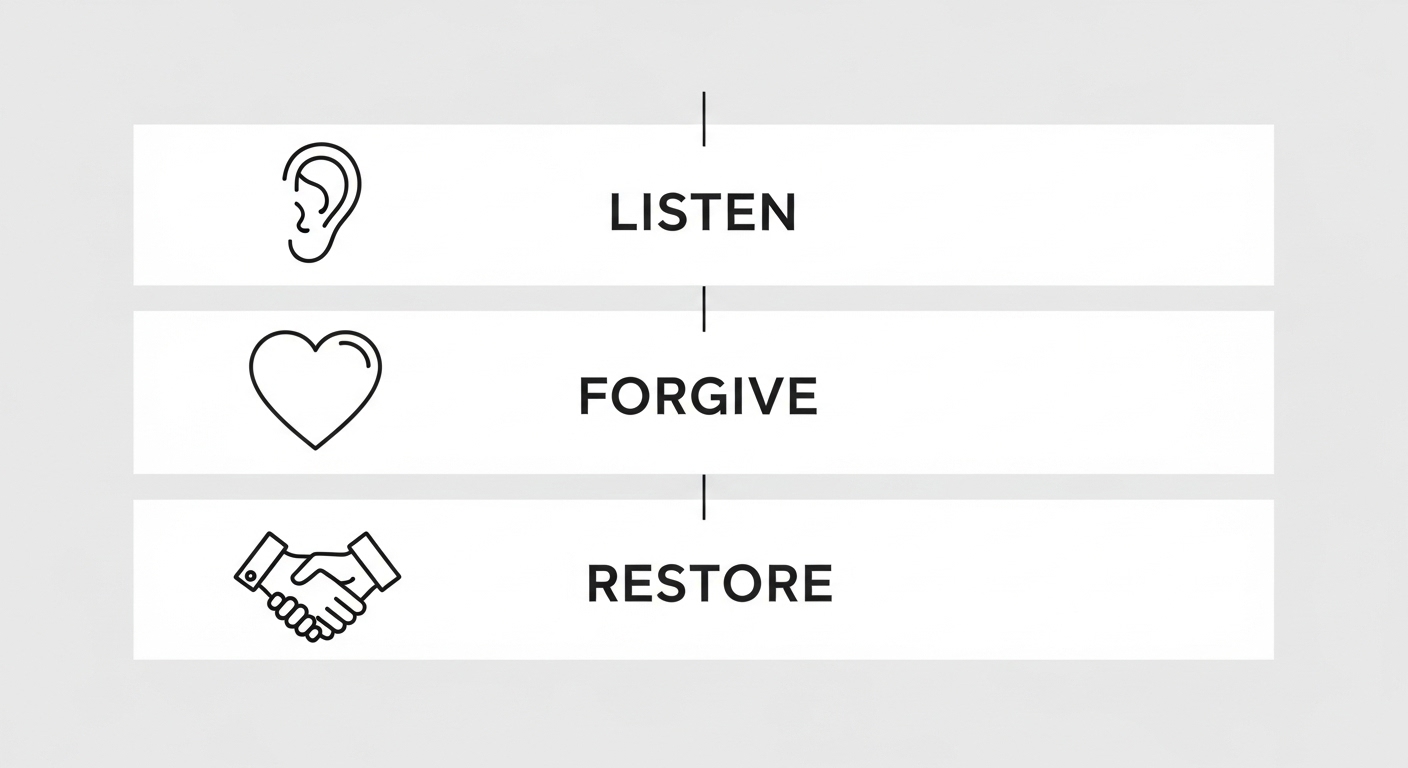
How do you live out the essence of forgiveness in everyday life? Start small and practical: first, acknowledge the hurt honestly — don’t minimize it. Second, set clear consequences if needed so boundaries protect others and teach responsibility. Third, be intentional about offering forgiveness when you’ve seen genuine change or sacrificial repentance. Finally, comfort and reaffirm love through concrete actions: a phone call, a note, or a public word of restoration. Practice these steps in relationships that matter. Over time, you’ll notice bitterness loosening and grace growing.
Faith Reflection Box
Pause here for a moment. Where do you hold an unresolved hurt that keeps showing up in your prayers? How might God be inviting you to choose restoration over resentment in one specific way this week?
Key Takeaways:
- Forgiveness restores relationships; it’s not the same as excusing wrongdoing.
- True restoration balances accountability and mercy.
- Practical forgiveness involves action: discipline when needed, then comfort and reaffirmation.
- You mirror Christ when you restore someone who shows repentance.
Related Post: Hebrews 8:12: Reflecting on Forgiveness
Q&A
Q1: Should I forgive someone who never apologizes? Answer: Forgiveness is primarily about your heart and obedience to God rather than forcing another’s repentance. You can forgive someone to release yourself from bitterness and to align with Christ’s mercy, even if they never apologize. However, forgiveness doesn’t always mean immediate restoration of closeness — healthy boundaries can and should remain in place while you choose to forgive. For guidance on finding peace through prayer in difficult emotional seasons, see this helpful post: https://biblestorieshub.com/how-to-pray-for-peace-when-your-mind-feels-overwhelmed/. Also consider Jesus’ teaching on forgiveness in Matthew 18:21-22 for perspective on repeated offenses.
Q2: Does forgiveness mean I forget what happened? Answer: Forgiveness doesn’t require erasing memory. God often lets you remember so you can apply wisdom and protect yourself and others. Forgetting is different from releasing the desire for revenge or allowing the past to poison your present. Your choice to forgive means you no longer let the offense define your identity or relationships. You can forgive while remembering lessons learned. Paul’s instruction in Ephesians 4:31-32 helps here: replace bitterness with kindness and forgiveness as God forgave you.
Q3: How do I know if someone’s repentance is genuine? Answer: Genuine repentance tends to show itself over time through changed behavior, a humble heart, and sometimes reparative actions. True repentance is not just saying “I’m sorry” but a willingness to accept consequences and to make amends where possible. You’re wise to watch for consistency: words alone aren’t enough, but consistent change, transparency, and submission to healthy accountability indicate sincerity. Scripture guiding restoration includes Galatians 6:1, which speaks to restoring gently in the spirit of humility.
Q4: What if I’m the one who needs to be forgiven, but I’m too ashamed to ask? Answer: Shame often keeps you stuck, but God’s grace invites you forward. Start by confessing to God and then to someone you trust who can guide you in humble steps toward those you’ve hurt. Asking for forgiveness may feel risky, but it’s a step toward true freedom anda relationship. Paul’s model shows that communities can restore someone who repents — you won’t be crushed if you’re truly sorry. Read 1 John 1:9 for reassurance that confession leads to cleansing and renewed fellowship.
Conclusion & Reflection
Forgiveness in 2 Corinthians 2:5-7 invites you into a restorative rhythm: truth spoken, consequence enacted, mercy offered, and love reaffirmed. When you practice this balance, you become an instrument of healing — one who reflects Jesus’ heart for lost, broken, and repentant people. Take a moment to pray with me:
Lord, help me not to harden my heart toward those who’ve hurt me. Give me the courage to set healthy boundaries where needed, the humility to forgive when you call me, and the wisdom to restore with love. Teach me your way of healing that honors truth and extends grace. Amen.

Explore More
For further reading and encouragement, check out these posts:
👉 7 Bible Verses About Faith in Hard Times
👉 Job’s Faith: What We Can Learn From His Trials
👉 How To Trust God When Everything Falls Apart
👉 Why God Allows Suffering – A Biblical Perspective
👉 Faith Over Fear: How To Stand Strong In Uncertain Seasons
👉 How To Encourage Someone Struggling With Their Faith
👉 5 Prayers for Strength When You’re Feeling Weak

📘 Jesus and the Woman Caught in Adultery – Grace and Mercy Over Judgement
A powerful retelling of John 8:1-11. This book brings to life the depth of forgiveness, mercy, and God’s unwavering love.
👉 Check it now on Amazon 🛒💥

🔥 “Every great message deserves a home online.” 🌍💬🏡
Don’t let your calling stay hidden. Start a Christian blog or website using Hostinger — with 99.9% uptime, a free domain, and SSL, your voice can shine for God’s glory anytime, anywhere.
💥 Begin today. 🛒 Try it RISK-FREE! ✅

✝️ “Your body is God’s temple — care for it with purpose.” 💪💖🏛️
Renew your energy and restore balance naturally. Mitolyn helps support a healthy metabolism, giving you the vitality to live out God’s calling with strength and confidence.
🔥 Unlock Your Metabolic Power! ⚡Burn More Calories & Feel Great With Mitolyn. 💪
👉 Start Today. 🚀 Check Price Now. 🛒💰
💰 As a ClickBank & Amazon Affiliate, I earn from qualifying purchases.
📖 Acknowledgment: All Bible verses referenced in this article were accessed via Bible Gateway (or Bible Hub).
🚀 Want to explore more? 👉 Dive into our new post on Why Jesus? and experience the 🔥 life-changing truth of the Gospel!