


What Is The Intermediate State? (Philippians 1:23)

Introduction
Have you ever wondered what happens between the moment someone dies and the moment of the final resurrection? You’re not alone—questions about death and what comes next touch nearly everyone at some point. In Philippians 1:23, the apostle Paul says he is “torn” between living and dying because death would mean being with Christ, which he calls “better by far.” That brief statement opens up a deep, comforting Christian hope about an “intermediate state”—the condition of the soul between death and the future resurrection. In this article, you’ll walk through Scripture, clear explanations, and practical responses so that this doctrine helps you live with courage and compassion today.

📖 The Bible Foundation
Read Philippians 1:21–24 (NIV)
“For to me, to live is Christ and to die is gain. If I am to go on living in the body, this will mean fruitful labor for me. Yet what shall I choose? I do not know! I am torn between the two: I desire to depart and be with Christ, which is better by far; but it is more necessary for you that I remain in the body.”
These verses show Paul wrestling with a simple but weighty truth: as a believer, living means serving Christ, but dying means being with Christ. He doesn’t speak in abstract theology; he speaks as a person who loves Jesus and cares for others. When Paul says “to depart and be with Christ,” he’s pointing to the Christian hope that after death there is conscious fellowship with Jesus. The context is both pastoral and personal—Paul desires heaven but also understands his mission on earth. That tension helps shape a biblical picture of the intermediate state: present awareness of Christ’s presence before the final resurrection.
Other key passages that shape the biblical picture of the intermediate state include:
- 2 Corinthians 5:8 (NIV): 2 Corinthians 5:8 — “We are confident, I say, and would prefer to be away from the body and at home with the Lord.”
- Luke 23:43 (NIV): Luke 23:43 — “Jesus answered him, ‘Truly I tell you, today you will be with me in paradise.’”
- Hebrews 9:27 (NIV): Hebrews 9:27 — “Just as people are destined to die once, and after that to face judgment.”
- Revelation 6:9-11 (NIV): Revelation 6:9-11 — speaks of the souls of martyrs who are alive in some sense under the altar, awaiting final justice.
Taken together, these verses suggest conscious awareness after death, a present relationship with Christ, and an eventual judgment that culminates in resurrection and consummation.
🧠 Understanding the Core Truth
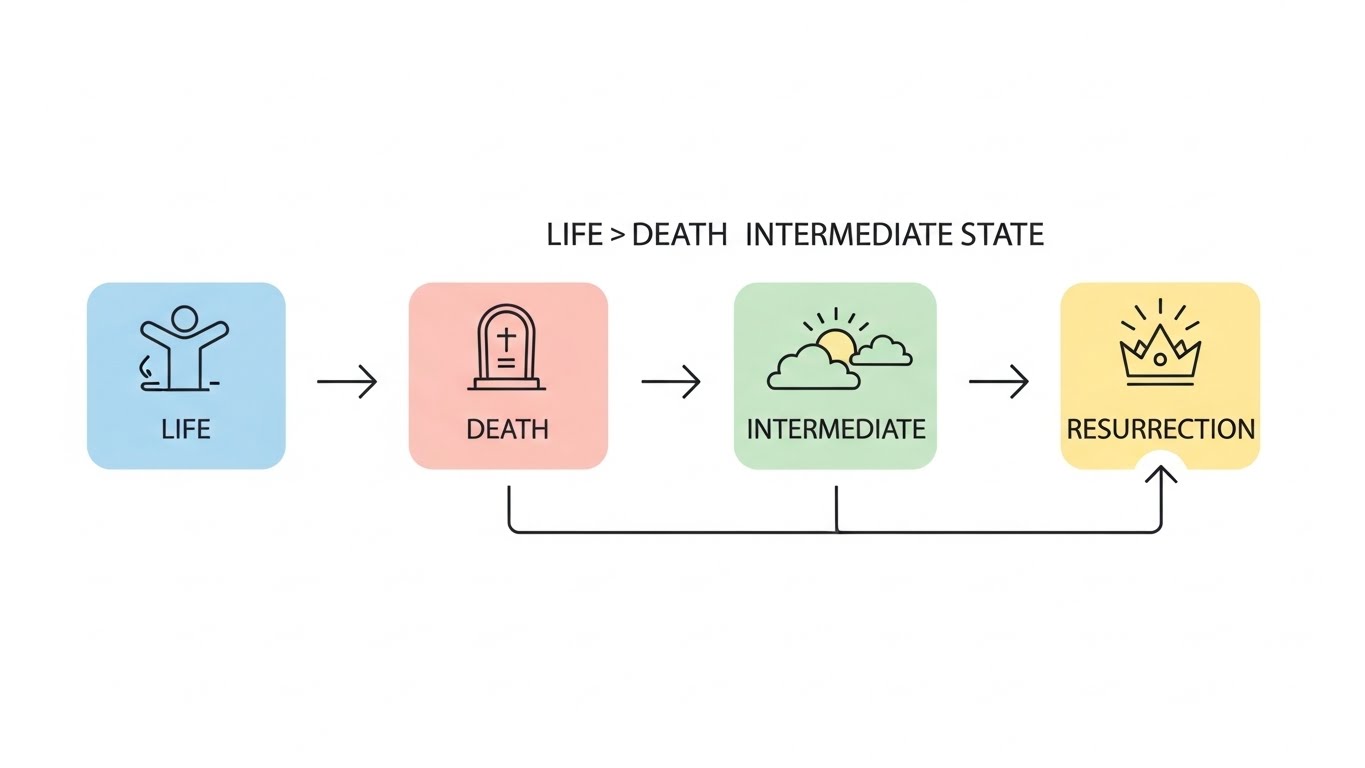
At its simplest, the intermediate state is the condition of your soul between physical death and the final resurrection at Christ’s return. Scripture leans toward the idea that believers are immediately in the presence of Christ after death, conscious, comforted, and aware. That’s what Paul, Luke, and John’s visions imply.
Why does this matter? Because it changes how you grieve, hope, and live. If death for a believer is “gain” and brings you into Christ’s presence, then mourning becomes a blend of sorrow and hope rather than despair. The intermediate state isn’t the end of the story—it’s a waiting room, a foretaste of ultimate redemption and restoration.
🌊 Going Deeper — The Hidden Meaning
The deeper lesson behind the intermediate state is pastoral and existential: God holds you personally even in death. The intermediate state reveals God’s relational character—He doesn’t leave you in a void; He welcomes you. Paul’s longing to “be with Christ” reveals that heaven is not a place of static rest but of relationship and joy in Jesus himself.
Consider a relatable example: think of an airport layover where you’re waiting between flights. The layover is not your destination, but if that layover is in a beautiful lounge with family, comfort, and the person you love, the waiting is a blessing rather than a burden. The intermediate state, in biblical terms, is like that—interim, yes, but gracious and full of presence. Biblical stories such as Jesus promising the thief on the cross (Luke 23:43) give a face to this promise; even at the worst moment of suffering, Jesus promised immediate, conscious presence with him.
Theologically, the intermediate state also protects the dignity of the person. You don’t vanish or become a mere shadow—Scripture treats the afterlife as real and relational, not as some impersonal sleep (except for traditions that interpret “sleep” metaphorically). The intermediate state reassures you that God’s redemption begins at death and reaches its completion at the resurrection.
💡 Modern Connection — Relevance Today
So how does this ancient teaching matter in modern life? If you’re caring for dying relatives, grieving a friend, or wrestling with fear of death, the intermediate state brings practical comfort: your loved ones are with Christ. That transforms pastoral care—consolation shifts from platitudes to gospel promises.
In practical settings—hospice, funerals, counseling—you can ground hope in Scripture. When someone asks whether they will see their loved ones again, you can point to passages like Philippians 1:23 and Luke 23:43 with pastoral tenderness. If you’re wrestling with anxiety about death, remembering that “to die is gain” helps orient your heart toward worship and mission rather than avoidance.
The intermediate state also impacts how you live now. If your life matters beyond the grave, your choices acquire eternal significance. You’re motivated to share the good news, to reconcile relationships, and to invest in the kingdom because what you do now echoes into eternity.

❤️ Practical Application — Living the Message
How do you let the truth of the intermediate state shape your everyday life? Here are simple, doable steps:
- Hold grief with hope: When you mourn, let Scripture inform your mourning—acknowledge loss, but also celebrate being “with Christ.”
- Pray for the dying and bereaved: Use Paul’s words as prayers—pray that the dying would know Christ and that the grieving would know comfort.
- Live missionally: If life now is an opportunity for fruitful labor (Philippians 1:21), pursue it with urgency and love. Let the awareness of eternity motivate your kindness and gospel-sharing.
- Prepare practically: Share your faith story, reconcile relationships, and make choices you’ll be glad you made when you remember eternity.
- Talk about it: Encourage your church to teach about death and heaven so that people aren’t surprised or fearful.
These practical steps aren’t complicated, but they’re shaped by a big hope—death is not the final word for those in Christ.
🌿 Faith Reflection Box
Take a moment to reflect: If you believed with confidence that dying brings you immediately into Christ’s presence, how would you live differently this week?
Key Takeaways:
- The intermediate state refers to the soul’s experience between death and resurrection.
- Philippians 1:23 and 2 Corinthians 5:8 support the confidence that believers are present with Christ after death.
- This doctrine brings pastoral comfort and practical urgency—grief is softened by hope; life gains purpose.
- Live each day with eternity in view: reconcile, pray, and share the gospel.
- Comfort and ministry to the dying should be rooted in Scripture’s promises.
👉 Q&A
Q1: Will I recognize and know my loved ones in the intermediate state? Answer: The Bible gives reasons for hope that you will recognize and be with loved ones in the intermediate state, though it doesn’t provide a full picture of what recognition will look like. Passages like Luke 23:43 (Luke 23:43) and Revelation 6:9-11 (Revelation 6:9-11) portray personal, conscious existence after death. The focus of Scripture is relational—being with Christ—so personal identity is respected. However, avoid speculative details; Scripture centers hope on communion with Jesus and the promise of resurrection. Trust the God who remembers names and redeems relationships.
Related: Do Christians Go To Heaven Immediately After Death? (2 Corinthians 5:8, Philippians 1:23)
Q2: What happens to unbelievers in the intermediate state? Answer: Scripture indicates that after death there is a conscious experience and an ultimate judgment (see Hebrews 9:27: Hebrews 9:27). For those who die separated from Christ, the Bible warns of a future and final judgment apart from God. Jesus’ parables and the book of Revelation portray a sober reality where souls are accounted for. At the same time, Scripture calls you to evangelize urgently—because the good news of Jesus changes one’s destiny. While the Bible describes different post-death fates, the consistent call is to point people to Christ now.
Q3: Does the Bible teach “soul sleep,” or are we immediately with Christ when we die? Answer: There are different Christian interpretations, but the balance of Scripture supports immediate presence with the Lord for believers. Verses like Philippians 1:23 (Philippians 1:23), 2 Corinthians 5:8 (2 Corinthians 5:8), and Jesus’ promise to the thief (Luke 23:43) argue for conscious fellowship with Christ after death. The “soul sleep” view interprets death as unconscious until resurrection, but the biblical voice emphasizes presence and awareness. While theological nuance exists, the pastoral thrust remains: death brings believers into blessed fellowship with Jesus.
🙏 Conclusion & Reflection
You’ve walked through a hope that changes everything: the intermediate state assures you that death for a believer is not an ending but a passage into Christ’s presence. Philippians 1:23 captures Paul’s longing—he’d gladly go to be with Jesus, because that is “better by far.” That promise steadies your heart in grief, steadies your courage in ministry, and inspires how you live today.
A short prayer: Lord Jesus, thank you that death is not the end for those who belong to you. Help me to live with eternity in view, to comfort the grieving with Your Word, and to share Your gospel with urgency and compassion. Keep my eyes on You until the day I see You face to face. Amen.

More Inspiration Awaits — Read These Next
 For deeper insight into Isaiah 40:31 and how it renews your strength in both faith and daily life
For practical lessons on compassion and neighborliness from the Good Samaritan
For a clear explanation of what we can learn from the Parable of the Good Samaritan
For meaningful insights from the Parable of the Pearl and its hidden treasures
For a deeper look at the Rich Man and Lazarus and what it reveals about the afterlife
For guidance on the Parable of the Ten Virgins and preparing for God’s Kingdom
For clarity on the Parable of the Lamp and how it calls us to shine our light
For insights from the Parable of the Wedding Feast and the meaning behind the invited guests

 Jesus and the Woman Caught in Adultery – Grace and Mercy Over Judgement
A powerful retelling of John 8:1-11. This book brings to life the depth of forgiveness, mercy, and God’s unwavering love. Check it now on Amazon 


 “Every great message deserves a home online.”


Don’t let your calling stay hidden. Start a Christian blog or website using Hostinger — with 99.9% uptime, a free domain, and SSL, your voice can shine for God’s glory anytime, anywhere. Begin today. Try it RISK-FREE! 

 “Your body is God’s temple — care for it with purpose.”


Renew your energy and restore balance naturally. Mitolyn helps support a healthy metabolism, giving you the vitality to live out God’s calling with strength and confidence.
Unlock Your Metabolic Power!  Burn More Calories & Feel Great With Mitolyn.
Start Today.  Check Price Now.
As a ClickBank & Amazon Affiliate, I earn from qualifying purchases.
 Acknowledgment: All Bible verses referenced in this article were accessed via Bible Gateway (or Bible Hub).
Want to explore more? Dive into our new post on Why Jesus? and experience the life-changing truth of the Gospel!