

What Is A Fallen Angel? (2 Peter 2:4; Jude 1:6)
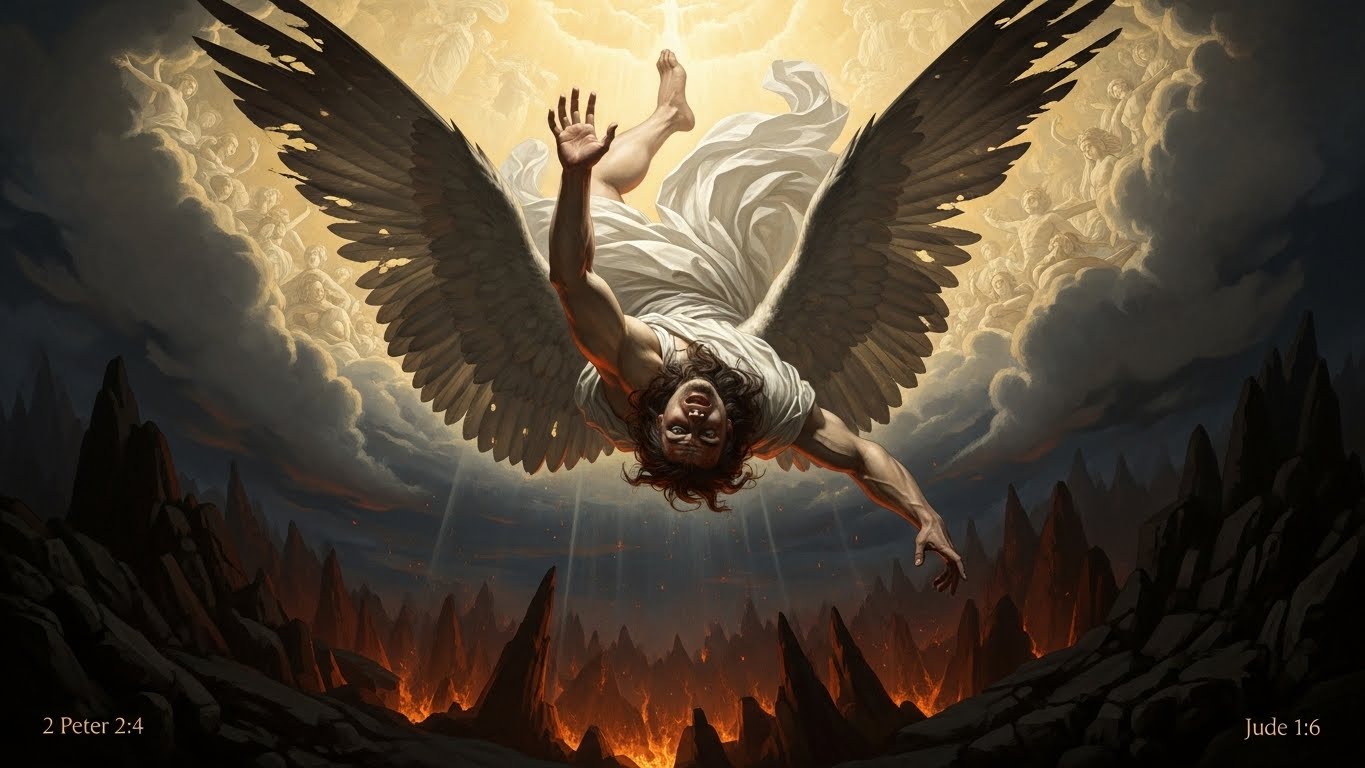
TL;DR — Simple Answer
A fallen angel is an angelic being who rebelled against God and was cast down from its original position of authority. According to Scripture, these angels sinned, abandoned their proper role, and are now restrained under God’s judgment, awaiting final punishment (2 Peter 2:4; Jude 1:6). The Bible presents fallen angels as real spiritual beings whose rebellion highlights God’s holiness, justice, and sovereign control over the unseen realm.

INTRODUCTION
You may have heard the phrase “fallen angel” in sermons, books, or online debates, and wondered what the Bible actually says. This question matters because how you understand spiritual forces affects your faith, your fears, and how you live each day. When scripture speaks about angels who fell, it does so with a sober purpose: to warn, to explain judgment, and to point you back to God’s sovereign care and Christ’s victory.
Understanding fallen angels touches God’s purpose, His protection, and His promise—for you and for the world. It helps you resist superstition, avoid sensationalism, and ground your trust in Christ rather than in fear of spiritual beings. If you want more on how angels serve God’s plan, see our article on /articles/angels-explained as you read here for clarity and hope.
You’ll find that the Bible’s treatment of fallen angels isn’t primarily a supernatural thriller; it’s pastoral and theological. Scripture invites you to see God’s authority over every creature and to rest in the salvation secured by Jesus. This topic matters for your faith because it calls you to faith over fear, obedience over curiosity, and worship over speculation.
What Is a Fallen Angel? — Simple Biblical Meaning
In simple terms, the Bible shows that a fallen angel is an angelic being who rebelled against God and was consequently judged. These beings are not equals to God, nor are they rival deities. They are created spiritual beings who were given authority and purpose, but some misused that freedom and were cast into judgment.
The meaning for you today is practical: knowing that angels can fall reminds you that freedom to choose is a created reality, not something unique to humans. It also points you to the heart of the gospel—only Christ provides the ultimate deliverance and security. Fallen angels are part of the biblical narrative that underscores God’s justice and Christ’s supremacy, and they serve as warnings that faithfulness and trust in Jesus are the only secure foundation.
WHAT DOES THE BIBLE SAY ABOUT A FALLEN ANGEL?
The Bible speaks directly about angels who sinned and were judged. Two clear New Testament references are foundational: 2 Peter 2:4 and Jude 1:6. Both passages describe angelic beings who transgressed and are kept in chains or darkness for judgment. Other passages in both Testaments distinguish between holy angels who serve God and demonic forces who oppose Him (see Hebrews 1:14; Mark 5:2-13).
In short: the Bible presents fallen angels as real, judged creatures who do not have the final word. God’s authority rules above them, and Christ’s work secures your safety and hope, not magic words or rituals.
📖 BIBLE FOUNDATION
Quoted verses
- “[For if God did not spare the angels when they sinned, but sent them to hell, putting them into gloomy dungeons to be kept until judgment;]” — 2 Peter 2:4.
- “[And the angels who did not keep their positions of authority but abandoned their proper dwelling—these he has kept in darkness, bound with everlasting chains for judgment on the great Day.]” — Jude 1:6.
Speaker
- 2 Peter: The epistle is attributed to the Apostle Peter (the letter’s author lines are traditionally Peter’s voice), writing pastoral correction to believers warning against false teachers and their destruction.
- Jude: Jude, a servant of Jesus Christ and brother of James, writes a short letter to contend for the faith against ungodliness and false teachers.
Audience
- Both letters address first-century Christian communities under pressure from false teachers, immorality, and theological error. Their readers were real people facing real spiritual and ethical challenges—just as you face today.
Historical and biblical context
- 2 Peter and Jude sit in the New Testament as warnings—letters that call you to remember apostolic teaching and to stand firm. When they reference angels being judged, they use that historical memory to underscore the certainty of divine justice. Jude evokes Jewish traditions and Old Testament imagery of divine judgment; Peter echoes the same theological concern to show that God’s patience does not mean God’s permission of sin without consequence.
- These verses are not sensational footnotes; they are pastoral proof points. They remind believers that God is just, that rebellion has consequences, and that your trust must be in the Lord—not in spiritual speculation or in fear of created beings.

UNDERSTANDING GOD’S PURPOSE, PROTECTION, AND PROMISE
At the heart of the Bible’s teaching about fallen angels is a core theological truth: God is sovereign over all creation, including spiritual beings. While angels were created to serve (see Hebrews 1:14), some rebelled. Their fall highlights human and cosmic realities and serves God’s greater purpose of displaying His justice and mercy.
God’s purpose
- The existence of rebellious angels fits within God’s purposes to demonstrate His righteousness and to bring glory through redemption. Fallen angels expose the reality of sin and the need for a Savior. This theological perspective keeps Christ central: the fallen condition of creation points you to the Redeemer, Jesus Christ.
God’s protection
- Scripture assures you that God’s protection rests on His authority and Christ’s victory, not on human manipulation of spiritual forces. The Lord confines or restrains evil in ways that serve His plan (see Revelation 20:1-3 for an image of restraining evil in God’s timetable). Your safety comes from Christ’s work, not from secret knowledge of angels.
God’s promise
- The promise for you is clear: Christ secures salvation and ultimate victory. Fallen angels are signs of God’s judgment but also serve to remind you of the hope that believers have in Christ’s final triumph and in the restoration of all things.
Theological emphasis
- Emphasize God’s sovereignty and Christ’s supremacy. The biblical data discourages speculation. You should respond with faith, obedience, and trust in Christ rather than anxiety or curiosity about hidden spiritual hierarchies.
🌊 GOING DEEPER — BIBLICAL CONTEXT
Cross-references
- Genesis 6:1-4 (ancient debates about “sons of God”)
- Isaiah 14:12-15 and Ezekiel 28:12-19 (poetic judgments often applied typologically)
- Mark 5:2-13 (Jesus, demons, and deliverance)
- Luke 8:2 (Mary Magdalene freed from seven demons)
- Hebrews 1:14 (angels as ministering spirits)
One biblical narrative example
- Consider the narrative of the Gerasene demoniac in Mark 5:2-13. Here Jesus confronts demons, who recognize His authority, and He casts them out into a herd of pigs. The episode demonstrates Jesus’ power over evil spirits, His compassion for the oppressed, and the alignment of deliverance with God’s kingdom mission. The scene shows fallen spiritual forces are real, dangerous, and subject to Christ.
Theological continuity
- From Genesis through Revelation, the Bible presents a consistent line: God creates, rebellion enters, God judges, and God promises redemption through a covenantal work culminating in Christ. Fallen angels fit this continuity as part of the created order that rebelled and was judged; yet they never overturn God’s purposes. The arc of Scripture moves you toward trust in Christ, not toward fear of angels or demons.
👉 “Many people wonder what it truly means to be saved and how the Bible describes the path to salvation—not through effort, but through faith in Jesus Christ.”
➡️ Learn more in How Can I Be Saved According to the Bible? (Romans 10:9-10, Acts 16:31)
DOES A FALLEN ANGEL GUARANTEE PROTECTION, SUCCESS, OR FINANCIAL BLESSING?
No. The Bible never presents fallen angels—or angels in general—as guarantees of protection, success, or financial blessing for believers. Any suggestion that angels will bless you materially or unlock prosperity for followers who perform certain rituals or pay money is contrary to Scripture.
Correcting prosperity-based thinking
- Scripture repeatedly teaches that material blessing is not a guaranteed sign of God’s favor. Jesus Himself warned that following Him can mean loss and suffering (Matthew 10:34-39). True protection is spiritual and eternal: protection in Christ means salvation, ongoing sanctifying care, and ultimate deliverance in God’s timing—not a promise of success or wealth.
Scriptural corrections
- 1 Timothy 6:6-10 warns against the love of money. James 4:13-16 reminds you that plans succeed only under God’s will. When passages mention angels, they portray service to God and sometimes deliverance, but never as a transactional path to prosperity.
Practical takeaway
- Put your hope in Christ’s promises and in the gospel, not in supposed angelic sponsorship. Faithfulness often brings hardship, but Christ promises presence (see Matthew 28:20) and an eternal reward.
💡 MODERN CONNECTION — FAITH, ANXIETY, AND DAILY LIFE
When you wrestle with anxiety about spiritual realities, the Bible gives clear help. Rather than fixating on fallen angels or demonic activity, focus on the sufficiency of Christ, the clarity of Scripture, and practical obedience.
Anxiety
- If fear of spiritual forces troubles you, remember that Jesus silenced storms and demons. Read Mark 5:2-13 and behold the Lord’s authority over the unseen. Pray, confess, and seek the fellowship of the church rather than indulging in speculative research that amplifies fear.
Decision-making
- Base decisions on God’s revealed Word and prayerful wisdom. Don’t make choices out of fear of angels or demons. Ask God for wisdom (James 1:5) and discernment.
Trust in God
- When you feel vulnerable, remind yourself that angels are ministering spirits to serve those who inherit salvation (Hebrews 1:14), but your trust belongs to God alone. Anchor your faith in Christ’s finished work.
Worship and faithfulness
- Focus your worship on Jesus. Angels and spiritual realities are subordinate to Christ’s lordship. Practically, cultivate spiritual disciplines—Bible reading, prayer, fellowship, and obedience—that draw you into Christ’s presence.
Faithfulness
- Faithfulness looks like love, obedience, and steady discipleship, not chasing signs. The presence of fallen angels in biblical teaching aims to call you to faithfulness in a world afflicted by sin.

ANGELS / PROMISE / DOCTRINE AND GOD’S PROTECTION
Doctrine about angels should direct you to God, not to angels themselves. The Bible teaches that angels are creatures who serve God’s purposes (Hebrews 1:14). Your faith is rightly placed in the Lord, in Christ’s atoning work, and in the Spirit’s guidance. Angels do not replace Christ, mediate salvation, or offer guarantees of material blessing.
Trust God’s authority and providence
- When questions about angels arise, remember: God governs all things. The providential care of the Father, Son, and Holy Spirit is your security. Fallen angels are judged, holy angels minister, and none can overturn God’s plan.
Christ as center
- Keep Christ at the center. He is the one who disarmed spiritual forces and triumphed on the cross (Colossians 2:15). Your prayer life, worship, and obedience should focus on Him.
Avoid spiritual superstition
- Avoid rituals, incantations, or practices that claim special contact with angels as paths to blessing. Scripture doesn’t support such systems; instead it calls you to repentance, faith, and obedience.
❤️ PRACTICAL APPLICATION
- Pray daily for wisdom and protection, asking God to guard your heart and mind in Christ (see Philippians 4:6-7).
- Read and memorize key Scripture passages that anchor you in Christ’s authority, such as Hebrews 1:14 and Colossians 2:15.
- Seek counsel from mature, Bible-teaching elders or pastors when spiritual fears rise; resist isolation.
- Practice sober discernment: measure extraordinary claims against Scripture and the testimony of the church.
- Serve others: compassion often displaces fear. Follow Jesus’ example of deliverance and care (Mark 5:2-13).
🪞 FAITH REFLECTION BOX
Take a moment to reflect: Is your fear of spiritual beings replacing your trust in Christ? Breathe, pray, and read a passage of Scripture that reassures you of God’s sovereignty—then lay your burdens before Jesus and worship Him who holds all things together.
A PRACTICAL TAKEAWAY
- Fallen angels are real but judged creatures; they do not have final authority. (2 Peter 2:4; Jude 1:6)
- Angels primarily serve God and His people; your security is in Christ. (Hebrews 1:14)
- The Bible’s focus is pastoral—God’s justice and Christ’s redemption—not sensationalism.
- Avoid prosperity promises tied to angels; Scripture teaches godly living over material gain. (1 Timothy 6:6-10)
- Live with courage: trust Christ, follow Scripture, and serve others.
❓ Q&A — BIBLE ANSWERS EXPLAINED
Q1 (Doctrinal): What exactly does the Bible teach about angels who fell?
A1: The Bible teaches that some angels sinned and were subsequently restrained or judged (see 2 Peter 2:4; Jude 1:6). Their fall demonstrates the seriousness of rebellion but does not threaten God’s sovereign plan—Christ remains supreme (Colossians 2:15).
Q2 (Practical): If I feel oppressed by fear of demons, what should I do?
A2: Turn to Christ in prayer, Scripture, and Christian community. Read passages where Jesus demonstrates authority over spirits (Mark 5:2-13), confess sin, seek pastoral counsel, and rely on God’s promise of presence (Matthew 28:20).
Q3 (Misconception): Do fallen angels cause all sickness or financial hardship?
A3: No. Scripture does not teach that fallen angels are the cause of every trial. Trials can result from sin, living in a fallen world, spiritual opposition, or God’s permissive will for growth. Trust God’s sovereignty and seek scriptural counsel (James 1:2-4).
CONCLUSION & PRAYER
In the Bible, fallen angels are real but contained realities—evidence of rebellion and of God’s righteous judgment. The gospel reframes every scary spiritual fact: you are secure in Christ, who conquered evil and reigns supreme. Let your response be faith, not fear; obedience, not fascination. Hold fast to Scripture and the person of Jesus Christ as your anchor.
Prayer: Lord Jesus, thank You that You are sovereign over all things, including the spiritual realm. Help me to trust You, not fear created beings. Grant me wisdom, courage, and a heart steadfast in Scripture. Use me to show Your love and truth to others. Amen.
 RELATED BIBLE TEACHINGS
- What Happens When You Die According To The Bible? The Soul’s Journey To Heaven Or Hell Explained (Ecclesiastes 12:7, 2 Corinthians 5:8)
- What Does The Bible Say About The Gates Of Heaven? (Revelation 21:12–27)
- How Do I Know If I Am Truly Saved? (1 John 5:13, Romans 8:16)
 Ministry Resource

 “Every God-given message deserves to be shared.”


Don’t let your calling stay hidden. If God has placed His truth on your heart, starting a Christian blog or website can help you reach others with clarity and purpose. Hostinger makes it easy—with 99.9% uptime, a free domain, and SSL—so your message can shine for God’s glory anytime, anywhere.
 Begin today.
  Try it RISK-FREE!
 As a ClickBank & Amazon Affiliate, I earn from qualifying purchases.
 Acknowledgment: All Bible verses referenced in this article were accessed via Bible Gateway (or Bible Hub).
 Want to explore more? Dive into our new post on Why Jesus? and experience the life-changing truth of the Gospel!