


How to Start a Christian Blog: A Step-by-Step Guide for Ministry & Impact

Introduction: Why Start a Christian Blog Today?
Starting a Christian blog is no longer just about writing online—it’s about ministry in the digital age. Every day, millions of people search for answers about faith, prayer, anxiety, purpose, and God’s promises. A Christian blog allows you to meet people exactly where they are, offering biblical truth in moments of real need.
Whether you feel called to share devotionals, Bible explanations, testimonies, or encouragement, blogging gives you a platform that works 24/7—long after a sermon ends or a social post disappears.
The good news? You don’t need to be a tech expert, pastor, or professional writer to start a Christian blog. With the right tools and guidance, you can build a blog that honors God and reaches people around the world.
In this step-by-step guide, you’ll learn exactly how to start a Christian blog—from choosing a domain to publishing your first devotional—using simple, beginner-friendly tools trusted by Christian bloggers.
Step 1: Clarify Your Calling and ✅ Purpose for Your Christian Blog

Before you choose a domain or hosting, ask this important question:
Who is God calling me to serve through this blog?
Some common Christian blog focuses include:
-
Daily devotionals and Bible reflections
-
Christian living and encouragement
-
Prayer and spiritual growth
-
Bible study explanations
-
Faith during trials, anxiety, or grief
-
Resources for Christian bloggers or ministries
👉 Why this matters:
Your purpose shapes your content, your audience, and even which tools you’ll need later.
Tip: Write one clear sentence:
“This blog exists to help ______ grow in ______ through God’s Word.”
You’ll come back to this often.
Step 2: ✅ Choose a Domain Name for a Christian Blog
Your domain name is your blog’s home address (example: yourblog.com).
Good Christian blog domain tips:
-
Keep it simple and easy to remember
-
Avoid dashes and numbers
-
Faith-based but not limiting
-
Easy to spell and pronounce
Examples:
-
HopeInScripture.com
-
FaithWalkDaily.com
-
AnchoredInChrist.com
You can register your domain together with hosting, which is easier and often cheaper.

Step 3: ✅ Best Hosting for a Christian Blog
This is one of the most important decisions you’ll make.
Hosting is what makes your blog visible online. Poor hosting causes:
-
Slow loading times
-
Site crashes
-
Frustrated visitors (and lower Google rankings)
✅ Recommended: Hostinger
Hostinger is especially great for Christian bloggers because:
-
Affordable (ideal for ministries on a budget)
-
Beginner-friendly dashboard
-
Free SSL (security)
-
One-click WordPress installation
-
Fast loading speeds (important for SEO)
👉 If you want a complete list of tools trusted by faith-based bloggers, you can find them all on our 📌 Resources for Christian Bloggers page.
Step 4: ✅ Install WordPress for a Christian Blog
Once hosting is set up, install WordPress.org (not WordPress.com).
Why WordPress?
-
Free and open-source
-
Perfect for blogs and devotionals
-
Thousands of Christian themes and plugins
-
Full control over content and monetization
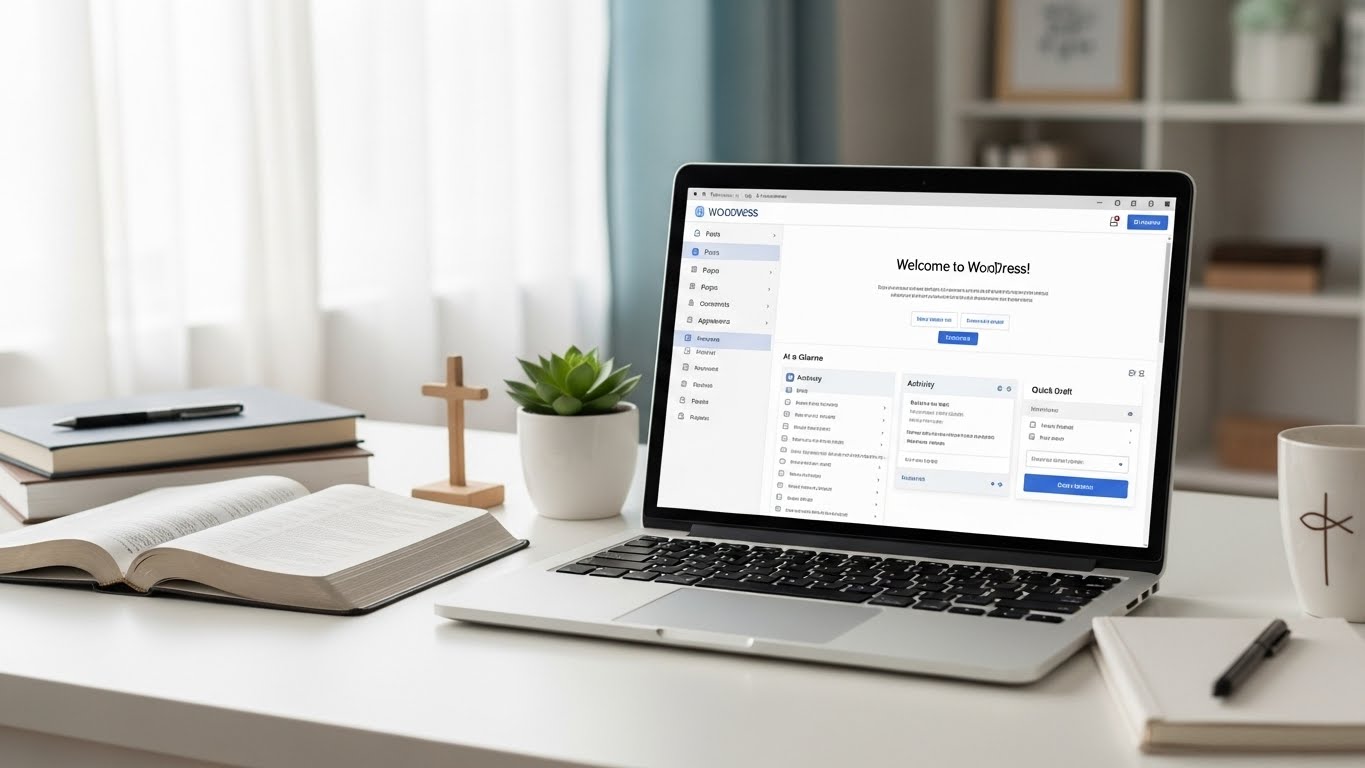
Most hosting providers (including Hostinger) offer one-click WordPress installation, so no coding is required.
After installation, you’ll log in to your dashboard at:
yoursite.com/wp-admin
This is where all the magic happens.
Step 5: Choose a Clean, Faith-Friendly Theme
Your theme controls how your blog looks.
When choosing a theme:
-
Prioritize readability
-
Mobile-friendly design
-
Clean layout (not cluttered)
-
Fast loading
Avoid overly flashy designs—your content and Scripture should shine.
You can start with:
-
Free WordPress themes
-
Or premium Christian/ministry themes later
👉 Don’t overthink this step. You can always change themes later.
Step 6: Install Essential Plugins (Do NOT Skip This)
Plugins extend WordPress functionality.
Must-Have Plugins for Christian Bloggers
1️⃣ SEO Plugin (Yoast SEO)
Helps your devotionals appear in Google searches.
2️⃣ Security Plugin
Protects your site from attacks.
3️⃣ Caching Plugin
Improves site speed.
4️⃣ Image Compression Plugin
Keeps pages fast and optimized.
Step 7: Create Core Pages (Before Blogging)
Before publishing posts, create these pages:
-
About – Share your testimony and mission
-
Contact – Allow readers to reach you
-
Privacy Policy – Required for AdSense & affiliates
-
Resources for Christian Bloggers – (Your monetization hub)
👉 Your Resources page will list trusted tools like:
-
Hosting
-
Email services
-
Design tools
-
Writing tools
Step 8: ✅ Email Marketing for Christian Blogs

Social media comes and goes.
Email lists stay with you.
Beginner-Friendly Email Tools:
-
ConvertKit – Best for creators and ministries
-
MailerLite – Affordable, great for beginners
Email allows you to:
-
Send devotionals
-
Share prayer requests
-
Announce new posts
-
Build a faith community
Step 9: Write Your First Christian Blog Post
Start simple.
Ideas for your first post:
-
Why you start this blog
-
A favorite Bible verse and reflection
-
A devotional for encouragement
-
A testimony of God’s faithfulness
Simple devotional structure:
-
Scripture
-
Short explanation
-
Life application
-
Prayer
👉 Consistency matters more than perfection.
Step 10: Design Simple Graphics (No Design Skills Needed)
Visuals improve engagement and sharing.
Canva (Highly Recommended)
-
Easy drag-and-drop design
-
Bible verse graphics
-
Pinterest & blog images
-
Social media posts
Step 11: Write Clearly & Confidently
Clear writing builds trust.
Grammarly (Optional but Helpful)
-
Fixes grammar
-
Improves clarity
-
Saves editing time
Step 12: Be Patient & Faithful
Christian blogging is a long-term ministry, not a quick win.
Growth takes time:
-
Traffic grows slowly
-
Trust builds steadily
-
Impact multiplies quietly
Remember:
“Let us not become weary in doing good…” (Galatians 6:9)

Frequently Asked Questions About Starting a Christian Blog
Do I need to be a pastor to start a Christian blog?
No. Many Christian bloggers are everyday believers who feel called to share God’s Word, encouragement, and testimony online.
How much does it cost to start a Christian blog?
You can start a Christian blog for a small monthly cost, especially if you use affordable hosting and free tools.
Can a Christian blog really be a ministry?
Yes. Blogs reach people globally and often meet readers during moments of spiritual need.
Many Christian bloggers also ask how to grow their reach once their site is live. We’ll cover that next in our guide on growing a ministry blog with SEO.
Final Encouragement
God can use your obedience more than your perfection.
Start where you are.
Use what you have.
Trust Him with the results.
👉 For trusted tools mentioned here, visit:
📌 Resources for Christian Bloggers