

Exploring The Nature Of Heaven And Hell: Spiritual Realms Or Physical Places?
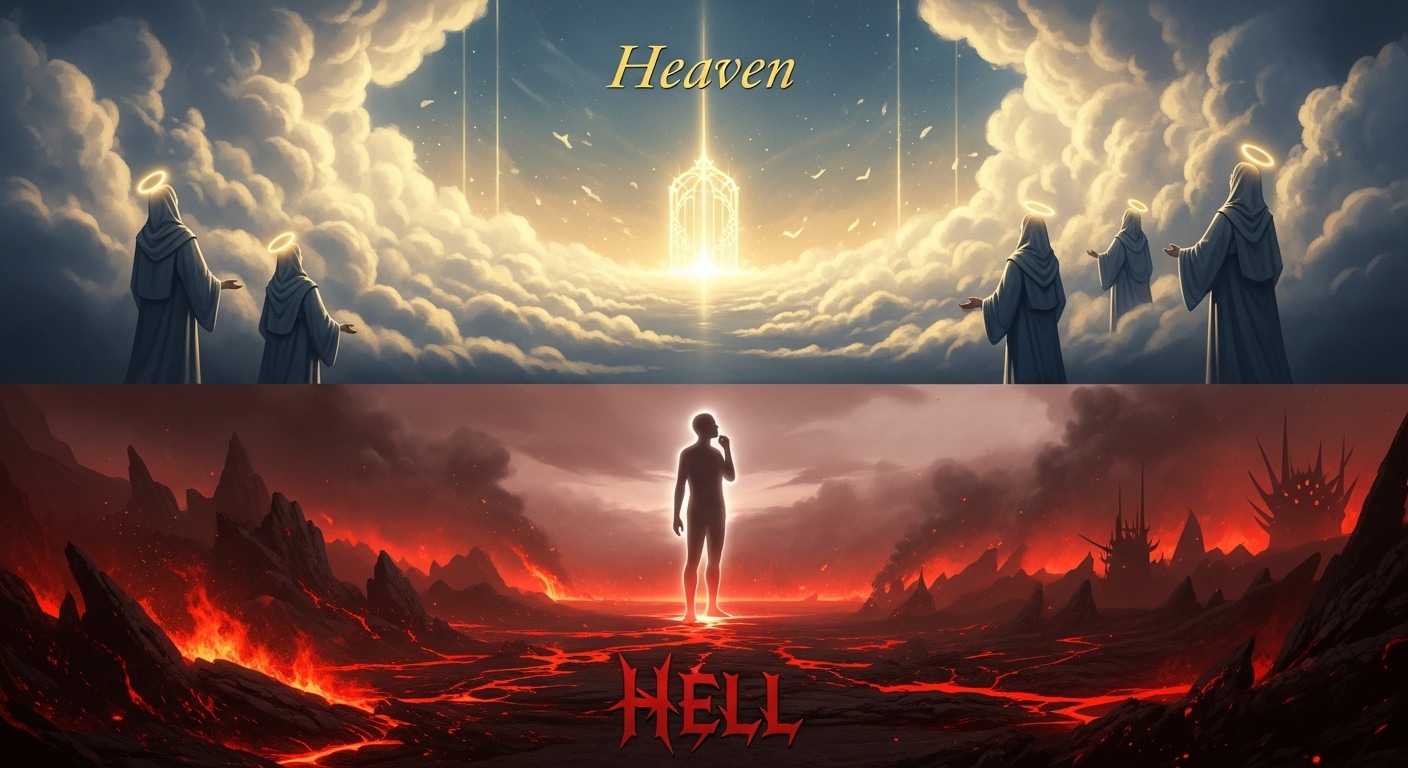
You’ve likely wrestled with the question: are heaven and hell physical places or spiritual realms? This is a question that stretches your imagination, tests your theology, and shapes how you live today. Whether you grew up with vivid pictures of pearly gates and fiery pits or you’ve heard cautious theological qualifiers, this topic matters because it touches the deepest hopes and fears you carry about eternity, justice, and God’s presence.
In this article you’ll get a calm, Scripture-centered exploration of that question. I’ll walk you through key biblical passages, help you see why the Bible sometimes speaks in physical terms and sometimes in spiritual terms, and point you toward how those patterns should shape your faith and daily life. I’ll also connect this discussion to the broader conversation—if you want the full framework on hell, see the pillar article Is Hell Literal Or Figurative? Along the way I’ll answer phrases you might be searching for, like “are heaven and hell physical places or spiritual realms,” “heaven and hell spiritual or physical,” “biblical view of heaven and hell,” and “are heaven and hell literal places.”

1. Introduction
You’ve probably heard the images: heaven as clouds and harps, hell as flames and a bottomless hole. Those images stick because they’re picture-like and emotionally powerful. But you also know that images can mislead. So when you ask whether heaven and hell are literal places or spiritual realities, you’re asking a question that affects the foundations of your hope, your understanding of divine justice, and how you talk about eternity with others.
This question matters for more than academic reasons. If heaven is simply a “state” of being with God rather than a location, that changes how you imagine resurrection, the renewal of creation, and your future body. If hell is merely a metaphor for separation rather than an actual place of torment, that affects your understanding of divine judgment and responsibility. Confusion often comes from traditional sermons, popular culture, and the symbolic language of Scripture itself. My aim here is to help you sort through those influences with a steady focus on biblical texts and theological clarity.
2. What the Bible Says About Heaven and Hell
Sponsored recommendation

You’ll find the Bible using a mix of language—sometimes physical and spatial, sometimes relational and experiential. Paying attention to genre (narrative, parable, apocalyptic) helps you interpret the images responsibly.
Heaven in Scripture
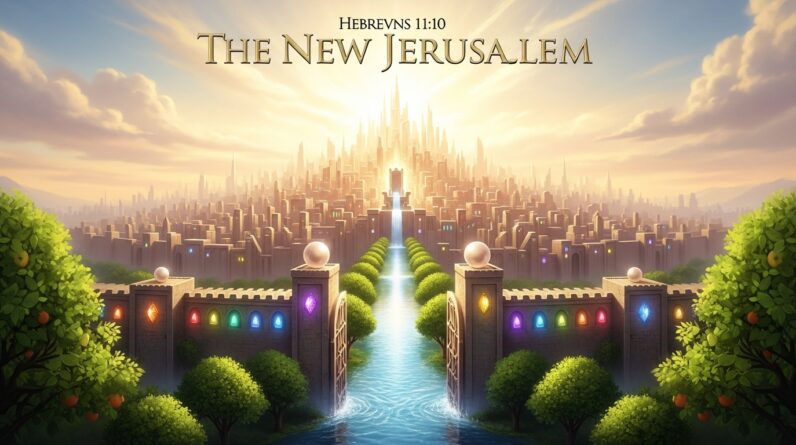
When Jesus comforts his disciples in John 14:2–3, he says, “In my Father’s house are many rooms… I go to prepare a place for you.” That language sounds spatial and promises a personal, shared place with Christ. Similarly, Paul’s strange reference in 2 Corinthians 12:2–4 describes being “caught up to the third heaven,” which suggests layered or tiered language about heaven’s scope. Revelation 21–22 offers the most expansive vision: a new heaven and a new earth where God dwells with humanity, where tears and death are no more. Revelation’s language is richly symbolic—streets of gold, a new Jerusalem, a city with gates named after the twelve tribes—but it speaks to a renewed, embodied reality in God’s presence.
Taken together, these texts show heaven as more than an idea; they point to communion with God that is described in terms you can picture. That pictorial language is meant to communicate comfort, hope, and the assurance that God’s presence is not distant.
Hell in Scripture
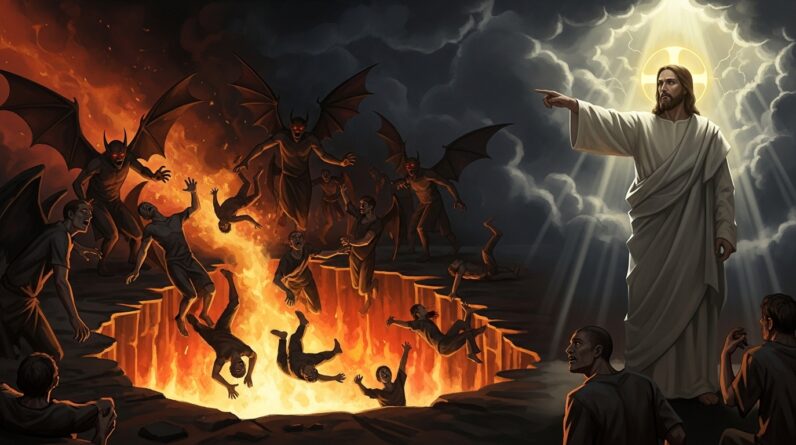
The Bible likewise uses a variety of images for hell. Jesus warns in Matthew 10:28 to “fear the One who can destroy both soul and body in hell,” which presents a sobering image linking bodily and spiritual consequence. The parable of the rich man and Lazarus in Luke 16:19–31 uses vivid, narrative elements to talk about postmortem reversal and consequence; most scholars read it as a parable with teaching purpose rather than a detailed geography of the afterlife. Revelation 20 speaks of a “lake of fire” as the final judgment—a potent image of divine justice and the end of evil.
Important clarification: many of these descriptions appear in parables or apocalyptic literature where symbolic language is expected and intentional. That means you should read images as conveying reality and meaning rather than providing a technical map of the afterlife. The Bible uses the language you understand—place, direction, and physicality—to express spiritual truth.
3. Biblical Meaning and Theological Insights
You want to understand why the biblical writers sometimes talk like heaven and hell are places and sometimes like they are spiritual realities. The key is to see how God communicates with human beings in terms they understand, and how those terms serve theological purposes.
3.1 Physical Language in Scripture
The Bible often uses spatial and physical language—terms like up, down, kingdom, outside, and lake—to describe spiritual truths. Saying something is “above” or “below” helps human minds picture unseen realities. When Scripture speaks of streets of gold or a place prepared for you, it’s using concrete imagery to anchor hope in your imagination.
You should notice that physical language in Scripture isn’t arbitrary. It’s a pedagogical tool: God communicates through human categories so you can grasp realities that transcend ordinary experience. The use of physical language doesn’t automatically mean you should read every description of heaven or hell as a literal material geography any more than you should take every parable as literal history.
3.2 Spiritual Reality and God’s Presence
At the heart of most biblical language about heaven is the relational fact of being with God. Heaven is best described as what it means to be gathered into God’s presence, to enjoy unbroken communion with Christ. That relational emphasis is consistent across many passages: heaven is not merely spatial but a qualitative experience defined by relationship.
Likewise, many biblical descriptions of hell emphasize exclusion: the pain of being cut off from God’s presence and blessing. Whether described as darkness, weeping, or fire, these images point to the agony of separation from the Source of life. So when you ask whether heaven and hell are spiritual or physical, remember this pivotal theological point: the Bible’s primary interest is in describing relational realities—being with God versus being separated—more than mapping out spatial coordinates.
3.3 Historical Christian Perspectives
You have a long tradition of Christian thinking behind you when you consider heaven and hell. Early church writers often accepted a mix of literal and symbolic readings. The medieval church popularized vivid imagery—think Dante’s Divine Comedy—which shaped many Western imaginations but also added layers of poetic elaboration not found in the biblical texts themselves. In modern times, many theologians caution against simplistic literalism while also resisting reducing heaven and hell to mere metaphors.
When you read church history, you’ll see that Christians have always grappled with balancing concrete imagery and spiritual meaning. That historical conversation should give you humility: the church wrestled with these texts because they’re profound and not easily pinned down.
3.4 Why the Bible Blends Physical and Spiritual Language
Why does Scripture mix the physical and spiritual? Partly because God accommodates divine truth to finite human minds. The Bible uses visible, familiar things—houses, rooms, fire, darkness—to teach eternal realities. That accommodation is a kindness: it gives you concepts you can hold.
Additionally, visible imagery often communicates moral and relational truths more forcefully than abstract language. When hell is described in stark images, the aim is moral urgency and sober warning. When heaven is pictured as a place prepared by Christ, the aim is comfort and assurance. Ultimately, the Bible prioritizes moral and spiritual meaning over technical cartography of eternity.
4. Connection to the Bigger Picture: Understanding Hell’s Nature
How you answer the physical vs. spiritual question will affect how you interpret judgment, justice, and what it means to be human in relation to God. If you think of hell only as a metaphysical state, you might emphasize moral separation and lose the sense of concrete consequence. If you insist on a purely material hell, you might miss the biblical emphasis on relational estrangement.
You can get a more in-depth look at these issues in the pillar article Is Hell Literal Or Figurative? That resource lays out interpretive options and theological implications in a fuller framework. For your practical life, the debate should reinforce a balanced view: take biblical language seriously without forcing it into categories it never meant to serve. The Bible wants you to understand that sin has real consequences and that God’s justice is real, while also reminding you of God’s mercy and the invitation to repent.
5. What This Means for Believers Today
You may feel a temptation to spend hours arguing about metaphysical details. While esoteric questions can be interesting, the Bible’s pragmatic thrust is pastoral: it calls you into relationship with God and a life shaped by that relationship. When you focus on the heart of the matter—your communion with God, your love for others, your participation in God’s mission—you’re responding to what Scripture emphasizes.
This perspective encourages holy living that’s rooted in hope rather than panic. If heaven is being with God and hell is separation, then your daily choices matter because they shape your orientation toward God. You’ll want to speak about eternity with humility and compassion, not triumphalism or terror. And when you engage others about heaven and hell, prioritize care and clarity: help people know God’s grace and the seriousness of moral choices.
Being careful and humble about such mysteries also frees you to lean into mission. Your confidence shouldn’t be in speculative certainty about where every image maps onto a physical point on a cosmic chart; it should be in God’s promise of redemption and restoration. That confidence equips you to love others, witness to Christ, and live in hope.
6. Related Questions and Further Reading
If you want to go deeper on themes related to death, judgment, and afterlife, these articles on BibleStoriesHub offer helpful follow-ups that expand on the core concepts in your main piece:
• Is Hell Eternal Punishment? — An approachable study of how Jesus and the New Testament describe punishment in hell and why many Christians read those passages as eternal judgment versus other interpretations.
• Do Christians Go To Heaven Immediately After Death? — A focused look at key New Testament passages about the believer’s state between death and resurrection and what it means to be with the Lord immediately.
• What Is The Soul According To The Bible? — A helpful exploration of how Scripture defines the soul, why that matters for understanding life and death, and how it shapes biblical anthropology.
7. 🔑 Key Takeaways (Summary Box)
You’ll want a clear summary after all that reading. Here are the main points to keep in mind:
- The Bible uses both physical and spiritual language to describe heaven and hell; both forms are meaningful.
- Heaven and hell are real realities in Scripture, but the Bible does not fully define them in purely material terms.
- Heaven is best described as being with God; hell is fundamentally about separation from God.
- Imagery—streets of gold, rooms, fires, darkness—teaches meaning and moral urgency, not precise measurements or coordinates.
- Scripture invites faith, repentance, and trust rather than speculative certainty about detailed mechanics.
These takeaways should guide your theology toward humility, obedience, and compassionate witness. You’re not left to guess what matters: God’s presence is the defining reality, and your relationship with God and others is the enduring call.
8. Conclusion
As you wrestle with whether heaven and hell are spiritual realms or physical places, remember the balance Scripture intends. The Bible speaks in ways that both accommodate your finite understanding and challenge it—using physical images where helpful, and emphasizing relational truths where essential. You won’t force every biblical image into a modern Cartesian map of the cosmos; instead, you’ll let Scripture shape you toward holy living, hope, and humble confidence in God’s justice and mercy.
Keep studying with curiosity and reverence. Let the Bible’s varied language—parable, narrative, prophecy, apocalyptic—teach you how God communicates with human beings. And if you want a fuller framework on the nature of hell, return to the pillar piece by following the link Is Hell Literal Or Figurative? for a comprehensive treatment.
Closing Prayer
Heavenly Father, you are greater than our concepts and nearer than our fears. Help us to trust your promises about eternity without presuming to know everything. Give us hearts that long for your presence, courage to live holy lives, and compassion for those who wander. Teach us to speak of heaven and hell with humility, clarity, and love, and draw many to your mercy. Amen.
Acknowledgment: All Bible verses referenced in this article were accessed via Bible Gateway (or Bible Hub).
“Want to explore more? Check out our latest post on Why Jesus? and discover the life-changing truth of the Gospel!”