

Old Testament Promises of God That Still Apply Today

Introduction
You might have heard people say that the Old Testament is mainly history, law, or ancient poetry — useful for context, but not directly relevant to your everyday faith. That assumption is common, but it misses a crucial point: the Old Testament doesn’t just record what God did long ago; it reveals who God is. When you read its promises carefully, you discover a consistent character: a faithful, covenant-making, promise-keeping God. Those promises are not relics; they form the backbone of the Bible’s witness and continue to speak into your life.
In this pillar article, you’ll explore the major promises God made in the Old Testament, how those promises continue through Scripture, and how they apply to life today. You’ll see examples from patriarchs like Abraham, leaders like Moses and Joshua, prophets who called a nation back to hope, and poets who praised God’s steady love. Wherever possible, you’ll find specific Scripture links so you can read the promises for yourself. If you want to go deeper into any single theme, this article points you to focused studies that unpack each promise in greater depth.
By the time you finish reading, you should feel both informed and encouraged: informed about what the Old Testament promises actually are and how theology and context shape their meaning, and encouraged that the God who spoke to ancient people still speaks and acts with the same faithfulness today.

What we mean by “God’s promises” in the Old Testament
Sponsored recommendation

When you talk about “God’s promises” in the Old Testament, you’re talking about several related but distinct things. First, a biblical promise is a declaration by God that something will happen, often anchored in a covenant or rooted in God’s character. Promises can be unconditional and covenantal — like the promise to Abraham that his descendants would become a great nation — or conditional, tied to a people’s faithfulness or obedience. There are also universal promises that flow from God’s unchanging nature: His steadfast love, justice, and presence.
Context matters a great deal. You can’t extract a sentence from a prophetic oracle or a law code and assume it means the same thing in every era. Genre matters too: the promises in narrative (stories about Abraham, Moses, David) operate differently than prophetic promises (Isaiah, Jeremiah), poetic promises (Psalms), or legal covenants (Deuteronomy). When you pay attention to genre and historical setting, you’re better equipped to see which promises were specific to Israel’s covenant role and which reflect God’s broader, ongoing character.
Finally, distinguishing between types of promises helps prevent confusion. Covenant promises often include signposts — signs, rituals, land, and genealogy — whereas universal promises show up repeatedly as themes (God will be faithful, God will be just, God will provide). Recognizing this allows you to read the Old Testament responsibly and to apply its truths faithfully in your life.
Major Old Testament promise themes that still apply
Below you’ll find the central promise themes that run throughout the Old Testament and continue to shape the life of the believer. Each theme includes examples and a short bridge to deeper material.
God’s Promise of Faithfulness
One of the clearest and most repeated truths you’ll find is that God is faithful. Even when people fail — Abraham’s mistakes, Moses’ moments of doubt, Israel’s repeated disobedience — God keeps His word. You can trace this pattern in promises to the patriarchs and in covenant commitments later reiterated to the nation. An illustrative passage is God’s reassurance of covenant faithfulness: Deuteronomy 7:9 affirms that God “keeps his covenant of love to a thousand generations.” You’ll also see faithfulness in the Psalms and prophets, as poets and seers recall God’s consistent mercy through generations. These stories show that God’s promises rest on His faithfulness, not human perfection.
Read more: God’s Faithfulness in the Old Testament: Stories That Prove His Promises
God’s Promises in Times of Fear and Anxiety
Fear is a recurrent human experience in the Old Testament — from wandering nomads to exiled communities. God’s response is often the same: calm and presence. The Old Testament includes repeated exhortations not to fear because God is with you, a theme embodied in specific verses that offer comfort. A powerful example is God’s charge to Joshua: Joshua 1:9 — “Do not be afraid; do not be discouraged, for the LORD your God will be with you wherever you go.” Isaiah captures the same comforting promise in Isaiah 41:10, where God tells you not to fear because He will strengthen and help you. When anxiety grips you, these promises invite you to remember God’s nearness and to reframe fear in light of divine presence.
Read more: God’s Promises in Times of Fear and Anxiety
God’s Promises During Uncertainty and Waiting
Waiting and uncertainty are woven through the Old Testament narrative. Abraham and Sarah waited for a child promised by God; Israel waited for deliverance in the wilderness; prophets waited for a future hope. Scripture doesn’t pretend waiting is easy, but it does offer resources for hope. For instance, God’s assurance that promises will be fulfilled in God’s timing appears in texts that remind you to persevere, trust God’s timing, and hold onto the vision even when it seems delayed. Habakkuk 2:3 speaks to the discipline of waiting: “The vision… is for an appointed time; it speaks of the end and will not prove false.” You’ll find that waiting in Scripture is reframed from passive resignation into active trust.
Read more: How God’s Promises Bring Peace During Uncertainty
God’s Promise of Strength in Human Weakness
The Old Testament is honest about human limitation. It shows leaders and ordinary people who lack strength, wisdom, or resources. God’s response is consistently to supply strength, often using weakness as the canvas for divine power. Psalmists celebrate God as a refuge and source of renewed strength, and prophetic literature emphasizes God’s empowerment for those who depend on Him. A practical example is the Psalmist’s claim that God sustains His people when they are weary: Psalm 46:1 — “God is our refuge and strength, an ever-present help in trouble.” For your life, this means you don’t have to fake strength; you can lean into God’s promise to empower you when you feel inadequate.
Read more: Promises of God for Strength When You Feel Weak
Why Old Testament Promises Still Matter Today
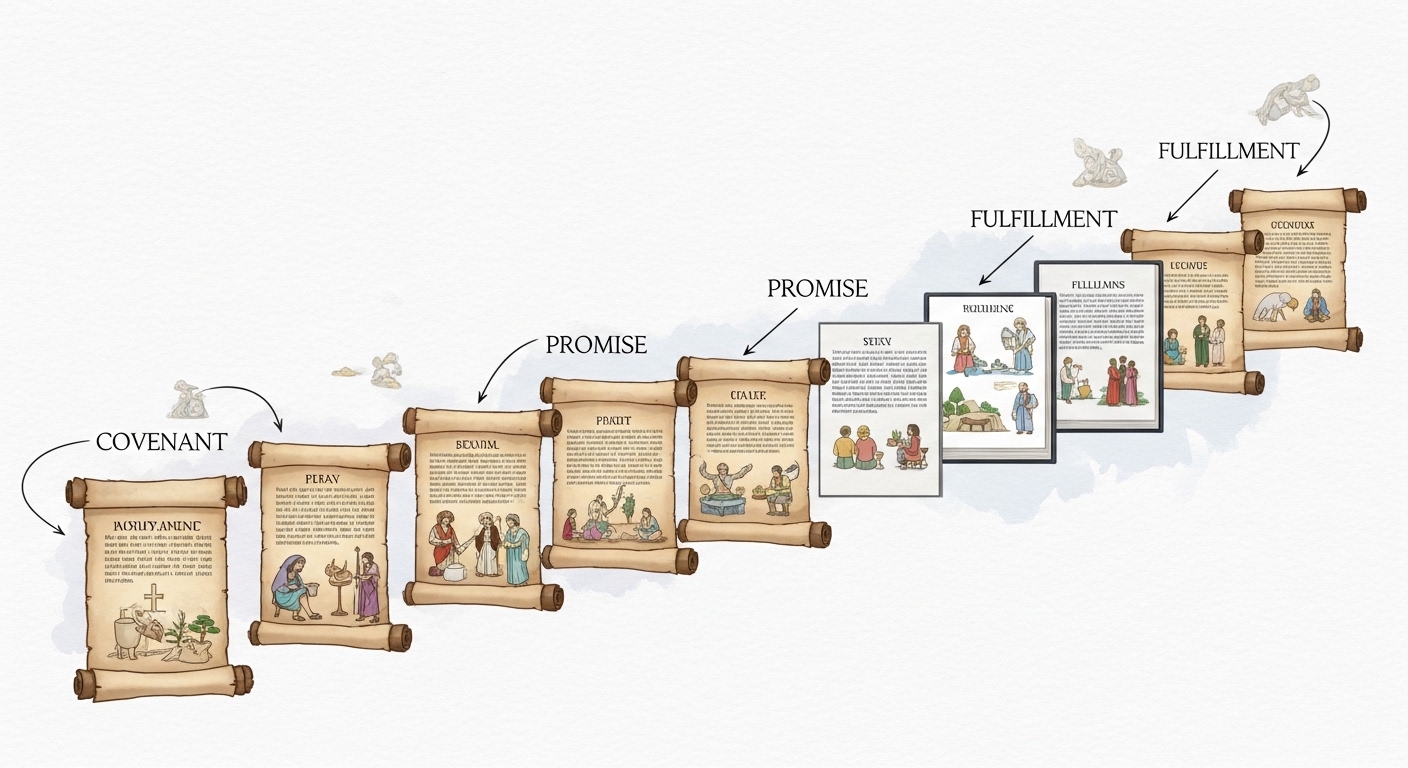
At a glance, some Old Testament promises look tied to ancient institutions — land allotments, temple rituals, tribal leadership. But you’ll find continuity because many promises reflect God’s unchanging character: faithfulness, justice, mercy, presence. The fullness of those promises often unfolds in New Testament fulfillment, but their origin and pattern lie in the Old Testament. The covenantal threads that bind God to His people show a God who initiates relationship, guides moral life, and promises ultimate restoration. Because Scripture is a unified story, the promises you read in Genesis, Exodus, and the prophets continue to inform what you believe about God and how you live today.

How Old Testament promises apply to believers today
The theological truth that God is unchanging becomes deeply practical when you translate it into daily life. Here are several ways Old Testament promises move from pages of ancient texts into your routines, relationships, and spiritual disciplines.
Prayer: When you pray, Old Testament promises shape both your posture and your petitions. You pray not to manipulate God, but to align with a God known for mercy and faithfulness. For example, when you recall God’s promise of presence (Joshua 1:9), you approach prayer with confidence that God listens and walks with you.
Trust in hardship: The Old Testament gives you examples of trusting God amid trials. Watching stories like the exodus or the exile helps you see that hardship is not the final word. Verses promising God’s steadfast love and loyalty — such as Lamentations 3:22 — anchor you to hope when circumstances are bleak.
Perseverance: The discipline of waiting and persevering is modeled throughout the Old Testament. You learn patience from Abraham and hope from the prophets. When you face delays or apparent setbacks, claim promises about God’s timing (see Habakkuk 2:3) and remember that persistence is often part of faithful response.
Identity rooted in God’s faithfulness: Your identity can be unstable if it rests on performance, social status, or success. Old Testament promises reorient identity toward God’s covenantal faithfulness. When God declares Himself as the keeper of promises, you can ground your worth in being known and loved by a faithful God (see Deuteronomy 7:9) rather than on fluctuating external measures.
Ethics and justice: Many Old Testament promises carry ethical implications. Promises of blessing are often paired with calls to justice, mercy, and humility. When God promises to bless a society that cares for the vulnerable, that promise invites you to live in ways that affirm dignity and justice.
Corporate life and worship: The Old Testament shaped communal worship and corporate identity in Israel. Even though the forms have changed, the functions — remembering, confessing, praising, and anticipating God’s faithfulness — still shape your congregation’s life. Rituals and liturgies that recall God’s promises encourage a community to remember where hope comes from and to act as a visible sign of God’s purposes.
Practical encouragement: Finally, the Old Testament gives you concrete promises you can claim in prayer. For presence: Deuteronomy 31:6 — “The LORD himself goes before you… he will not fail you or forsake you.” For provision: Psalm 23:1 — “The LORD is my shepherd; I lack nothing.” These texts provide a vocabulary for bringing real needs before a God who hears and acts.
If you’re building a faith-based website or ministry and want a fast, reliable place to publish biblical content like this, choosing the right hosting matters. A dependable host helps ensure your articles stay accessible, secure, and easy to manage as your site grows. Hostinger offers affordable, beginner-friendly hosting that works well for Scripture-based blogs and long-form teaching sites.  Start a website with Hostinger →

Common misunderstandings about Old Testament promises
When you try to bring Old Testament promises into your present life, misunderstandings can arise. Addressing them carefully protects you from misapplication without draining the promises of their power.
“Those promises were only for Israel”: Some promises were indeed given within the context of Israel’s covenant and its specific role in history. For example, certain land promises concern the historic people of Israel. Yet many promises reflect God’s character and are broader. Distinguishing between context-specific and universal promises helps you recognize what legitimately applies to you and what belongs to a particular covenantal situation.
“Promises mean immediate blessing”: The Old Testament sometimes ties blessing to obedience, but it also includes narratives of faithful people undergoing hardship and delay. Abraham, for instance, waited many years before God’s promise of descendants visibly unfolded (Genesis 12:2, Genesis 15:6). Promises should regulate your hope, not your expectations of swift, untroubled outcomes.
“The Old Testament doesn’t apply anymore”: If you think the Old Testament is obsolete, you’ll miss the theological roots of the New Testament and the continuity of God’s work. The Bible is a unified story; Old Testament promises often reach their fullest meaning through later revelation, including the life and work of Jesus. But even apart from fulfillment narratives, the Old Testament teaches you about God’s consistent character: mercy, holiness, justice, and faithfulness.
What carries forward and what was context-specific: The key skill is discerning which promises are tied to particular covenant forms and which express God’s enduring attributes. Good biblical interpretation values genre, historical context, and the broader biblical canon. Rather than dismissing promises wholesale, you’ll find yourself asking: Is this promise rooted in God’s character or in a specific covenant stipulation? That question helps you apply Scripture responsibly.
Key takeaways
- God’s promises reveal His unchanging character and intention to be faithful.
- Many Old Testament promises still guide faith and practice today, though some are covenant-specific.
- Context and genre help you distinguish universal truth from particular stipulations.
- Remembering God’s faithfulness anchors your hope in every season.
Related articles in this promises cluster
Each of the following articles explores one dimension of God’s promises in greater depth.
- God’s Faithfulness in the Old Testament: Stories That Prove His Promises
- God’s Promises in Times of Fear and Anxiety
- How God’s Promises Bring Peace During Uncertainty
- Promises of God for Strength When You Feel Weak
If one of the themes above resonated with you, follow the link to dive deeper into that specific promise and see more biblical examples, practical applications, and reflective questions.
Conclusion
You don’t have to decide between a reverent appreciation for Scripture and practical use of it in daily life. The Old Testament is not simply a collection of ancient commands and stories; it’s a portrait of a God who makes and keeps promises. That portrait teaches you to trust in God’s presence, to persevere when waiting, and to find strength when you feel weak. Even when promises came to specific people and contexts, they often reflect a broader divine character that remains present and active in your life. When you read the Old Testament with attention to context and with an eye for continuity, you’ll find a treasure trove of promises that shape your faith, inform your ethics, and comfort you in trouble.
Trust grows when you remember that God’s promises are rooted in His unchanging character. As you live day to day, let the steady narrative of God’s faithfulness encourage you: the same God who kept covenant promises to people centuries ago is at work with you now.
Prayer
Thank you, Lord, for your steadfast love and faithfulness through every generation. Help me to trust your promises today and to live in the hope they inspire.
Bible verses cited (quick reference)
- Genesis 12:2
- Genesis 15:6
- Exodus 3:14
- Deuteronomy 7:9
- Joshua 1:9
- Isaiah 41:10
- Psalm 46:1
- Psalm 23:1
- Habakkuk 2:3
- Lamentations 3:22
- Deuteronomy 31:6
- 2 Samuel 7:16
- Psalms 119:90
- Jeremiah 29:11
Acknowledgment: All Bible verses referenced in this article were accessed via Bible Gateway (or Bible Hub).
“Want to explore more? Check out our latest post on Why Jesus? and discover the life-changing truth of the Gospel!”