

Lessons From The Life Of David: Faith, Failure, And God’s Grace

Few Bible figures reveal both the beauty of faith and the reality of failure like David. You see a young shepherd who trusts God with a sling, a king who writes songs that steady the soul, and a sinner who faces the consequences of choices—and finds a path back through genuine repentance. David’s life doesn’t present a polished, perfect hero; it shows a real person whose highs and lows teach you how faith looks when it is lived, tested, broken, and restored.
You’ll recognize pieces of your own story in David’s: courage when fear seems overwhelming, ambition that can tip into poor choices, the sting of consequences, and the surprising reach of God’s grace. This article will walk you through David’s life, draw practical lessons about faith, failure, and grace, and give you everyday ways to live out those lessons. By the end, you’ll have concrete practices to help you follow God more faithfully—even when you stumble.

Who Was David?
David lived during the late Iron Age, roughly in the 11th–10th centuries BCE, a pivotal time for Israel as it transitioned from tribal confederation to monarchy. He started as a humble shepherd in Bethlehem, the youngest son of Jesse, was anointed by the prophet Samuel, and rose to become Israel’s second king. His life spanned roles: musician, warrior, poet, fugitive, statesman, and father.
You’ll find his story across several books of the Bible: his anointing and rise in 1 Samuel, his kingship and failures in 2 Samuel, and many of his heart-cry prayers in the Psalms. If you want a focused look at primary historical accounts, begin with these passages: 1 Samuel 16:11–13 and his decisive confrontation with Goliath in 1 Samuel 17:45. For his household and royal struggles, consult 2 Samuel 11:2–5 and his painful repentance in Psalm 51:1–4.
Sponsored recommendation

The Defining Moments of David’s Life
David’s story is a sweep of contrasts: small beginnings to national prominence, bold trust to terrible failure, creative worship to political messiness. Each stage offers a defining moment you can learn from.
- Shepherd to anointed servant: As a young shepherd, David was anointed by Samuel while still tending sheep—an outsider choice that revealed God values the heart. See 1 Samuel 16:11–13.
- Goliath and public courage: Facing Goliath, David refused the armor of King Saul and trusted the Lord with a sling and a stone. That bold trust is captured in 1 Samuel 17:45.
- Popular hero to persecuted fugitive: After success, jealousy from Saul forced David into years of hiding; he learned patience, humility, and restraint.
- King on the throne: David united Israel, established Jerusalem as a spiritual center, and brought the ark of the covenant home.
- Bathsheba and deep failure: His adultery with Bathsheba and the arranged death of her husband Uriah became David’s darkest chapter. Read the account in 2 Samuel 11:2–5.
- Repentance and restoration: When confronted by Nathan, David confessed and sought forgiveness, giving the world some of the most honest penitential writing in Psalm 51:1–4.
- Legacy: Though his family and reign were marred by conflict, David’s heart for God and his psalms shaped Israel’s worship and point forward to messianic hope.
Each of these moments holds lessons you can apply to daily life: humility before calling, radical dependence when fear stalks you, the cost of moral compromise, and the possibility of genuine repentance.

What David Teaches You About Faith
David’s faith is not abstract. It’s practical, audible in songs, and visible in deeds. Here are key lessons you can adopt.
1. Faith trusts God more than circumstances
When you face giants—literal or metaphorical—David models choosing God’s strength over human resources. He didn’t wear Saul’s armor because it belonged to someone else’s way of fighting; instead, he trusted God with the tools God had given him. Read his bold claim in 1 Samuel 17:45. For you, faith often means using what you have: a prayer, a small action, a faithful refusal to give in to fear.
2. Faith shows up in worship and honesty
David wrote songs that named pain, joy, fear, and praise. His Psalms are raw—sometimes triumphant, sometimes broken. You can build your faith by cultivating honest worship: speak to God openly in prayer, write your heart out, and let worship shape your view of God. Psalm 23 displays that pastoral trust in God’s care: Psalm 23:1.
3. Faith grows through trials and waiting
David’s years on the run taught him patience and dependence. When God’s timeline differs from yours, remember David’s endurance through trials where he often turned to prayer and praise rather than revenge. His experiences show that waiting with faith refines character and deepens trust.
4. Faith is humble before God’s authority
Even as king, David submitted to prophetic correction. When Nathan confronted him after Bathsheba, David responded in contrition rather than justification. You can practice humility by inviting correction, listening to godly counsel, and aligning your choices with God’s revealed truth. This posture prevents pride from derailing your relationship with God.
5. Faith is courageous but not reckless
David’s courage didn’t mean courting danger for show. It meant informed courage—he knew the risks, but he also knew God’s presence. You can emulate this by acting with prayerful discernment, not impulsive bravado, and by aligning risk with obedience to God rather than pride.
What David Teaches You About Failure
Failure is part of the human story, and David’s fall makes that painfully clear. But it’s not only the fall; it’s the response that matters.
David’s affair with Bathsheba and the subsequent attempt to cover it up teach you the cost of moral compromise. The narrative in 2 Samuel 11:2–5 shows how an initial lapse can become a cascade of poor choices. It’s easy to rationalize, but the consequences often extend beyond you to harm others you love.
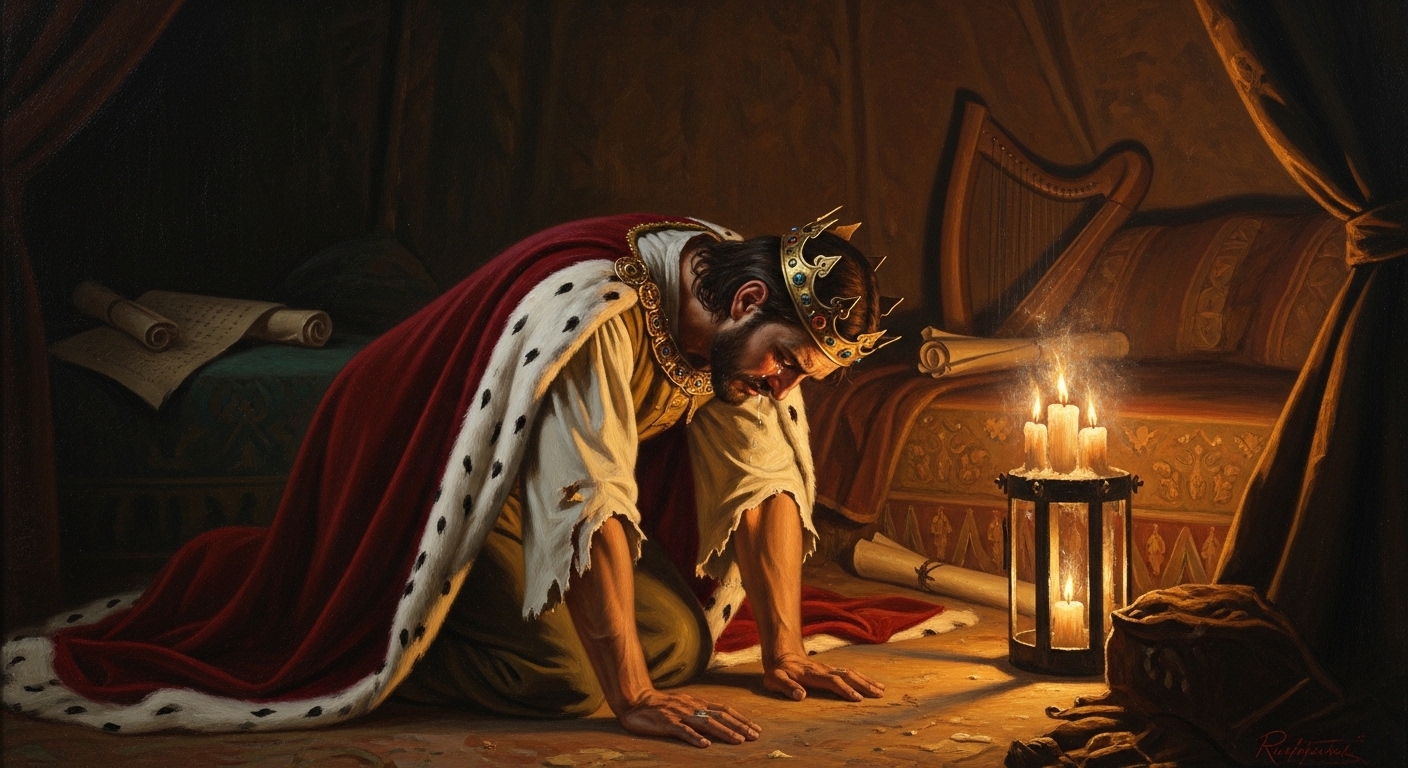
Yet David also models the right response: honest confession and sorrow. When Nathan exposed the sin, David didn’t minimize it. He owned it and cried out for mercy in Psalm 51:1–4. For you, failure will come—sometimes from weakness, sometimes from willful wrong—but the path forward includes these steps: acknowledge the wrong, name it before God and trusted people, accept consequences when they come, and seek active restoration.
David’s life also warns you that forgiveness doesn’t always erase consequences. Even after God forgave him—see 2 Samuel 12:13—David faced lasting turmoil within his family and kingdom. You should remember that grace and consequence can coexist: God’s forgiveness is real and powerful, yet earthly results may remain. That reality should make you sober, not despairing.
What David Teaches You About God’s Grace
David’s story is ultimately a testament to God’s grace—generous, transformative, and practical. Grace appears most clearly in three ways.
First, God chose David despite his humble status and imperfections. The prophet Samuel anointed the youngest son, rejecting human assumptions about worth or ability (1 Samuel 16:11–13). That choice says God’s standard is heart-attitude, not social status or outward perfection. For you, this means your past or present doesn’t disqualify you from God’s calling.
Second, God forgives when you repent. Nathan’s confrontation led David to a deep confession captured in Psalm 51:1–4, and the prophet declared God’s pardon in 2 Samuel 12:13. This shows that grace meets genuine sorrow and seeks to restore relationship.
Third, grace reshapes your legacy. Even though David’s family suffered, his heart for God influenced generations. Acts reflects this when it calls David “a man after God’s own heart” despite his failures (Acts 13:22). Grace doesn’t excuse sin, but it invites you into a renewed life where your life—even with scars—can point to God’s mercy.
Grace also means God disciplines rather than abandons. After the sin with Bathsheba, God held David accountable, which is a form of loving correction that aims to restore and refine. The combination of mercy and holy accountability can help you grow rather than remain stuck in shame.
How You Can Live This Out Today
David’s life gives you practical rhythms and choices to emulate. Here are ways to practice faith, handle failure, and rely on grace in everyday life.
- Cultivate honest prayer and songwriting/journaling: David expressed his fears, joys, and regrets openly. Start a prayer journal where you write to God as David wrote the Psalms. It will deepen your awareness of God’s presence.
- Practice immediate confession and accountability: Don’t let sin fester in silence. If you stumble, name it to God and a trusted friend or mentor. Confession opens the door to healing and prevents a cascade of cover-ups.
- Develop worship habits that speak truth to your moments: When fear rises, lean on Psalms that reflect trust, such as Psalm 23:1–4. Singing, meditating, or memorizing verses helps reorient your heart.
- Choose humble leadership and willingness to receive correction: If you’re in leadership, remember David’s example—allow prophetic voices and be willing to evaluate and confess. Humility preserves integrity and invites constructive change.
- Make courage a practiced muscle: Small acts of faith build your capacity for larger ones. Step out in small, obedient risks and let God confirm your steps before you take bigger leaps.
- Accept that forgiveness doesn’t always remove consequences: If your choices have hurt others, expect the process of restoration to take time. Seek reconciliation and accept outcomes with a posture of learning and perseverance.
These are everyday moves you can start this week. Faith is not only a grand moment; it’s a thousand little acts of trust, honesty, and obedience.

Related Bible Characters Who Show Similar Faith
- Joseph — trust during injustice
Joseph’s trust when sold into slavery and imprisoned shows faithful endurance when life feels unfair. Anchor: trusting God when life feels unfair → /characters/joseph - Job — faith in deep suffering
Job’s resilience and honest wrestling with God offer companionship for those holding on in overwhelming loss. Anchor: holding on in overwhelming loss → /characters/job - Ruth — loyalty in uncertainty
Ruth’s faithfulness in choosing loyalty over security shows faithfulness in uncertain seasons. Anchor: choosing faithfulness in an unknown future → /characters/ruth - Esther — courage to step forward
Esther models the courage to act at a critical moment for the good of others, reflecting David’s decisive bravery in battle. Anchor: courage for a critical moment → /characters/esther
Each of these figures complements David: Joseph’s integrity in hardship, Job’s perseverance, Ruth’s loyalty, and Esther’s boldness. Link their stories to your life by identifying which season you’re in and reading the related passages for encouragement.
Final Encouragement
David’s life invites you to hold complexity—faith that acts, failure that humbles, and grace that restores. You don’t have to be flawless to be used by God. You do have to be honest, repentant, and willing to trust again. God called David not because he was perfect but because he was teachable and turned back to God when he went astray. That promise is for you as well.
Key verse for reflection: Psalm 23:1 — “The Lord is my shepherd, I lack nothing.” Let that phrase settle in you today as a reminder that God’s care is both personal and practical.
Reflection question: What “giant” in your life is God inviting you to face with faith, and what small step can you take today to trust Him?
Short prayer: Lord, give me a heart like David’s—one that seeks You in triumph and in failure. Help me to confess honestly, to receive Your correction, and to walk forward in the strength of Your grace. Amen.
Suggested Bible passages for further reading:
- David anointed: 1 Samuel 16:11–13
- David and Goliath: 1 Samuel 17:45
- David’s failure with Bathsheba: 2 Samuel 11:2–5
- David’s repentance: Psalm 51:1–4
- God’s forgiveness through Nathan: 2 Samuel 12:13
- Acts on David’s heart for God: Acts 13:22
Sponsored recommendation
Acknowledgment: All Bible verses referenced in this article were accessed via Bible Gateway (or Bible Hub).
“Want to explore more? Check out our latest post on Why Jesus? and discover the life-changing truth of the Gospel!”