


His Mercy Endures Forever – Psalm 136:1 Explained
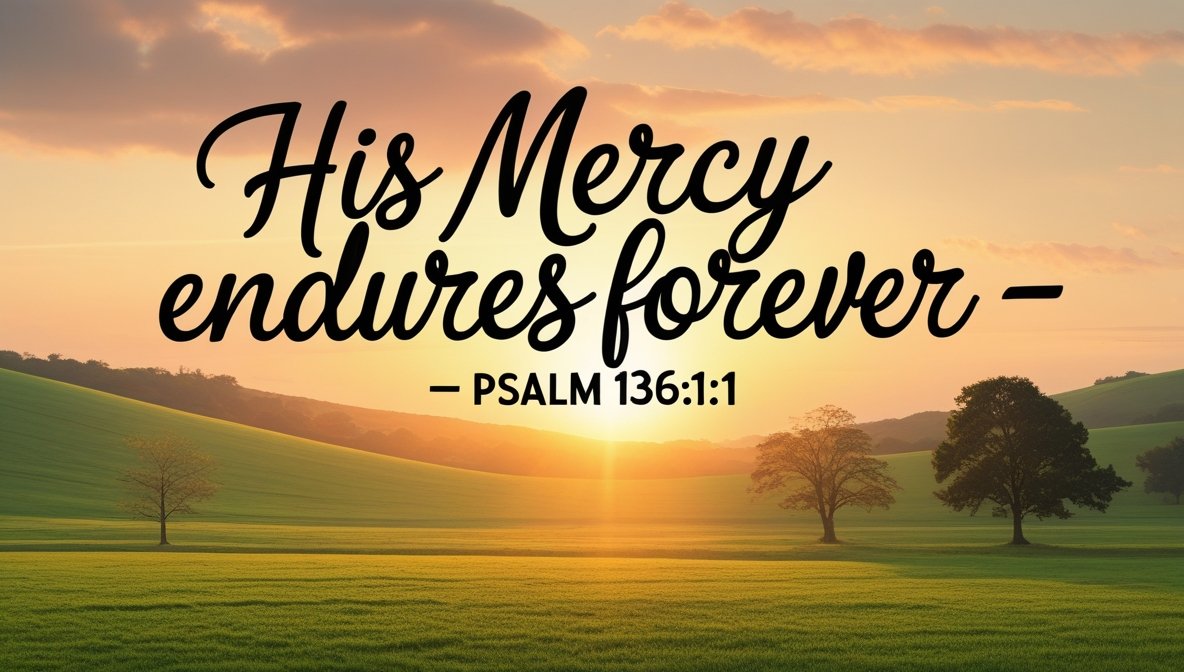
You’re probably familiar with the timeless words of Psalm 136. It’s the sort of passage that stays with you, echoing in your heart with a melody both ancient and ever new. In particular, Psalm 136:1 stands out with its recurring assurance of divine kindness:
“Give thanks to the Lord, for he is good. His mercy endures forever.”
This declaration isn’t poetic exaggeration—it’s a foundational truth of faith.
Many believers read this verse but still wonder what it truly means for daily life, healing, and faith today. In this guide, we’ll break down the historical context, the spiritual depth behind the phrase “His mercy endures forever,” and how you can personally apply it in prayer and trust in God.
Sponsored recommendation


The Nearness of God’s Goodness
The opening words of Psalm 136:1 invite you into gratitude: “Give thanks to the Lord, for he is good.”
This is not just instruction—it’s perspective.
The psalmist anchors worship in God’s character. Gratitude becomes an act of faith, especially when life feels uncertain. You may not always see immediate evidence of goodness in circumstances, but this verse calls you to trust in the unchanging goodness of God Himself.
His Mercy Endures Forever: A Timeless Assurance
The phrase “His mercy endures forever” appears in every verse of Psalm 136. That repetition is intentional. It reinforces a truth that must be remembered again and again.
The word “endures” suggests permanence, stability, and reliability. In a world where everything shifts, God’s mercy does not.
When Scripture says His mercy endures forever, it declares that God’s compassion is not seasonal, not temporary, and not conditional on human performance. It is covenantal and constant.
The Hebrew Word for Mercy: Chesed
To understand this more deeply, we look at the Hebrew word chesed.
Chesed means steadfast love, covenant loyalty, faithful kindness. It is mercy rooted in commitment.
God’s mercy is not random kindness—it is relational faithfulness. It means He binds Himself to His people with enduring love. Even when people fail, His covenant love remains.
An Enduring Legacy Through Generations
Throughout biblical history, God’s mercy is visible in the lives of:
-
Abraham
-
Moses
-
David
Each story shows that mercy adapts to circumstances but never diminishes. It spans generations.
This means you are not outside that promise. You stand within a long history of people sustained by enduring mercy.

Experiencing God’s Mercy Daily
God’s mercy is not just theological—it’s experiential.
You see it in:
-
Unexpected provision
-
Restoration after failure
-
Peace during hardship
-
Strength when you feel weak
When you train your heart to notice these moments, Psalm 136:1 becomes lived reality rather than abstract doctrine.
The Universality of Mercy
God’s mercy is universal in invitation. It is not reserved for the spiritually elite.
Whether you are deeply rooted in faith or just beginning to explore it, the promise stands: His mercy endures forever.
That means you belong in the story of grace.
Mercy as a Call to Action
Receiving mercy also means reflecting it.
When you forgive, serve, extend patience, or choose compassion over retaliation, you mirror the mercy you have received.
Mercy transforms communities when it moves from doctrine to action.
How Mercy Transforms Lives
Understanding that God’s mercy endures forever changes how you see yourself.
It turns:
-
Guilt into forgiveness
-
Shame into restoration
-
Fear into confidence
-
Isolation into belonging
Mercy heals identity. It reshapes relationships. It fuels courage.
Biblical Examples of Mercy
Scripture provides powerful illustrations of enduring mercy:
-
Joseph extending forgiveness instead of revenge.
-
The parable of the Prodigal Son in Gospel of Luke showing a father welcoming back a rebellious child.
These accounts reveal that mercy restores not only individuals but entire families and futures.
The Role of Faith in Recognizing Mercy
Faith allows you to see mercy even when circumstances are unclear.
It’s easy to recognize mercy in blessing. It’s harder—but deeper—to recognize mercy in correction, delay, or refinement.
Faith anchors you in the truth that God is still good, still present, still merciful.
Modern Relevance of an Ancient Promise
Psalm 136 may be ancient, but its message is profoundly relevant.
In times of uncertainty, anxiety, and rapid change, the promise that God’s mercy endures forever becomes a stabilizing force.
It reassures you that divine love does not expire.
What Does This Mean for Us Today?
This passage is not only poetry—it speaks directly to modern believers.
It reminds us that God’s character does not change with circumstances. His mercy remains active in suffering, available in failure, and present in restoration. Whether you are facing loss, uncertainty, or spiritual dryness, this truth invites you to depend fully on Him.
Because Scripture is living and active, its encouragement still strengthens hearts right now.
Frequently Asked Questions
What is the main message of Psalm 136:1?
The central message is that God’s goodness and mercy are constant and everlasting, inviting believers to respond with gratitude and trust.
How can I apply this Scripture in everyday life?
You can practice daily gratitude, remember God’s past faithfulness, and reflect His mercy through forgiveness and compassion toward others.
Why is this passage important for Christians today?
It reassures believers that God’s character does not change and that His covenant love remains secure in every season of life.
Continue Growing in Scripture
If this study encouraged you, you may also like:
• [7 Bible Verses About Faith in Hard Times]
• [Faith Over Fear: How To Stand Strong In Uncertain Seasons]
• [Why God Allows Suffering – A Biblical Perspective]
Conclusion: Living in the Light of Enduring Mercy
As you reflect on Psalm 136:1, let it reshape your perspective.
God’s mercy is not temporary. It does not fluctuate with your performance. It is steadfast, covenantal, and eternal.
Live in that assurance.
Rest in that promise.
Reflect that mercy.
His mercy endures forever—and that forever includes today.
A Short Prayer Based on This Passage
Lord, thank You that Your mercy endures forever. When I feel weak or uncertain, remind me that Your love does not fail. Help me receive Your mercy fully and extend it generously to others. Anchor my heart in Your goodness today. Amen.
Explore More
For further reading and encouragement, check out these posts:
👉 7 Bible Verses About Faith in Hard Times
👉 Job’s Faith: What We Can Learn From His Trials
👉 How To Trust God When Everything Falls Apart
👉 Why God Allows Suffering – A Biblical Perspective
👉 Faith Over Fear: How To Stand Strong In Uncertain Seasons
👉 How To Encourage Someone Struggling With Their Faith
👉 5 Prayers for Strength When You’re Feeling Weak

📘 Jesus and the Woman Caught in Adultery – Grace and Mercy Over Judgement
A powerful retelling of John 8:1-11. This book brings to life the depth of forgiveness, mercy, and God’s unwavering love.
👉 Check it now on Amazon
Sponsored recommendation
Acknowledgment: All Bible verses referenced in this article were accessed via Bible Gateway (or Bible Hub).
“Want to explore more? Check out our latest post on Why Jesus? and discover the life-changing truth of the Gospel!”