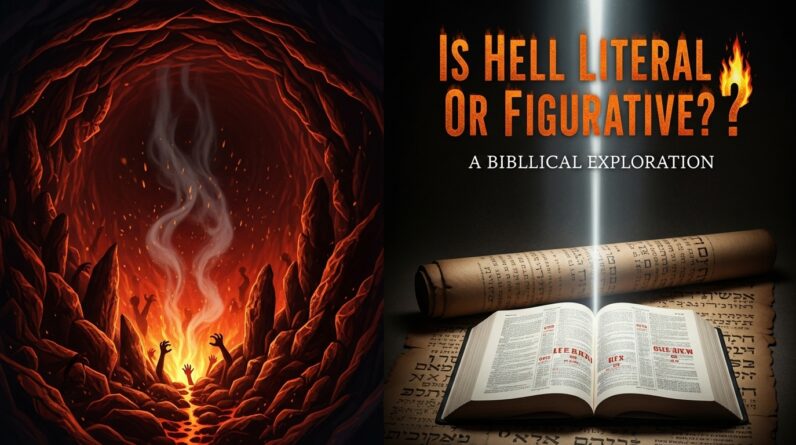


Is Hell Described As Literal Fire Or Symbolic Imagery?
Image 3 — After Modern Connection
Prompt: “Realistic interior of an ancient home where a family studies Scripture by oil lamp light; warm, soft lighting, authentic Middle Eastern artifacts, reverent tone, no modern faces.”

INTRODUCTION
You’ve probably asked the question: is hell described in the Bible as literal fire, or is the language mostly symbolic? That question matters because it shapes how you understand God’s justice, Christ’s mercy, and your daily trust in Him. When this topic comes up in a sermon, Bible study, or an anxious moment, you want clarity rooted in Scripture, not speculation. God’s purpose includes truth that protects your faith and gives hope, and that’s exactly what you need when wrestling with difficult teachings.
This article will walk you through what Scripture actually says, how the biblical writers used fire-language, and how to hold these images with Christ at the center of your thinking. Along the way, you’ll see connections to God’s justice and mercy, and practical ways to live in the light of what the Bible teaches (see also Heaven and Hell Explained: What the Bible Really Says About Eternity for further reading). You’ll come away able to explain the biblical material to others without sensationalism and with pastoral clarity.

Is Hell Described As Literal Fire Or Symbolic Imagery? — SIMPLE BIBLICAL MEANING
In simple terms, the Bible uses images of fire to describe the final judgment and separation from God, but it also employs symbolic language to communicate spiritual realities that go beyond physical description. The biblical authors used the language of fire because it carried powerful associations: purification, destruction, light, and pain. For believers, the key takeaway is not to choose between “literal” or “symbolic” as mutually exclusive categories but to interpret those images in the light of Christ’s revelation and the whole counsel of Scripture. You should keep Christ’s victory and the gospel’s call to repentance as the center of how you live in light of these warnings.
WHAT DOES THE BIBLE SAY ABOUT IS HELL LITERAL FIRE OR SYMBOLIC IMAGERY?
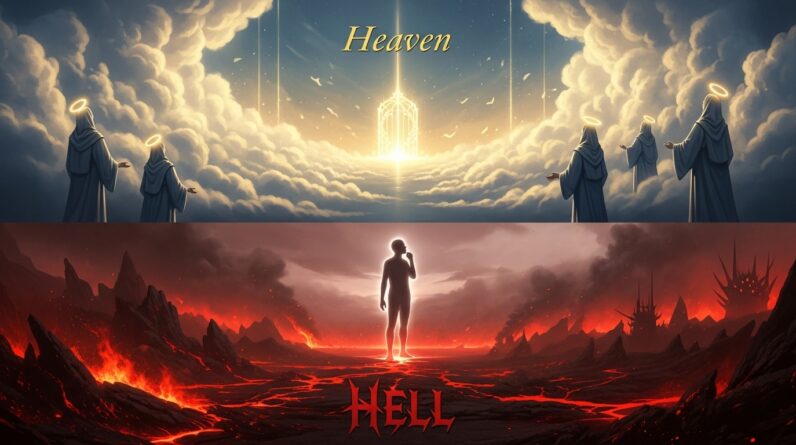
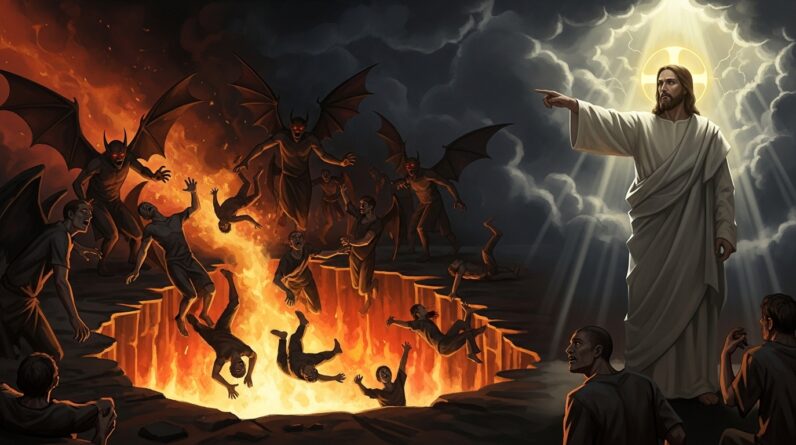
The Bible speaks of fire in connection with final judgment, eternal punishment, and destruction. Verses such as Matthew 25:41 and Revelation 20:14-15 describe judgment with strong imagery, including “eternal fire” and the “lake of fire.” Jesus also warns about Gehenna (a term he used drawing from a real place associated with judgment) in passages such as Mark 9:43-48. At the same time, prophetic literature like Isaiah 66:24 and parables like the rich man and Lazarus in Luke 16:19-31 use images meant to warn and teach moral truths rather than provide a technical physical description. Thus, Scripture often combines vivid imagery with theological purpose: to call people to repentance and to point to God’s holiness and the seriousness of rejecting Him.
📖 BIBLE FOUNDATION
Quoted verses:
- “Then he will say to those on his left, ‘Depart from me, you who are cursed, into the eternal fire prepared for the devil and his angels.’” — Matthew 25:41 (Jesus speaking to his disciples and the gathered nations during the Olivet/eschatological discourse; context: final judgment imagery in Matthew 24–25).
- “Then death and Hades were thrown into the lake of fire. The lake of fire is the second death.” — Revelation 20:14-15 (John’s apocalyptic vision to churches; context: the consummation of all things and final judgment).
Speaker and audience:
- In Matthew 25:41, Jesus is the speaker addressing a mixed audience: disciples and those listening to his teaching about the coming kingdom and final judgment. His words aim to reveal the moral seriousness of entering God’s kingdom.
- In Revelation 20:14–15, John the revelator records an apocalyptic vision given to the early churches; the passage addresses believers living under persecution, assuring them that God will ultimately judge evil and vindicate righteousness.
Historical and biblical context:
- First-century Jewish and early Christian readers understood images of fire in light of Old Testament motifs: God’s refining fire (e.g., Malachi 3:2-3), consuming fire in judgment (e.g., Deuteronomy 4:24), and the valley of Hinnom (Gehenna) outside Jerusalem that became a symbol of judgment. Jesus draws on these images to warn his hearers that rejecting God has eternal consequences. In Revelation, symbolic, apocalyptic language communicates cosmic truths: the final defeat of evil and the restoration of creation under Christ’s reign.
UNDERSTANDING GOD’S PURPOSE, PROTECTION, AND PROMISE
When you examine passages about hell and fire, the core theological truth is that God’s ultimate purpose is the vindication of His righteousness and the establishment of a holy kingdom under Christ. Fire-language underscores God’s holiness and the reality that evil cannot coexist with His presence. That said, God’s primary posture toward sinners in Scripture is redemptive: He calls you to repentance, offers forgiveness through Christ (see Romans 6:23), and promises that nothing can separate those who are in Christ from His love (Romans 8:38-39). The emphasis on judgment is paired with invitations to turn to Jesus. So, while images of punishment are sobering, they exist within a biblical call to faith, not as an end in themselves.
God’s sovereignty means He will execute justice in holiness; Christ’s supremacy means salvation is found in Him alone; and faith over fear means you rest in His promises rather than in trying to interpret every image literally as a mere physical description. Interpretations that ignore the gospel’s centrality or suggest God delights in torment are inconsistent with the biblical witness of a God who is merciful and just.
🌊 GOING DEEPER — BIBLICAL CONTEXT
Cross-references:
- Mark 9:43-48 (Jesus’s warning about sin and Gehenna)
- Luke 16:19-31 (the rich man and Lazarus)
- Revelation 21:1-4 (the new heaven and new earth, contrasting final judgment with God’s restorative promise)
- 2 Thessalonians 1:7-9 (judgment for those who oppose God, revealing God’s righteous retribution)
Narrative example:
- Consider the parable-like account in Luke 16:19-31, where Jesus tells of a rich man and Lazarus. The rich man experiences torment after death, separated from Abraham’s side. Jesus uses vivid imagery to teach about moral consequences and the fixed nature of the afterlife once history has run its course. The story functions as a moral warning and reveals God’s concern for the poor and oppressed, not as a geographic travelogue.
Theological continuity:
- Throughout Scripture, images of fire serve multiple theological functions: they are purgative (refining), punitive (judgment), and figurative (communicating spiritual realities). You should read fire- imagery in the context of God’s character: holy, just, loving, and merciful. This keeps your theology balanced and avoids turning God into an image of arbitrary cruelty. For more on how the Bible balances judgment and mercy, see How Salvation Works.
DOES IS HELL LITERAL FIRE OR SYMBOLIC IMAGERY GUARANTEE PROTECTION, SUCCESS, OR FINANCIAL BLESSING?
No—teachings about hell and judgment do not guarantee protection, success, or financial blessing for believers. The Bible does not connect acceptance of divine warnings with material prosperity as a sign of God’s favor. In fact, Scripture often warns that faithful following of Christ may involve hardship, loss, and even persecution (see John 16:33 and 2 Timothy 3:12). Promises of blessing in Christ are primarily spiritual—assurance of forgiveness, adoption into God’s family, and the hope of resurrection (1 Peter 1:3-5). Beware prosperity theology that reads warnings about judgment as leverage for financial promises; Scripture corrects that error by teaching that godliness with contentment is great gain (1 Timothy 6:6).
💡 MODERN CONNECTION — FAITH, ANXIETY, AND DAILY LIFE
When you face anxiety about afterlife imagery—whether hell is a literal furnace or a symbolic way of describing separation from God—apply Scripture to calm your fears and guide your actions. First, focus on Christ’s work for you: He bore your sin and offers forgiveness to anyone who trusts in Him (1 John 1:9; Romans 10:9-10). Second, let the warnings deepen your compassion and urgency in sharing the gospel—your confidence should be gospel-shaped, not fear-driven. Third, practice worship, repentance, and faithful obedience as remedies for anxious speculation. When you anchor your hope in Christ rather than in trying to map out metaphysical details, you’ll be more effective in both worship and witness.

🛠️ Faithful Stewardship Tip For believers who feel called to teach or share biblical truth online, choosing a dependable hosting platform is a wise stewardship step. Hostinger offers reliable website hosting that helps you create and share faith-based resources responsibly and securely.
ANGELS / PROMISE / DOCTRINE AND GOD’S PROTECTION
You should remember that Christian trust rests in God’s authority, not in angels or apocalyptic signs. Angels in Scripture are servants of God’s purposes (see Hebrews 1:14), and God’s protection is ultimately in Christ, not in a specific spiritual token. Doctrine about judgment serves to call people to repentance and to encourage holy living. As you interpret images of fire, align your convictions with Christ’s lordship and the promise that He will make all things new (Revelation 21:5). Place your faith in God’s character—His holiness, justice, and mercy—rather than in apocalyptic speculation.
❤️ PRACTICAL APPLICATION
- Read and memorize gospel-centered passages that ground you in Christ, such as Romans 8:1 and John 3:16.
- When teaching others, explain biblical imagery honestly: note symbolic elements and point listeners to the gospel rather than to sensational details.
- Use warnings about judgment to fuel compassion: pray regularly for those who don’t know Christ and share the gospel with clarity and love.
- Practice spiritual disciplines—prayer, Scripture reading, community—that replace anxious speculation with faithful obedience.
- Encourage children and new believers with gospel hope, not fear-driven motives; explain biblical truth in age-appropriate, grace-filled ways.
🪞 FAITH REFLECTION BOX
Take a moment to reflect: do you lean toward fear or toward hope when you read Bible passages about judgment? Ask God to replace anxious curiosity with gospel confidence, and to make you a faithful witness who speaks truth and love to others.
A PRACTICAL TAKEAWAY
- The Bible uses fire imagery for both literal-sounding and symbolic purposes.
- Fire symbolizes God’s holiness, purification, and the seriousness of judgment.
- Christ’s death and resurrection are the center of hope against all fear of condemnation.
- Warnings about hell are pastoral tools intended to bring people to repentance.
- Your response should be mercy-driven evangelism and faithful living, not sensationalism.
❓ Q&A — BIBLE ANSWERS EXPLAINED
Q1 — Do Christians need to fear literal eternal fire doctrinally?
A1 — Scripture teaches Christians are secure in Christ’s salvation if they truly trust Him (John 10:28-29), so your focus should be on faith and obedience rather than fear of a literal furnace.
Q2 — How should I answer someone worried about the physical reality of hell?
A2 — Point them to the gospel: repentance and faith in Jesus are central (Acts 3:19); explain the Bible uses vivid images to warn, not to satisfy curiosity about metaphysical detail.
Q3 — Is teaching that hell is metaphorical a denial of God’s justice?
A3 — No—interpreting some imagery as symbolic does not deny God’s justice. Scripture affirms final accountability (2 Corinthians 5:10), and viewing images as symbolic can help emphasize moral and theological truths without reducing God to cruelty.
CONCLUSION & PRAYER
When you study what the Bible says about hell and fire, hold Scripture’s imagery in tension with the gospel. The fire-language underscores God’s holiness and the seriousness of sin, while the gospel places Christ’s mercy and victory at the center of your hope. Interpret vivid passages with humility, theological balance, and pastoral care, always pointing others—and yourself—to repentance and trust in Jesus.
Prayer: Lord, help us understand Your Word with humility and grace. Replace our fear with faith, our curiosity with compassion, and our confusion with confidence in Christ. Teach us to speak the truth in love so that many may come to repentance and life through Jesus. Amen.
📖 RELATED BIBLE TEACHINGS
- Are There Different Levels Of Heaven And Hell?
- What Happens After Death? Biblical Answers
- What Is Salvation In The Bible?