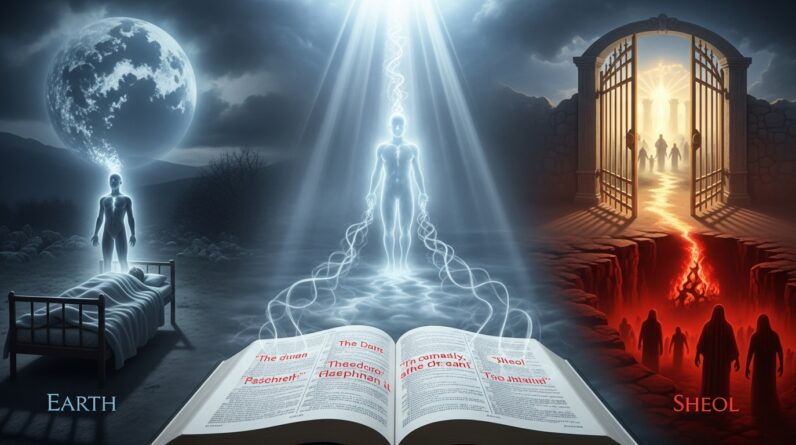



Why Would A Loving God Allow Hell To Exist?

INTRODUCTION
You’ve likely wrestled with this question: if God is loving, why would He allow hell to exist? It’s a real, honest issue for faith—one that shapes how you understand God’s character, your choices, and how you share the gospel with others. What the Bible says about hell intersects with God’s purpose, His protective justice, and His promise of redemption in Christ, and that matters for how you live day by day.
This topic matters because it forces you to hold two truths at once: God’s infinite love and God’s holy justice. When you study the Bible carefully, you’ll find that God’s allowance of eternal judgment is not arbitrary cruelty but tied to human freedom, divine holiness, and the centrality of Christ’s redeeming work. For a clear discussion of related themes, see our article on Heaven and Hell Explained. In this article you’ll get a Scripture-centered explanation that protects the glory of Christ and helps your faith move from fear to faithful trust.
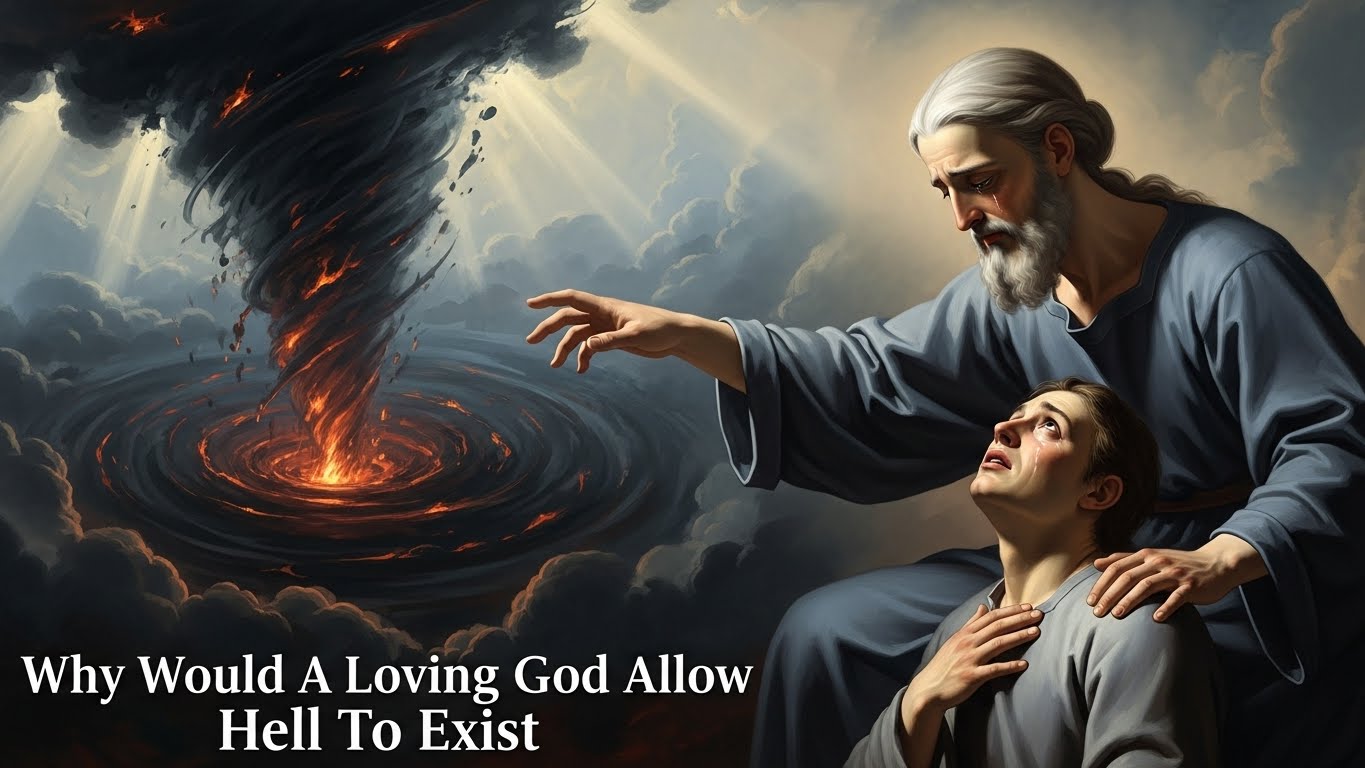
Why Would A Loving God Allow Hell To Exist? — SIMPLE BIBLICAL MEANING
In simple terms, the Bible teaches that God permits the reality of final judgment—including what Scripture calls hell—because of His holy nature, the reality of human sin, and the way He honors human choice. Hell is not a mysterious hobby of God, but the logical and just consequence of rejecting God’s mercy and choosing life apart from Him. At the center of the biblical story is Christ, who provides the only rescue from that consequence (see John 3:16 and Romans 6:23).
This meaning is pastoral: it should move you toward evangelism, compassion, and urgent prayer rather than fear-driven judgmentalism. Understanding hell biblically will deepen your gratitude for grace and sharpen your desire to point others to the cross, where God’s love and justice meet.
WHAT DOES THE BIBLE SAY ABOUT WHY GOD ALLOWS HELL?
The Bible is clear that God is both loving and just. He is love (1 John 4:8) and He is righteous judge (Romans 2:4-8). Scripture teaches that sin brings real consequences (see Romans 6:23), that people will be judged (see Hebrews 9:27), and that Christ offers the way of rescue (see John 3:16). God’s allowance of hell is consistent with these biblical truths: it is the setting in which divine justice and human responsibility are both real.
The New Testament repeatedly connects belief in Christ with escaping judgment (for example, Acts 17:30-31). At the same time, biblical authors never detach judgment from God’s long-suffering desire that people repent (2 Peter 3:9). So God’s allowance of final judgment and hell aligns with His character: He loves, pleads, and provides a rescue; He also honors human choices and executes righteous justice.
📖 BIBLE FOUNDATION
Quoted verses:
- “Then they will go away to eternal punishment, but the righteous to eternal life.” (Matthew 25:46)
- “Then death and Hades were thrown into the lake of fire. The lake of fire is the second death. Anyone whose name was not found written in the book of life was thrown into the lake of fire.” (Revelation 20:14-15)
Speaker and audience:
- Matthew 25:46 is part of Jesus’ teaching delivered to His disciples and the larger crowd as He spoke about the final judgment, using vivid images to call listeners to faithful obedience.
- Revelation 20:14-15 is John’s prophetic vision given to the seven churches and to the Christian community; it portrays the culmination of history and the final defeat of death.
Historical and biblical context:
Matthew’s Gospel presents Jesus as the Messiah who warns, teaches, and reveals God’s kingdom. The parable and teaching that culminate in Matthew 25:31-46 set judgment in the context of mercy shown to the needy—suggesting that how you live matters for the final accounting. Revelation, written to persecuted Christians in the first century, gives a sweeping theological picture of cosmic conflict, God’s sovereignty, and the ultimate rectification of wrongs. Its language is symbolic but the moral point is plain: sin and rebellion are dealt with ultimately and decisively, and God’s justice is real.
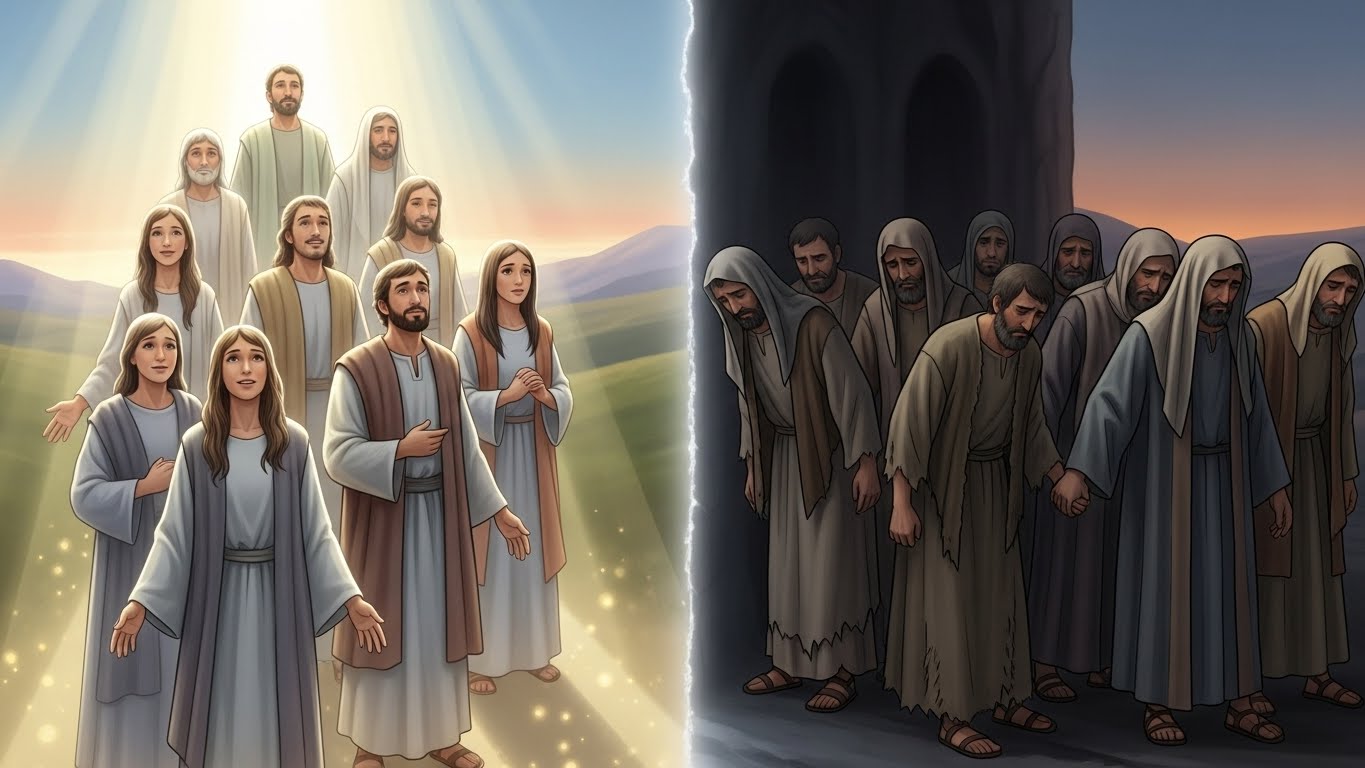
UNDERSTANDING GOD’S PURPOSE, PROTECTION, AND PROMISE
The biblical core truth is this: God’s allowance of hell serves His purpose of honoring human freedom, protecting the moral order of the universe, and fulfilling His promise to be both loving and just. God is not capricious; His purposes include redeeming sinners through Christ and fixing the moral distortions caused by sin. His protection is seen in that He warns, provides a Savior, and gives means of repentance and faith (see 2 Peter 3:9 and Ephesians 2:8-9). His promise is to make all things new for those in Christ (Revelation 21:4).
God’s sovereignty means He ordains the ends without violating human responsibility. Christ’s supremacy means judgment is administered rightly—He is the one who bore sin and offers salvation (John 5:22-23 and Romans 3:25-26). Your faith is meant to rest on His work, not on fear of judgment only. The existence of final consequences underscores the urgency of the gospel but does not cancel God’s patient offer of life.
🌊 GOING DEEPER — BIBLICAL CONTEXT
A helpful way to go deeper is to follow cross-references that put judgment and mercy together. Scripture consistently juxtaposes God’s love and justice: consider John 3:16 with John 3:18, and Romans 2:4-8 alongside Romans 3:23-26. These passages show both God’s offer of justification by faith and the reality that rejecting that offer has consequences.
Biblical narrative example: the Parable of the Sheep and the Goats (see Matthew 25:31-46) frames final judgment around acts of mercy. In that scene, the King separates people based on how they treated “the least of these”—demonstrating that genuine faith produces compassion. The parable shows theological continuity: judgment is not arbitrary, but linked to the way God’s love is embodied in human life.
For more on judgment and final hope, see our discussion on Salvation and Eternal Life. This continuity helps you see that hell is not a freestanding doctrine but part of the narrative that culminates in new creation and God’s restored justice.
DOES A LOVING GOD ALLOW HELL—AND WHY?
Yes. According to Scripture, God allows hell to exist not because He lacks love, but because He honors human freedom, moral responsibility, and justice. Love that is forced is not love at all. From the beginning, God gives people the ability to choose either relationship with Him or separation from Him (Deuteronomy 30:19; Joshua 24:15).
Hell is never presented as God’s desire. The Bible consistently teaches that God wants all people to be saved (1 Timothy 2:4) and that He takes no pleasure in the death of the wicked (Ezekiel 33:11). Hell exists because God does not coerce love or obedience, and because evil cannot remain unjudged forever.
Scripture also shows that God actively provides a way of rescue. Through Christ’s sacrifice, forgiveness and eternal life are offered freely (John 3:16; Romans 5:8). Hell is not proof of God’s cruelty, but of His respect for human choice and His commitment to justice—alongside His persistent mercy.
Rather than using fear as manipulation, the biblical message calls people to respond to God’s love, grace, and truth. Hell ultimately stands as the tragic consequence of rejecting the very relationship God continually offers.
💡 MODERN CONNECTION — FAITH, ANXIETY, AND DAILY LIFE
When you wrestle with the reality of hell, it’s natural to feel anxious. The Bible responds to that fear by calling you to trust in Christ, to live in obedience out of gratitude, and to let the gospel shape your choices. Practical steps include prayerful reflection on God’s mercy (Psalm 103:8), regular study of Scripture (2 Timothy 3:16-17), and active compassion toward others as a witness to the truth (Matthew 5:14-16).
In daily decision-making, keep this balance: take sin seriously because of its consequences, but cling to Christ’s finished work for peace. When anxious thoughts about judgment arise, redirect them to what Scripture assures: Christ’s intercession (Romans 8:34), God’s compassion (Psalm 145:8), and the invitation to repent and believe (Mark 1:15).
🛠️ Faithful Stewardship Tip
For believers called to share gospel teaching online, choosing a reliable platform is part of faithful stewardship; Hostinger provides dependable hosting that helps you create and maintain a ministry website or blog. Use technology wisely to make Scripture accessible, protect your content, and build resources that serve God’s purposes.
❤️ PRACTICAL APPLICATION
- Regularly confess sins and cling to Christ’s forgiveness through prayer and Scripture reading to keep fear grounded in gospel truth (1 John 1:9).
- Engage in loving action: serve the poor and speak the gospel, because compassion is a visible sign of God’s reign (Matthew 25:35-36).
- Teach your family and church the balance of God’s love and justice, using Scripture as the guide (2 Timothy 2:2).
- Resist prosperity-only interpretations that downplay holiness; instead, pursue holiness as gratitude for grace (1 Peter 1:15-16).
- When facing anxious thoughts about final judgment, rehearse gospel promises out loud—John 3:16 (John 3:16) and Romans 8 (Romans 8:1) are good starting points.
🪞 FAITH REFLECTION BOX
Take a quiet moment: ask God to deepen your trust in Christ rather than your fear of judgment. Confess where fear rules and invite the Spirit to replace that fear with reverent love and faithful action. Let worship, not anxiety, shape your response.
A PRACTICAL TAKEAWAY
- Hell in Scripture is linked to divine justice, not arbitrary cruelty.
- God’s allowance of final judgment honors human responsibility and His holy standard.
- Christ is the only rescue from judgment; the gospel is the remedy (John 3:16).
- Faith should produce compassion, evangelism, and holy living (Matthew 25:31-46).
- Live in gratitude, not fear—serve others and proclaim the hope you have in Christ.
❓ Q&A — BIBLE ANSWERS EXPLAINED
Q1 — Doctrinal: Does God allowing hell mean He is not truly loving?
A1 — No. Scripture affirms God’s love (1 John 4:8) and His justice (Romans 2:4-8). Allowing final judgment reflects His holiness and respect for human freedom; God provides rescue in Christ, showing both love and justice (see Romans 3:25-26).
Q2 — Practical: How should the reality of hell change how I live each day?
A2 — Let the reality of judgment motivate urgent compassion, prayer, and faithful witness. Scripture calls you to mercy and proclaiming the gospel (Matthew 28:18-20); live with holiness and joy (1 Peter 1:15-16).
Q3 — Misconception: Is hell the same as annihilation (ceasing to exist)?
A3 — The dominant biblical language portrays conscious and real separation from God and describes final punishment (e.g., Matthew 25:46 and Revelation 20:14-15). While some theological views debate the mechanics, the Bible warns of real, serious consequences for rejecting Christ (Hebrews 9:27).
CONCLUSION & PRAYER
You don’t have to resolve every mystery to hold this biblical balance: God is infinitely loving and perfectly just. Hell’s existence in Scripture calls you to depend on Christ, to live in gratitude, and to share the gospel urgently and compassionately. Let the cross be your primary lens—there God’s love and justice meet in full.
Prayer: Lord Jesus, thank You for bearing my sin and opening the way to life. Help me to trust Your mercy, to live in holy love, and to share Your truth with compassion. Give me courage to speak the gospel and grace to reflect Your heart. Amen.