

Is Hell Literal Or Figurative? A Biblical Exploration
Biblically, Hell is presented both as a literal place of eternal separation from God (Matthew 25:46, Revelation 20:14-15) and as a symbolic representation of final judgment and punishment (Revelation 20:10). The Bible uses vivid imagery to convey the reality and seriousness of Hell, emphasizing its eternal consequences rather than focusing solely on literal or figurative interpretation
You’ve probably sat with the question before: when the Bible speaks of hell, is it describing a real place every person will go, or using vivid images to point toward a spiritual truth? Maybe you grew up with a mental picture that felt unhelpfully small or frightening, or perhaps you never quite knew how to reconcile Jesus’ warnings with God’s love. That tension — between language that can feel literal and imagery that clearly reaches beyond literal description — is the honest place to start.
This article invites you to think through biblical language, ancient contexts, Jesus’ teaching, and pastoral implications. I’ll not try to settle every theological debate, but I’ll walk you through a single guiding question: When Scripture speaks of final judgment and separation from God, is the Bible pointing you to a literal geography of suffering, or to a deeper reality rendered in symbolic language? The answer you’ll find is both careful and pastoral: Scripture resists a simplistic either/or and calls you to a posture of awe, repentance, and hope.

The confusion begins with words: Sheol, Hades, Gehenna
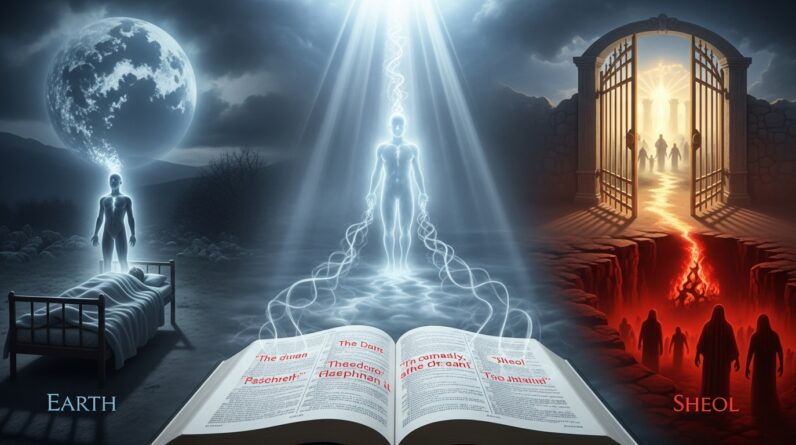
A lot of the puzzle comes from translation and culture. The Old Testament often uses the word Sheol — a catchall for the place of the dead — not necessarily a place of torment but the shadowy abode of all who die. You can see this in many Psalms and in prophetic texts like Isaiah 66:24, where the prophet pictures a scene meant to shock and teach rather than to map geography (Isaiah 66:24).
In the New Testament, the Greek words Hades and Gehenna appear. Hades generally corresponds to Sheol as “the place of the dead”; Jesus uses Hades in ways that draw on Jewish expectation (for example, in the story of the rich man and Lazarus — a parable found in Luke 16:19–31). Gehenna, on the other hand, is a loaded term. It refers to the Valley of Hinnom outside Jerusalem, historically associated with idolatrous practices and later a rubbish dump that burned — an image of destruction and humiliation. When Jesus warns about Gehenna, he’s evoking that grim image to speak of final ruined destiny (see Matthew 5:22, Matthew 10:28). Compare his words and notice how they lean on metaphor as much as on report (Matthew 10:28).
So the biblical vocabulary is complex. That matters because you’ll get different answers depending on whether you emphasize a literal geography (a place called “Hell”), the metaphorical force of prophetic imagery, or Jesus’ moral and pastoral concerns.

Listen to Jesus first: warnings that aim to awaken, not to terrify
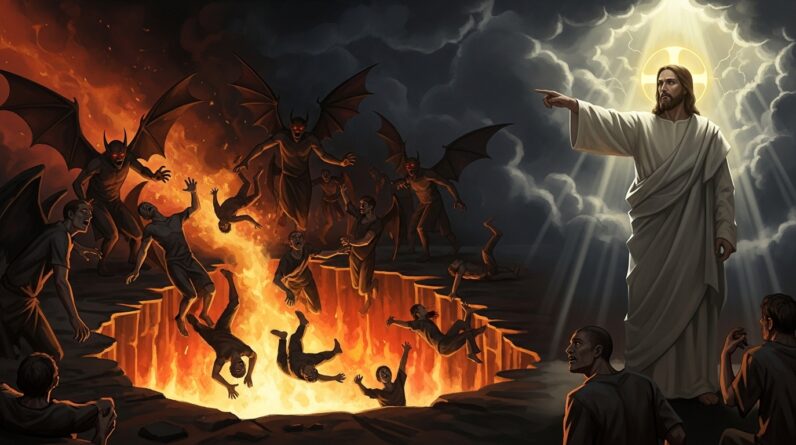
One of the clearest places to hear Jesus on final judgment is how he combines stark warnings with pastoral urgency. He tells his hearers to fear the One who can “destroy both soul and body in hell” (a translation of his warning found at Matthew 10:28). Elsewhere, he uses images of weeping and gnashing of teeth in parables designed to awaken people who presume on God’s patience.
Those images are jarring by design. Jesus is not simply giving a travelogue of geography; he’s trying to shift hearts. If the metaphors function only as moral scare tactics, however, they would lose their depth. They point to a real and serious consequence — separation from God and the loss of the life God intended — but they do so by borrowing the most compelling images available to his listeners: images of irreversible ruin, shame, and loss.
Think of it this way: Jesus speaks with the rhetoric of a prophet and a rabbi. His goal is formative: to call you to repentance, to warn you about choices that have eternal consequences, and to reveal the holiness of God that cannot coexist with unrepentant sin. The “literal or figurative” question should not obscure the ethical urgency in his voice.
Parables and visions: different literary forms, different responsibilities
The Bible contains several literary genres, and they carry different interpretive rules. Parables — like the rich man and Lazarus — are didactic stories that use concrete detail to teach moral and spiritual truths. They aren’t necessarily meant to map theological minutiae (“What color were the robes?”); they are meant to provoke a response. When Scripture uses apocalyptic imagery — as in parts of Revelation — it communicates through surreal, symbolic language to describe cosmic realities.
Revelation 20 speaks of death and Hades being thrown into a “lake of fire,” an image of final defeat (Revelation 20:14–15). That image uses symbolic language to declare that evil’s reign will end. The symbolism does heavy lifting: it announces ultimate loss and divine justice, using language that both imagines and warns.
You shouldn’t ignore the literal sense: some readers and communities rightly affirm that Scripture teaches an actual, irreversible separation from God for those who reject him. But you also shouldn’t reduce apocalyptic and parabolic language to a rigid physical map. Those forms are designed to enlarge your moral imagination, and they do so by mixing literal claims with metaphor.
The Old Testament echoes: poetic pictures of consequence
The Old Testament contributes sobering imagery. Passages like Isaiah 66:24 intentionally shock — depicting the sight of dead bodies as a sign of divine judgment (Isaiah 66:24). The imagery is not offered as tourist information; it’s meant to awaken a response to covenant unfaithfulness.
Similarly, the Psalms and wisdom literature sometimes paint death in stark terms, reinforcing that human choices have moral weight and that God will ultimately set things right. These poetic expressions remind you that Scripture consistently treats evil seriously and insists that God is both merciful and just.
The apostolic witness: judgment, mercy, and responsibility
The New Testament apostles echo the tension between justice and mercy. Paul affirms that “the wages of sin is death” (which you can read in Romans 6:23) and warns about the reality of final judgment. Hebrews 9:27 lays out a sober axiom: “people are destined to die once, and after that to face judgment” (Hebrews 9:27). At the same time, Paul and the other writers overflow with the message of God’s grace — the offer of life in Christ.
The apostolic voice insists that the reality Scripture describes is not some abstract doctrine but a call: how will you live, knowing that death gives way to accountability? The biblical witness simultaneously affirms the seriousness of separation from God and the availability of redemption through Jesus.
Is eternal punishment literal? Theological tensions you can hold
When people ask if hell is literal, they often mean: “Is there an actual conscious, ongoing suffering, or does Scripture teach annihilation (final destruction), or maybe some kind of purifying punishment?” The Bible doesn’t give a single tidy catechism answer. Some passages suggest ongoing conscious experience, others emphasize destruction and removal, and still others center on the finality of exclusion from God’s presence.
You can hold these tensions without losing biblical fidelity. That means recognizing that Scripture insists on finality and gravity — that some choices have irreversible consequences — while also recognizing that different texts stress different aspects of that reality. The responsible posture is humility: avoid forcing Scripture into modern either/or categories and instead let Scripture’s images move you to repentance, trust, and evangelistic compassion.
Pastoral use: why clarity matters less than transformation
It’s easy to get stuck on doctrinal certainty when what really matters is transformation. Whether you picture hell as a place with coordinates or as an image representing permanent separation, the pastoral import is similar: God’s holiness and your freedom mean choices matter. Warnings are not just theological points; they are pastoral tools intended to turn hearts back to God.
If someone in your life is wrestling with this question, share both truth and tenderness. Affirm God’s justice and God’s astonishing patience, and point to Jesus as the great provision for sinners. The Bible is not primarily a metaphysical primer on afterlife geography; it’s an invitation to life with God now, which will determine your eternal orientation.
How does this affect your daily life and mission
If the biblical picture is at once real and symbolic, what changes for you today? First, urgency: Jesus’ warnings are meant to stir you to live visibly like one who has been found by grace. Second, compassion: the images in Scripture should not harden you into biliary judgment but soften you into mission. If the stakes are real, your witness matters more, not less.
Third, humility: as you read passages about judgment and consequence, let them interrogate your heart rather than fuel your certainties. Scripture wants you oriented toward repentance and reconciliation. Let that shape how you talk about others and how you live.
A final tension you can live inside: conviction without cruelty
The Bible’s pictures of final consequence are neither fan fiction nor idle speculation. They’re sober, urgent, and pastoral. Yet they also sit within the larger story of a God who pursues the lost. Living inside that tension means you’re called to be clear about sin and consequence while refusing to weaponize the doctrine against people.
When you speak of judgment, do so with the same heavy care you’d apply to a surgery: necessary, precise, and compassionate. When you speak of grace, remember that it doesn’t abolish responsibility. Both realities hold together in Scripture, and both are meant to produce in you a life that reflects God’s justice and mercy.
A reflective takeaway (not a summary)
What if you approached the Bible’s language about hell the way you approach a warning sign on a cliff? The sign’s purpose isn’t to satisfy curiosity about geology; it aims to save lives. The Bible’s images — sometimes stark, sometimes symbolic — are warning signs that call you to change course. Whether you end up picturing hell as a literal place or as symbolic of irrevocable loss, let the images do their work: move you away from whatever hardens you against God and toward the life God offers in Christ.
So ask yourself: what paths in your life need an about-face? Where do you assume God’s patience lets you continue believing one thing and living another? Let the gravity of Scripture’s images turn into a gentle urgency in your life — repentance, trust, love for others, and persistent hope.

Bible references used (for quick checking)
Sponsored recommendation

Acknowledgment: All Bible verses referenced in this article were accessed via Bible Gateway (or Bible Hub).
“Want to explore more? Check out our latest post on Why Jesus? and discover the life-changing truth of the Gospel!”