

Understanding The Eternal Fire: Biblical Insights Beyond Literalism
You’ve probably wrestled with phrases like “eternal fire,” “everlasting punishment,” or “the lake of fire” at some point — maybe in a sermon, a heated debate, or late-night reading. Those images can land heavy in your mind and leave you asking, What exactly does the Bible mean? This article walks you through the biblical material with calm curiosity, aiming to give you clarity without sensationalism. I’ll interact directly with Scripture, show how imagery works in different genres, and point you to a fuller treatment in our main resource, understanding hell’s nature. You’ll get theological perspectives, practical takeaways, and tools to think faithfully about judgment language in the Bible.

What the Bible Says About Eternal Fire
Below are several key passages that shape the Bible’s talk about fire, judgment, and a destiny described as “eternal.” I’ll show each passage, give a short context, and note why the genre or symbolism matters for how you interpret it.
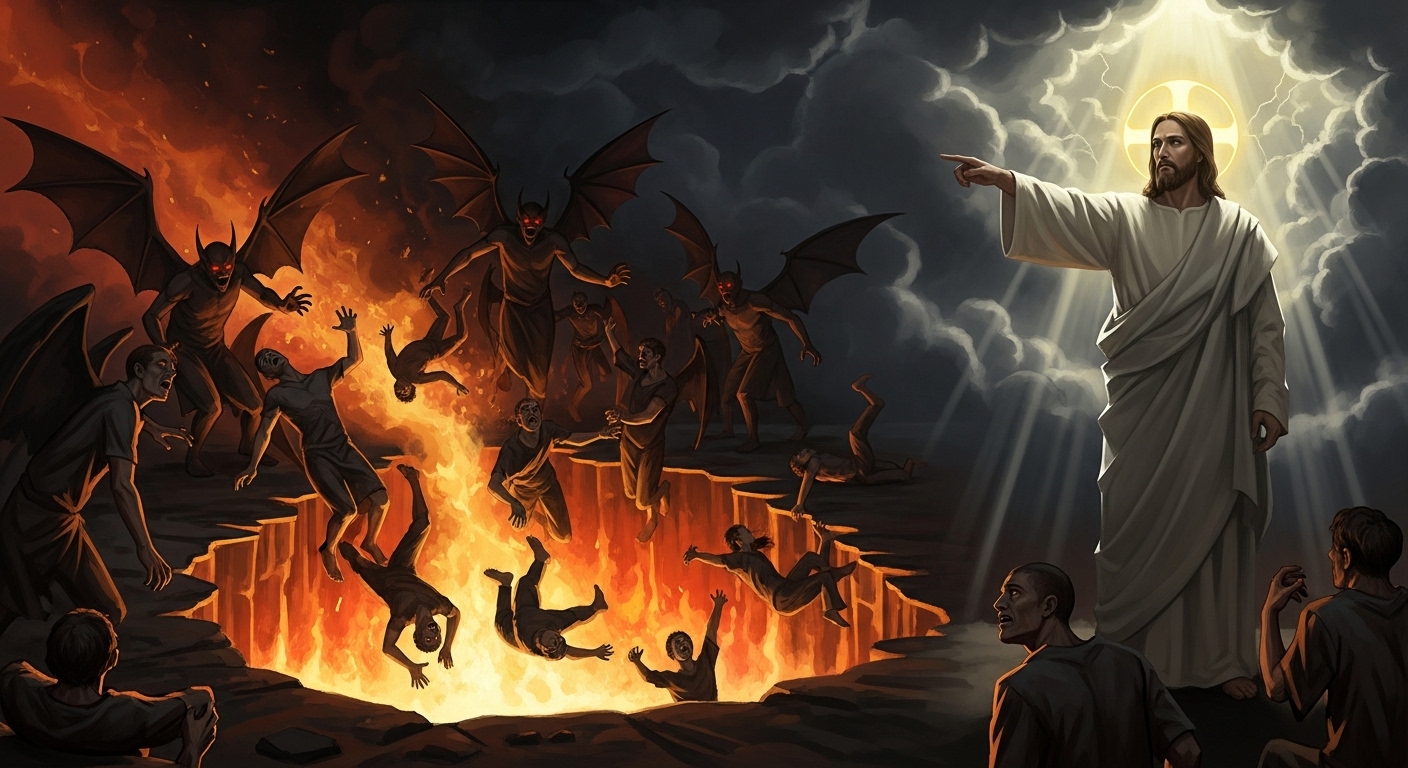
“Then he will say to those on his left, ‘Depart from me, you who are cursed, into the eternal fire prepared for the devil and his angels.’”
— Matthew 25:41
This verse is part of Jesus’ judgment scene (the Sheep and the Goats). The imagery is judicial and apocalyptic: a sovereign Judge separates peoples. The “eternal fire” is described as being prepared for the devil and his angels, which raises questions about intention, scope, and purpose.
“Then they will go away to eternal punishment, but the righteous to eternal life.”
— Matthew 25:46
The parallelism here is sharp: “eternal” (Greek aionios) characterizes both life and punishment. How you read aionios — as “age-long,” “of the age,” or “eternal” — affects interpretation. Context and the surrounding Johannine and Pauline uses can guide you.
“If your hand causes you to stumble, cut it off. … It is better for you to enter life maimed than with two hands to go into hell, where the fire never goes out.”
— Mark 9:43, 45–48 (select verses)
Jesus uses vivid, hyperbolic language to warn against sin. The “undying fire” language echoes prophetic and OT depictions of unquenchable judgment and often functions as moral exhortation rather than a technical metaphysical description.
“In a similar way, Sodom and Gomorrah and the surrounding towns gave themselves up to sexual immorality and perversion. … They serve as an example by undergoing a punishment of eternal fire.”
— Jude 1:7
Jude treats Sodom and Gomorrah as paradigmatic examples. The language is polemical and pastoral: Jude warns his readers that moral corruption has severe consequences, and he borrows well-known imagery from Israel’s scriptures and history.
“And the devil who deceived them was thrown into the lake of burning sulfur, where the beast and the false prophet had been thrown. They will be tormented day and night for ever and ever.”
— Revelation 20:10
Revelation is apocalyptic literature full of symbolic imagery. The “lake of fire” here is part of a final vision of cosmic judgment. Interpreting Revelation requires attending to symbolism, genre, and the book’s letter-to-churches context.
“Then death and Hades were thrown into the lake of fire. The lake of fire is the second death.”
— Revelation 20:14-15
Here the “lake of fire” is called “the second death.” That phrase shifts the focus from sensory detail (flames) to existential finality — death’s ultimate eradication or consequence — depending on how you read “second death.”
“They will be punished with everlasting destruction and shut out from the presence of the Lord and from the glory of his might.”
— 2 Thessalonians 1:9
Paul’s pastoral letter links punishment to exclusion from divine presence. The emphasis here spotlights relational consequences more than literal flames.
“Our God is a consuming fire.”
— Hebrews 12:29
This short sentence captures God’s purity and righteous judgment. In Hebrews it serves as motivation for holiness: the presence of God calls for reverent living.
“They will be displayed there their worm will not die, the fire will not be quenched, and they will be an abhorrence to all flesh.”
— Isaiah 66:24
Isaiah’s prophetic imagery shapes later Jewish and Christian conceptions of judgment. The verse is starkly poetic and likely functions as a warning about the consequences of rebellion.
“I have come to bring fire on the earth, and how I wish it were already kindled!”
— Luke 12:49
Here Jesus speaks of fire as a purifying, divisive force. The image has both confrontational and purifying dimensions and connects to the mission of the kingdom.
Each of these passages contributes to the biblical conversation about fire and judgment. Some use apocalyptic symbolism, others moral exhortation, and some draw on Israel’s prophetic imagery. That variety forces you to ask: Is the Bible talking literal flames, relational exclusion, existential destruction, or symbolic purification? The answer isn’t uniform; it depends on genre, context, and the theological point the author is making.

Biblical Meaning and Theological Insights
Literal and Figurative Uses of Imagery
The Bible uses fire in many ways — literally, metaphorically, and symbolically — which matters when you encounter phrases like “eternal fire symbolism” or “fire in the Bible judgment.” You’ll find literal fires (burning sacrifices, Sinai’s smoke), metaphorical warnings (the “fires” of passion or zeal), and symbolic apocalyptic images (the lake of fire). When you read a specific passage, pay attention to genre clues: is the text prophetic, apocalyptic, poetic, narrative, or didactic? That helps you avoid reading every image as a straightforward physical description.
For example, Mark 9’s hyperbolic language about cutting off a hand is aimed at the seriousness of sin, not surgical advice. Revelation’s “lake of fire” appears in a book that loves symbol and cosmic theater, so interpreting it requires careful attention to metaphorical layers. When you search “biblical meaning of fire in judgment,” let genre and authorial intent guide you more than the heat of the metaphor.
Historical and Theological Perspectives
Historically, Christians have read these texts in different ways. You’ll commonly encounter three broad theological options:
- Eternal conscious torment (ECT): This view holds that the “eternal fire” means unending conscious punishment for the wicked. Proponents point to texts like Matthew 25:46 and Revelation 20:10 as literal and straightforward.
- Annihilationism (conditionalism): This perspective reads “eternal destruction” as final cessation of existence for the wicked. Supporters focus on language like “destruction” and “second death” and highlight God’s justice and the idea of death as the ultimate penalty.
- Christian universalism: This approach argues that God’s restorative purposes eventually bring all people to salvation. Its advocates interpret judgmental imagery as corrective or remedial and read the “age-long” language as disciplinary, not permanently exclusionary.
Each view reaches for fidelity to Scripture, though they weigh verses differently. You don’t need to adopt a polemical posture toward other views; they each try to reconcile God’s justice, holiness, and love with the concrete Biblical witness. The important thing is to read carefully, know your assumptions, and remain willing to hold tension where the Bible leaves some mystery.
Relational and Existential Dimensions
One core theme that often gets lost in literal debates is the relational meaning behind judgment imagery. Many New Testament texts emphasize separation from God as the heart of the “punishment.” For example, 2 Thessalonians 1:9 mentions “shut out from the presence of the Lord,” which shifts your focus from physical torment to existential rupture: what it means to be denied the life-giving presence of God.
This relational angle reframes the issue: if God is the source of life, then being eternally cut off from God is a devastating judgment in itself. You can read “fire” as a symbol describing the anguish of separation, the consuming holiness that cannot tolerate rebellion, or the moral consequences that flow from a life turned away from God. That doesn’t remove the seriousness of judgment; it deepens the why.

The Purpose Behind the Imagery
If you stand back from the heat and look at purpose, you’ll see that fire imagery in the Bible often aims to provoke repentance and transformation. Jesus’ warnings tend to stir moral urgency (Mark 9), prophets use apocalyptic warnings to call Israel back to covenant faithfulness (Isaiah), and apocalyptic writers like John encourage churches to persevere and repent (Revelation). The imagery is pastoral and prophetic — it’s designed to wake you up, not merely terrify you.
So when you encounter “eternal fire symbolism,” consider the author’s pastoral or prophetic intent. Is the message warning you, purifying you, calling you home, or portraying cosmic justice? The imagery’s rhetorical force is as important as any metaphysical claim about flames.
Connection to the Bigger Picture: understanding hell’s nature
Your reading of “eternal fire” should connect back to broader biblical teaching about humanity, salvation, and the end of all things. For a deeper dive, see the main pillar article understanding hell’s nature which examines anthropology (what it means to be human), atonement, and eschatology across Scripture. That piece situates “fire” within the whole story — creation, fall, redemption, and consummation.
When you place single verses into that storyline, you begin to see why interpretations differ. Anthropology matters: if you believe humans are embodied image-bearers who can’t be reduced to disembodied consciousness, you might read “second death” differently. Soteriology matters: how you understand Christ’s atoning work shapes how you interpret God’s restorative or retributive ends. Eschatology matters: whether you read Revelation’s images as symbolic or literal affects whether you see the “lake of fire” as metaphoric finality or a spatial locale.
Ultimately, the Bible balances divine justice and mercy. You see both in Jesus’ life — compassion for sinners and warnings about the cost of rejecting God. Any mature reading of “eternal fire” should respect that tension.
What This Means for Believers Today
When you bring these biblical insights into daily life, they produce spiritual responses that matter more than simply winning arguments.
First, cultivate humility. The Bible’s images warn you about judgment, yes, but they also call you to self-examination and reliance on grace. You’re not interpreting texts in a vacuum; you’re reading sacred literature meant to shape you.
Second, let urgency lead to compassion. The seriousness of judgment should motivate gospel urgency, not vindictive joy. If eternal separation is possible, your response should be prayerful outreach that honors people’s dignity and invites them to reconciliation.
Third, live in the tension of justice and mercy. God’s holiness does mean consequences for rebellion, but Scripture is equally insistent that God is patient, merciful, and seeks restoration. That balance should shape your view of God’s character and your own posture toward sinners and sufferers.
Fourth, be faithful in ordinary holiness. Hebrews 12:29’s “consuming fire” calls for a reverent, aligned life. That doesn’t translate into legalism; it invites you to shape your desires around God’s love and truth.
Finally, allow hope to temper fear. The gospel centers on Jesus’ reconciling work; the same Scriptures that warn also promise life in God’s presence. You can hold both realities: the seriousness of rejecting God and the hope offered through Christ.

Related Questions and Further Reading
If you want to explore how the idea of eternal fire fits into the Bible’s broader teaching on the afterlife, these related articles may help deepen your understanding:
-
Is Hell Literal or Figurative?
This pillar article examines whether biblical descriptions of hell—such as fire, darkness, and separation—should be read literally or figuratively, and how Scripture holds justice and mercy together. -
Are Heaven and Hell Physical Places or Spiritual Realms?
A closer look at whether the Bible presents heaven and hell as physical locations, spiritual realities, or something beyond human categories—and why that distinction matters for interpretation. -
What Happens Immediately After Death?
Explores what Scripture says about the state of the soul after death, including judgment, comfort, and hope, and how these teachings connect to larger questions about eternity.
Each of these articles will give you tools to read Scripture more holistically and avoid forcing single images into simplistic answers.
Key Takeaways / Summary Points
- Fire in the Bible functions both literally and symbolically; context and genre matter when you read “eternal fire symbolism.”
- Many biblical passages emphasize relational consequences — separation from God — alongside images of fiery judgment.
- Major theological positions (ECT, annihilationism, universalism) try to honor Scripture but weigh verses differently; charitable engagement matters.
- The purpose of fire imagery often aims at repentance, purification, and warning, not merely sensational punishment.
- Your response should balance reverent seriousness with hope, humility, and compassionate action.
Conclusion
You don’t have to resolve every doctrinal tension right now. Scripture’s images of “eternal fire” are meant to jolt you into soul-searching and to point you toward the God who calls people to life. Read the texts carefully, listen to the broader biblical story, and let both justice and mercy shape your faith. For a more comprehensive study, explore understanding hell’s nature and continue this conversation through prayerful reflection and honest questions.
Acknowledgment: All Bible verses referenced in this article were accessed via Bible Gateway (or Bible Hub).
“Want to explore more? Check out our latest post on Why Jesus? and discover the life-changing truth of the Gospel!”