


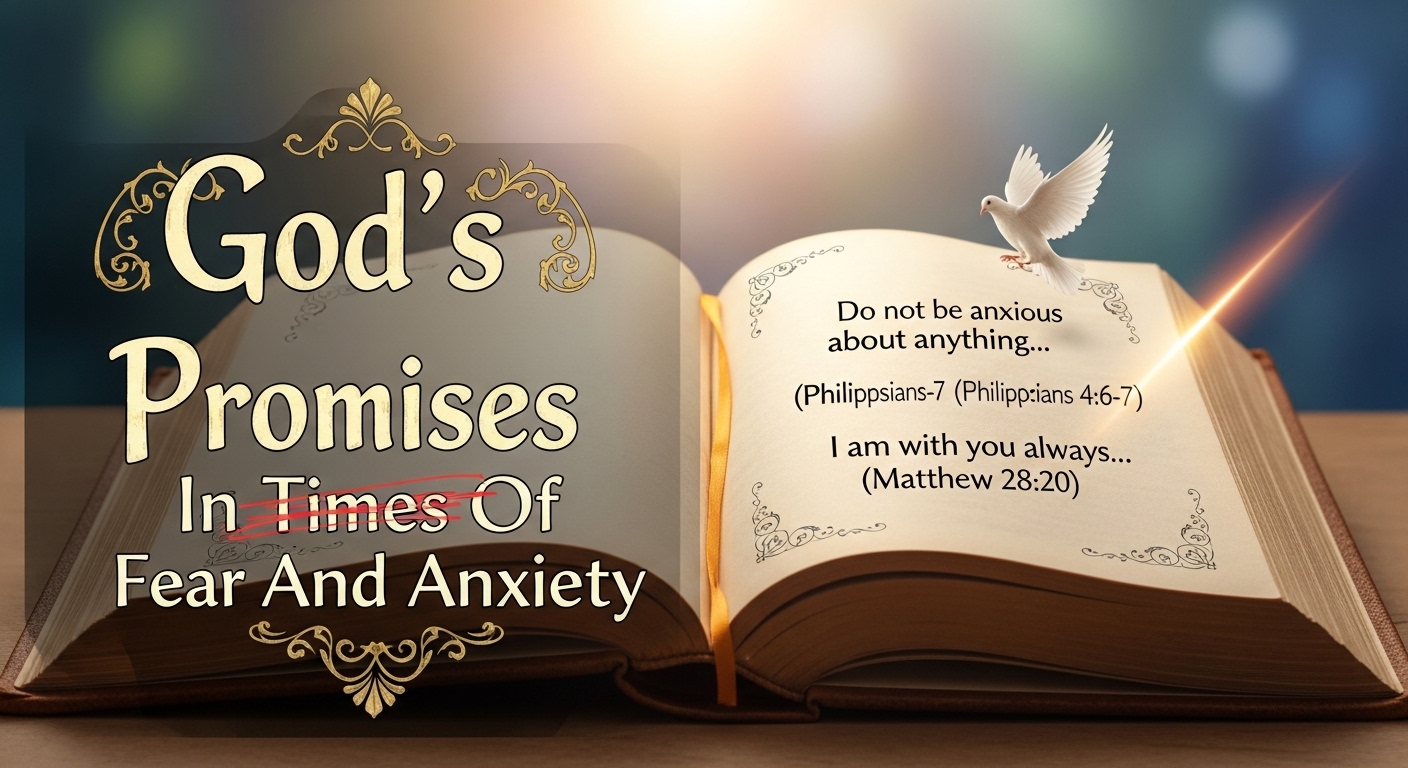
God’s Promises In Times Of Fear And Anxiety
Introduction
You’re not alone if fear or anxiety grips you sometimes. Those feelings aren’t failures of faith; they’re part of being human. The Bible doesn’t ignore the weight of fear, doubt, or weakness. Instead, Scripture meets those moments with promises meant to steady your heart and restore your trust.
This article walks you through how God’s promises—especially those voiced in the Old Testament—speak directly into seasons of fear and anxiety. You’ll see these promises arise out of real crises, understand how they aim to sustain you rather than simply erase difficulty, and discover practical ways to lean on them today.

Why This Struggle Matters in the Life of Faith
You might expect faith to mean the absence of anxiety, but Scripture paints a different picture. God’s people repeatedly experienced fear: Israel wandered with uncertainty in the wilderness, David lived with danger and despair, and prophets faced national collapse and personal threat. The crucial thing wasn’t that they never felt afraid; it was where they turned when fear arrived.
God’s promises were given knowing you’d face seasons where trust feels difficult. They function as anchors: reminders that God’s character doesn’t change even when circumstances do. When you recognize this, anxiety doesn’t have to be the final word. Instead, it becomes an invitation to remember what God has already revealed about himself.
Key Old Testament Promises That Speak to This Situation
Sponsored recommendation

Throughout the Old Testament you’ll find consistent threads of reassurance that address fear, weakness, and waiting. Those promises were spoken into real historical crises but continue to carry meaning because they flow from God’s unchanging character.
Below are some of the promises you can hold on to when fear encroaches. Each one links to the verse so you can read it in context and let Scripture be your first counselor.
Isaiah 41:10 — “Do not fear, for I am with you”
Isaiah 41:10 is a direct word of comfort: “Do not fear, for I am with you; do not be dismayed, for I am your God.” When anxiety makes the future look uncertain, this promise redirects your attention from your anxious thoughts to God’s presence and strength. Read the full verse here: Isaiah 41:10.
This verse doesn’t pretend danger isn’t real. Instead, it calls you to face real danger with the assurance that God is covering you—present, strong, and faithful.
Psalm 46:1 — “God is our refuge and strength”
The psalmist declares that God is “our refuge and strength, an ever-present help in trouble.” That imagery matters: a refuge is a tangible place of safety when things fall apart. When anxiety feels overwhelming, the psalm reminds you that more than a sentiment, God is a dependable shelter. Read it here: Psalm 46:1.
This promise reframes anxiety from a solitary battle into an invitation to take shelter in God’s character and care.
Deuteronomy 31:6 — “Be strong and courageous; do not be afraid”
In Deuteronomy 31:6, Moses tells the people to be strong and courageous because God will not leave them. That command wasn’t naive optimism—it was a call to trust in the One who promises presence and protection. Read it here: Deuteronomy 31:6.
When your courage feels thin, this verse points you back to God’s commitment to never abandon you, which fuels perseverance when your emotions pull the other way.
Lamentations 3:22–23 — “His compassions never fail”
Lamentations 3:22–23 is a lifeline in prolonged sorrow: “Because of the Lord’s great love we are not consumed, for his compassions never fail. They are new every morning; great is your faithfulness.” This promise doesn’t deny suffering but grounds hope in daily renewed mercy. Read it here: Lamentations 3:22-23.
When you face seasons that seem to drag on, these verses encourage you to look for God’s small, faithful mercies that arrive each day.
Isaiah 43:1–2 — “I have redeemed you; I will be with you”
Isaiah 43:1–2 offers assurance of redemption and presence through trials: “Do not fear, for I have redeemed you; I have summoned you by name; you are mine… When you pass through the waters, I will be with you.” Read it here: Isaiah 43:1-2.
That language helps you remember that God’s relationship with you is personal—he summons you by name and promises his presence through difficulty, not just after it’s over.
Psalm 23 — “The Lord is my shepherd… I will fear no evil”
Psalm 23 is rich with pastoral imagery that calms fear: a shepherd who leads, provides, and protects. The famous line “I will fear no evil” feels practical—fear is acknowledged, but it’s anchored to the shepherd’s care. Read the psalm here: Psalm 23.
When anxiety whispers threats, let the shepherd language bring you back to a God who sees, guides, and comforts.

Why These Promises Still Matter for You Today
You live in a different culture than the original recipients of these promises, but the God who speaks in those texts hasn’t changed. The Old Testament words still address the same human conditions—fear, waiting, loneliness, and uncertainty—because they’re grounded in who God is, not in changing circumstances.
These promises don’t promise that you’ll escape pain. Instead, they reframe pain by anchoring it in God’s presence. That reframing helps you respond differently: pray rather than panic, wait with hope rather than despair, and seek community rather than isolate.
When you read promises like those above, remember they were spoken into real historical crises. Their endurance across centuries demonstrates that God’s faithfulness is consistent. That lends them credibility to guide your life now.
How These Promises Apply to Believers Today
So how do you take these ancient words and make them practical?
First, treat these promises as invitations to relationship. They’re not magic formulas; they’re rooted in God’s character and his covenant with his people. When fear rises, you can respond by reminding yourself of what God has said and by orienting your prayer around his promises.
Second, use Scripture to reframe your thinking. Anxiety often multiplies when you spiral into worst-case scenarios. Bring a particular promise to mind and let it challenge those spirals. For example, recite Isaiah 41:10 when fear exaggerates the future (Isaiah 41:10).
Third, practice steady spiritual rhythms—prayer, Scripture reading, community, and rest. God’s promises strengthen you inside these practices, and these practices place you where God’s presence and comfort are most accessible.
Finally, share these promises with others. Encouraging someone else out of fear is a powerful way to reinforce your own trust. When you speak God’s promises into another person’s struggle, you’re reminded again of their truth in your life.
Biblical Examples That Reinforce These Promises
The Bible doesn’t present promises as abstract; it shows them lived out in people who struggled and were sustained.
David: fleeing, fearing, and trusting
David experienced raw fear—running from enemies, hiding in caves, grieving losses—but he also wrote songs that anchored him in God’s presence and protection. Psalm after psalm shows how David brought his fear to God and found God faithful. You can learn from David that honest lament and turning to God often go together.
When you face danger or despair, follow David’s pattern: be honest about fear, cry out, and then claim God’s help.
Israel in the wilderness: dependence in uncertainty
Israel’s wilderness wandering was a profound time of uncertainty—lack of food, danger from enemies, and tests of faith. God provided manna, water, and guidance, teaching dependence rather than self-sufficiency. Their story illustrates that God sometimes uses uncertainty to shape trust.
If you feel like you’re wandering, remember that God is capable of meeting daily needs and teaching dependence on him rather than yourself.
Hannah: sorrow, patience, and answered prayer
Hannah’s prolonged sorrow and prayer (1 Samuel 1) show how God meets deep emotional longing with compassionate attention and eventual deliverance. Her story is a reminder that waiting is often part of God’s work and that faithful petition—even over long seasons—has value.
When you wait with anxious longing, let Hannah’s example encourage you to bring your grief to God and to trust his timing.
For further reading on these narratives and God’s faithfulness across the Old Testament, see the related article listed below:
Old Testament Promises of God That Still Apply Today
What This Means for You Today
At the core, God’s promises invite you to rest instead of striving. They redirect your gaze from your limitations to God’s character. When fear rises, try these practical next steps:
- Name the fear and bring it to God in specific prayer.
- Identify a promise that speaks into that fear and memorize or recite it.
- Create a simple spiritual rhythm—brief daily Scripture reading, short prayers, and a trusted friend to check in with.
- Remind yourself that faith is not the absence of fear but the habit of turning to God in it.
You’re not expected to manufacture perfect faith. God’s promises are meant to steady you within weakness, to teach endurance, and to invite trust through grace rather than pressure.
If you’re building a faith-based website or ministry and want a fast, reliable place to publish biblical content like this, choosing the right hosting matters. A dependable host helps ensure your articles stay accessible, secure, and easy to manage as your site grows. Hostinger offers affordable, beginner-friendly hosting that works well for Scripture-based blogs and long-form teaching sites.  Start a website with Hostinger →

Key Takeaways
God’s promises address real human struggles, not idealized faith. They were spoken into real crises and continue to apply because they reflect God’s unchanging character. These promises don’t guarantee that hardship will vanish instantly, but they sustain trust, reshape your response to fear, and invite reliance on God’s presence and power. Faith grows as you remember what God has already proven true.
Related Articles on God’s Promises
If this topic encouraged you, these related articles explore other dimensions of God’s promises and how they work together in the life of faith:
- Old Testament Promises of God That Still Apply Today — A foundational overview showing how God’s promises remain trustworthy across generations and circumstances.
- How God’s Promises Bring Peace During Uncertainty — Examines how biblical promises provide calm and direction when outcomes are unclear.
- Promises of God for Strength When You Feel Weak — Focuses on how God supplies strength when human effort falls short.

Conclusion
God’s promises were never meant to erase every difficulty. They were given to remind you that you are not alone in hardship. Throughout Scripture, God shows himself faithful—present, purposeful, and trustworthy. When fear and anxiety press in, return to his promises: they steady your heart, encourage prayer, and point you toward endurance built on God’s character, not on your own emotional stability.
Prayer
Lord, thank You for being faithful in every season. Help us remember Your promises when fear rises, strength fades, or the path feels unclear. Teach us to trust You more deeply and rest in Your unchanging love. Amen.
Bible Verses Cited
For your convenience, here are the passages referenced above with direct links to read them in the NIV on Bible Gateway:
Feel free to click any of those links to read the fuller context and let the words speak to your situation.
Acknowledgment: All Bible verses referenced in this article were accessed via Bible Gateway (or Bible Hub).
“Want to explore more? Check out our latest post on Why Jesus? and discover the life-changing truth of the Gospel!”