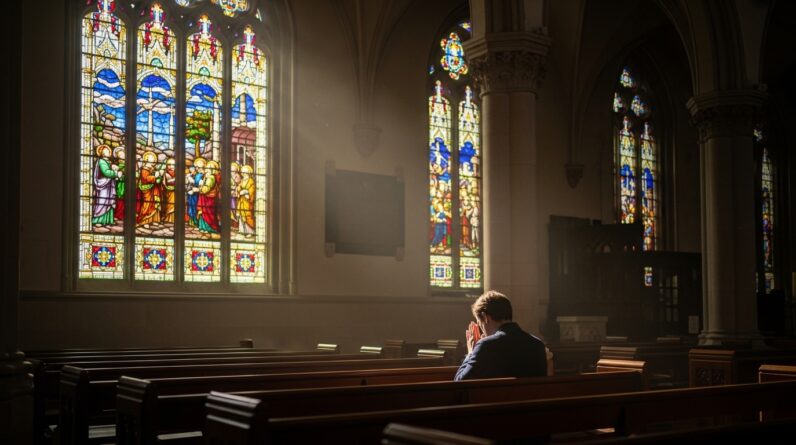


When Your Mind Won’t Slow Down at Night

You lie awake again, the house quiet, the clock ticking, and your thoughts replaying every what-if like a movie you didn’t ask to watch. You’re exhausted, but your brain feels wired — rehearsing worst-case scenarios, listing failures, or plotting tomorrow’s to-do list in relentless detail. You might feel alone in this, like everyone else sleeps easily and you’re the only one whose mind refuses to rest.
You are not alone. Many believers discover that anxiety can return even after prayer, and that nighttime can sharpen worry into something that feels larger than faith. Others around you may look composed, but many share this same late-night wrestling match — it’s more common than it feels in the dark.
God is not surprised by your sleeplessness, and He is not distant from it. There is help that matters — both practical habits and spiritual truths — and a steady, patient God who invites you to bring the restless places of your mind to Him. If you want a fuller framework, a deeper, day-by-day approach lives in Renewing the Mind: A Biblical Plan for Mental Calm.

Why This Feels So Hard
When your mind won’t slow down at night, it’s not just stubbornness or moral failure; there are real patterns that make this season especially hard. First, you are likely mentally exhausted. You’ve used your willpower all day — managing work, family expectations, emotions, and decisions — and by night the executive part of your brain that helps you “turn off” is worn thin. That mental fatigue makes it much easier for small anxieties to balloon.
Second, repeated cycles feed themselves. The more you notice your mind racing, the more you worry about worrying, which keeps you awake longer. That loop — rumination — becomes its own kind of energy that keeps the night alive. You may start to fear losing control of your thoughts, and that fear of the mind’s power over you adds another layer of worry. Over time, sleep becomes a battleground instead of a refuge, and the arms of rest feel just out of reach.
Third, the silence and darkness remove daytime distractions that usually help dull anxiety. Without tasks to absorb you, your brain defaults to rehearsing unresolved problems and threats — real or imagined. That’s why the night can feel like a magnifying glass on your fears. When you read this, you should feel understood — these are normal, explainable reasons your night thoughts intensify, and they don’t mean you’ve failed.

What Scripture Shows Us to Do
God’s Word gives us commands, invitations, promises, and stories that speak into sleeplessness in ways that are both liberating and practical. One clear command is to bring anxious cares to God: “Do not be anxious about anything, but in every situation, by prayer and petition, with thanksgiving, present your requests to God” (Philippians 4:6-7). That command isn’t a call to immediate perfection; it’s a persistent practice: bring what troubles you into God’s presence and do so with a posture of gratitude.
Jesus extends an invitation that’s tender and accessible: “Come to me, all you who are weary and burdened, and I will give you rest” (Matthew 11:28). This isn’t only spiritual rest for eternity; it’s an invitation to find rest in the moment — to approach Jesus with what’s heavy on your heart and let His presence change the interior tone of your mind.
There’s also a promise of peace when God guards your mind: “You will keep in perfect peace those whose minds are steadfast, because they trust in you” (Isaiah 26:3). Trust here doesn’t mean never experiencing anxiety; it means trusting in ways that re-align your heart over time. Scripture includes examples, too — David’s candid prayers in the Psalms show a man who brought his fear, anger, and doubts directly to God, modeling raw honesty before a loving Lord (see Psalm 4:8).
Finally, Scripture gives a practical instruction that ties heart posture to action: cast your anxiety on the Lord because He cares for you (1 Peter 5:7). That casting is a repeated, small act — not a single magic moment — and it works hand-in-hand with the other practices you’ll read about below.
A Simple Way to Practice Faith Right Now
When your thoughts race tonight, you can do short, practical exercises that are spiritually shaped and easy to repeat. These are deliberately small so you can actually use them in the moment.
- Breathe + Pray: Start with a slow breathing cycle — breathe in for four counts, hold for four, breathe out for six. As you breathe in, name a short truth (e.g., “God is near”); as you breathe out, offer a short prayer (e.g., “I surrender this worry to You”). Do this for five minutes and notice the physical shift in your body.
- Short Verse Meditation: Choose one brief Scripture to anchor your mind. Helpful options include Philippians 4:6 (“Do not be anxious about anything…”), Matthew 11:28, or Psalm 4:8 (“In peace I will lie down and sleep…”). Whisper the verse slowly, phrase by phrase, letting its rhythm replace your anxious loop. You can even set your phone to repeat a gentle chime every 30 seconds to guide your pace.
- Surrender Statement: Create a one-sentence surrender you repeat when you notice your mind spiraling. Examples: “I release this to You, Lord.” “Not my will, but Yours.” Say it aloud or in your mind and imagine placing the thought in God’s hands. This is less about perfect theology and more about a repeated habit that trains your mind to stop rehearsing worry.
- Gratitude Pivot: When fear floods in, pivot intentionally to gratitude. Name three concrete things — small is fine — you’re grateful for tonight (a warm cup, a child’s voice, a kind text). Gratitude doesn’t erase difficulty, but it shifts your brain chemistry and gives your mind tangible, trustworthy facts to hold.
- A Bedtime Prayer Rhythm: Build a 5–10 minute routine before sleep: confession (brief), thanksgiving (two items), specific requests (one or two), and a listening moment (30 seconds of silence). Close with a phrase like, “I trust you with tonight,” and then follow the breathing pattern for two minutes.
These practices are sticky because they’re short, repeatable, and tied to both body and soul. You don’t need to do everything every night — start with one and practice it for a week before adding another.

Where Real Change Slowly Happens
You’ll want relief fast — that’s normal. But real, lasting change usually happens slowly and gently. Think in terms of compound interest: small spiritual and practical investments each night build a more peaceful inner life over months and years. This is a process shaped by daily disciplines, not a single instant fix.
Daily rhythms matter. When you integrate short practices (prayer, Scripture meditation, breathing, gratitude) into your evenings, your nervous system gradually learns that night is not a time for constant alertness. Your spiritual life grows in parallel: the more you bring worries to God, the more your heart learns to trust Him with the small and large threats you once hoarded.
Grace is central to this process. You won’t have perfect nights, and there will be setbacks. A growth mindset here means you treat setbacks as data, not destiny: a night of racing thoughts isn’t failure; it’s a signal to show yourself compassion and to keep trying. Over time, small wins will become more frequent. You’ll sleep better, and when worry does come, you’ll have tools to meet it rather than be overwhelmed by it.
Change is also communal. Sharing your struggles with a trusted friend or a small group who prays can help normalize the journey and provide accountability. If you want a fuller, biblical foundation on how God brings peace and stability to your inner life, see Renewing the Mind: A Biblical Plan for Mental Calm (link below) — it lays out daily steps that feed this nightly transformation.
Learn the Bigger Picture of Mental Health & Faith
Your nights are one window into a larger theological and practical landscape. Faith and mental health aren’t opposed; they inform and reinforce each other. Christianity gives you a theology of rest and a lifetime of practices that shape imagination, will, and emotion. At the same time, contemporary knowledge about sleep hygiene and the nervous system offers helpful tools you can pair with spiritual disciplines.
For a fuller biblical foundation on how God brings peace and stability to our inner life, see Renewing the Mind: A Biblical Plan for Mental Calm. That resource gives a day-by-day framework for renewing how you think, feel, and pray, so your nighttime practices don’t stand alone but are supported by broader, sustainable habits. You might also find these sibling resources helpful: when your thoughts start spiraling in the dark, learn how to gently refocus your mind on God instead of fear, and if you’ve ever wondered what taking your thoughts captive actually looks like at 2 a.m., this practical guide will show you how, both offering specific practices you can blend into your evenings and mornings.
Other Biblical Stories That Give Hope
Scripture is full of people who wrestled with fear, sleepless nights, and anxious imaginations — you are in good company. Their stories show different ways God meets restless hearts.
David: A man after God’s own heart who still wrote Psalms filled with anxiety, fear, and eventual trust. David models honest prayer in the middle of turmoil; his laments name raw feelings and then pivot to God’s faithfulness. Read more about David’s prayers to find language for your own David.
Joseph: He faced betrayal, imprisonment, and years of uncertainty. Joseph’s story teaches patience, integrity, and how God’s sovereignty reorders worry into purpose. When nights are long and your future feels unclear, Joseph’s example reminds you that God can work through setbacks.
Job: Job shows raw wrestling with suffering and theodicy. He asked hard questions, lamented deeply, and eventually encountered God in ways that reframed his pain. Job’s story gives permission to be honest with God in your dark hours.
Esther and Ruth: These women show courage, trust, and the small acts of faith that change outcomes. Esther’s sleepless courage before a risk and Ruth’s steady loyalty in an uncertain world both encourage you to step forward in faith even when the night is loud.
Each of these stories doesn’t offer a simple cure, but they do give language, rhythm, and permission: God hears honest hearts, and faithful practice in little things creates space for His work.

A Short Prayer for This Moment
Lord, my mind is heavy and my thoughts won’t quiet. I give You the noise and the fear. Help me rest in Your presence; help me trust what I cannot control. Teach me a simple habit tonight: a breath, a verse, a short surrender. Fill my chest with Your peace and remind me that You are awake with me. In Jesus’ name, Amen.
(You can repeat this prayer as a breathing rhythm: breathe in on “I give You the noise,” breathe out on “I give You the fear.”)
Practical Nighttime Adjustments That Help
Alongside spiritual practices, small practical changes can reduce the nighttime fuel that feeds anxious thinking. These aren’t demands; consider them experiments. Try one or two for a week and notice what shifts.
- Limit screens an hour before bed; blue light and endless feeds prime your mind to stay alert.
- Keep a notebook by your bed to write down worries or tomorrow’s tasks — transfer them out of your mind.
- Create a consistent wind-down routine: dim lights, warm drink, Scripture reading, breathing exercises.
- Avoid heavy news or intense conversations right before sleep.
- Use a dim nightlight or soft music if full silence amplifies your thoughts; gentle external stimuli can be calming.
- If your bed becomes a battleground for thought, make it strictly for sleep and intimacy only — do not rehearse problems there.
These small environmental cues train your brain: when you see certain cues (low light, calm breathing), your nervous system starts to expect rest.
When to Seek Professional Help
While spiritual practices and practical adjustments help most people, sometimes you need broader care. If your nighttime anxiety is tied to persistent insomnia, panic attacks, intrusive thoughts that disturb daily life, or substances interfering with sleep, it’s wise to reach out to a professional. A Christian counselor, a pastor familiar with mental health resources, or a general practitioner can help you discern steps like therapy, medication, or specialized sleep interventions.
Seeking help is not a lack of faith; it’s an act of stewardship over the mind God gave you. You can do this while holding prayer at the center of your care plan.
How to Build a Nightly Habit That Sticks
Consistency is the secret sauce. To build a habit that helps your nights, follow three simple rules: make it short, make it obvious, and make it repeatable.
- Short: Your routine should be 5–15 minutes. That lowers resistance.
- Obvious: Use a trigger that always happens before bed (turning off one light, brushing your teeth) to cue your practice.
- Repeatable: Do the same basic flow most nights — breathe, pray, verse, write one line of gratitude — so your body and soul learn the pattern.
Record your wins. After a week, note how many nights felt calmer. Small success breeds confidence.
What to Do When a Night Is Especially Bad
Some nights will be rough. If your thoughts spiral, try these steps in order: 1) slow the breath for two minutes, 2) read or whisper one short Bible verse, 3) write the thought out and place it on the nightstand as an “offer” to God, 4) call a trusted person to pray with you if you need that connection. If nothing changes, allow yourself the grace to rest even in wakefulness — the night can still be restorative, even if you’re not asleep the whole time.
Encouragement From the Small Wins
Notice small shifts. Maybe you sleep 10 minutes longer tonight than last week, or you wake with less dread. Celebrate that. Over time these small wins compound: your nervous system learns new rhythms, your spiritual life grows in trust, and your nights become less of a battleground and more a place of quiet yielding to God.
Remember that progress is nonlinear. Be kind to yourself, and if you stumble, gently return to the practices you know.
Read Next
If this encouraged you, continue here:
- When your thoughts start spiraling in the dark, here’s how to gently refocus your mind on God instead of fear
- Want to know what ‘taking your thoughts captive’ actually looks like in real life? Start here
For a fuller biblical foundation on how God brings peace and stability to our inner life, see Renewing the Mind: A Biblical Plan for Mental Calm
Final Encouragement
You are not defined by the nights you lie awake. You are a beloved child of God who can bring the restless parts of your mind to a faithful Father. Start small, be consistent, and give yourself grace for the messy middle. Little acts of surrender — a breath, one verse, a short prayer — begin to change the story of your nights. Keep practicing; God is patient, and He meets you in the honest, small steps.
Sponsored recommendation

Acknowledgment: All Bible verses referenced in this article were accessed via Bible Gateway (or Bible Hub).
“Want to explore more? Check out our latest post on Why Jesus? and discover the life-changing truth of the Gospel!”