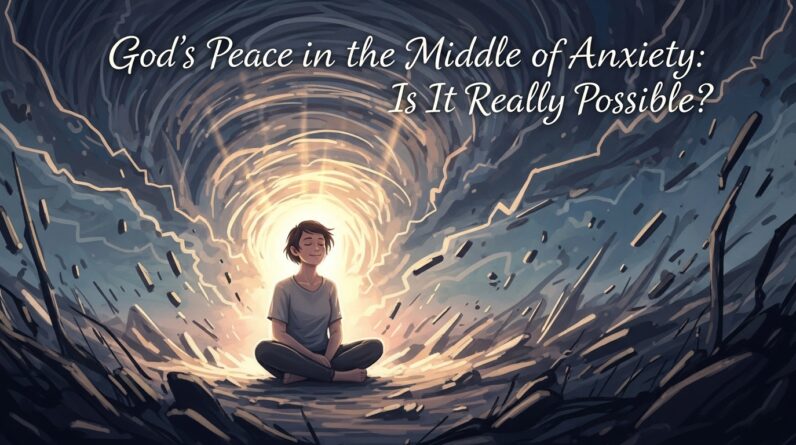


Replacing Fearful Thinking With Biblical Truth

You wake in the middle of the night with a looped conversation in your head, a list of “what ifs” that builds without permission. Your chest tightens, you replay the same fears, and you promise yourself you’ll stop tomorrow — but tomorrow looks suspiciously like today.
You aren’t the only one. Many believers discover that anxiety can return even after prayer, and you may feel guilty, confused, or alone because of it. That doesn’t mean you’ve failed; it means you’re in a real human struggle that God wants to meet you in.
There is help — practical, spiritual, and biblical. In this piece you’ll find compassionate explanation, scripture-grounded steps, and hands-on practices to begin replacing fearful thinking with God’s truth. For a deeper roadmap, there’s a fuller foundation awaiting you in the pillar resource linked below.

Why This Feels So Hard
When fear keeps circling, it’s not simply a moral shortcoming. It’s often mental exhaustion wearing down your defenses. You may be tired from long seasons of stress, and the brain’s alarm system becomes over-sensitive. That makes even small uncertainties feel like emergencies.
You’ve learned patterns — repeated cycles of worry that seem to confirm themselves. Once anxiety starts, it finds small openings and multiplies. The repetition trains your mind to default to fear. You think, “If I don’t stay vigilant, something bad will happen,” and that belief keeps fueling the cycle.
There’s also a deep human fear of losing control. You’re responsible for a family, a job, a reputation; the stakes feel high. Fear promises protection — “If you stay anxious you’ll be prepared” — but that promise steals your peace and energy. As you read this, you’ll likely recognize these exact dynamics in yourself. That’s the first helpful step: understanding rather than blaming.
What Scripture Shows Us to Do
Scripture addresses fear directly — not with condemnation but with commands, invitations, promises, and examples that train your heart.
- Command: You’re told to not be anxious because God’s ways reorient your mind. “Do not conform to the pattern of this world, but be transformed by the renewing of your mind” calls you to an active, daily work of mind renewal. See Romans 12:2.
- Invitation: Jesus invites you to come with your burdens. This isn’t a suggestion; it’s a relational offer: bring your worry and exchange it for rest. See Matthew 11:28.
- Promise: God repeatedly promises His presence and help in fear. “So do not fear, for I am with you; do not be dismayed, for I am your God” reassures you that you are not abandoned to your anxious thoughts. See Isaiah 41:10.
- Example: Scripture gives you people who wrestled with fear and doubt and learned to trust. David’s laments, Joseph’s endurance, and Hannah’s prayers show faith that grows in hard places. Reading their lives gives you practical language for your own struggle.
Scripture doesn’t pretend fear will disappear overnight. Instead, it gives a pattern: confess, reframe, pray, remember God’s promises, practice obedience, and grow in trust.
A Simple Way to Practice Faith Right Now
You want something you can do — not just concepts. Here are practical, repeatable moves you can start today to disarm fearful thinking and replace it with biblical truth.
- Breathe + Pray (1–3 minutes)
- Sit or stand and take slow breaths. Inhale for four, hold for two, exhale for six. As you breathe out, say a short prayer: “Lord, I give this fear to You.” This links a physiological calming with spiritual surrender and interrupts panic quickly.
- Short Verse Meditation (2–5 minutes)
- Pick a concise verse that counters your fear. For example, remind yourself of God’s peace: Philippians 4:6–7. Say it aloud or in your head with each breath. Let the words outnumber your worries.
- Surrender Statement (30 seconds)
- Develop a one-sentence surrender you can repeat when worry begins: “I trust God with this; I will do my part and leave the rest to Him.” Say it until your mind shifts.
- Gratitude Pivot (1–2 minutes)
- Name three specific, immediate things you can thank God for. Gratitude reorients the mind toward God’s faithfulness and chokes out fear’s power to monopolize thought.
- Identify the Pattern (5–15 minutes)
- Pull a notebook out and map your recurring fears. When do they show up? What thought always appears first? Identify triggers so you can prepare a truthful response the next time.
- Write Lies vs. Truth (10–20 minutes)
- On the left column, jot the specific fearful thoughts (e.g., “I’ll fail and everyone will judge me”). On the right, write gospel-centered truths that answer each lie (e.g., “My worth is not performance; Christ’s work covers me” or “God is with me even if things go wrong.”). Keep this list handy — it becomes your “truth bank.”
- Build a Personal Truth Bank
- Over time, collect short scripture verses, promises, testimonies, and statements of gospel truth that you can quickly access. This bank is your immediate ammunition when fear attacks.
- Repeat for Conditioning
- Repetition matters. Schedule a daily 5–10 minute renewal time: read a verse, journal a truth, and pray your surrender statement. Over weeks this reprograms your default thinking.
These micro-practices are concrete, portable, and faith-shaped. You don’t need to do all of them at once. Start with one — likely the breath-prayer or the “lies vs. truth” exercise — and add the rest as you gain momentum.

Where Real Change Slowly Happens
Change in your inner life is rarely dramatic and often slow, but steady. You’re not meant to flip a switch and never worry again; you’re meant to enter into a disciplined, grace-filled process that reshapes your mind.
This process is daily. Each moment of choosing truth over fear is a small victory that stacks. It’s also grace-driven: when you fail, shame isn’t the path forward; confession, repentance, and re-engagement are. God’s patience with you invites your patience with yourself.
Noticeable transformation happens when practices become habits. That’s why repetition and small wins are so important: they rewire your neural patterns. If you journal your “lies vs. truth” entries every evening for a month, you’ll start to see less reactive fear and more measured responses. If you memorize a handful of verses and pull them up during stress, they’ll begin to replace anxious scripts.
This is a training program for your mind. Be disciplined in the small things — the five-minute practices, the nightly truth-check — and allow time for God’s slow sanctifying work.

Learn the Bigger Picture of Mental Health & Faith
There’s a broad theological and pastoral framework that connects your immediate steps to a larger renewal of the mind. Mental health challenges intersect with spiritual life, biology, relationships, and seasons of stress. A Christian approach recognizes those realities and invites you to integrate medical care, counseling, spiritual disciplines, and supportive community.
For a fuller biblical foundation on how God brings peace and stability to your inner life, see Renewing the Mind: A Biblical Plan for Mental Calm. This article resource lays out the comprehensive roadmap — theology, daily routines, and pastoral tools — that support the practical training in this article.
Other Biblical Stories That Give Hope
You can learn from men and women in Scripture who faced fear, uncertainty, and repeated setbacks yet found God’s steadying presence.
- David — the psalmist who poured out raw fear and then renewed his trust. Read about David’s honesty and eventual reliance on God in many Psalms; his life models real wrestling that leads to faith. For a focused character study, see Lessons From The Life Of David: Faith, Failure, And God’s Grace
- Joseph — sold by his brothers and thrown into prison, Joseph’s story shows how God’s purpose can work through suffering. His long patience and reframing of injustice into God’s sovereignty is a powerful template for trusting in delay. See Genesis chapters for Joseph and reflect on God’s purpose in waiting; a helpful verse of perspective is Genesis 50:20.
- Ruth — a woman who navigated loss and uncertainty and found hope through loyalty and providence. Her story reminds you that faithful, small choices matter, even when circumstances are chaotic. See Ruth 1:16–17 for her pledge of trust.
- Job — a model for lament, honest questioning, and ultimately encountering God’s presence in suffering. His journey teaches you that faith can be maintained through honest grieving. See Job 1:20–21 for an initial posture of surrender.
These stories don’t promise immediate emotional fixes. Instead, they invite you into the long work of trusting God through disruption and into the hope that He is present and at work.

A Short Prayer for This Moment
Lord, I bring my racing thoughts to You. When fear rushes in, remind me that You are near and that Your peace surpasses my understanding. Help me to see the lies my anxiety tells and to replace them with Your truth. Give me patience for the slow work of change and the courage to practice small acts of trust. Thank You for being with me in every anxious hour. Amen.
Final Encouragement
You don’t have to let fear script your life. With compassionate understanding, daily practices, and the Word of God as your standard, you can build new pathways in your mind that align with truth. This is a training process — sometimes unglamorous, often gradual — but it’s faithful work that God honors.
Start where you are. Pick one small practice from this article — maybe the five-minute breath-prayer or the “lies vs. truth” list — and commit to it for a week. Celebrate small wins, be gentle with setbacks, and know that as you repeat truth, God’s Spirit helps you internalize it. You are not alone in this work; the God who commanded peace walks with you in the messy process of becoming.
🙏 Read Next
If this encouraged you, continue here:
When your mind won’t slow down at night and anxious thoughts keep looping:
Find calm, biblical guidance for those 2 a.m. mental battles
For deeper application and clarity on what it truly means to control your thoughts:
Learn how to take thoughts captive in real-life situations, not just in theory.
Sponsored recommendation

Acknowledgment: All Bible verses referenced in this article were accessed via Bible Gateway (or Bible Hub).
“Want to explore more? Check out our latest post on Why Jesus? and discover the life-changing truth of the Gospel!”