


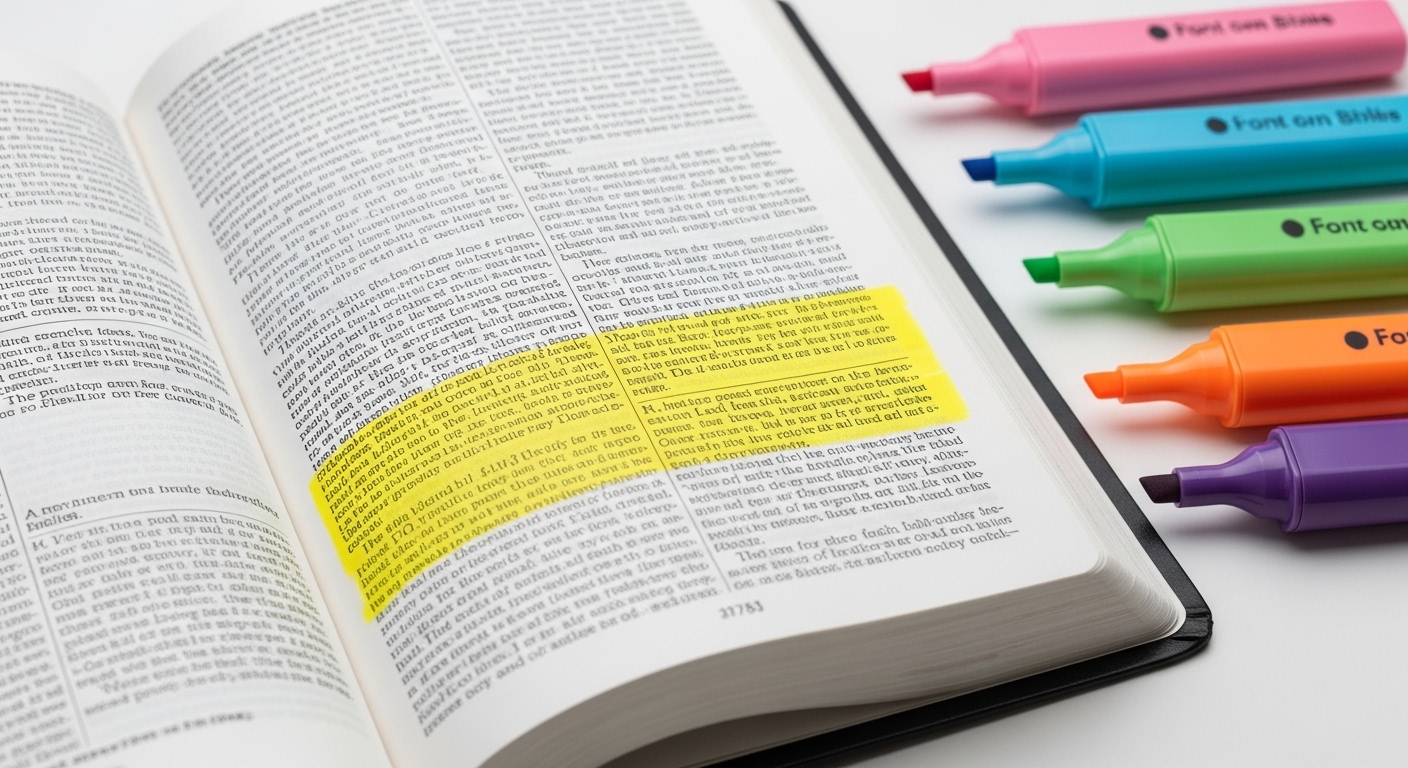
Highlighting Scripture is one of the simplest, most effective ways you can deepen your engagement with God’s Word. When you highlight passages, you mark places that encourage you, convict you, or teach you something new — and when you return to them later, those highlighted notes help you remember what God spoke into your life. But thin Bible paper can be unforgiving: standard highlighters often bleed, ghost, or feather, leaving the back page messy and the text harder to read. If you want to protect your Bible and keep your highlighting neat and readable, you need Bible highlighters no bleed — tools specifically designed for delicate pages. In this guide you’ll find handpicked products, practical tips for choosing the right highlighter, highlighting strategies, and answers to common questions so you can highlight Scripture confidently without damaging your Bible.

Introduction
When you sit down for Bible study, the last thing you want is to worry that your notes or highlights will ruin a favorite Bible. Thin Bible pages (often called Bible paper or India paper) are prized for allowing many pages to be bound in one volume, but that thinness makes them vulnerable to bleed-through from regular highlighter ink. Fortunately, manufacturers have responded by designing gel, wax, and specially formulated ink highlighters that were created with Bible readers in mind. As you read this guide, you’ll learn how these different types work, why they prevent bleed-through, and which specific products are most likely to meet your needs. You’ll also get practical guidance on color choices, tip styles, and gentle techniques for using highlighters on fragile pages.
Quick Comparison of Top Picks
It helps to get a snapshot before diving into detailed reviews. Below is a short overview of the standout options you’ll read about in full later. This quick comparison focuses on what makes each product shine when you need Bible highlighters no bleed.
- Mr. Pen Bible Highlighters — Overall best: gel stick design, twist-up, pastel colors, no bleed.
- BLIEVE Bible Gel Highlighters — Smooth, waxy gel feel with vivid yet soft colors.
- Zebra Mildliner — Dual-tip with mild pastel colors; versatile for highlighting and note-taking.
- Doodle Hog Bible Highlighters — Wax-based formula, designed especially for journaling and delicate pages.
Each of these choices aims to keep your Bible clean and readable; your personal preference will depend on whether you value versatility, tip size, color palette, or a specific application style.
⭐ Our Top Pick: Mr. Pen Bible Highlighters
The Mr. Pen Bible Highlighters are a favorite among Bible readers because they combine convenience with gentle, non-bleeding performance. These are gel stick highlighters that look and feel more like a lip balm or crayon than a traditional liquid highlighter. That gel formulation sits on the surface of the page rather than soaking in, which makes bleed-through minimal or nonexistent on most Bible papers.
Why you’ll love them: They glide smoothly without wetting the paper, they come in soft pastel colors that keep the underlying text legible, and the twist-up design means you won’t fuss with caps or worry about the tip drying out. They’re also portable and long-lasting, so you can keep them in your Bible bag for daily reading or take them to group study sessions.
Pros:
- No bleed-through on typical Bible paper
- Smooth application and long-lasting gel sticks
- Soft pastel palette that preserves readability
Cons:
- Slightly thicker tip than some fine-point options, so they’re better for highlighting than underlining
If you want a reliable familiar feel that behaves like a crayon but highlights like a pen, Mr. Pen is likely to be a great fit.
BLIEVE Bible Gel Highlighters
BLIEVE’s gel highlighters take the gel-stick concept and deliver bright yet soft highlights that stand out without overpowering the text. They’re formulated to minimize moisture transfer into the page fibers, which prevents bleed-through. The application is smooth and almost creamy, so you get even coverage that won’t smudge the print.
Why you’ll like them: If you prefer a slightly bolder look while still avoiding bleed-through, BLIEVE strikes a nice middle ground. The colors are vivid enough to be useful for color-coding themes, and the consistency makes them easy to control during long study sessions.
Pros:
- Smooth glide and pleasant application
- Good color saturation for theme-based highlighting
- Designed specifically for thin pages
Cons:
- May feel a little waxy to those used to liquid highlighters
BLIEVE is a solid choice if you appreciate a smoother, creamier application and want to color-code passages without risking bleed-through.
Zebra Mildliner Highlighters
Zebra Mildliners are almost cult favorites among journalers, students, and Bible readers. Their dual-tip design — a chisel tip on one end and a fine tip on the other — makes them incredibly versatile. What sets them apart is the “mild” color range: muted pastels that highlight without overwhelming the printed text. Many Bible readers like them not only for highlighting but also for writing notes, underlining, and decorating margins.
Why you’ll appreciate them: The variety of tip options allows you to switch between broad highlighting and precise underlining. The ink is designed to be mild and less saturated than standard fluorescent highlighters, which reduces the risk of bleed-through on many thin papers. They’re especially useful if you like to switch between highlighting and note-taking during study.
Pros:
- Dual tips for versatility
- Soft pastel ink that keeps text readable
- Great for journaling and more detailed marking
Cons:
- Some color shades may ghost slightly on ultra-thin Bible paper, so test a page first
If you want one tool that can handle both highlighting and fine notes, the Mildliner is a dependable pick.
Doodle Hog Bible Highlighters
Doodle Hog markets itself directly to Bible journalers, and their highlighters are designed with journaling in mind. They typically use a wax-based formula that resists soaking into thin pages. The color range usually includes soft pastels suitable for marking themes in Scripture while keeping text legible.
Why you’ll choose them: The waxy feel is comfortable and familiar to many users who previously highlighted with colored pencils or crayons. The formulation helps ensure very little to no bleed, and some users find the finished look more like a soft watercolor wash than a bright fluorescent stripe.
Pros:
- Specifically targeted to Bible journaling
- Wax-based formula with minimal bleed
- Nice palette for thematic study
Cons:
- Can feel unfamiliar if you’re accustomed to liquid highlighters
Doodle Hog is a strong option for creative Bible journalers who want safe, gentle highlighting that pairs well with margin art and notes.
More Options Worth Considering
Beyond the four featured picks, there are other products and formats you might want to try depending on your study style. Some colored pencils, very fine pencil crayons, and certain erasable highlighters are useful alternatives. Brand-wise, look for highlighters that advertise “no bleed” and “safe for Bible paper.” If you like variety, you might pick up one gel-style and one dual-tip to experiment with.
Choosing a couple of different types for different tasks — for example, gel highlighters for main verses and Mildliners for underlining or notes — can give you flexibility while preserving your Bible.
Buying Guide: How to Choose Bible Highlighters
Choosing the right Bible highlighter comes down to a few practical factors. You should consider the type of highlight (gel, wax, liquid), the color palette, tip size and shape, and how you plan to use the tool in your study. Below are deeper explanations of these elements so you can choose wisely.
1. Look for “No Bleed” Technology
If your main concern is protecting fragile Bible pages, prioritize gel- or wax-based highlighters. These formulas sit on the surface instead of soaking into the paper fibers. You’ll see little to no seep-through and minimal ghosting. Some liquid highlighters are also formulated to be thin-page safe, but many standard fluorescent highlighters are not.
Understanding the formulation will save you grief: gel sticks and wax-based highlighters are usually safest, while traditional liquid inks are more likely to cause problems.
2. Choose Soft Colors
Soft pastel colors are the golden rule for Bible study. Bright neon colors may look vibrant, but they can obscure the print and make reading harder. Pastels provide contrast without overpowering the words. Consider starting with a limited palette — for example, soft yellow, pale green, light blue, and soft pink — then expand if you need more nuance for color-coding themes.
You’ll find that pastel shades also look nicer in the margins and create a calmer, more reflective feel in your study notes.
3. Consider Tip Size and Shape
Different tip shapes offer different benefits for how you study:
- Chisel tip: Best for highlighting whole verses quickly and evenly.
- Fine tip: Ideal for underlining, marking dates, or adding small notes.
- Dual-tip: Offers both options in one tool for maximum flexibility.
- Twist-up stick: Often thicker and comfortable for broad strokes.
Consider how detailed your writing is and whether you do a lot of margin note-taking. If you like to underline and write small notes, a dual-tip that includes a fine point will be valuable.
4. Decide Between Gel, Wax, and Liquid
The underlying chemistry matters:
- Gel: Provides a smooth glide, sits on the page, and minimizes bleed. It’s often sold as a twist-up stick.
- Wax: Similar to colored wax crayons; minimal bleed and great for a softer look.
- Liquid (specialized): Some liquid highlighters are specifically formulated to be low-bleed, but many standard liquids are not suitable for thin Bible paper.
Gel and wax are generally the safest bets for Bible paper. Pick the format that feels best in your hand and matches your style of study.
5. Think About Durability and Portability
You probably want tools that last and don’t dry out. Twist-up gel sticks and capped dual-tip markers are usually built to be portable. If you plan to carry highlighters in a Bible cover or bag, consider caps that click securely or twist mechanisms that don’t extend too far and break.
6. Smell and Allergies
Some markers have stronger scents due to chemicals in the ink. If you’re sensitive, try brands that advertise low odor. Gel sticks and wax-based options generally have milder smells than solvent-based liquid highlighters.
7. Price and Availability
Bible-friendly highlighters come in a range of prices. You don’t need premium markers to get good results; even budget gel sticks can perform well. If you study in a group or give pens away as gifts, consider mid-range options that balance cost and quality.
How to Test Highlighters Safely on Your Bible
Before you commit to a whole set, test any new highlighter on a discreet spot or on the inside back cover of your Bible. Here’s a gentle step-by-step approach:
- Choose a non-critical page or the Bible’s inside back cover.
- Use the highlighter lightly with a single stroke and allow it to fully dry for a few minutes.
- Check the reverse side for seep-through and see how much ghosting appears.
- Try writing over the highlight to ensure the printed text is still readable.
- Test layering by highlighting the same verse twice after it dries to ensure no cracking or clumping.
This small test will save you from damaging important pages and help you judge whether the color and tip size suit your needs.
Practical Highlighting Techniques for Deeper Bible Study
Highlighting is not just decorative — it’s a study tool. Use highlighting to reinforce memory, reveal connections, and track themes. Below are practical methods to make your highlighters work harder for your study time.
Color-Coding Themes
Pick 4–6 categories you often study and assign each a color. For example:
- Promises of God — soft blue
- Commands/Instruction — pale green
- Prophecies — light purple
- Promises to you personally — soft pink
- Prayer-related verses — light yellow
When you consistently use the same colors for the same themes, you’ll quickly scan a page and identify patterns without re-reading every verse.
Highlight Sparingly
Resist the urge to highlight every inspirational sentence. Highlighting everything dilutes the power of the technique. Be selective and highlight only the most meaningful or study-relevant phrases. This restraint will help the highlighted verses stand out when you return to them.
Use Marginal Notes and Symbols
Combine small margin notes with highlights to capture why the verse stood out to you. A few shorthand symbols (★ for promise, ! for convicting passages, ? for questions) make your study notes richer without cluttering the text.
Underline vs. Highlight
Use underlining for emphasis within a verse and highlighting to mark the verse as thematically important. If your highlighter has a fine tip, you can underline the phrase that strikes you and highlight the entire verse.
Layer Carefully
If you layer colors, allow each layer to fully dry to avoid smudging. Layering can be a great way to indicate intersecting themes (for example, a verse that’s both a promise and a command).
Caring for Your Highlighters and Your Bible
Taking care of your tools and your Bible will extend their lifespan and keep your study environment pleasant.
- Store markers capped and upright if recommended by the manufacturer to prevent drying.
- Keep gel sticks clean by wiping the tip gently on a scrap paper if they attract dust.
- Use a thin sheet of scrap paper behind the page when you’re testing a new highlighter in case it bleeds slightly through.
- For especially thin pages, consider using a clear Bible mat or a card behind the page as you write or highlight to prevent indentations.
Small care habits maintain neatness and prevent frustration during study.
Alternatives to Highlighters You Might Prefer
Highlighters aren’t the only way to mark Scripture. If you’re worried about even ghosting or prefer a subtler method, consider these alternatives:
- Colored pencils: Offer precise control and no wet bleed; you can blend colors lightly.
- Pencils or mechanical pencils: Great for underlining and not permanent if you want to change later.
- Thin colored pens designed for Bible paper: Some pigment-based pens are safe when used sparingly.
- Sticky tabs or washi strips: These attach to the page edge so the text stays untouched and you can remove or replace them.
- Digital highlighting: If you use a Bible app, you can highlight without touching paper and sync across devices.
Each alternative comes with trade-offs in permanence, tactile satisfaction, and visual presence — choose what helps you engage most meaningfully with Scripture.
Common Mistakes to Avoid
Even with the best tools, mistakes happen. Here are a few pitfalls to watch out for.
- Highlighting everything: When everything is highlighted, nothing stands out.
- Using neon fluorescent colors: They can obscure text and be harsh on the eyes.
- Pressing too hard: Excess pressure can indent fragile pages or cause more transfer.
- Forgetting a test stroke: Always test on a spare edge or scrap to avoid surprises.
- Relying on one color: A limited color palette is more helpful than a rainbow that confuses themes.
Avoiding these mistakes will keep your Bible tidy and your study habits effective.
Top Brands to Explore for Bible-Friendly Highlighters
Beyond the products we’ve reviewed, you may want to look at these brands that often cater to delicate paper or journaling needs: Stabilo (look for their pastel BOSS range), Faber-Castell (certain gel crayons and colored pencils), Tombow (Mild or pastel brush pens for light-handed users), and Pentel (some erasable highlighters with lighter ink). When you explore these brands, seek out user reviews specifically mentioning Bible paper to confirm no-bleed performance.
Frequently Asked Questions (Expanded)
What highlighters work best for Bible pages?
Gel and wax-based highlighters, as well as specialized low-bleed liquid markers like Mildliners, work best for Bible pages. Look for products labeled “Bible-friendly,” “no bleed,” or user reviews that confirm performance on thin paper.
Do gel highlighters bleed through Bible pages?
Most gel highlighters formulated for Bible pages do not bleed. Gel sticks are designed to sit on top of the page fibers rather than soak in, which prevents bleed-through. Still, test a stroke on an inconspicuous page first to be sure.
Can I use regular highlighters in my Bible?
You can, but it’s risky. Many regular fluorescent highlighters contain solvent-based inks that diffuse through thin Bible paper, causing bleed-through and making the back side harder to read. If you do use them, test carefully on a spare page first.
Are erasable highlighters safe for Bibles?
Some erasable highlighters (heat-sensitive ink like FriXion) can work if they’re faint and dry quickly, but the erasure process uses heat and friction and may cause smudging or spotting on thin paper. Use with caution and test first.
How do I remove or fix a bleed problem?
If you notice slight ghosting (show-through) there’s not much you can do to remove it without damaging the page further. Preventive care is best: test new highlighters and use minimal pressure. If a page is severely stained, a conservator may help, but that’s rarely practical for most Bibles.
Is it okay to highlight in study Bibles with commentary?
Yes, but be mindful: commentary pages often use thicker paper and may accept stronger colors, while the main text pages are often thinner. Test both types to avoid unintended bleed-through on the main text.
Final Thoughts
Highlighting Scripture should be an act of reverence and helpfulness, not a source of anxiety about ruining your Bible. By choosing Bible highlighters no bleed, such as gel or wax-based sticks and soft pastel markers, you can protect thin pages while marking the verses that matter to you. Mr. Pen’s gel sticks are a trusted top pick for overall performance, but BLIEVE, Zebra Mildliner, and Doodle Hog all offer great alternatives depending on whether you prefer a dual-tip, a creamy gel, or a waxy finish. Pair your favorite highlighter with a simple color-coding system, test any new tool on a spare edge, and use gentle techniques to keep your Bible clean and readable.