

The early church didn’t begin randomly—it was the result of everything Jesus accomplished through His resurrection, ascension, and the coming of the Holy Spirit at Pentecost. To understand this foundation, follow the timeline in What Happened After Jesus Rose From the Dead? (Full Timeline Explained) and see how it all leads to What Happened At Pentecost? (Acts 2 Explained Simply).
You’re asking a big, exciting question: how did the early church start? The Book of Acts walks you through the moment-by-moment birth and growth of the Christian movement after Jesus’ resurrection and ascension. In this article you’ll explore the key events, the people, the work of the Holy Spirit, and the features of early Christian life that helped the church move from a small group of followers in Jerusalem to a worldwide movement reaching Jews and Gentiles alike. You’ll also get practical takeaways so you can see how that story shapes your life and community today.

Quick Answer
You’ll find the short takeaway here: the early church began after Pentecost through preaching, empowered witness by the Holy Spirit, committed community life, baptism, and a missionary impulse that sent believers outward. These elements—teaching, fellowship, shared life, and Spirit-led boldness—are the bones of the church’s beginning.
Verse
The early Christian community is summarized in one powerful snapshot: Acts 2:42. That verse shows you the early priorities—teaching, fellowship, breaking of bread, and prayer.
Why Acts Matters for Understanding the Beginning
Luke wrote Acts as a historical-theological bridge. He follows the risen Jesus’ promises and shows how the Spirit fulfills them by transforming scattered disciples into a movement that worships, shares, and witnesses. When you read Acts you’re reading not just a record of events but a theological explanation of how God builds the church—through people, Spirit, teaching, and mission.
The Immediate Background: Ascension and Promise
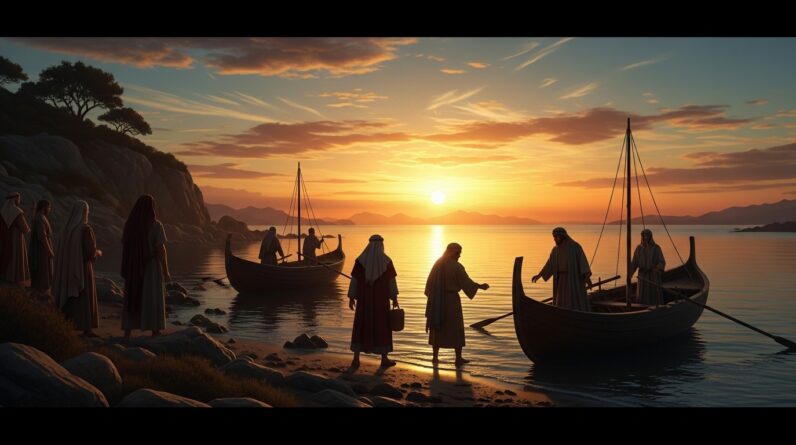
Before the church actually starts, you need to see the setup. After his resurrection, Jesus met the disciples, taught them, and gave clear instructions. He promised the Holy Spirit to empower them to be witnesses “in Jerusalem, and in all Judea and Samaria, and to the ends of the earth” (Acts 1:8). He then ascended into heaven, leaving them with a promise and a mission. That combination—a promise of power and a clear mission—sets the stage for everything you see in Acts.
Waiting in Prayer: The Community Prepares
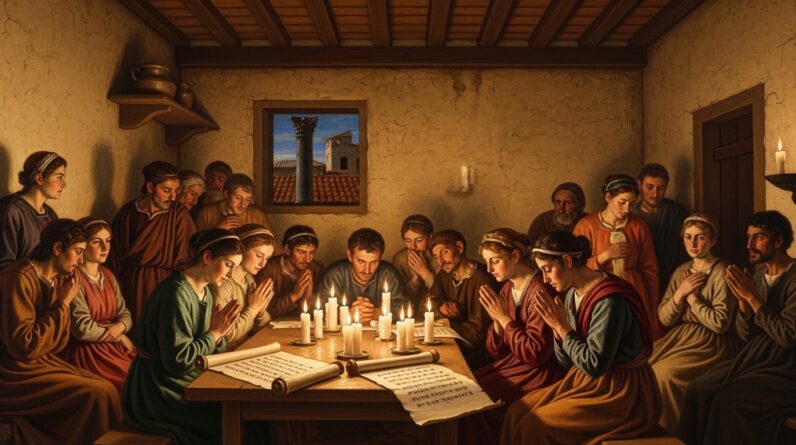
Right after the ascension the disciples returned to Jerusalem and devoted themselves to prayer, waiting for the promised Spirit. Jesus had told them to stay, and they obeyed. The moment of waiting wasn’t passive; it was a disciplined, expectant community gathered together in unity and prayer (Acts 1:4). That posture of dependence shapes how you should think about beginnings: prayer and unity matter.
🔥 The ROLE of the Holy Spirit
To understand who the Holy Spirit is, read Who Is the Holy Spirit? (Simple Bible Explanation)
Affiliate disclosure: This article contains affiliate links. As an Amazon Associate I earn from qualifying purchases. If you buy through these links, BibleStoriesHub may earn a small commission at no extra cost to you. This does not affect which resources we recommend.
Pentecost: The Spirit Arrives
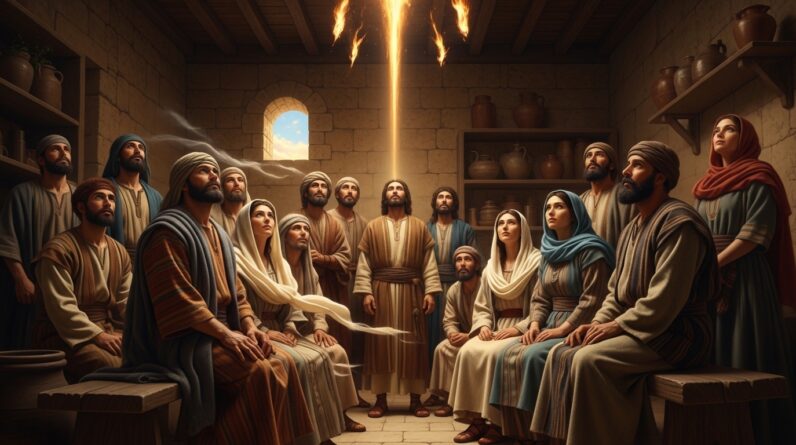
Pentecost is the watershed moment for the start of the church. On the day of Pentecost, the Holy Spirit came with visible and audible signs—wind, tongues of fire—and filled the gathered believers. They began to speak in other languages, and a crowd from many nations heard them in their own tongues. This supernatural act not only fulfilled Jesus’ promise but also validated the message of the apostles and launched public proclamation (Acts 2:1-4). When the Spirit arrives, the church is born as a public, visible movement.
Peter’s Sermon: Repentance and Baptism
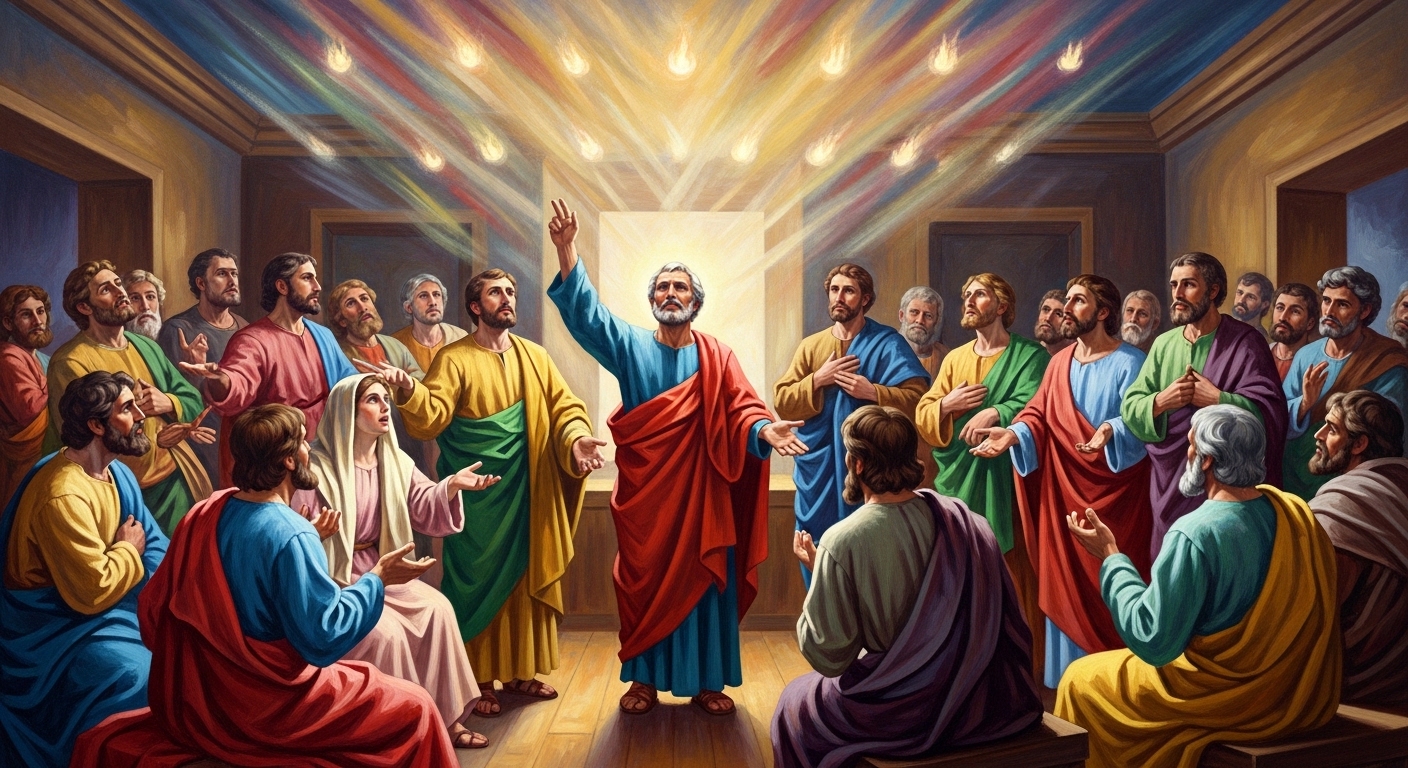
The arrival of the Spirit led Peter to preach boldly. In Jerusalem a large crowd gathered and Peter explained the events in light of Scripture and Jesus’ life, death, and resurrection. His message called people to repent and be baptized for forgiveness and to receive the gift of the Holy Spirit. That day about three thousand were added to the community after they responded in faith (Acts 2:14; Acts 2:41). You’ll notice the pattern: preaching, conviction, repentance, and a visible sign—baptism—mark the early church’s growth.
The Marking Characteristics: Teaching, Fellowship, Breaking Bread, and Prayer
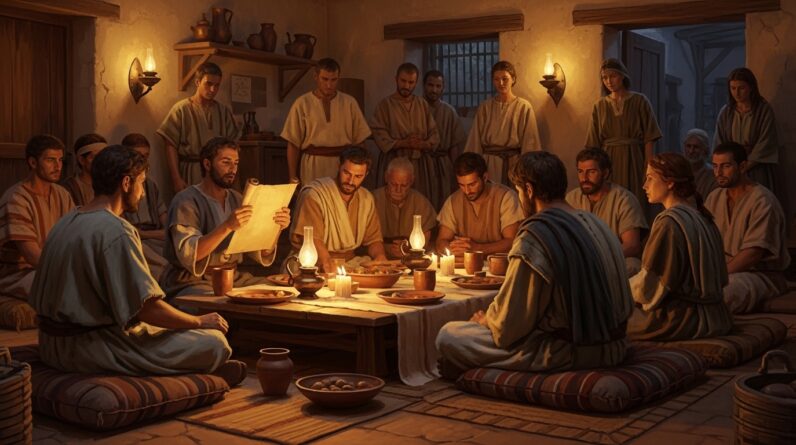
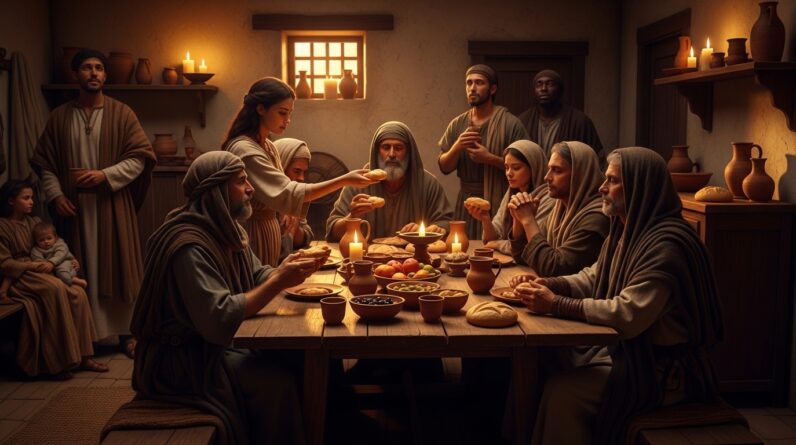
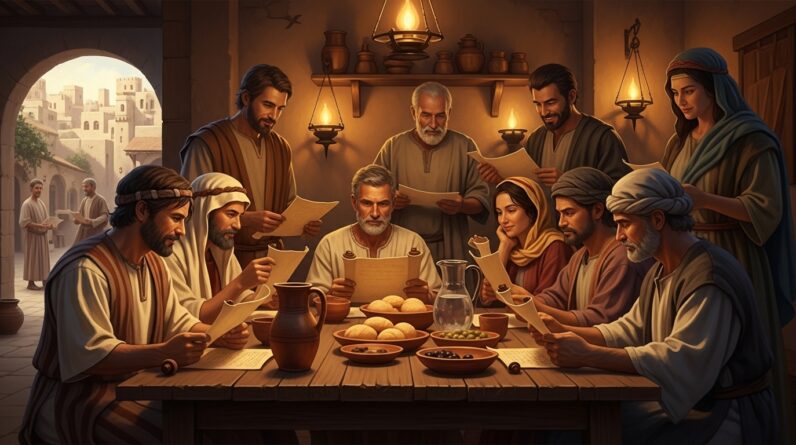
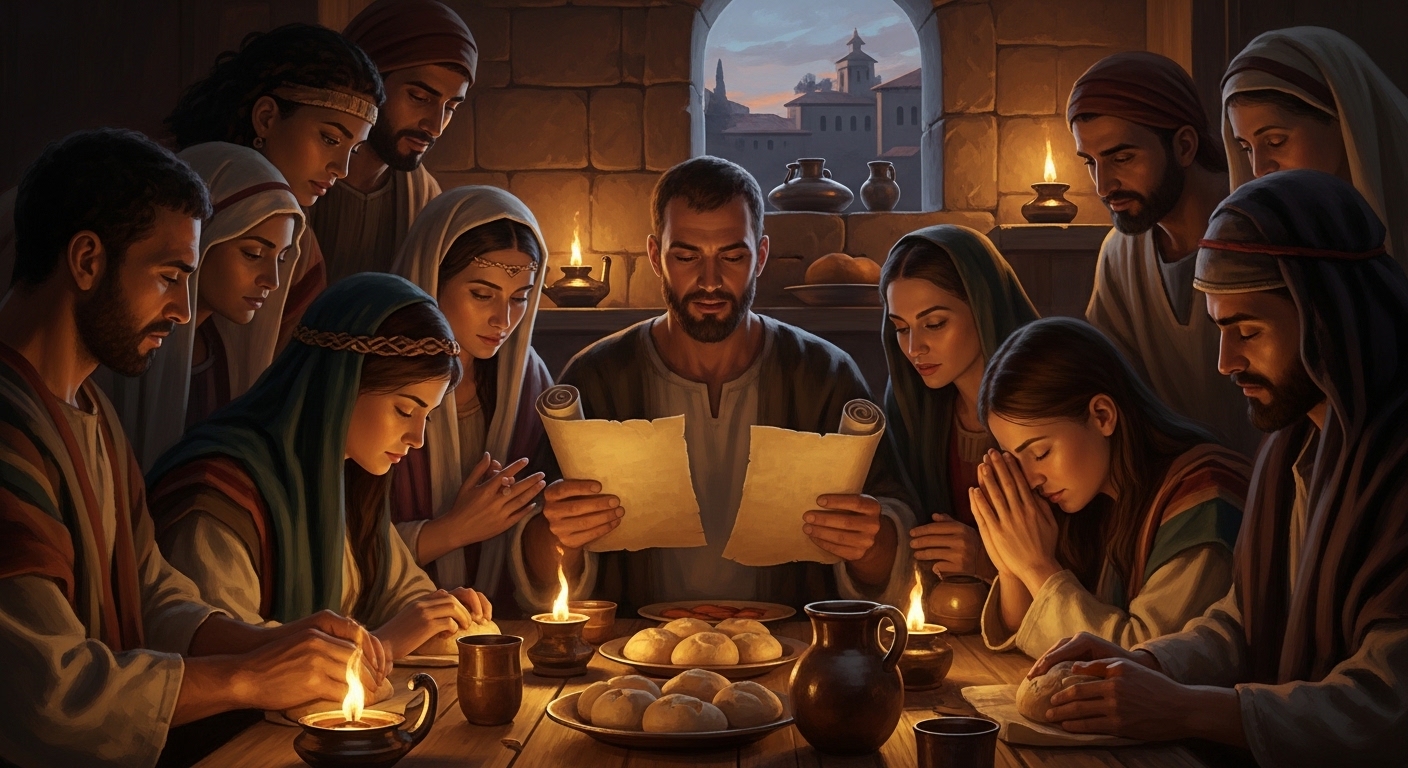
Luke gives you a snapshot of the early church’s rhythm in one verse: they devoted themselves to the apostles’ teaching, to fellowship, to breaking of bread, and to prayer (Acts 2:42). Each of those elements matters:
- Teaching: The apostles passed on Jesus’ teachings and the theological meaning of his life, death, and resurrection. You can’t separate community life from formation in truth.
- Fellowship: The believers shared life and supported one another emotionally, materially, and spiritually.
- Breaking of bread: This likely refers to both communal meals and the Lord’s Supper, practices that shaped identity and remembrance.
- Prayer: The community depended on God and stayed in active communion with him.
Together, these practices made the early church a distinctive, resilient community, and they shaped how the mission took place.
⚡ What empowered the apostles
You can explore this further in What Does The Holy Spirit Do? (7 Powerful Roles Explained)
Generosity and Shared Life
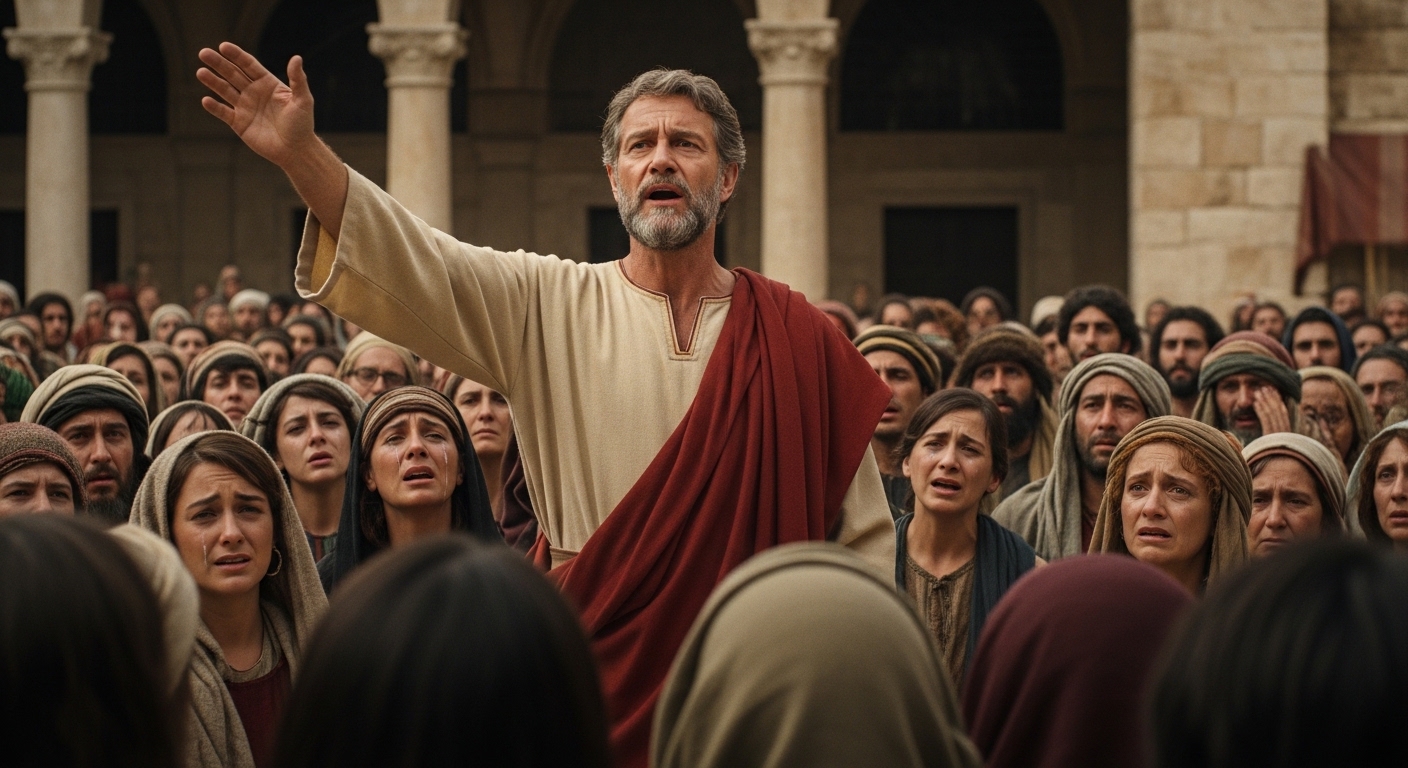
Act 4 gives an unforgettable picture of the communal life of the early church. Believers shared possessions, sold property, and distributed resources so that there was no needy person among them (Acts 4:32). That radical generosity was an essential witness. When you read about it, you see how material sharing showcased unity and cared for vulnerable members. The church’s life wasn’t just private piety; it was social transformation, modeling the kingdom Jesus taught.
🙏 HOW people responded
For a personal application, read How To Receive The Holy Spirit (Biblical Guide)

Organization and Conflict: Deacons and Leadership
As the community grew, practical problems arose, especially over how to care for widows from different cultural groups. The apostles appointed seven men to oversee the fair distribution of resources, creating the earliest form of deaconship and administrative order (Acts 6:1-7). This moment is important because it shows that growth demands structure, that leaders are needed to shepherd practical needs, and that conflict can be resolved in ways that preserve mission and unity.
Witness amid Opposition: Persecution Spreads the Message
Persecution comes into the story quickly. After Stephen’s martyrdom, a wave of persecution drove many believers out of Jerusalem, scattering them throughout Judea and Samaria. Rather than extinguish the movement, this scattering spread the message as disciples preached wherever they went (Acts 8:1-4). You’ll see a counterintuitive pattern in Acts: opposition often accelerates mission. When you face trials, the tendency is to hunker down, but the early church shows that persecution can become a channel for witness.
The Inclusion of Gentiles: A Major Turning Point
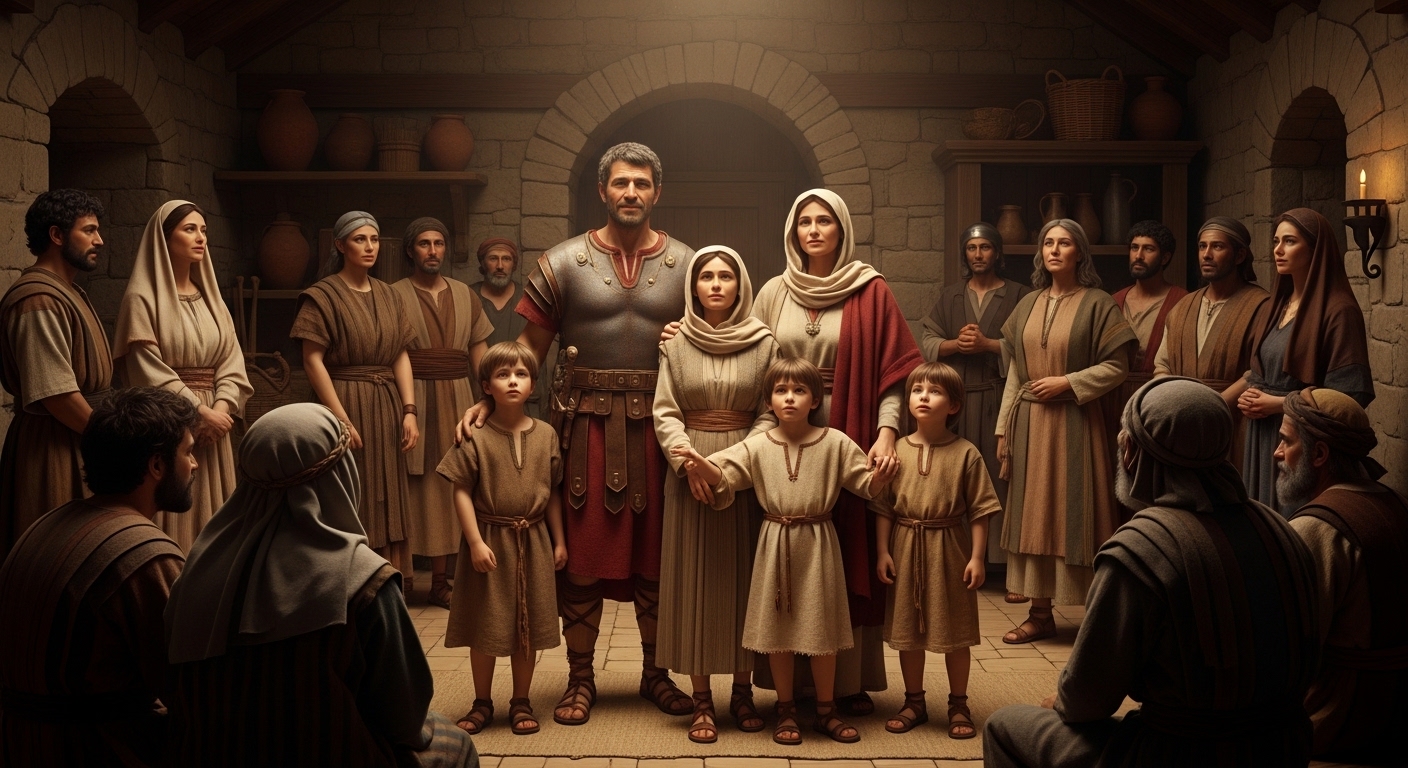
A huge question in the early church was whether Gentiles (non-Jews) could be part of God’s people without first becoming Jews. That question surfaces dramatically in the story of Cornelius, a Roman centurion whose household receives the Spirit while Peter preaches. Peter’s vision and the pouring out of the Spirit on Gentiles convinced him that God shows no partiality (Acts 10:44). This led to a broader theological reckoning and heated debate later at the Jerusalem Council. You’ll see that the early church had to rethink identity: the church becomes a multiethnic family united by faith in Christ and marked by the Spirit.
The Jerusalem Council: A Communal Decision
When questions about Gentile inclusion threatened unity, the apostles and elders met in Jerusalem to decide what to require of Gentile believers. The Council of Jerusalem concluded that Gentiles did not need to follow the full Jewish law to be part of the church; they were asked to abstain from a few practices for the sake of peace and witness (Acts 15:6-11). This decision is pivotal: it establishes the principle of unity in diversity and shows that the church is a community making decisions under the guidance of the Spirit.
Missionary Impulse: From Jerusalem to the Ends of the Earth
Jesus’ mission blueprint—Jerusalem, Judea, Samaria, and the ends of the earth—unfolds in Acts. After Jerusalem, the message spreads to Samaria and then to Antioch, where followers are first called “Christians” (Acts 11:26). Antioch becomes a launching center for Paul and Barnabas’s missionary journeys, and as they travel, new churches are planted across Asia Minor and Europe. The missionary impulse in Acts demonstrates that the church is not a static institution; it is movement-oriented, always crossing boundaries to proclaim Christ.
Paul’s Conversion and Mission: A Game Changer
One of the most dramatic stories is Saul’s conversion on the road to Damascus. Saul, a persecutor of the church, encounters the risen Jesus and becomes Paul, the apostle to the Gentiles (Acts 9:3-6; Acts 9:18). Paul’s subsequent missionary journeys, letters, and theological reflections shape much of Christian identity and practice. His example shows you how God can repurpose the most unlikely people and how personal transformation fuels public mission.
✝️ HOW the church began
This moment is rooted in Pentecost, which you can explore in What Happened At Pentecost? (Acts 2 Explained Simply)
How Early Churches Functioned: Worship, Teaching, and Discipline
Across Acts you see recurring patterns in how early churches operated. They gathered for prayer and worship, devoted themselves to the apostles’ teaching, celebrated the Lord’s Supper, healed the sick, and appointed leaders to guide communities. When problems arose, the churches handled discipline and sayings of faith publicly and pastorally. You’ll notice a balance between charismatic experience (miracles, Spirit-empowerment) and institutional formation (elders, councils). The early church wasn’t chaotic; it combined Spirit-empowered witness with structures to sustain growth.
Signs and Wonders: Confirming the Message
Throughout Acts, God confirms the apostles’ message with signs and wonders—healings, exorcisms, and deliverances—that bear witness to the kingdom breaking into the present age. Miracles are not the core of the church’s identity but serve as confirmations that the message is from God. When you read these stories, you see how God validated the gospel in tangible ways, drawing more people to faith and strengthening the church’s confidence.
Suffering and Perseverance: A Pattern of Loss and Growth
The early church doesn’t have an easy story. Leaders suffer; believers are imprisoned, flogged, or martyred. Yet the community perseveres, often growing in the midst of suffering. You’ll notice Luke’s theological point: suffering doesn’t mean God’s absence; rather, it often accompanies mission. The church learns to witness with courage and to see trials as opportunities for gospel spread.
The Role of Women and Diverse Leaders
While many of the leadership titles are male-dominated in the narrative, Acts includes notable women and diverse leaders who participated in the life and mission of the church. Women like Lydia in Philippi open their homes for church gatherings, and others are named among co-workers in the ministry. The movement’s growth depended on a broad array of contributors, and you can read Acts as a story of diverse people participating in God’s mission.
Theological Significance: Spirit, Sacrament, and Community
Theologically, Acts shows you three core dynamics at work: the Spirit’s power, sacramental practices (baptism and Lord’s Supper), and communal witness. The Spirit equips witnesses, baptism marks entrance into the community, and communal life manifests the gospel’s social implications. These dynamics are not optional extras; they constitute how God intends the church to be. For you, that means the church is both supernatural and tangible—empowered by God and expressed in real relationships.
Practical Applications: What You Can Learn from the Early Church
The story of the early church gives you practical takeaways you can apply in your life and community. First, you see that community matters—whether for support, formation, or mission. Second, teaching and prayer are foundational for growth; the church begins with discipleship. Third, mission is communal: the church doesn’t send individuals in isolation; it sends communities that support, pray for, and sustain apostles and missionaries. Finally, openness to the Spirit requires humility and willingness to change practices for the sake of the gospel.
Community Matters
One clear application is that you can’t do Christian life alone. The early church modeled daily practices of fellowship, mutual care, and shared life (Acts 2:42; Acts 4:32). If you want to grow spiritually, you need a community that teaches, prays, eats, and serves together. Community shapes your faith, prevents isolation, and amplifies witness.
Missional Living: Everyday Witness
The early church’s witness wasn’t limited to pulpit sermons; it was everyday life—testimony by speech and by deed. The believers’ generosity, integrity, and courage made their witness credible. When you live faithfully in your workplace, neighborhood, and relationships, you participate in the same missionary impulse. The church grows when ordinary people are faithful in ordinary places.
Navigating Conflict and Growth
Acts also teaches you how to navigate conflict. The early church faced theological, cultural, and practical disputes, and it resolved them through communal discernment, prayer, and leaders willing to make decisions for unity (Acts 15:6-11). If you’re part of a church, you’ll face disagreements. The Acts model encourages you to address them constructively, centering the mission over preferences.
Prayerful Expectancy: Waiting on God
The beginning of the church emphasizes prayerful waiting. Before anything big happens, the disciples prayed. That’s a pattern you can imitate: you wait on God, seek the Spirit, and then act in obedience. Prayer is not a prelude to action only; it’s the environment in which action is empowered and sustained.
The Long View: From Small Groups to Global Church
When Luke penned Acts he wanted you to see the arc: from a handful of followers to a church spreading across continents. The growth was neither simple nor uniform, but it was consistent: the Spirit led, communities formed, and missionaries were sent. For you, this long view encourages patient faithfulness—small beginnings can become movements when God is at work.
Critical Reflections and Honest Questions
As you read Acts you might ask sharp questions: Were all early practices ideal? Did some decisions exclude or marginalize? How do you reconcile suffering with God’s goodness? These are important theological and pastoral questions. Acts gives you a narrative that invites questions rather than offering simplistic answers. Your faith grows when you wrestle honestly with the text and allow the Spirit to shape your understanding.
👑 WHY this was part of God’s plan
This becomes clearer when you understand Why Did Jesus Ascend Into Heaven? (Biblical Reasons Explained)
📚 Recommended Resources for Spiritual Growth
🥇 #1 Best Overall (Most Recommended)
👉 NIV Study Bible
✔ Beginner-friendly
✔ Clear explanations
✔ Best balance of depth + simplicity
👉 Top Pick for most readers studying the Book of Acts
👉 NIV Study Bible – Check latest price on Amazon
👉 View full details here
🥈 #2 Best For Daily Habit
👉 Jesus Calling
✔ Short daily readings
✔ Easy to stay consistent
✔ Highly engaging
👉 Top Pick for building a daily devotional routine
👉 Jesus Calling – Check latest price on Amazon
👉 Read reviews on Amazon
🥉 #3 BEST FOR REFLECTION
👉 Christian Prayer Journal Hardcover
✔ Simple and flexible
✔ Great for writing prayers
✔ Encourages consistency
👉 Top Pick for starting a prayer journal habit
👉 Christian Prayer Journal Hardcover – Check latest price on Amazon
👉 View on Amazon
Conclusion: The Church Began with Power
The early church began with power—the power of the Holy Spirit, the clarity of apostolic teaching, the warmth of communal life, and the courage of witness. From Pentecost to Paul’s missionary journeys, you see a dynamic movement formed by dependence on God and outward-looking mission. If you want to understand the church’s origin, Acts gives you the blueprint: Spirit + Word + Community + Mission.
Prayer
Lord, help me grow in community and boldness. Fill me with your Spirit, teach me your ways, and help me live with generosity and courage. Amen.
🔁 To understand the FULL STORY
To see how everything connects, read What Happened After Jesus Rose From the Dead? (Full Timeline Explained) and What Happened At Pentecost? (Acts 2 Explained Simply).
🔥 To go deeper into the HOLY SPIRIT
Learn more in Who Is the Holy Spirit? (Simple Bible Explanation) and What Does The Holy Spirit Do? (7 Powerful Roles Explained).
🙏 To apply this PERSONALLY
Take the next step by reading How To Receive The Holy Spirit (Biblical Guide).
✝️ To understand the FOUNDATION
Go deeper into the core message in The Meaning of the Resurrection of Jesus Christ.