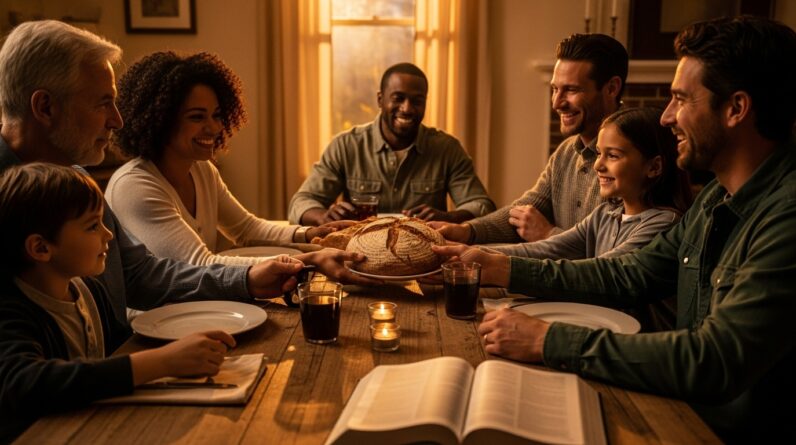


Should Christians celebrate Halloween? The question can become personal when your child brings home a school invitation, a neighbor asks about trick-or-treating, or your church announces a fall festival. You want to honor Jesus, guide your children wisely, and respond kindly to people whose choices differ from yours.
The Bible does not mention Halloween by name. Christians should reject occult practices and evaluate other activities through Scripture, conscience, love for others, and their children’s needs. A costume parade, a neighborhood candy walk, and an attempt to contact spirits involve different actions. They deserve careful evaluation rather than one assumption about everything happening on October 31.
This guide offers a Christian approach to those decisions. The passages below were not written about modern Halloween. We will consider their original settings before applying their principles to family life.
Why Do Christians Disagree About Halloween?
For some Christian families, Halloween brings concerns about witchcraft, frightening imagery, and treating evil as entertainment. Others see opportunities for hospitality, appropriate costumes, and spending time with neighbors. Some churches offer alternative gatherings, while other families prefer an ordinary evening at home.
These differences can reflect family experiences, church teaching, cultural background, and conscience. Begin by asking what a person actually means by “celebrating Halloween.” You may discover that you are discussing different activities.
History deserves care, too. Halloween’s name developed from All Hallows’ Eve, the evening before All Saints’ Day. Its modern customs reflect a mixture of religious and cultural traditions. For background, see HISTORY’s overview of Halloween’s origins and traditions. A brief history can provide context, but it cannot replace examining what your family would actually do.
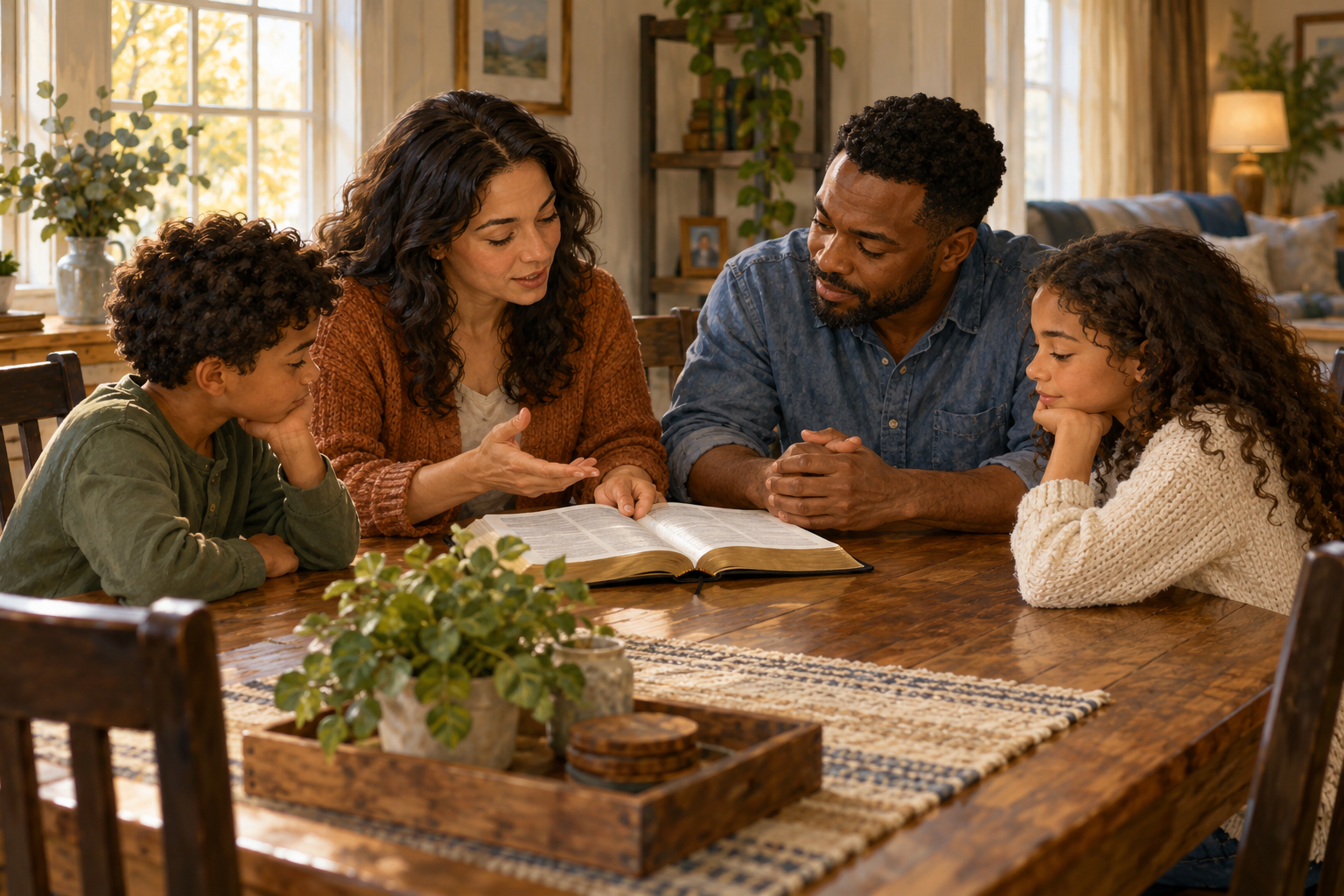
Four Biblical Principles for Deciding About Halloween
1. Honor God and Consider Others
Read 1 Corinthians 10:23–33 alongside the preceding warning in 1 Corinthians 10:14–22. Paul addresses idolatry, food associated with sacrifices, ordinary meals, and the effect of a believer’s choices on others.
He prohibits participation in idol worship, yet does not require believers to investigate every piece of meat sold in the market. When a meal raises a specific concern about its connection to sacrifice, he tells them to consider conscience and the other person. The context holds faithfulness to God and concern for others together.
Applied to Halloween, this means asking more than whether something is popular or technically permitted. Consider what the activity involves, what it communicates, and whom it affects. Your freedom should serve love rather than become a reason to dismiss another person’s concerns.
Family application: Before accepting an invitation, find out what is planned. A meal with neighbors and participation in a spiritual ritual require different responses.
Learning to discern God’s will in everyday decisions can help you approach seasonal invitations through Scripture and prayer.
2. Reject Occult Practices
In Deuteronomy 18:9–14, Israel is warned against adopting practices of the surrounding nations, including divination, sorcery, and consulting the dead. These commands concern seeking spiritual knowledge or power through forbidden practices.
The New Testament also describes believers turning away from magic in Acts 19:18–20. Following Christ involves a change of allegiance, not simply adding Christian language to practices that contradict faithfulness to God.
Our application is to decline activities that involve fortune-telling, attempts to contact spirits, or actual occult rituals. Calling an activity a party game does not settle what it asks participants to do.
At the same time, receiving a wrapped candy or wearing an animal costume does not by itself establish participation in those practices. Evaluate the action honestly rather than treating every seasonal object as equivalent.
Family application: If a gathering includes a séance or a fortune-telling activity, explain why your family will not join that part, and choose a different gathering if necessary.
For a broader biblical understanding of standing firm in Christ, explore what the Bible teaches about spiritual warfare.
3. Choose What Shapes Your Thoughts Wisely
In Philippians 4:8, Paul directs believers toward what is true, honorable, pure, and worthy of praise. Read the surrounding encouragement in Philippians 4:4–9 to see the connection between prayer, thought, and daily practice.
Applying this passage to entertainment requires discernment. It does not provide a list of approved costumes or movie ratings. It does invite parents to consider what their family is dwelling on and what an experience encourages them to admire.
Ask whether a movie, decoration, or event celebrates cruelty, makes evil attractive, or overwhelms your child. A child’s distress deserves attention even when adults consider something harmless fun. Children of different ages and temperaments may need different boundaries.
Family application: Preview unfamiliar entertainment, discuss costume choices, and give children permission to leave an activity that frightens them. They do not need to prove their courage by staying.
Choosing what fills our thoughts is an ongoing practice. These daily habits for renewing your mind and strengthening faith can help you carry that discernment beyond a single holiday.
4. Respect Conscience and Avoid Contempt
Romans 14 addresses disagreements among believers about food and observing particular days. Paul tells them to welcome one another, stop treating each other with contempt, and pursue peace and mutual encouragement.
This chapter is not a direct ruling on Halloween. We can apply its principles to genuinely disputable choices, while recognizing that conscience cannot make an explicitly forbidden practice acceptable.
A family that declines a costume event should not be pressured to attend. A family that chooses a suitable neighborhood activity should not automatically be accused of rejecting Christ. Discuss the specific choice and its reasons.
Conscience also needs instruction from Scripture. Take time to pray, read, and seek counsel rather than letting peer pressure make the decision. If you remain troubled, pausing or declining is a reasonable response.
Family application: Teach children to explain your household’s decision without insulting a friend whose family decides differently.
As you examine your conscience, keep learning to walk in the Holy Spirit daily, responding to God’s Word with humility and obedience.
How These Principles Apply to Common Halloween Activities
Costumes and School Parades
A child wants to dress as a firefighter, an astronaut, or a favorite animal. Consider the costume’s meaning, modesty, safety, and suitability. Dressing up is not the same action as practicing divination. Still, parents may decide that particular characters or imagery conflict with what they want to encourage.
For a school parade, ask the teacher about the actual program. Explain your boundaries respectfully and discuss an alternative if your child will not participate. A school invitation does not remove your responsibility to decide.
Trick-or-Treating and Handing Out Candy
Some families view a neighborhood candy walk as an ordinary social activity; others prefer to abstain. Consider your conscience, the atmosphere along the route, and your children’s needs. If you participate, agree on boundaries and supervise children appropriately.
Handing out candy can be an occasion for a friendly greeting. You can welcome neighbors without approving every costume or joining every activity. You can also decline participation kindly. Neither choice requires hostility toward people who knock at your door.
Scary Movies, Decorations, and Haunted Attractions
Evaluate the actual content and its effect rather than relying on a “family-friendly” label. Ask whether your children understand the difference between pretend and reality, and listen when they express discomfort.
If an experience encourages fascination with occult practices, dwells on cruelty, or leaves a child distressed, choose another activity. Avoid making claims about spiritual consequences that you cannot support from Scripture.
Church Fall Festivals and Trunk-or-Treat Events
A church setting does not remove the need for discernment. Ask what activities, costumes, and messages are included. A gathering can provide hospitality and friendship, but its name alone does not determine whether it fits your family’s convictions.
Church leaders can communicate expectations clearly and allow families to decline without embarrassment. Participation in a seasonal event should not become a test of someone’s commitment to Jesus.

Five Questions to Discuss as a Family
Before making plans, sit down together and work through these questions:
- What exactly will we be doing? Get details instead of deciding from an event’s name.
- Does any part conflict with a clear biblical teaching? Identify the concern and read the relevant passage in context.
- Can we take part with a clear conscience before God? Notice whether pressure is replacing conviction.
- Is this suitable for our children? Consider age, maturity, sensitivities, and supervision.
- How can we show love through our decision? Plan a respectful response to neighbors, teachers, and other families.
If you cannot agree or do not have enough information, you do not have to rush into an invitation. Speak with a trusted pastor who understands your family and can help you examine Scripture carefully.
How to Explain Your Decision to Your Children
Give a clear reason rather than only a rule. Explain what you have decided, which activities you are comfortable with, and why. Let children ask questions and acknowledge disappointment without treating it as rebellion.
If you are abstaining, explain your convictions without teaching children that every participating neighbor is a bad person. If you are participating within boundaries, explain why those boundaries matter and why another family may choose differently.
Parents who disagree should discuss their concerns privately and work toward a consistent approach. Listen for the experience behind a concern, not only the conclusion. Your children benefit from seeing you handle disagreement with patience.
Our guide to the fruit of the Spirit and Christian witness explores how character shapes the way others experience our faith.
These conversations are also an opportunity to model a genuine faith to your children at home through the way you listen, explain, and live out your convictions.
Meaningful Options for October 31
If you choose not to participate in Halloween activities, make a positive plan for the evening. Your family might:
- Share a meal with friends or neighbors who welcome the invitation.
- Have a game night or watch an appropriate movie together.
- Read a Bible story, discuss it, and pray for your neighborhood.
- Attend a church gathering that fits your convictions.
- Enjoy baking or an autumn craft without Halloween themes.
If you do participate in selected activities, decide on your boundaries beforehand and follow through calmly. Either way, your children can learn that obedience to Christ includes kindness, honesty, and care for other people.
Frequently Asked Questions
Is Celebrating Halloween Automatically a Sin?
The word “celebrating” covers many different actions. Scripture does not name the modern holiday, so examine the activity rather than giving every activity the same verdict. Occult practices conflict with the passages discussed above. Other choices require attention to conscience, wisdom, and love for others.
Does the Bible Forbid Wearing Costumes?
The Bible does not give a specific command about modern Halloween costumes. Consider what a particular costume communicates and whether it is appropriate. Christian families may reach different conclusions about some choices without dismissing one another’s faith.
Can Christians Give Out Candy?
Giving candy to a neighbor is not inherently the same as participating in a religious ritual. Some Christians choose this as a simple act of hospitality; others abstain because of conscience. Consider your purpose, your context, and how you will explain your decision.
What if My Child Feels Left Out?
Listen without minimizing the disappointment. Explain your reasons in language your child understands, provide a meaningful alternative, and help them respond kindly to friends. A firm boundary can be communicated with warmth.
What if I Celebrated Halloween Before Becoming a Christian?
Review the activities involved in light of Scripture rather than assuming that every past experience has the same meaning. If you recognize sin, turn from it and seek God’s forgiveness; 1 John 1:9 offers encouragement for confession. Your decision this year can reflect what you are learning as you follow Jesus.

Conclusion: Let Jesus Christ Be Magnified in Your Home
Our deepest purpose in making these decisions is to honor the Lord who has loved and redeemed us. Colossians 1:13–14 reminds believers that God has brought us out of darkness into the kingdom of His beloved Son, in whom we have redemption and forgiveness. Our confidence rests in Jesus Christ, not in our ability to make every family decision perfectly.
That grace calls us to faithful living. Titus 2:11–14 connects God’s saving grace with turning from ungodliness and becoming a people eager to do good. We can reject occult practices, examine our choices honestly, and teach our children with patience because we belong to a gracious and holy Savior.
As you decide which activities your family will accept or decline, let Jesus be honored in both your decision and your manner. Let your children see reverence for His Word, gratitude for His salvation, and kindness toward your neighbors. Let your home be marked by prayer, obedience, and love that points others to Him.
Colossians 3:17 directs our words and actions toward the Lord Jesus, with thanksgiving to the Father through Him. This is our calling on October 31 and every other day: to live as people who belong to Christ.
May the Lord be magnified in our homes, our conversations, and our choices. To Jesus Christ be the honor and glory.
A Family Prayer for Wisdom
Heavenly Father, help our family honor You in our choices. Give us understanding as we read Your Word. Show us what to refuse and how to respond with love. Help us listen to one another, care for our children, and treat our neighbors kindly. Keep our hearts faithful to Jesus in this season and every day. In Jesus’ name, amen.
Read More: Grow in Faith as a Family
- 7 Biblical Principles for Raising Godly Children in a Modern World — Continue building a home where faith shapes everyday life.
- The Power of Prayer in Parenting: Covering Your Children in Faith — Bring your concerns and hopes for your children before God.
- Fruit of the Spirit for Teens: 9 Lessons for School, Friendships & Everyday Life — Help teenagers apply Christian character to daily choices.
- The Sword of the Spirit Explained: Using God’s Word in Spiritual Warfare — Learn to respond to temptation and fear with Scripture.
Scripture references throughout this article link to BibleGateway, with the NIV selected for reading. The explanations and applications are written in our own words.