

Are Angels Mentioned In The New Testament? (Hebrews 1:14; Luke 2:9-15)

TL;DR — Simple Answer
Yes. The New Testament frequently mentions angels as God’s servants, sent to carry out His purposes and minister to believers. They appear announcing Christ’s birth, delivering messages, and serving under God’s authority (Hebrews 1:14; Luke 2:9–15).
INTRODUCTION
You’ve probably asked whether angels are mentioned in the New Testament because they capture our imagination and play roles in key gospel moments. This matters for your faith because how you understand angels affects your confidence in God’s purpose, protection, and promise for your life. When passages like Hebrews 1:14 and Luke 2:9-15 appear in Scripture, they’re not just supernatural showpieces — they point you back to Christ and the Father’s care.
Understanding angels should deepen your worship and trust, not distract you into superstition. If you want a clear grounding in how angels relate to salvation and daily trust, see other studies on salvation and discipleship here: /articles/what-is-salvation. In this article you’ll get a Scripture-centered, practical explanation of angels in the New Testament, plus related teaching about fallen angels and evil spirits that help you distinguish God’s activity from spiritual deception.

Are Angels Mentioned In The New Testament? — SIMPLE BIBLICAL MEANING
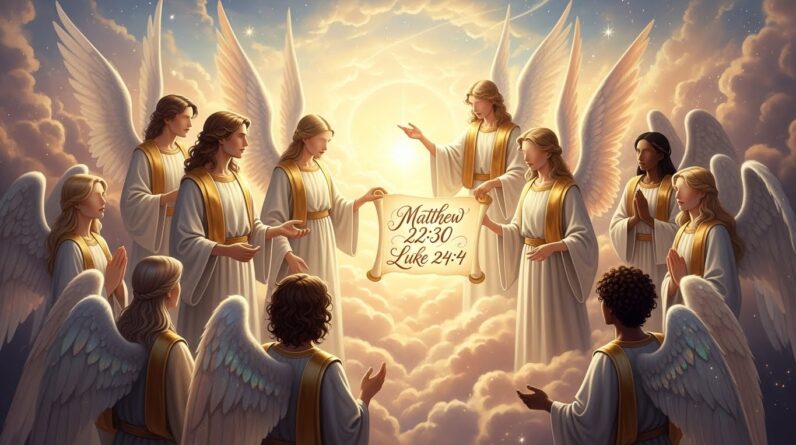
In simple terms: yes, angels are clearly mentioned in the New Testament. The New Testament describes angels as God’s created servants, messengers, and agents who carry out God’s will in relation to Christ and his people. They announce the birth of Jesus to shepherds (Luke 2:9-15), minister to Jesus during temptation and after his resurrection (Matthew 4:11; Matthew 28:2-7), and are presented as “ministering spirits” sent to serve those who will inherit salvation (Hebrews 1:14). For you as a believer, that means angels point you to God’s care and carry out tasks under his authority — they don’t replace Christ or your need for faith.
WHAT DOES THE BIBLE SAY ABOUT ANGELS IN THE NEW TESTAMENT?
Directly, the New Testament teaches that angels are created beings who serve God and carry out his purposes. For instance, Hebrews 1:14 describes angels as “ministering spirits sent out to serve for the sake of those who are to inherit salvation.” Luke 2:9-15 narrates angels announcing Christ’s birth and praising God. You also see angels ministering to Jesus (Matthew 4:11), delivering believers (Acts 12:7-11), and engaging in cosmic conflict in Revelation (Revelation 12:7-9). The New Testament therefore affirms angels’ reality, purpose, and subordination to Christ.
📖 BIBLE FOUNDATION
Quoted verses:
- Hebrews 1:14 — “Are they not all ministering spirits sent out to serve for the sake of those who are to inherit salvation?” (Hebrews 1:14)
- Luke 2:9-15 — “And an angel of the Lord appeared to them… And the angel said to them, ‘Fear not, for behold, I bring you good news of great joy that will be for all the people…’” (Luke 2:9-15)
Speaker:
- In Hebrews, the author (addressing Jewish Christians and rooted in Christ’s supremacy) explains angels’ place in God’s economy.
- In Luke, the angel(s) speak to shepherds, proclaiming the incarnate Christ.
Audience:
- Hebrews addresses believers tempted to revert to older understandings; the passage grounds them in Christ’s superiority.
- Luke addresses readers of the Gospel, showing the humble announcement of Jesus’ birth to ordinary people.
Historical and biblical context:
- Hebrews situates angels beneath Christ’s authority. The author contrasts angels with the Son, showing Christ is greater. Hebrews unpacks how God has spoken through the Son, who is over angels and heir of salvation.
- Luke writes carefully, historically and theologically, to show the significance of Jesus’ birth. The angelic announcement emphasizes God’s intervention in history — the Messiah has come. Angels function as messengers and worshipers, not as objects of worship.
Together, these texts teach you that angels operate within God’s redemptive plan centered on Christ. They are neither independent saviors nor objects for idolizing; they direct you to the Savior.

UNDERSTANDING GOD’S PURPOSE, PROTECTION, AND PROMISE
The core theological truth is that angels exist to serve God’s purposes, demonstrating his sovereignty and carrying out his intentions in relation to Christ and the church. Hebrews 1:14 makes the point that angels are “ministering spirits” sent for the sake of believers. That phrase ties angels directly to God’s promise of salvation — they serve the plan centered on Jesus, not an autonomous spiritual bureaucracy.
God’s sovereignty is paramount: angels act under his command (see Colossians 1:16, which places all created things, including angels, under Christ). Christ’s supremacy is emphasized across the New Testament; angels serve Christ’s reign, not compete with it. That guards you from thinking that angels are a safer, easier shortcut to protection or blessings. Instead, they reflect God’s providence: in some historical moments God used angels to deliver, announce, or minister, but God himself is the one you ultimately trust for protection and promise.
Faith over fear: Scripture calls you to trust God first. Verses like Psalm 91:11-12 speak of God commanding his angels to guard you, but this promise is rooted in God’s faithfulness — not a formula you can manipulate. Avoid speculation. The New Testament invites steady faith in Christ, with angels as God’s servants aiding his redemptive plan.
🌊 GOING DEEPER — BIBLICAL CONTEXT
Cross-references:
- Matthew 18:10 — angels behold the face of the Father, indicating closeness to God and care for God’s children.
- Matthew 4:11 — angels minister to Jesus after temptation.
- Acts 12:7-11 — an angel frees Peter from prison, showing God’s providential intervention.
- Revelation 12:7-9 — cosmic conflict between angels and the dragon points to spiritual realities under God’s control.
- Colossians 1:16 — all things created through Christ, including angels.
One biblical narrative example:
- Consider the shepherds’ encounter in Luke 2:9-15. Angels appear to announce Jesus’ birth, calling people to worship the newborn Savior. This event shows angels as heralds of good news, pointing you to Christ and igniting worship in ordinary lives. They don’t become the center — the infant Jesus is.
Theological continuity:
- From Genesis through Revelation, angels appear as God’s servants, intermediaries of his will. The New Testament does not overturn that pattern but centers it in Christ. Angels serve the incarnate and risen Lord, assist believers when God wills, and participate in cosmic worship. This maintains theological continuity: angels are real and purposeful, yet always subordinate to God’s sovereign plan revealed supremely in Jesus.
👉 For more on how Christ’s supremacy governs spiritual realities, see The Name Above Every Name (Philippians 2:9–11)
DOES THE TOPIC (ANGELS / FALLEN ANGELS / EVIL SPIRITS) GUARANTEE PROTECTION, SUCCESS, OR FINANCIAL BLESSING?
Short answer: No. The Bible does not teach that angels guarantee personal success, financial blessing, or automatic protection as a merit-based reward. Scripture repeatedly connects blessing and protection to God’s purposes and covenantal faithfulness, not to angelic manipulation.
Clarifying misconceptions:
- Prosperity teaching that promises angels will deliver wealth or success misreads Scripture. The New Testament never links angelic service with guaranteed earthly prosperity for believers.
- Verses like Psalm 91:11-12 and stories of angelic deliverance (e.g., Acts 12:7-11) point to God’s protection, but those are examples of God’s providence, not a biblical checklist for guaranteed outcomes.
Addressing false expectations biblically:
- Jesus warned against seeking signs as a faith substitute (Matthew 12:39). You are called to trust the Father and the Son, not to expect angelic service as a substitute for obedience, perseverance, or sacrificial discipleship.
- The New Testament invites you to seek God’s kingdom and righteousness; material blessing may or may not accompany faith. Instead, claim the promise of salvation and hope in Christ, knowing that God’s care — sometimes mediated through angels — serves his redemptive purposes.
💡MODERN CONNECTION — FAITH, ANXIETY, AND DAILY LIFE
When you feel anxious, it’s tempting to imagine an angel guarding you like a spiritual bodyguard. The New Testament encourages a different posture: cast your anxieties on God and trust Christ, while remembering angels are God’s servants sent to do his will.
Anxiety:
- Replace fear-driven fascination with angels by feeding faith with Scripture. Verses like Philippians 4:6-7 teach prayer and God’s peace as your guard. Angels might be one aspect of God’s care, but peace comes from the Spirit through Christ.
Decision-making:
- Don’t base choices on seeking angelic confirmations or signs. Instead, be guided by Scripture, prayer, wise counsel, and the Spirit’s fruit. Angels in the New Testament deliver messages when God chooses (Acts 10:3-8), but routine decisions are meant to be made under the Word and prayer.
Trust in God:
- Let passages like Hebrews 1:14 encourage you to trust God’s sovereign care. Angels are part of God’s providence; your trust belongs to God who ordains and commands them.
Worship and faithfulness:
- Use angelic references to fuel worship of Christ and God’s majesty. When Luke’s shepherds heard the angelic choir (Luke 2:13-14), they worshiped and responded in obedience. In your life, angelic truth should increase worship and obedience, not intrigue or superstition.

ANGELS / PROMISE / DOCTRINE AND GOD’S PROTECTION
Your faith is placed in God, not in spiritual signs, angelic manifestations, or rituals. The New Testament consistently grounds hope and protection in God’s person and promises, centered in Christ. Angels are servants who implement God’s purposes — they are never the head of your hope.
Reinforce trust in God’s authority and providence:
- The New Testament presents angels as subordinate to Christ’s lordship (Hebrews 1:4-7). That theological ordering helps you maintain a Christ-centered worldview — angels are affirming agents, not alternatives to obedience.
Keep Christ as the center:
- Angels announce, minister, and worship the Savior. Every angelic scene in the New Testament ultimately points to Jesus. Your doctrine should place God and Christ at center stage; angels support that focus.
Avoid superstition:
- The Bible warns against idolatry and improper fascination with spiritual beings (Colossians 2:18). If you’re tempted to seek signs or manipulate spiritual forces, let Scripture correct you and call you back to Christ.
❤️ PRACTICAL APPLICATION
- Pray for clarity: Ask God to help you interpret spiritual experiences through Scripture and Church teaching, not emotion.
- Read the Word daily: Let passages like Hebrews 1:14 and narratives like Luke 2:9-15 form your understanding of angels.
- Trust God in decisions: Use prayer, Scripture, and wise counsel rather than seeking angelic “confirmations.”
- Respond in worship: When Scripture points to divine activity, let your response be worship of God and obedience to Christ.
- Exercise discernment: Compare any spiritual claim with biblical teaching and consult mature, Scripture-grounded leaders.
🪞 FAITH REFLECTION BOX
Take a moment to reflect: how does knowing that angels are ministering spirits sent for the sake of those who inherit salvation (Hebrews 1:14) change the way you pray, worship, and face anxiety? Let that truth direct you to praise God and trust Christ for your protection and hope.
A PRACTICAL TAKEAWAY
- Angels are real, created servants of God, not objects of worship. See Colossians 1:16.
- The New Testament centers angels around Christ’s redemptive work — they serve God’s purposes for salvation. See Hebrews 1:14.
- Fallen angels exist and face judgment for rebellion (see 2 Peter 2:4; Jude 1:6).
- “Evil spirits” in the Gospels are demonic forces opposed to God’s purposes — Jesus confronts and casts them out in compassion and authority (see Mark 5:2-13; Luke 8:2).
- Your ultimate trust is in God and Christ; angels serve that trust, they don’t replace it.
❓Q&A — BIBLE ANSWERS EXPLAINED
Q1 Do fallen angels still have a role in Scripture?
A1: Yes. Scripture affirms fallen angels (demons) rebelled and are subject to judgment. For example, 2 Peter 2:4 explains God did not spare angels when they sinned, and Jude 1:6 speaks of angels kept in chains for judgment. This shows both reality and final accountability.
Q2 If I sense spiritual pressure or fear, what should I do?
A2: Pray, confess, read Scripture, and seek Christian counsel. Remember Jesus’ authority over evil spirits (Mark 5:2-13) and cast your anxiety on God (Philippians 4:6-7). The church provides means of pastoral care and prayer grounded in the Word.
Q3 Does the New Testament teach that angels will give you signs to guide decisions?
A3: No. The New Testament shows angels bring messages when God chooses, but routine decisions should be guided by Scripture, prayer, and wisdom (Acts 10:3-8; Matthew 12:39). Seeking signs for every choice leads away from trusting God’s revealed will.
CONCLUSION & PRAYER
Angels are indeed mentioned in the New Testament as God’s ministering spirits who serve his purposes centered in Christ. They bring announcements, minister to Jesus and his followers at God’s command, and participate in worship and cosmic events. But your faith is to remain fixed on Christ — angels never replace him. Hold to Scripture, trust God’s promises, and let angelic truth lead you to worship and obedience.
Prayer: Father, thank you for your care and for sending your Son. Help me to trust you above all, to read your Word with humility, and to welcome your care without turning to signs or superstitions. Strengthen my faith in Christ and guide me by your Spirit. Amen.
 RELATED BIBLE TEACHINGS
- What Is Gehenna In The Bible? (Matthew 5:22, Mark 9:43)
- Can The Dead See Us? (Hebrews 12:1)
- How Can I Be Saved According To The Bible? (Romans 10:9-10, Acts 16:31)
 Ministry Resource

 “Every God-given message deserves to be shared.”


Don’t let your calling stay hidden. If God has placed His truth on your heart, starting a Christian blog or website can help you reach others with clarity and purpose. Hostinger makes it easy—with 99.9% uptime, a free domain, and SSL—so your message can shine for God’s glory anytime, anywhere.
 Begin today.
  Try it RISK-FREE!
 As a ClickBank & Amazon Affiliate, I earn from qualifying purchases.
Acknowledgment: All Bible verses referenced in this article were accessed via Bible Gateway (or Bible Hub).
 Want to explore more? Dive into our new post on Why Jesus? and experience the life-changing truth of the Gospel!