



Can Someone Leave Hell According To Scripture?
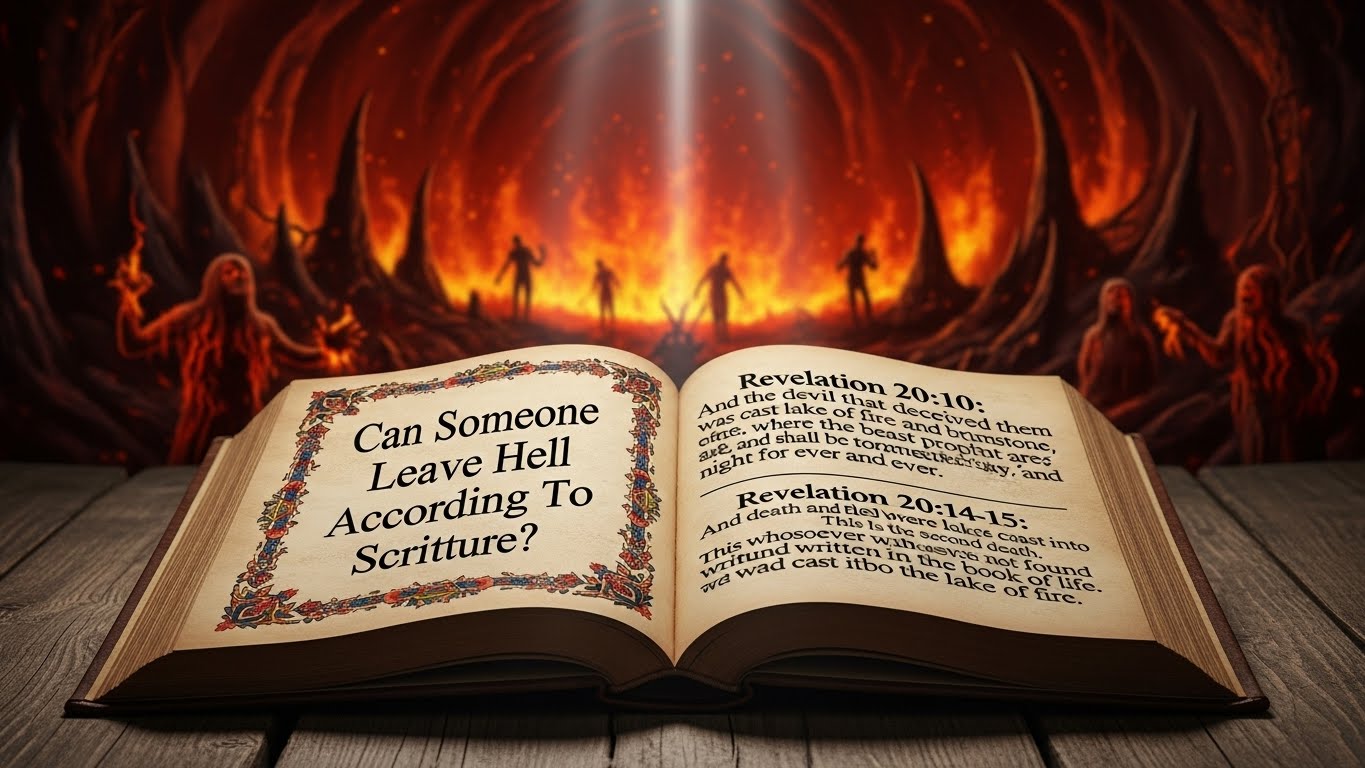
No. Scripture teaches that after death comes judgment, and hell is a final state with no opportunity to leave or repent (Luke 16:26; Hebrews 9:27). The Bible urges repentance now, because salvation is offered in this life.
INTRODUCTION
This question matters because it touches the heart of your hope, fear, and faith: if there is real finality to judgment, how should you live now? Whether you wrestle with doubts, care for loved ones, or seek to share the gospel, the Bible’s treatment of judgment, hell, and eternity shapes your trust in God’s justice and mercy. Scripture shows God’s purpose to redeem and to call people to repentance, His protection for those who belong to Christ, and His promise that justice and holiness will not be compromised.
As you read, you’ll find that the Bible places Christ at the center of hope and rescue, not speculation about afterlife mechanics. If you want a broader overview first, see our overview on Heaven and Hell Basics which helps orient the key terms and categories. This article examines whether anyone can leave hell according to Scripture, traces what the Bible actually says about final judgment, and points you toward faithful, practical responses for daily living.

Can Someone Leave Hell According To Scripture? — SIMPLE BIBLICAL MEANING
In simple terms: the Bible consistently presents post-judgment punishment as final. Scripture describes a distinction between the redeemed and the condemned after the final judgment, and the language it uses—phrases like “eternal punishment,” “everlasting destruction,” and the “lake of fire”—communicates permanence. That means the New Testament writers expect ultimate separation from God for those who reject Christ, and they do not provide an example or promise of a person leaving hell after final judgment.
At the same time, Scripture is clear about God’s desire that none should perish and about the many offers of mercy given in time for repentance (see 2 Peter 3:9). Christ’s work is the central rescue plan; if anyone is saved, it is by God’s saving acts in Christ. Your focus as a believer is to trust the gospel, to share it faithfully, and to rest in Christ’s supremacy over judgment.
WHAT DOES THE BIBLE SAY ABOUT CAN SOMEONE LEAVE HELL?
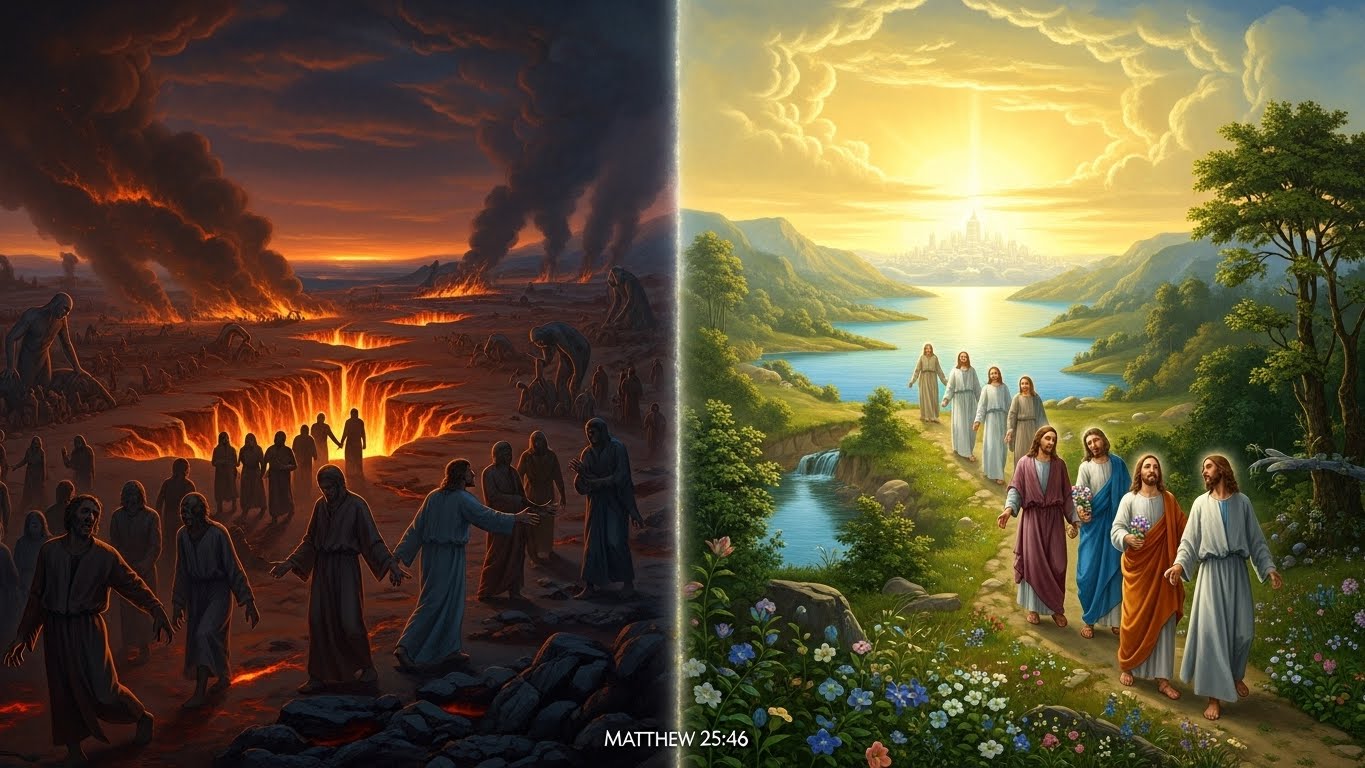
The Bible’s testimony is straightforward: after the final judgment there is no scriptural example that someone is released from hell or that hell will be emptied into salvation. Key texts portray the final state as irreversible: “eternal punishment” and “eternal life” are set side by side as distinct destinies (Matthew 25:46). Revelation speaks of the lake of fire as the final destination for Satan, the beast, the false prophet—and for anyone whose name is not found in the book of life (Revelation 20:10; Revelation 20:14-15).
At the same time, the Bible repeatedly calls people to repent in this life. Verses like Hebrews 9:27 and 2 Thessalonians 1:9 indicate a one-time death and a subsequent judgment with lasting consequences. From the plain reading of Scripture, the biblical pattern is clear: judgment follows life, and the final decision is final.
📖 BIBLE FOUNDATION
Quoted verses (linked), speaker, audience, and context give weight to the Bible’s teaching on finality. Consider two foundational texts:
- “Then they will go away to eternal punishment, but the righteous to eternal life.” Matthew 25:46.
Speaker: Jesus.
Audience: His disciples and a larger crowd listening in Matthew’s Gospel.
Context: The Parable of the Sheep and the Goats—Jesus explains the final separation at the judgment based on mercy shown to “the least of these.” The paired terms “eternal punishment” and “eternal life” contrast final destinies. - “And the devil, who deceived them, was thrown into the lake of burning sulfur, where the beast and the false prophet had been thrown. They will be tormented day and night for ever and ever.” Revelation 20:10.
Speaker: John (revelation given by Christ).
Audience: Seven churches and the larger Christian community; the vision addresses the end of history.
Context: Revelation’s closing visions describe final cosmic judgment and the lake of fire as the final fate for evil and all whose names are not in the book of life (Revelation 20:14-15). The book functions as prophetic assurance that God’s justice will be enacted decisively.
These passages illustrate the Bible’s primary affirmations: there is a final judgment and a final destiny. The speakers are authoritative (Jesus and the inspired prophetic witness), the audiences are the churches and believers, and the context stresses both warning and hope—warning for those who ignore God, hope for those in Christ.
UNDERSTANDING GOD’S PURPOSE, PROTECTION, AND PROMISE
To understand these texts theologically, you must hold three truths together: God’s holiness and justice, God’s desire to save, and Christ’s supremacy over judgment. God is holy and cannot allow rebellion to stand unjudged; Scripture affirms God’s righteous condemnation of sin (see Romans 1:18). Yet God is also merciful and patient, not wanting anyone to perish but everyone to come to repentance (2 Peter 3:9; 1 Timothy 2:4).
Christ’s death and resurrection are the decisive acts that secure rescue for those who repent and trust him. When you place your faith in Christ, you trust in his righteousness covering you and in his victory over death and judgment (John 5:24; Romans 8:1). The doctrine of finality does not contradict God’s love; rather, it intensifies the urgency of the gospel and clarifies the stakes: God’s offer of mercy is real, time-bound, and centered in Christ.
Avoid speculative ideas that suggest God will contradict his revealed justice or ignore the plain language of judgment texts. Faith rests in God’s character—his justice, his mercy, and his faithfulness to his promises—not in imaginative escapes from consequence.
🌊 GOING DEEPER — BIBLICAL CONTEXT
A deeper look shows consistency across Scripture. Cross-references include:
- Hebrews 9:27: “Just as people are destined to die once, and after that to face judgment…”
- 2 Thessalonians 1:9: “…They will be punished with everlasting destruction and shut out from the presence of the Lord…”
- Mark 9:43-48: Jesus warns about the dangers that lead to final judgment and quotes Isaiah about “unquenchable fire.”
- Luke 16:19-31: The parable of the rich man and Lazarus gives a vivid portrait of postmortem consciousness and irreversibility in that narrative.
Narrative example: Consider the rich man and Lazarus (Luke 16:19-31). Jesus, speaking to the Pharisees, tells of a rich man who ends up in torment in Hades and a poor man who is comforted. The rich man requests that Lazarus be sent to warn his brothers; Abraham replies that if they have Moses and the Prophets, they should listen to them. The story conveys that warning and repentance must happen in this life; after death the conditions have changed and the rich man cannot be transferred out of his place of torment.
This continuity—from Law and Prophets through the Gospels and into Revelation—presents a coherent theological line: God calls people to repent now; the final judgment seals destinies. For more on how biblical justice and mercy harmonize across Scripture, see What Happens When You Die According To The Bible? The Soul’s Journey To Heaven Or Hell Explained (Ecclesiastes 12:7, 2 Corinthians 5:8)
💡 MODERN CONNECTION — FAITH, ANXIETY, AND DAILY LIFE
When you worry about final things—judgment, hell, or the fate of loved ones—return to what Scripture emphasizes: the gospel is the power of God for salvation (Romans 1:16), and repentance and faith are the means God uses to bring people into his saving purposes. In practical terms, that means you pray for nonbelieving friends, share the gospel with clarity and humility, and live as a witness to God’s mercy and justice.
Anxiety about final judgment can lead you to two harmful extremes: despair or presumption. Scripture calls you instead to sober hope—trusting God’s mercy, practicing obedience, and resting in Christ’s work. When tempted to speculate about afterlife loopholes, ground yourself in the clear pastoral imperatives of Scripture: proclaim the gospel now, love your neighbor, and trust the Lord with outcomes.

🛠️ Faithful Stewardship Tip
For believers who feel called to share biblical truth online or through small teaching ministries, hosting your content on a reliable and secure platform is part of faithful stewardship of the gospel. Consider a dependable web host like Hostinger to create a stable place for teaching resources, sermon notes, and discipleship materials that serve your local church and beyond.
ANGELS / PROMISE / DOCTRINE AND GOD’S PROTECTION
It’s important that you place your faith in God, not in spiritual signs or speculation about angels moving people after judgment. Scripture teaches that angels are servants who execute God’s will (see Hebrews 1:14), but your ultimate trust is in Christ and his sovereign authority over life, death, and judgment (Colossians 2:15). Promises of God’s protection are sure, but they are framed by his purposes—sanctification, obedience, and witness—rather than by private revelations that contradict Scripture.
If you’re tempted by teachings that emphasize angels as alternate saviors or offer secret escapes from final judgment, measure those claims against the clear witness of the Bible. God’s promises center on Christ’s atoning work and the call to repent; Scripture’s doctrines on judgment and hell should shape how you interpret any claimed revelation.
❤️ PRACTICAL APPLICATION
Apply what you now understand with these short, actionable steps:
- Share the gospel plainly with at least one person this week; offer Scripture and prayer, trusting God with the outcome.
- Practice urgent compassion: call, visit, or invite someone at spiritual risk to hear the gospel.
- Commit to daily repentance and reading: start with the Gospels for clarity on Christ’s call and mercy.
- Pray for God’s justice and mercy to shape how you live—ask to be a faithful witness, not fearful.
- Serve the vulnerable in your community as an expression of Christ’s love.
🪞 FAITH REFLECTION BOX
Reflect: Where do you lean when thinking about final judgment—fear, apathy, or confident hope? Bring that honestly before God in prayer, ask for clear repentance where needed, and give thanks that Christ’s victory secures your final hope if you have trusted him.
A PRACTICAL TAKEAWAY
- The Bible consistently presents final judgment as decisive and final—Scripture does not show someone leaving hell after the final judgment.
- Christ’s work is central: salvation comes through repentance and faith in him now.
- God’s mercy is real and urgent; Scripture calls people to respond during life.
- Trust in God’s justice and mercy together—avoid speculative shortcuts that undercut biblical warning or hope.
- Live with evangelistic urgency, compassionate action, and steady trust in Christ.
❓Q&A — BIBLE ANSWERS EXPLAINED
Q1 Can the Bible’s descriptions of “eternal” ever mean a finite punishment?
A1: The biblical witness uses “eternal/everlasting” (e.g., Matthew 25:46; 2 Thessalonians 1:9) to express finality. While theological debates exist over the meaning of “aionios” in some contexts, the plain reading of final judgment passages supports permanent separation for the condemned.
Q2 How should I respond if I’m anxious about the fate of loved ones?
A2: Pray, witness compassionately, and trust God’s sovereignty. Scripture calls you to evangelize and intercede now (Romans 10:14-15); the Bible does not teach postmortem escape as a basis for postponing gospel witness.
Q3 Does Luke 16 prove that hell is only temporary because it’s a parable?
A3: Luke 16 is a parable used by Jesus with real lessons: it portrays conscious postmortem states and warns of consequences after death (Luke 16:19-31). Even if literary in form, Jesus intended it to teach about the urgency of repentance and the reality of afterlife consequences—there’s no indication that final fate is reversible.
CONCLUSION & PRAYER
The clear testimony of Scripture is that final judgment is final: the Bible does not present a case where someone leaves hell after the last judgment. That truth underscores both the seriousness of sin and the urgency of the gospel. But it also showcases God’s heart: he offers mercy in time through Christ, and he calls you to trust, obey, and share that gospel with urgency and love.
Prayer: Lord Jesus, thank you for your life, death, and resurrection that secure our hope. Give us boldness to share your mercy, wisdom to live holy lives, and peace to trust your justice. Help us to love the lost with urgency, rely on your grace, and worship you with our whole lives. Amen.
📖 RELATED BIBLE TEACHINGS
-
Heaven and Hell Explained: What the Bible Really Says About Eternity
-
What Is Eternal Life And How Is It Related To Salvation? (John 17:3, Romans 6:23)
Want to explore more? Check out our article on Why Jesus? and discover the life-changing truth of the Gospel.