



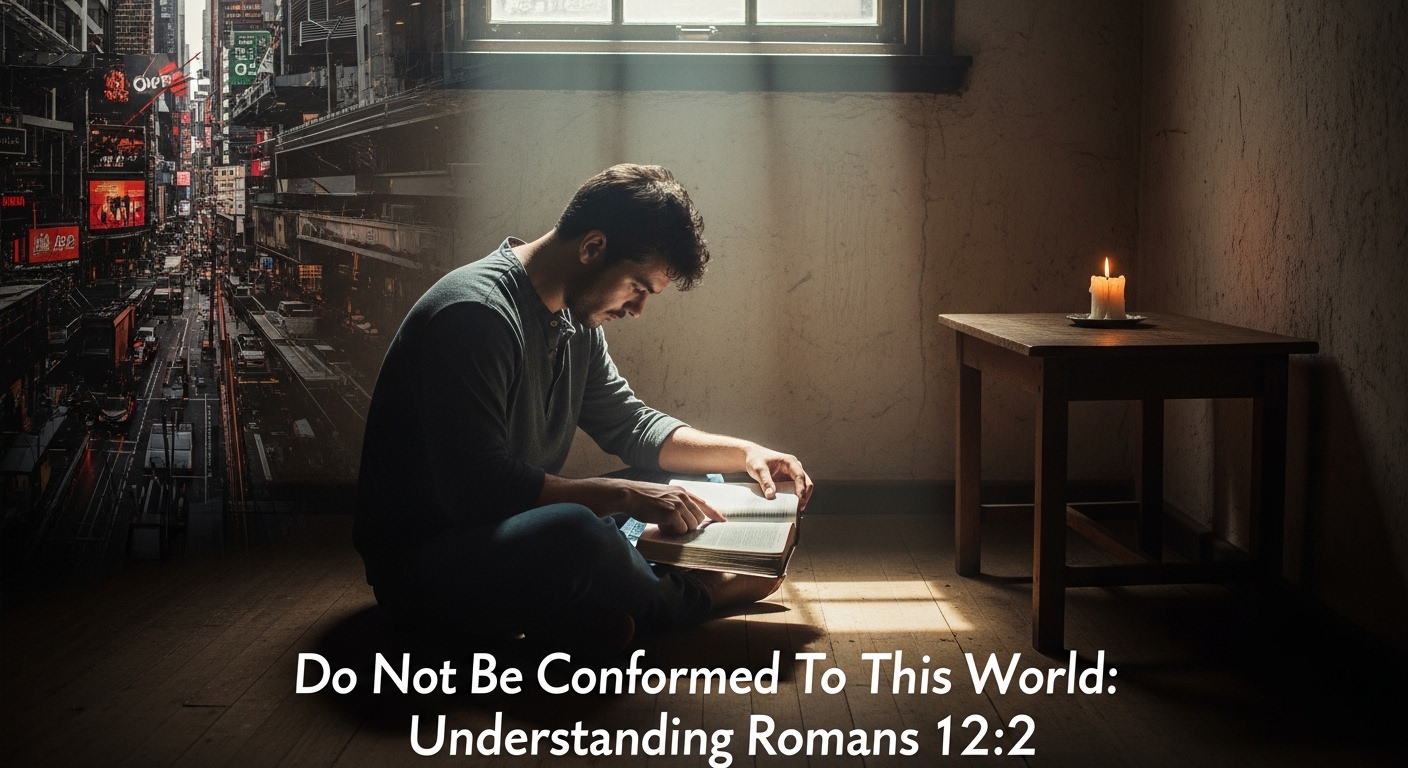
Many people wrestle with what it looks like to follow Jesus in a culture that often values success, pleasure, or comfort above obedience. You’ve probably heard the phrase “Do not be conformed to this world” and wondered what it really means for your daily life. In this article you’ll explore the meaning of Romans 12:2 in its original context, the deeper theological message behind it, and practical ways you can live it out today. Along the way, you’ll see how Scripture invites you to a transformed mind and a renewed life that points back to God.
The Bible Verse Explained
“Do not conform any longer to the pattern of this world, but be transformed by the renewing of your mind. Then you will be able to test and approve what God’s will is—his good, pleasing and perfect will.” — Romans 12:2 (NIV)
Who wrote it?
The letter to the Romans was written by the Apostle Paul. Paul is one of the most influential figures in early Christianity, a missionary and theologian who addressed theological concerns and pastoral challenges across the early church. In Romans, Paul lays out a careful theological presentation of sin, salvation, grace, and life transformed by the gospel. When you read Romans 12:2, you are hearing practical instruction from an apostle who has already explained why you need transformation—because the gospel changes everything about how you live.
Who was it written to?
Paul wrote to the Christians in Rome—a diverse community of Jewish and Gentile believers. They were living in the heart of the Roman Empire, surrounded by powerful cultural pressures: religious pluralism, social hierarchies, moral compromises, and political expectations. The community needed guidance on how to live faithfully in such a context. Romans 12:2 is addressed to that community, and it’s addressed to you in the same way: believers in any age who must navigate culture while remaining true to God.
Historical setting
The Roman world in Paul’s day prized honor, success, conformity to social norms, and philosophical systems that often conflicted with Christian convictions. Religious practices included emperor worship and a mixture of pagan rites that permeated public life. Christians were called to a way of life that didn’t merely adopt external practices but embodied a radically different allegiance—one shaped by the gospel of Jesus Christ. Romans 12:2 is part of Paul’s transition from explaining doctrine to detailing ethical application: how belief in Christ should reshape the believer’s daily choices in a hostile or indifferent culture.
The key message of the passage
At its core, Romans 12:2 calls you to a countercultural transformation. Instead of simply adopting the values, habits, and mental patterns of the surrounding world, you’re invited to allow God to change you internally—beginning with your mind. The verse links transformation to the renewal of your thinking: when your mind is reoriented around God’s truth, your perceptions, decisions, and actions will increasingly align with God’s good, pleasing, and perfect will. This is not about mere self-improvement; it’s about a gospel-driven metamorphosis that bears fruit in holy living.

What Does This Verse Really Mean?
When you dig beneath the surface of Romans 12:2, you’ll find several interlocking truths that shape Christian identity and practice. Let’s unpack three major facets of meaning.
1. Understanding the Message of the Verse
Paul uses two principal verbs: “be not conformed” (or “do not be conformed”) and “be transformed.” The first verb points to resistance: don’t be squeezed into the mold of a world that misunderstands God. The second verb is positive: let God remake you. The Greek behind “transformed” (metamorphoomai) evokes an inner change that results in a new outward form—think of a caterpillar becoming a butterfly. This transformation begins in your mind—your thoughts, values, and assumptions—and it produces the ability to discern God’s will.
The “pattern of this world” refers to a systematic way of thinking and behaving shaped by values opposed to God’s kingdom: selfishness, relativism, moral compromise, and priorities that put creature comforts or status above faithful obedience. To avoid conformity doesn’t mean complete isolation from society; it means you don’t let worldly assumptions set the agenda for your life.
2. Trusting God’s Wisdom and Guidance
Romans 12:2 invites you to trust God’s wisdom more than the culture’s wisdom. When your mind is renewed by Scripture and prayer, you gain spiritual discernment: the capacity to “test and approve what God’s will is.” That phrase reassures you that God’s will is knowable—not in a vague, mystical way, but in the concrete rhythm of holy living: decisions shaped by Scripture, prayer, counsel, and experience of God’s faithfulness.
This trust is not passive. You actively pursue renewal—by learning Scripture, praying, and obediently following the Spirit’s promptings—while resting in the assurance that God’s will is both good for you and revealed progressively. You don’t have to guess at meaningless sign-seeking; instead you cultivate a pattern of life that makes God’s will clearer.
3. Living Out This Truth in Everyday Life
Transformation affects the ordinary: how you handle relationships, money, work, ambition, recreation, and online life. When your mind is renewed, gratitude replaces entitlement, service replaces selfishness, and long-term spiritual fruit replaces short-term gratification. You begin to evaluate choices by God’s values rather than culture’s applause.
Practically, transformed thinking often shows itself in compassion, integrity, humility, and a desire for holiness. It reshapes priorities: worship becomes central, the community of believers becomes essential, and obedience becomes an expression of love for Christ rather than mere rule-following.
Why This Verse Still Matters Today
Romans 12:2 resonates because modern culture continues to present pressures similar to the Roman world—competing loyalties, persuasive philosophies, and moral confusion. This verse remains a foundational call for discipleship in your everyday world.
Faith During Uncertainty
In times of uncertainty—whether economic, political, or personal—Romans 12:2 reminds you that your identity and security are rooted in God, not in unstable cultural assurances. Renewing your mind helps you interpret crises through God’s promises rather than fear-driven narratives. You can respond with faith and steadiness because your internal compass has been realigned.
Trusting God in Difficult Seasons
When life feels chaotic or painful, transformed thinking does not promise an easy life but it does redirect your perspective. You learn to see suffering in light of God’s purposes and to rely on His sovereignty. Rather than asking “Why is this happening to me?” as a helpless cry, renewed thinking inclines you to ask “How can God use this?”—a question that invites God into the situation and opens you to growth.
Spiritual Growth
Romans 12:2 is a roadmap for spiritual maturation. The renewal of the mind is an ongoing process; it isn’t instantaneous perfection but a progressive shaping of your affections and thoughts. Over time, you notice changes in how you reason, how you feel about sin, and how you value eternity. This verse encourages perseverance: the longer you submit to God’s transforming work, the more your life reflects Christ.
Encouragement from Scripture
Scripture is not only instructive but also sanctifying. When you immerse yourself in God’s Word, your beliefs and desires are corrected and reoriented. Romans 12:2 points you to the centrality of Scripture and the Holy Spirit in effecting change. The Bible supplies the truths that remodel your mind and heart, equipping you to live out a faithful witness.
How to Apply This Verse in Your Life
You can translate Romans 12:2 into concrete habits that foster a renewed mind and transformed life. Here are practical steps to help you lean into God’s renewing work.
1. Reflect on God’s Word Daily
Begin by carving out consistent time to read, reflect, and meditate on Scripture. Daily reading helps replace worldly narratives with God’s storyline. When you study Scripture with prayerful attention, you rewire your thought patterns: truths about God’s character, promises, and commands gradually reshape how you interpret life.
Make it practical: choose a manageable reading plan, keep a journal of insights, and memorize key verses that confront patterns of thought you struggle with. Repetition and contemplation allow biblical truth to sink deeper than mere intellectual assent.
2. Pray for Wisdom and Guidance
Prayer is the relational channel through which God renews your mind. When you pray, ask the Holy Spirit to show you where your thinking aligns with the world and where it needs change. Pray for honesty, humility, and the courage to act on the convictions that Scripture places in your heart.
Integrate specific prayer practices: regularly confess the ways you’ve conformed to the world, thank God for moments of growth, and seek direction for choices that feel ambiguous. Prayer keeps your dependence on God visible and active.
3. Trust God Even When Life Feels Uncertain
Practicing trust doesn’t mean pretending not to worry; it means intentionally choosing to rest in God’s character amid unease. When anxious thoughts arise, rehearse biblical truths that counter fear—for example, God’s sovereignty, care, and promises for your future.
Create spiritual anchors: memorized promises, songs of worship, supportive relationships, and tangible acts of obedience. These anchors help you respond to uncertainty with faith instead of panic.
4. Live Out Your Faith Through Action
Transformation changes both thought and deed. Put your renewed thinking into practice through concrete actions: serve in your local church, practice generosity, engage in honest conversations, and make ethical choices at work and online. Obedience strengthens your mind’s renewal because acting on what you believe reinforces and clarifies those beliefs.
Make small, sustainable commitments that align with Scripture rather than chasing dramatic but unsustainable bursts of zeal. Over time, consistent obedience yields deeper conviction and visible fruit.

Common Misunderstandings About This Verse
Because Romans 12:2 is both concise and powerful, it’s sometimes misunderstood. Here are a few common mistakes and clarifications to help you grasp the intended meaning.
Taking the verse out of context
One frequent error is to isolate Romans 12:2 from the surrounding argument in Romans. The verse sits within a larger biblical theology of sin and redemption. Without that framework, you might think the verse simply calls for moral effort. In reality, the transformation Paul speaks about flows from God’s grace and the believer’s union with Christ. You renew your mind not by sheer willpower but by the Spirit’s work through Word and obedience.
Misunderstanding the promise
Some people think the verse promises worldly success or immediate clarity on every decision. Instead, Romans 12:2 promises the ability to “test and approve” God’s will as you grow in Christ. That means increasing discernment over time, not a one-time guarantee of perfect foresight. You will develop wisdom, but it typically comes through experience, community, Scripture, and prayer.
Applying the verse incorrectly
A wrong application is turning Romans 12:2 into a call for isolation or legalistic separatism. Paul doesn’t instruct believers to retreat from the world entirely; he calls you to resist being shaped by its values. Engagement with culture can be faithful and redemptive when it’s guided by a renewed mind. Another misapplication is equating “renewing your mind” with mere positive thinking. True renewal is rooted in truth—Scripture and the Spirit—not in wishful affirmations.
Bible Verses Related to This Passage
Here are several related passages that reinforce the message of Romans 12:2. Each link goes to the exact chapter and verse on Bible Gateway for easy reference.
• Proverbs 3:5–6 (NIV) — These verses encourage trusting the Lord rather than leaning on your own understanding, which complements the call to renew your mind by depending on God’s wisdom.
• Romans 8:28 (NIV) — This verse emphasizes God’s sovereign purpose for those who love Him, reminding you that God’s will is ultimately good and working for your good, which is consistent with the assurance in Romans 12:2.
• Hebrews 11:1 (NIV) — The definition of faith found here connects to renewed thinking: faith often requires you to trust unseen realities and God’s promises, not merely the visible patterns the world celebrates.
• Psalm 37:5 (NIV) — This short verse directs you to commit your way to the Lord and trust Him, illustrating the practical posture of entrusting decisions and outcomes to God—an outworking of a transformed mind.
Frequently Asked Questions About This Verse
This section addresses common, concise queries you or others might type into a search engine.
What does this verse mean in simple terms?
In simple language, Romans 12:2 tells you not to copy the negative patterns of the world. Instead, let God change how you think and see things. When your mind is renewed, you’ll be better able to know and do what pleases God.
Who wrote this verse in the Bible?
The Apostle Paul wrote Romans. He wrote this letter to the Christians in Rome to explain the gospel and its implications for life and ethics.
What is the main message of this verse?
The main message is that true Christian life involves an internal transformation, beginning in the mind, which enables you to recognize and do God’s will. It calls for resistance against cultural conformity and an embrace of spiritual renewal.
How should Christians apply this verse today?
Christians should apply Romans 12:2 by engaging Scripture regularly, praying for renewed thinking, choosing faith over fear in uncertain seasons, and living out beliefs through obedient action that reflects God’s priorities rather than the world’s.
A Short Prayer Inspired by This Verse
Heavenly Father,
Thank You for the wisdom and truth found in Your Word. Help me understand and live out the message of this verse each day. Strengthen my faith, guide my steps, and teach me to trust You more deeply in every season of life. Renew my mind by Your Spirit so that my thoughts, words, and actions reflect Your will. Use me to display Your grace and truth in a world that needs both.
In Jesus’ name,
Amen.
 Continue Your Growth Journey
If you want to understand this more clearly:
The Lord Is My Shepherd: The Deep Meaning Of Psalm 23 Explained
If you want practical daily steps:
10 Short Morning Devotionals For Busy Christians
If you feel stuck or discouraged:
The 9 Fruits Of The Spirit Explained (Galatians 5:22–23)
If you want to know if you’re truly growing:
Spiritual Maturity: 8 Biblical Signs You’re Growing In Christ
If you want to stand strong in spiritual battles:
The Armor Of God Explained: The Meaning Of Each Piece
Final Thoughts
Romans 12:2 is a concise but profound call to discipleship. It reminds you that following Christ involves more than external conformity or moralism; it requires an inward metamorphosis of the mind shaped by God’s truth. As you read the Bible, pray, and practice faithful obedience, you’ll find your judgments, desires, and actions increasingly aligned with God’s good, pleasing, and perfect will.
You don’t have to navigate cultural pressures alone. The renewal God promises is a process: sometimes slow, often challenging, always worth pursuing. Let this verse encourage you to resist easy conformity and to invest in a life that steadily becomes more like Christ—thought by thought, choice by choice.
Acknowledgment: All Bible verses referenced in this article were accessed via Bible Gateway (or Bible Hub).
“Want to explore more? Check out our latest post on Why Jesus? and discover the life-changing truth of the Gospel!”