

Does The Bible Mention Heaven As A City? (Hebrews 11:10, Revelation 21:2)
INTRODUCTION
Why does it matter whether the Bible pictures Heaven as a city? The way Scripture describes our eternal hope shapes how you live now — your priorities, your courage, and the peace you carry through suffering. When the New Testament uses city language for Heaven, it’s not a travel brochure or a piece of abstract theology; it’s God’s way of giving you a tangible image for His purpose, protection, and promise. You can see how that imagery reframes fear into faith and ambition into stewardship by comparing it with other teachings about eternal life in our resource on Heaven and Hell.
You’re asking a deeply practical question: does Heaven really look like a city? That question matters because the Bible’s images teach you how to orient your life toward Christ’s kingdom, how to endure trials knowing God has prepared a place for you, and how to weigh earthly goods against eternal realities. This article walks carefully through the key texts — especially Hebrews 11:10 and Revelation 21:2 — explains context, answers common misunderstandings, and gives practical next steps for living in light of the city God promises.
DOES THE BIBLE MENTION HEAVEN AS A CITY? — SIMPLE BIBLICAL MEANING
In simple terms: yes, the Bible sometimes describes Heaven as a city. That language is a figurative, theological way of communicating God’s order, permanence, and the communal nature of eternal life with Christ. When Hebrews talks about a city with foundations and Revelation shows John a new, holy city descending from heaven, they’re using a powerful human image — a city — to tell you about God’s unshakable, inhabited, and restored reality for His people.
The point isn’t to give you a real estate blueprint; it’s to anchor your hope. Cities in Scripture signify security, community, and God’s presence (think of Jerusalem), so when Heaven is called a city, the Bible intends to communicate God’s purposeful dwelling with His people and the unshakeable nature of the inheritance He promises through Christ.
WHAT DOES THE BIBLE SAY ABOUT HEAVEN AS A CITY?
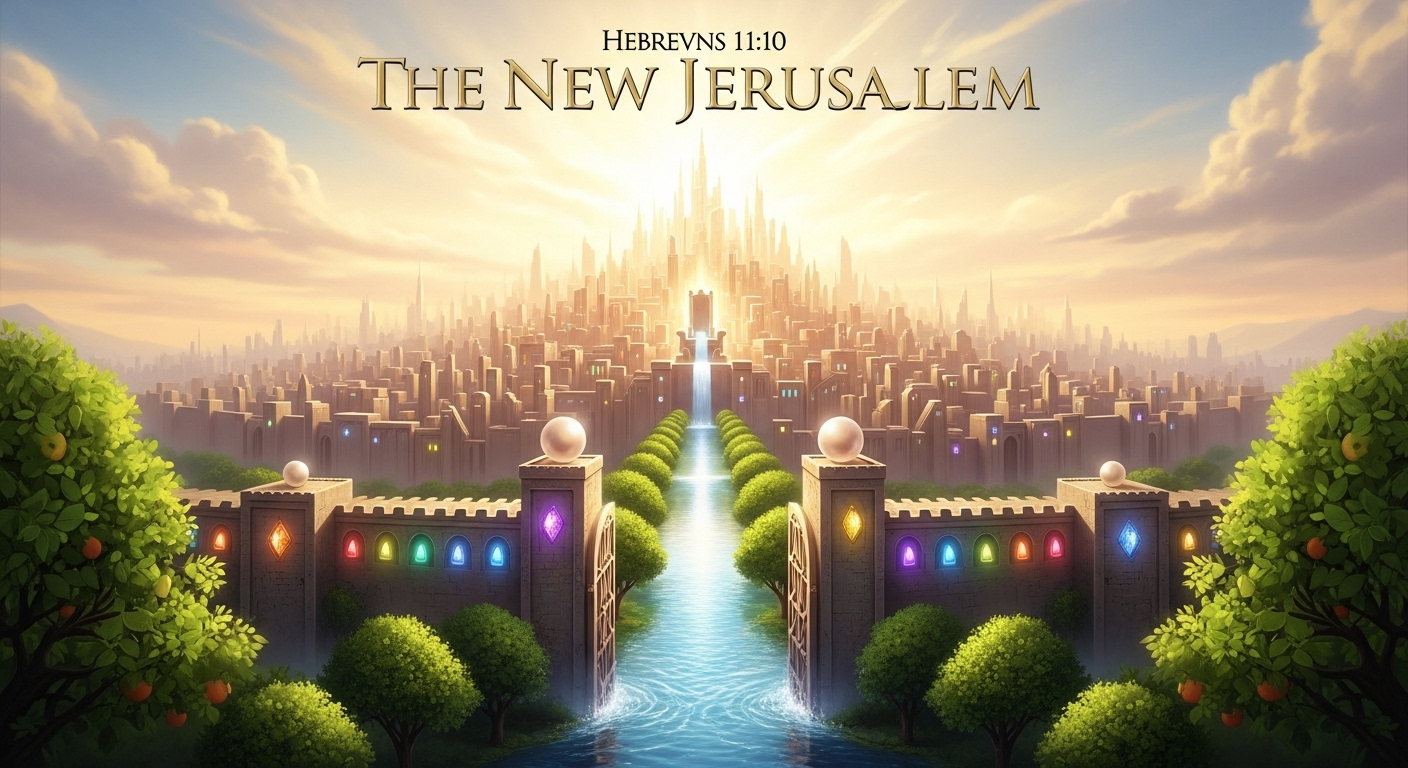
The Bible uses different metaphors for Heaven and the final state: city, home, father’s house, inheritance, and kingdom. Two passages are especially direct: Hebrews 11:10, where the patriarchs look for “a city whose architect and builder is God,” and Revelation 21:2, where John sees “the Holy City, the New Jerusalem, coming down out of heaven from God.” These texts show you two complementary ideas: the hope God prepared long before the new creation, and the final fulfillment of that hope when God dwells permanently with His people.
Both passages root the city image in covenantal promise and redemption through Christ. Hebrews connects the city to the faith of Abraham and the promise, while Revelation shows the cosmic, eschatological fulfillment where God’s presence is fully restored. Together they teach you that Heaven is less a geographical location you go to and more a relational, established reality where God’s promises come true.
📖 BIBLE FOUNDATION
Quoted verses:
- Hebrews 11:10: “For he was looking forward to the city with foundations, whose architect and builder is God.” Speaker: the author of Hebrews (anonymous but traditionally linked to Paul or another early Christian teacher). Audience: Jewish and Gentile Christians facing pressure and persecution. Historical/biblical context: Hebrews 11 surveys the faith of the patriarchs — Abraham, Isaac, Jacob — and highlights that their faith looked forward to a heavenly city rather than to merely earthly possessions. The chapter encourages Christians to persevere under suffering by focusing on God’s promises.
- Revelation 21:2: “I saw the Holy City, the new Jerusalem, coming down out of heaven from God, prepared as a bride beautifully dressed for her husband.” Speaker: John the Apostle (the author of Revelation). Audience: the seven churches of Asia Minor and all Christians who would read the book. Historical/biblical context: Revelation gives a final vision of the new creation after judgment (chapters 20–22), portraying the restoration of God’s people and the permanent presence of God with His people. The New Jerusalem symbolizes the completion of God’s redemptive plan — communion with Him in a renewed cosmos.
Both passages are literary and theological, meant to assure you that God is the architect and fulfiller of the promise. Hebrews roots your hope in the faith story; Revelation shows you the eschatological reality that completes the story.
UNDERSTANDING GOD’S PURPOSE, PROTECTION, AND PROMISE
When Scripture uses city imagery for Heaven, it points to several core theological truths: God’s sovereignty over history, Christ’s supremacy as the bringer of salvation, and the promise that faith connects you to something permanent beyond present suffering.
God’s purpose: The city metaphor reveals that God intends to dwell among His people. From Eden through the tabernacle and temple to the promised New Jerusalem, the Bible shows a trajectory where God chooses to make His presence known within a place and among a people. That purpose is fulfilled ultimately in Christ, who reconciles sinners to God and opens the way for you to belong to that permanent community.
God’s protection: Cities in antiquity represented refuge and order. By calling Heaven a city, Scripture reassures you that God’s kingdom is ordered and secure — not subject to the chaos and corruption of fallen cities. The New Jerusalem’s foundations, gates, and streets symbolize stability and the end of exile for believers. This protection is spiritual and relational more than merely physical: it’s freedom from sin, sorrow, and death because Christ has conquered them.
God’s promise: The city imagery ties current faithfulness to a promised future. The patriarchs lived by faith, looking for a city God would build; early Christians endured suffering because they expected a permanent home with God. That promise is not vague wishful thinking; it’s grounded in the resurrection and in Christ’s finished work. Your trust is anchored in a historical, covenantal God who has acted and will act to consummate His purposes.
Avoid treating the city language as a formula or a guarantee of earthly prosperity. The Bible’s primary aim is spiritual fidelity and relationship with God; material blessings are never the central promise.
🌊 GOING DEEPER — BIBLICAL CONTEXT
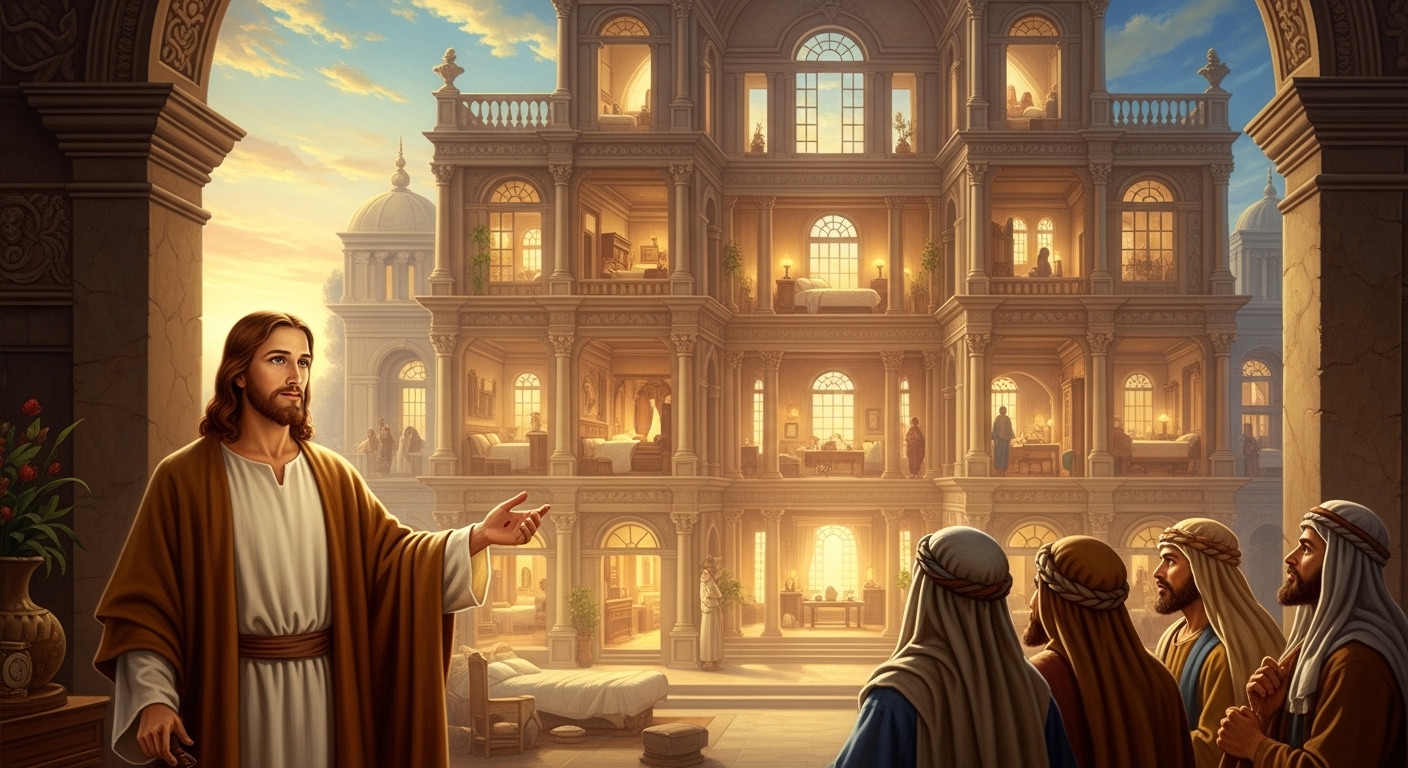
To go deeper, notice how the city theme threads through Scripture. Cross-references include John 14:2–3 (Jesus speaks of many rooms in the Father’s house), Philippians 3:20 (our citizenship is in heaven), Hebrews 13:14 (we have no lasting city here), and 2 Corinthians 5:1–2 (we have an eternal house in heaven). These passages, taken together, show consistent theological continuity: believers are pilgrims in this age, citizens of a future reality prepared by God.
A clear biblical narrative example is Abraham. In Genesis 12–22 Abraham receives promises of land, descendants, and blessing, but Hebrews highlights that Abraham lived as a sojourner, looking forward to a city God would prepare. Abraham’s faith is exemplary because he trusted God’s future reality over present comfort. That pattern — patriarchal promise, covenant faith, and ultimate fulfillment in Christ — is the thread that ties Hebrews 11 to Revelation 21.
If you want to explore more of how the Bible treats eternal hope, see our article on salvation and the afterlife for deeper theological background.
DOES THE CITY IMAGERY PROMISE EARTHLY SECURITY OR MATERIAL BLESSINGS?
No. The Bible’s city imagery is primarily theological and eschatological, not a promise of earthly security or guaranteed material prosperity. When Scripture teaches that God prepares a city, it comforts you about ultimate destiny — freedom from sin, death, and alienation — rather than promising that your bank accounts or health will be preserved in this life. Verses such as Matthew 6:19–21 teach you to store treasures in heaven, while 1 Timothy 6:6–10 warns against false hopes of riches and encourages godliness with contentment.
There’s a real pastoral danger when city language is turned into a health-and-wealth formula. The biblical promise is ultimately about God’s presence and the renewal of all things through Christ, not an earthly guarantee of comfort. The Christian hope reframes your relation to possessions and security: you steward resources for God’s glory, you trust God’s providence, and you live generously because the city God prepares is your true home.
💡 LIVING IN LIGHT OF ETERNITY
Knowing Heaven is described as a city reshapes daily life. You face anxiety and uncertainty with an eternal perspective: difficulties are real, but they are temporary in light of the city God prepares. When making decisions, you weigh outcomes not merely by immediate benefit but by kingdom significance. Worship becomes hopeful and expectant, not fearful or escapist; you worship because God is your future, not because you want comfort now. Practical faithfulness — in work, family, and mission — flows from the conviction that God is building a permanent, inhabited reality for His people.
When worry threatens, remind yourself of passages like Philippians 4:6–7 and the city language in Hebrews and Revelation. That doesn’t eliminate struggles, but it reframes them. You live as a pilgrim with purpose, investing in what endures and trusting God’s providential care.
📖 GOD’S PROMISES, ANGELS, AND TRUST IN HIS SOVEREIGN CARE
It’s tempting to latch onto signs, dreams, or extraordinary experiences as proof of Heaven or God’s favor. Scripture, however, grounds faith in God Himself — His promises, character, and the person of Jesus Christ — not in secondary phenomena. Angels appear in Scripture as messengers and servants of God, but they never replace Christ as your mediator or the assurance of God’s promises. Verses such as Hebrews 1:14 show angels aiding believers, but the focus is always God’s redemptive plan through Christ.
Trust in God’s sovereign care means you anchor your faith in the promises recorded in Scripture and fulfilled in Christ. The city imagery points you to a future secured by God’s faithfulness, not to secret signs or private revelations. Your hope rests on God’s revealed word and the historical reality of Jesus’ death and resurrection.
❤️ PRACTICAL APPLICATION
- Reorient one decision this week by asking: “How will this matter in light of the city God has prepared?” Let the answer shape your priorities.
- Practice a short daily exhale prayer: praise God for the city He prepares and ask for courage to live as a faithful pilgrim today.
- Share a tangible blessing (time, talent, treasure) with someone who needs kingdom care rather than investing for mere comfort.
- Memorize Hebrews 11:10 or Revelation 21:2 and let the words reframe your worries.
🛠️ Faithful Stewardship Tip For believers called to share Scripture teaching, creating a stable online home for your ministry is part of faithful stewardship. Consider using a reliable web hosting provider like Hostinger to build a site where you can publish trustworthy resources, sermons, and Bible studies for God’s glory.
🪞FAITH REFLECTION BOX
Take a moment to breathe and reflect: picture the city Scripture promises — God’s presence, community, and permanence. Ask God to soften your heart to live with less anxiety about temporary things, and to give you the courage to invest in what matters for eternity.
A PRACTICAL TAKEAWAY
- The Bible uses city language to communicate God’s dwelling, permanence, and community.
- Hebrews points you to the patriarchal hope; Revelation shows the eschatological fulfillment.
- The city metaphor reassures you of God’s sovereignty and the final defeat of death and sorrow.
- Don’t read the image as a promise of earthly prosperity; read it as a call to faithful pilgrimage.
- Live now with kingdom priorities, trusting God’s promise and Christ’s work.
❓Q&A — BIBLE ANSWERS EXPLAINED
Q1: Does calling Heaven a city mean our ultimate destiny is physical or spiritual? A1: Scripture uses both physical and relational language; the biblical answer is that your destiny is embodied and relational, transformed by God. Passages like 2 Corinthians 5:1–2 speak of an eternal house from God, and Revelation 21:3–4 describes God dwelling with people, wiping away tears — indicating both physical renewal and relational restoration.
Q2: How should the city image affect daily money and time decisions? A2: Let it prioritize stewardship and generosity. Jesus’ teaching in Matthew 6:19–21 warns against earthly treasures and calls you to heavenly investment; practical choices should reflect eternal values by serving others and investing in gospel work.
Q3: Is the New Jerusalem a literal, architectural blueprint for Heaven? A3: The New Jerusalem uses symbolic, architectural language to convey theological truths — God’s order, beauty, and inhabited presence — rather than providing a literal blueprint. Revelation’s imagery (e.g., streets of gold) communicates the perfect and glorious character of God’s final work; interpret it as prophetic and symbolic while affirming its real fulfillment in God’s new creation (see Revelation 21:18–21).
CONCLUSION & PRAYER
You don’t need to imagine a perfect cityscape to trust the promise behind the city language. The Bible gives you a city image so you can grasp God’s purpose, His protection, and the sure hope you have in Christ. Hold fast to that hope — it will steady you through loss and embolden you for faithful living.
Prayer: Father, thank you for the hope of the city you prepare and for the confidence we have in Christ. Teach us to live as pilgrims with kingdom priorities, to trust your sovereign care, and to love others as citizens of your eternal city. Strengthen our faith and lead us to act in ways that honor you. Amen.
📖 RELATED BIBLE TEACHINGS
- Heaven and Hell: What the Bible Really Teaches
- Afterlife and Resurrection: Biblical Hope Explained
- Salvation and Eternal Life: A Biblical Guide
Sponsored recommendation

Acknowledgment: All Bible verses referenced in this article were accessed via Bible Gateway (or Bible Hub).
“Want to explore more? Check out our latest post on Why Jesus? and discover the life-changing truth of the Gospel!”