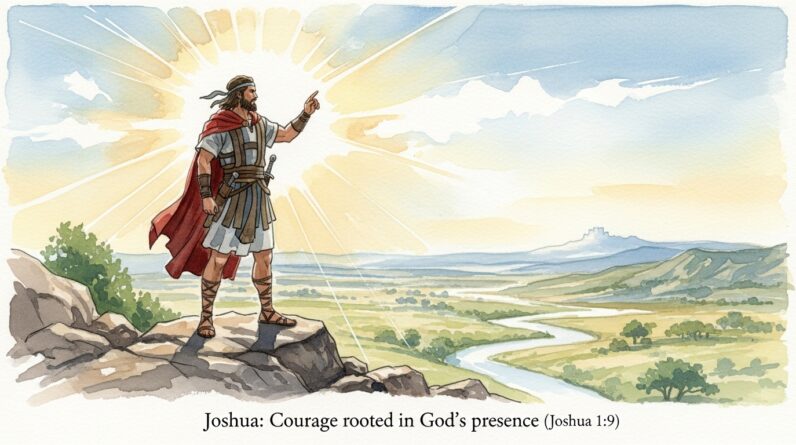


Faith Over Fear: How God Helps Us in Anxious Moments
Introduction
You know what it feels like when your chest tightens, your thoughts run ahead of you, and the future looks more like a list of what-ifs than a path forward. That’s anxiety — in its small everyday moments and in the weighty seasons when fear seems to set up camp in your mind and body. You aren’t failing your faith because you feel afraid; you’re human.
Even people who follow Jesus closely experience worry, sleepless nights, and racing thoughts. The Bible doesn’t pretend believers are immune to anxiety; it gives honest examples, steady promises, and practical ways God meets you in the middle of your most anxious moments. Your experience is not a spiritual disqualifier — it’s an invitation to find God’s presence in the hard places.
In this article, you’ll find compassionate, biblically rooted hope and practical guidance you can begin using today. We’ll name the struggle, point you to Scripture that speaks directly into it, and walk through rhythms and resources that help you choose faith over fear — one small step, one steady breath, and one honest prayer at a time.
Sponsored recommendation

Why This Struggle Is Real for Many Believers
Fear can feel unfair when you know the truth, but still wake up trembling at the thought of what might happen. Anxiety doesn’t ask for permission; it shows up in deadlines, in medical reports, in broken relationships, and in the silence of the night. You might carry exhaustion, unresolved pain, or a mind that keeps rehearsing worst-case scenarios. These are common human realities — not spiritual failures.
For many believers, there’s an added layer: the inner tension between wanting to trust God fully and recognizing how easily your trust frays when life gets uncertain. You might pray and sense relief for a while, only to find old fears returning. Or you may feel guilty that faith hasn’t removed the anxiety entirely. That cycle is familiar to many: the highs of spiritual reassurance and the low return of worry. Normalizing that keeps you from isolating — it helps you see the problem without shame, which is the first step toward healing.
Think of fear as a signal, not a verdict. It points to places where you need care, community, and a gospel-shaped reframing of your story. Whether your fear is chronic or situational, whether it arrived gradually or hit suddenly, it’s real — and God doesn’t pretend otherwise.

What the Bible Says About This Condition
The Bible is full of honest accounts of people who felt afraid alongside teaching that redirected their hearts. Scripture gives you narrative examples, clear teaching passages, and promises you can hold.
Narrative example: Consider Elijah after the mountaintop victory against the prophets of Baal. In 1 Kings 19:3-4, you see him running for his life, exhausted and terrified, even asking God for death. That raw honesty shows you that spiritual highs don’t prevent spiritual lows; they can make you more vulnerable. Read it for yourself: 1 Kings 19:3-4.
Teaching passage: Jesus directly teaches about worry in plain language. Matthew 6:25-34 is practical and pastoral: he points you to the birds of the air and the lilies of the field as invitations to trust God’s daily care. Jesus doesn’t shame you for worrying; he offers a reorientation for your heart. Read his teaching: Matthew 6:25-34.
Promise: God gives promises intended to steady you. Isaiah 41:10 is one of those anchors: “Do not fear, for I am with you.” That promise is less about a one-time fix and more about a long-term presence. Read the promise here: Isaiah 41:10.
You’ll also find Psalms that mirror your feelings in honest poetry. Psalm 34:4 is David’s testimony of deliverance from fear, and Psalm 42:11 models speaking hope to a discouraged heart. See them: Psalm 34:4 and Psalm 42:11. Scripture doesn’t bypass your suffering; it meets you there, names it, and guides you toward faith-filled responses.
How God Meets Us Here
You may wonder: if God is sovereign and loving, why do I still feel afraid? The answer lives in how God meets you — not by erasing the reality of your life, but by entering it in ways that transform your experience from the inside out.
Presence: God’s primary response is his presence. In Jesus, you have Emmanuel — God with you. John 14:27 carries his calming promise: “Peace I leave with you; my peace I give you.” That peace is not obliviousness to trouble; it’s a steadying presence that can be with you even in the storm. Read it: John 14:27.
Compassion: God is not distant from your pain. Hebrews 4:15-16 invites you to come to a compassionate Savior who understands weakness. You don’t have to “perform” for God; you can bring your trembling, your confusion, and your midnight thoughts to One who knows what it’s like to be human and still sympathizes with your struggles. Read the invitation: Hebrews 4:15-16.
Sovereignty: Knowing God is in control doesn’t always remove anxious feelings, but it reframes them. Verses like Romans 8:28 offer a lens through which to see your suffering — not as meaningless, but as something God can weave into redemptive purposes. This doesn’t minimize pain; it points toward hope that outlasts the current fear. Read it: Romans 8:28.
Invitation: God doesn’t coerce you into calm. He invites you into practices that cultivate trust: prayer, surrender, community, and truth. Scriptures like Philippians 4:6-7 show you how prayering your anxieties leads to peace that guards your heart and mind. This is an ongoing invitation, not a one-time trick. Read the passage: Philippians 4:6-7.
God meets you with presence, compassion, power, and an open hand — not as a distant fixer but as a close companion who walks with you through fear.
Practical Rhythms That Help
Theology gives your soul confidence; rhythms give your soul structure. Here are practical habits you can begin to practice that translate faith into tangible relief.
Prayer that names specifics: When anxiety spikes, be specific in prayer. Don’t just say, “Help me.” Say, “Help me with this mortgage, this doctor’s appointment, this conversation.” Philippians 4:6 encourages you to present requests to God with thanksgiving, which shifts your perception from scarcity to provision. Specific prayers help you focus and reclaim your wandering thoughts.
Slowing down: Anxiety thrives in speed. Create small margins for slowing: a 10-minute breathing prayer in the morning, a short walk without your phone, or a night routine that turns screens off 30 minutes before bed. Psalm 46:10 — “Be still, and know that I am God” — isn’t a mystical command for perfection; it’s practical permission to pause and realign your heartbeat with God’s. Read it: Psalm 46:10.
Community: Isolation amplifies fear. Find one or two trusted people you can call when your anxiety spikes — a friend, a mentor, or a small group leader. Being known reduces shame and gives you witnesses who can pray with you, remind you of God’s truth, and hold you accountable to healthy patterns.
Truth replacing lies: Anxiety often uses lies as its currency — “You’ll be alone,” “This will never get better,” “God doesn’t care.” Counter those with Scripture memorization and quick truth reminders. Keep a few promise verses (e.g., Isaiah 41:10, 1 Peter 5:7) in a place you can see them when your thoughts go dark. 1 Peter 5:7.
Daily surrender: Make small, repeated acts of surrender part of your day. In the morning, say a short prayer offering the day’s worries to God. At key moments (before a meeting, before bed), take a breath and hand the concern to him again. These tiny acts retrain your mind to respond to stress by turning toward God rather than spiraling into fear.
Movement and rest: Anxiety affects your body. Regular movement—walking, stretching, gentle exercise—helps regulate your nervous system. Prioritize sleep hygiene; consistent sleep reduces baseline anxiety. When necessary, use techniques like paced breathing (inhale for four counts, hold two, exhale for six) to activate calm.
Journaling and naming: Write down what you’re afraid of and why. Often fear loses its power once it’s named. List possible outcomes and how you might cope in each scenario. This exercise gives your mind a plan, and planning reduces catastrophic imagining.
Small spiritual practices: Read short Scripture passages that center you, sing a hymn or worship song, or practice a breath prayer (“Lord Jesus, have mercy” in rhythm with your breathing) to reanchor your soul in God’s presence.
These rhythms aren’t cures, but they are faithful ways to train your mind and heart to turn toward God in the moment of fear.

When to Seek Help Beyond Yourself
Choosing faith over fear often includes receiving help from others. Knowing when to ask for help is a sign of wisdom, not weakness.
Start with spiritual leaders: If your anxiety feels entangled with spiritual questions, talk to a pastor or mature believer you trust. They can pray with you, offer scriptural counsel, and help you discern spiritual and practical next steps.
Use a trusted community: A small group, trusted friends, or a mentor can provide ongoing support. They can encourage you in spiritual rhythms, keep you accountable, and remind you of God’s promises when your view narrows.
Consider professional care: There are times when anxiety becomes a medical or psychological issue. If your fear is persistent, interferes with daily functioning (work, relationships, sleep), or leads to panic attacks, intrusive thoughts, or hopelessness, seek professional help. Therapists, counselors, and psychiatrists can partner with your faith leaders to provide tools, therapy, or medication when appropriate. Professional care is not a lack of faith; it’s good stewardship of your mind and body.
Crisis signs that need immediate attention: If you ever have thoughts of harming yourself or others, seek emergency help or contact a crisis line immediately. Your safety matters deeply, and getting care quickly is an act of faith in life’s value and God’s concern for you.
You don’t have to carry this alone. Combining spiritual care with community and, when needed, professional support is often the most faithful route to healing.
Bible Characters Who Walked This Road
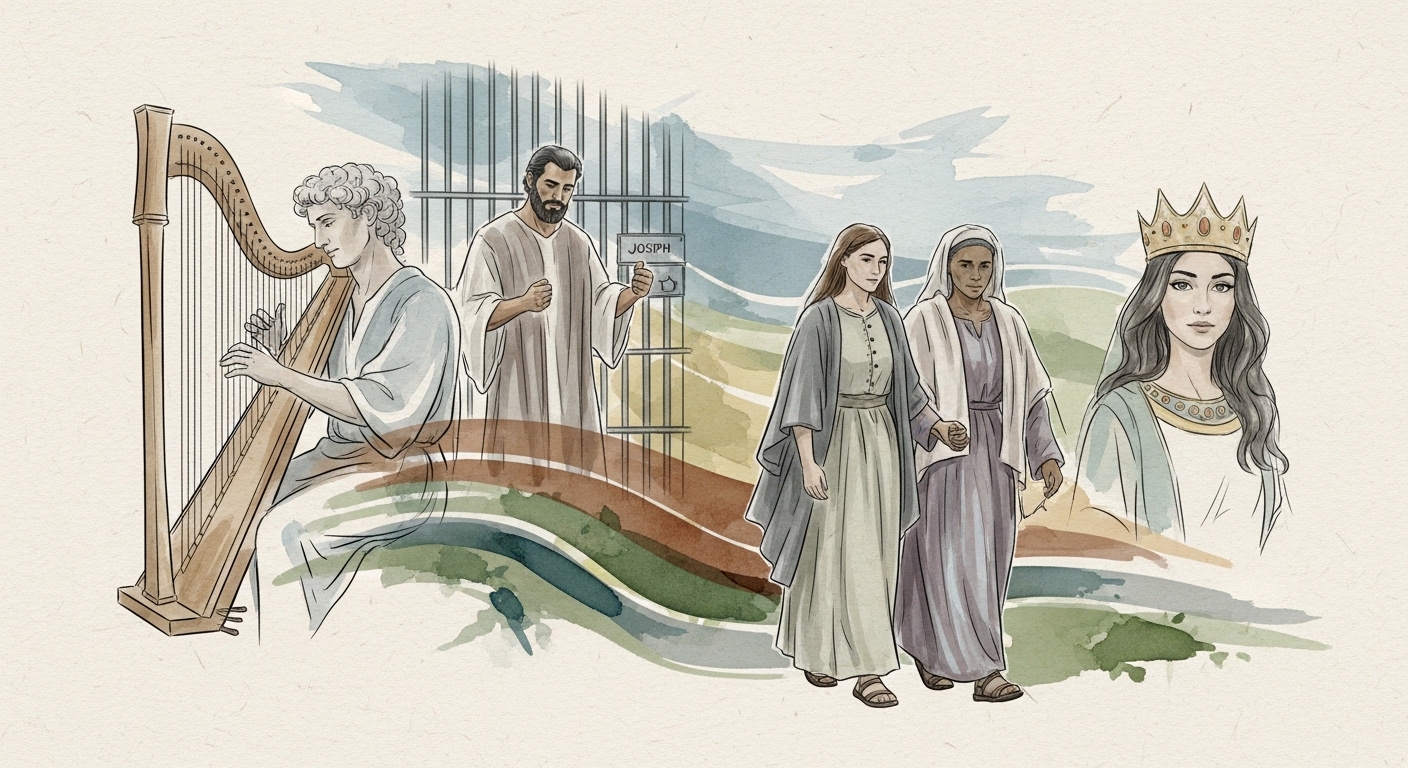
Seeing others in Scripture who experienced fear helps you feel less alone. These brief snapshots show how real people were honest about fear and found God in the process.
David in distress: David wrote Psalms when he felt hunted, rejected, or overwhelmed. In Psalm 13:1-2, he asks, “How long, Lord? Will you forget me forever?” His honesty turns into trust, and his words model the move from despair to praise. Read David’s cry: Psalm 13:1-2.
Joseph in injustice: Joseph was betrayed, falsely accused, and imprisoned, yet Genesis 39:20-21 shows how God was with him even in the pit. Joseph’s story points to steadiness under pressure and God’s unseen work through hardship. See the passage: Genesis 39:20-21.
Job in suffering: Job’s pain stripped him of ideas about fairness and control. In Job 1:20-22, he responds with raw grief and a stubborn refusal to curse God. Job models faithful suffering — a posture that trusts God even when explanation is absent. Read Job’s response: Job 1:20-22.
Ruth in uncertainty: Ruth faced an uncertain future as a widow in a foreign land. Her commitment to Naomi in Ruth 1:16-17 shows trust in relationships and steps of faith when the future is unclear. Her story encourages you to take faithful next steps even when fear says stay put. Read Ruth’s vow: Ruth 1:16-17.
Esther under pressure: Esther faced the terrifying possibility of death if she approached the king. In Esther 4:13-16, she chooses courage and asks others to fast and pray — showing that holiness and courage often arise within community and prayer. Read the moment of decision: Esther 4:13-16.
Each of these characters shows a different response to fear: honest lament, quiet endurance, outward courage, and faithful dependence. Their lives reflect how God works in different temperaments and contexts.
Explore More Help for Specific Situations
Sometimes your anxious moments have a shape — nighttime spikes, future fears, exhaustion, or panic. Here are micro articles you can turn to for targeted help.
If anxiety spikes at night → Bible Verses to Read During a Panic Attack. Nighttime fears can feel bigger because the world quiets. A short set of calming verses and breathing strategies can guide you through those hours.
If fear about the future → read How to Trust God When You Feel Afraid of the Future. This piece helps you reframe uncertainty, identify next practical steps, and offers faith-filled reminders you can carry with you.
If exhaustion is winning → read From Fear to Faith: Training Your Mind to Rest in God. Exhaustion clouds perspective; this article focuses on rhythms of rest, Sabbath practices, and small spiritual disciplines that replenish your soul.
If your thoughts spiral quickly → read When Fear Takes Over Your Thoughts: Turning to God Quickly. It gives immediate breath prayers, quick scripture counters, and a short plan for interrupting rumination.
Choose the one that matches how your anxiety shows up. Reading targeted material helps you practice specific, fast-acting tools when you need them most.
A Simple Prayer
Lord, I bring my fear to you. I don’t have to fix it alone. Help me breathe in your presence, receive your peace, and take the next faithful step. Remind me of your promises when my thoughts race and help me trust your love when I can’t see the way. Amen.
This short prayer is an example you can use and adapt in the moment. Keep it accessible: say it on the go, whisper it under the covers, or write it down to reread.
Final Encouragement
You are on a journey, not in a battle; you must fight alone. Hope is not an abstract idea; it’s a person — Jesus — who meets you in the messy, worried, sleepless parts of your life. Remember Romans 8:28: God is at work even when you can’t see it. Romans 8:28.
Your anxious moments don’t disqualify you from God’s love. They invite you deeper into dependence and into practices that form trusting hearts. Keep taking small steps: pray, name the fear, replace lies with Scripture, slow your pace, and reach out for help. Over time, those small steps frame a life where faith increasingly replaces fear.
You are not alone. God is near. And he walks with you — in the quickening breath, the darkest night, and the ordinary dawn.
Sponsored recommendation
Acknowledgment: All Bible verses referenced in this article were accessed via Bible Gateway (or Bible Hub).
“Want to explore more? Check out our latest post on Why Jesus? and discover the life-changing truth of the Gospel!”