

Healing Emotional Pain: Where God Meets You in Your Hurt

You’re living with a heaviness that doesn’t lift. Maybe it shows up as a tightness behind your chest, nights that stretch long with worry, or a quiet ache that arrives when you’re alone. You’re not failing at faith because you feel this—you’re human. Many people, even those in church, carry deep emotional pain that reshapes daily life.
If you’re a Christian, you may feel guilt, confusion, or even shame about the intensity of your feelings. That’s understandable. Spiritual life doesn’t mean emotional immunity. You can follow Jesus and still wrestle with grief, fear, loneliness, or numbness.
There is hope. The Bible names these experiences and points to a God who meets you in the middle of them. This article will gently walk you through how Scripture speaks to emotional pain, how God meets you there, practical daily rhythms that help, when to seek outside help, and the real stories of people in the Bible who walked the same road. You’ll find both biblical comfort and simple steps you can begin today.
Why This Struggle Is Real for Many Believers
You might be wondering: why do faithful people still hurt so deeply? The reasons are multiple and often overlapping. Life’s losses, unmet expectations, spiritual wounds, and chronic stress chip away at resilience. Even when faith gives you meaning, it doesn’t erase the biological, relational, and situational causes of pain.
Fear Can Overwhelm
Fear sneaks in about the future, health, relationships, or finances, and once it settles it can hijack your thoughts. It isn’t a moral failing; it’s a human response to perceived threat. When fear becomes constant, it colors how you interpret every event and decision.
Exhaustion Is Real
Spiritual devotion and emotional labor don’t cancel out the reality of tiredness. You can be serving, praying, and doing all the “right things” and still be bone-tired. When exhaustion sits deep, your ability to regulate emotion shrinks and losses feel heavier.
Pain Lingers
Grief and past wounds don’t always follow a tidy timeline. You may expect things to be “better” by now, and when they’re not you feel discouraged or ashamed. Persistent pain is not your failure—it’s the slow work of healing that takes time and often requires help.
Thoughts Race
When your mind floods with what-ifs and regrets, you can feel trapped. Racing thoughts magnify feelings and make it hard to rest in the present. That’s a common experience, not proof that you’re spiritually immature.
The goal here is simple: for you to feel understood. Your struggle is neither unusual nor proof that God is absent. It’s a human condition that God has addressed in Scripture and in the life of the people He loves.
What the Bible Says About This Condition
The Bible is full of honest emotion. It doesn’t sugarcoat pain or demand that you hide what you feel. Instead, it offers stories, teachings, and promises that point toward God’s presence in trouble.
You see Jesus enter into human sorrow. When Lazarus died, “Jesus wept” — a short, powerful record of His empathy and grief. John 11:35. That moment tells you that your tears matter and that God is not distant from your sorrow.
Jesus also taught words meant for the exhausted and burdened: “Come to me, all you who are weary and burdened, and I will give you rest.” Matthew 11:28-30. That invitation isn’t a platitude; it’s an open door to bring your emotional load to Him.
Scripture offers concrete promises of comfort. Paul writes that God is “the Father of compassion and the God of all comfort, who comforts us in all our troubles.” 2 Corinthians 1:3-4. That promise doesn’t remove pain immediately, but it places your pain inside the care of a God whose character is compassionate.
Taken together, the narrative examples, teaching passages, and promises show a God who sees your pain, invites you into rest, and provides a steady comfort that doesn’t depend on your feelings.
How God Meets Us Here
When you’re in the thick of emotional pain, understanding a few core truths about God can make a practical difference. These are theological realities that shape how you pray, rest, and relate.

Presence
God’s nearness is not theoretical; it’s relational. Psalm 23 offers a powerful image of God walking with you through dark valleys. “Even though I walk through the darkest valley, I will fear no evil, for you are with me.” Psalm 23:4. That presence means you are not alone when the night is long.
Compassion
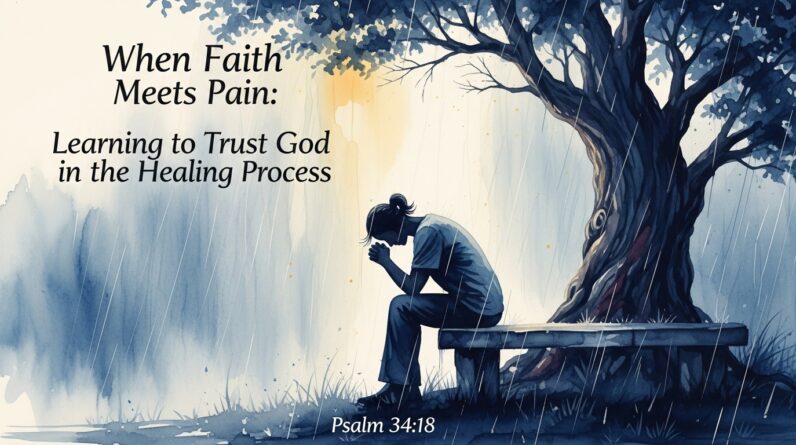
God’s heart moves toward suffering. Scripture repeatedly describes the Lord as near to the brokenhearted. “The LORD is close to the brokenhearted and saves those who are crushed in spirit.” Psalm 34:18. You can bring raw feelings to Him without pretense.
Sovereignty
God is not surprised by your pain, and He is not out of control. Romans assures you that God works even through hard things: “In all things God works for the good of those who love him.” Romans 8:28. That doesn’t mean every painful event is good on its own, but it does mean God is able to bring meaning and redemption through suffering.
Invitation
God invites you to approach Him with what you’re carrying. Hebrews encourages boldness in coming to God’s throne of grace to find mercy and help. “Let us then approach God’s throne of grace with confidence, so that we may receive mercy and find grace to help us in our time of need.” Hebrews 4:16. This invitation is practical—it’s a call to bring your pain into relationship, not to pretend it away.
When you combine presence, compassion, sovereignty, and invitation, the portrait that emerges is of a God who is both close and wise, gentle and powerful, able to carry you and to lead the healing process.
Practical Rhythms That Help
Healing is often a rhythm rather than a one-time event. Small, repeated practices help retrain your heart and mind and create space for God’s comfort to land. The following rhythms are practical, low-barrier actions you can begin today.
Prayer (Simple and Honest)
Prayer doesn’t have to be eloquent. You can say what you feel—anger, confusion, grief—and ask for help. Paul tells you to “not be anxious about anything, but in every situation, by prayer and petition, with thanksgiving, present your requests to God.” Philippians 4:6-7. Try short prayers at set times during the day: morning, midday, and night. Keep them honest and brief.
Slowing Down
Modern life trains you to move fast. Slowing down lets you notice what’s under the surface—grief, anxiety, or exhaustion. Scripture encourages stillness: “Be still, and know that I am God.” Psalm 46:10. Practically, choose a five-minute breathing or meditation practice focused on a simple Scripture phrase.

Community
Healing rarely happens in isolation. Hebrews encourages you to gather and encourage one another. “Let us consider how we may spur one another on toward love and good deeds, not giving up meeting together.” Hebrews 10:24-25. Find one or two trusted people you can share your heart with—friends, a small group, or a mentor.
Truth Replacing Lies
When pain comes, it often brings false narratives: “I’m alone,” “God has abandoned me,” “I’m weak.” One practical rhythm is to collect short, truthful Scriptures you can memorize and repeat when lies surface. Paul’s call to transform your mind is helpful: “Do not conform to the pattern of this world, but be transformed by the renewing of your mind.” Romans 12:2. Start with two or three promises you can speak aloud.
Daily Surrender
Surrender is less a one-time surrender and more a habit of handing over the day. The Apostle Peter encourages you to cast your cares on God. “Cast all your anxiety on him because he cares for you.” 1 Peter 5:7. Each morning, say a short prayer offering your day and anxieties to God, and then repeat that offer when stress rises.
These rhythms aren’t magic fixes, but they create fertile ground for healing. The key is repetition and gentleness toward yourself when you stumble.
When to Seek Help Beyond Yourself
There are times when the pain you’re living with needs more than spiritual practices or personal support. Asking for help is not a lack of faith; it’s a wise step toward healing.
You’re encouraged in Scripture to seek counsel and bear one another’s burdens. “Where there is no guidance, a people falls, but in an abundance of counselors there is safety.” Proverbs 11:14. If your pain includes persistent depression, suicidal thoughts, or trauma responses, professional care is important.
Pastoral and Mature Believer Support
Talk with a pastor, elder, or a spiritually mature friend who can pray with you, offer perspective, and help you apply Scripture to your situation in a grounded way. James instructs the church to call for elders when someone is suffering. “Is anyone among you sick? Let them call the elders of the church to pray over them.” James 5:14.
Professional Care
There are times when counseling, psychiatry, or specialized trauma therapy is necessary. Professional care can offer tools and diagnoses beyond the scope of your congregation. Turning to a counselor doesn’t mean you’ve spiritually failed; it means you’re using the resources God has made available to help you heal. The Bible values wise help and the practical benefits of supportive relationships. “Two are better than one… If either of them falls down, one can help the other up.” Ecclesiastes 4:9-10.
Emergency Signs
If you have thoughts of harming yourself or others, seek immediate help—contact emergency services or a crisis hotline in your area. Your life and safety matter, and there’s no shame in seeking urgent care.
Seeking help beyond yourself is an act of faith and stewardship. It recognizes your limits and invites God’s grace to work through people and resources around you.
Bible Characters Who Walked This Road
The Bible is rich with people who experienced raw, real emotion. Their stories bring connection—these were not idealized saints but people like you who faced deep hurt and came through it.
David in Distress
David poured out his heart in the Psalms, giving voice to despair and hope. He asked, “How long will you hide your face from me?” and later reaffirmed trust in God. Psalm 13:1-2 and Psalm 42:11. His writings show that questioning and trust can coexist.
Joseph in Injustice
Sold by his brothers and unjustly imprisoned, Joseph’s life was marked by betrayal and delay in deliverance. Yet he later said to his brothers, “You intended to harm me, but God intended it for good.” Genesis 50:20. Joseph’s story reminds you that God can bring meaning out of harm, even when the timeline is long.
Job in Suffering
Job lost nearly everything and wrestled with baffling pain. His honesty—saying, “Naked I came from my mother’s womb, and naked shall I return” Job 1:21—captures the rawness of grief. Job’s narrative shows that God can be present in the hardest questions, even when answers are slow.
Ruth in Uncertainty
Ruth, an immigrant widow, faced insecurity but chose loyalty and trust. Her story is a quiet testament to steady faith through instability. Her declaration, “Where you go I will go,” Ruth 1:16 points to faithful commitment amid fear.
Esther in Pressure
Esther bore immense pressure when her people’s lives were at stake. She modeled courageous prayer and action, saying that perhaps you have been placed for such a time as this. Esther 4:14 Her story shows faithfulness under stress and the call to act even when fear is present.
These characters show different facets of suffering and endurance. Their stories don’t minimize pain; they place it inside the context of a God who moves in and through messy, real human lives.

Explore More Help for Specific Situations
If a certain type of pain is pressing in, you may find focused articles helpful. Below are short pointers to dig into specific situations and offer scripture-centered guidance and practical next steps.
- Heart shattered tonight? Find God’s comforting presence in the darkest moments → read: When Your Heart Is Broken but God Is Close.
- Feeling too broken to pray? Step-by-step guidance for bringing your pain to God → read: Praying Through Deep Emotional Wounds.
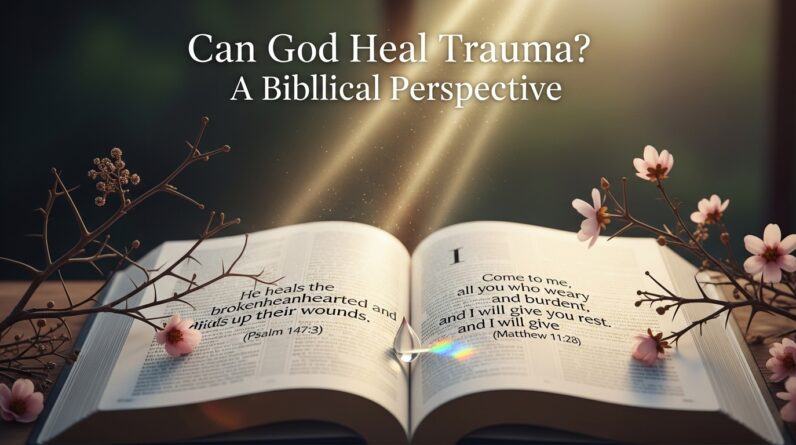
- Struggling with past trauma? See how God’s healing truly reaches even your deepest scars → read: Can God Heal Trauma? A Biblical Perspective
- Lost joy and broken dreams? Discover how God can rebuild what pain has stolen → read: Letting God Restore What Pain Has Taken
A Simple Prayer
Lord, I bring the heavy parts of my heart to you. When I don’t have words, hold me. When I have questions, meet me in the silence. Grant me small steps of courage today — people to speak to, moments of rest, and the truth to replace my fears. Help me trust you in the slow work of healing. Amen.
Final Encouragement
You are not walking this road alone. The Scriptures and the stories of God’s people show that emotional pain is part of human life but not the final word. God is present, compassionate, sovereign, and invites you to bring what’s real. Healing is often slow and requires small, steady rhythms, and sometimes it will require wise, outside help. That’s all part of the journey, not a detour from faith.
Hold on to the hope that God is near to the brokenhearted and that the one who wept with friends will also sit with you in your sorrow. Keep taking one small, faithful step today—reach out, pray a line of Scripture, slow your breath, or call someone who can help. You are seen, and you are loved through it all.
Sponsored recommendation

Acknowledgment: All Bible verses referenced in this article were accessed via Bible Gateway (or Bible Hub).
“Want to explore more? Check out our latest post on Why Jesus? and discover the life-changing truth of the Gospel!”