

You’re here because something inside you longs for steadiness. Maybe your days feel like a scramble, your heart heavy, or your faith is more a memory than a practice. You want prayer to be real again—not just something you think about—but a daily, steady rhythm that shapes how you live. You’re not alone in this; many people who want a closer walk with God find themselves stuck between good intentions and inconsistent practice.
This moment is honest: you’ve tried, you’ve missed days, and maybe you’ve felt guilt or frustration afterward. That struggle doesn’t disqualify you; it points to a need for a different approach—one that honors where you are and helps you move forward. What follows is practical, compassionate, and focused: a clear plan to help you pick a realistic time and place, start small, link prayer to daily habits, and build a sustainable rhythm. You’ll get scripture to anchor you, steps you can use tonight, a sample prayer, and a path from urgent need into long-term growth.
Why This Moment Requires Prayer
Right now you’re dealing with more than a busy schedule. You might be facing fear—about your future, a job, a relationship—or carrying grief that surfaces at odd hours. You could be in a season of confusion, wondering which direction to take, or standing at a decision point that feels larger than you can handle. Crisis can also knock on your door unexpectedly: a health scare, a financial strain, or news that shifts your foundation.
Prayer matters in these situations because it reorients you. When fear tightens your chest, prayer provides a place to name the fear, to hand it over, and to remember that you don’t have to carry it alone. In grief, prayer creates space to feel, to lament, and to invite God’s presence into your ache. When confusion clouds decisions, prayer slows you down and helps you listen for wisdom. In crisis, prayer is a contact line—an immediate way to bring your needs to God and to seek peace in the middle of chaos. This moment requires prayer because it’s an invitation to respond, not react; to move from frantic trying to steady surrender.

What Scripture Shows Us
Scripture consistently points to prayer as both a refuge and a practice—an ordinary way to live in relationship with God. A few passages are especially relevant for building a daily habit.
- Psalm 5:3 — Psalm 5:3 (NIV). David says, “In the morning, Lord, you hear my voice; in the morning I lay my requests before you and wait expectantly.” This verse gives you permission to begin your day with God. Morning prayer isn’t a ritual only for spiritual elites; it’s a practical way to set the tone for your day and to practice expectant waiting.
- Matthew 6:6 — Matthew 6:6 (NIV). Jesus instructs, “But when you pray, go into your room, close the door and pray to your Father, who is unseen.” This verse emphasizes simplicity and privacy: prayer doesn’t require performance. It requires an honest, undistracted moment with God. That teaches you to create a place—physical or metaphorical—where prayer can happen.
- Philippians 4:6-7 — Philippians 4:6-7 (NIV). Paul writes, “Do not be anxious about anything, but in every situation, by prayer and petition, with thanksgiving, present your requests to God. And the peace of God… will guard your hearts and minds in Christ Jesus.” This passage directly applies to your tendency to worry. Prayer is not only petition; it’s a posture of thanksgiving that opens you to peace.
These verses don’t overload you with rules. Instead, they give clear practices: start in the morning, create honest private time, and bring every concern—big and small—with thanksgiving. That’s the spiritual scaffolding you need to build a daily routine.
How to Pray in This Situation
You need prayer that fits your life—not a checklist that becomes a burden. Below is a practical, immediate structure that you can use today. It’s intentionally short and repeatable, so it’s easier to do consistently.
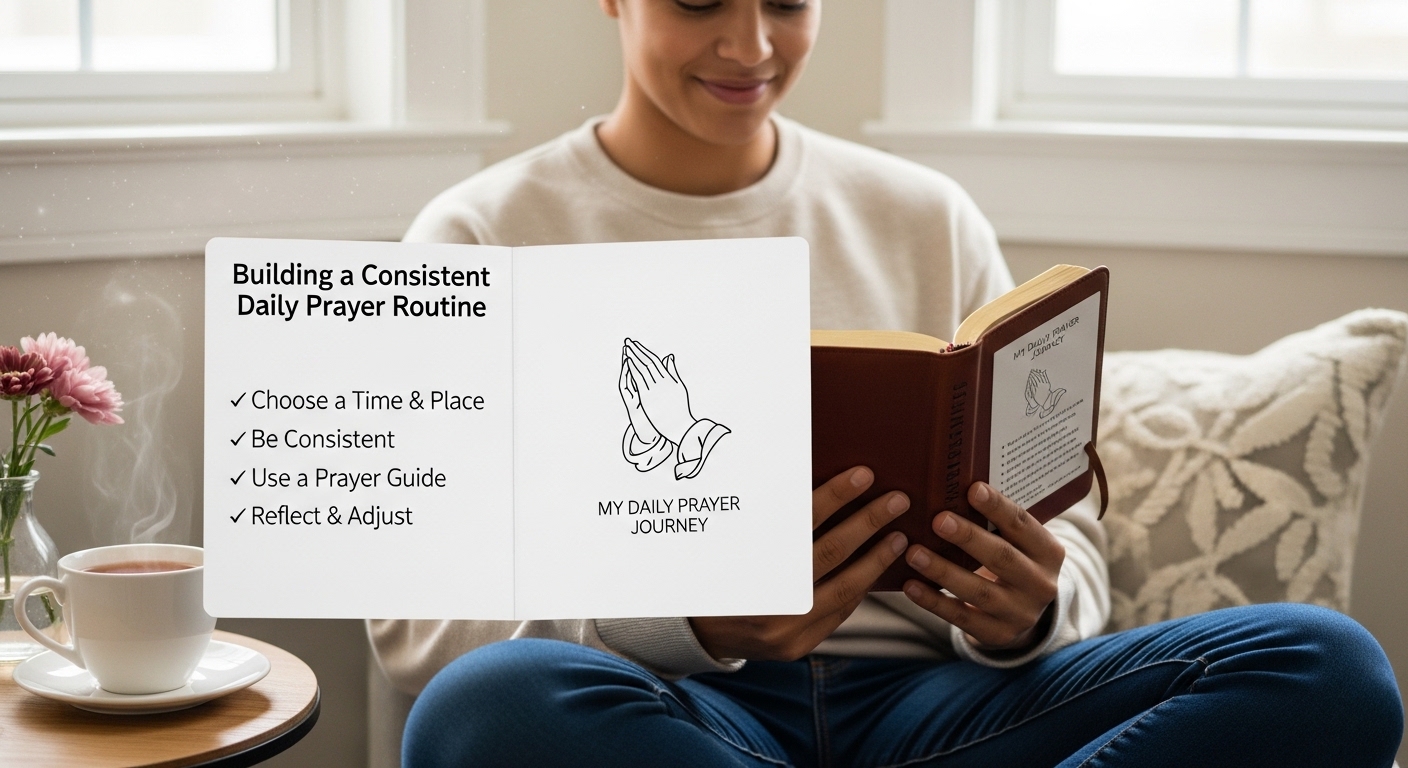
Step 1 — Choose a realistic time and place Decide on a specific cue: a time of day you already own. Early morning before coffee? During a lunch break? Right after dinner? Pick a place that reduces distraction—a corner of your bedroom, a bench in a quiet park, or even the passenger seat of your car. The key is consistency: when your body and mind associate a cue with prayer, it becomes easier to start.
Step 2 — Start small: 3-7 minutes Begin with a tiny commitment. Three to seven minutes is enough to form habit. Use a timer if that helps. Small wins build momentum; you’ll be more likely to return tomorrow if you meet a realistic goal today.
Step 3 — Use a simple structure: Pause, Praise, Present, Listen, Thank This five-part outline keeps your prayer focused and manageable. Pause to breathe and center yourself. Praise God briefly for who He is. Present your needs—be honest, specific, and short. Listen: allow silence for a minute and notice impressions, Scripture, or a sense of peace. Finish with a quick thanksgiving—this turns petition into worship and opens you to peace.
Step 4 — Link prayer to a habit (habit stacking) Attach your prayer to something you already do. If you brush your teeth every morning, make prayer the thing you do immediately after. If you have a coffee ritual, pray while the kettle boils. This “stacking” reduces friction; instead of creating something new, you’re piggybacking on an existing habit.
Step 5 — Track and adjust Keep a simple tracker—one line in your planner, a habit app, or a small sticker calendar. If you miss a day, note why and make a tiny adjustment. If mornings are chaotic, try evening or two short sessions. Be flexible; consistency grows with compassionate repetition, not perfection.
Breath Prayer Option If words fail you or you’re short on time, try a breath prayer: on the inhale say, “Lord,” on the exhale say, “have mercy,” or “lead me,” or “give me peace.” Repeat this for 3–5 breaths. Breath prayers are accessible no matter where you are and anchor your body to prayer quickly.
This model is usable tonight: pick your cue, set a timer for five minutes, follow the Pause–Praise–Present–Listen–Thank structure, and use a breath prayer if you need to calm your body first.
Short Prayer Outline (if you prefer a template)
- Pause: 20–30 seconds of slow breathing.
- Praise: “God, you are…”
- Present: “I bring… (one specific thing).”
- Listen: 60 seconds silent waiting.
- Thank: “Thank you for…” This outline is bite-sized and repeatable—perfect for building consistency.

A Sample Prayer You Can Use
Use this short, honest prayer in the first person whenever you need a starting point. Speak it slowly and mean each line.
Lord, I come to you now. I am tired and unsure. I bring [name the thing—fear, decision, grief]. Help me see clearly and let your peace come. Teach me what to do today. Thank you that you hear me. Amen.
This prayer is raw and specific—exactly what a routine needs. You can replace the bracketed phrase with a concrete worry or a person’s name to keep it rooted in reality.
Growing Beyond This Moment
Once you’ve established a daily touchpoint, shift your focus from merely getting through the day to cultivating long-term spiritual growth. Consistency is the bridge between urgent need and steady formation. Don’t rush the process; growth often looks like small, faithful actions over time.
Deepen study: pair prayer with a short scripture reading. Start with a verse or two—maybe the same verses you already find comforting—and read slowly. Reflect on one line and let it inform your prayer the next day. Over months, these small studies shape how you see God and yourself.
Surrender as practice: part of growth is learning to let go of control. Use your daily prayer time to practice surrender—say aloud what you cannot change and invite God’s will into your heart. Surrender is not passive; it’s a courageous act of entrustment that frees you to act with clarity.
Increase intentionality: once five minutes becomes natural, add one small spiritual discipline—like a short journal entry, an act of mercy, or a listening prayer—without overcommitting. Growth that sticks is incremental.
Community and accountability: consider joining a small prayer group or pairing up with a friend. Sharing your journey helps you stay faithful and gives you encouragement on hard days. When you know someone else is praying with you or for you, your own practice deepens.
Ritualize transitions: create prayer-postures or phrases for different life rhythms. A “morning offering,” a midday breath prayer, and a nightly examen (a 3–5 minute review of the day) can help you integrate prayer into daily life without feeling like a chore.
Finally, give yourself grace. You will miss days. That’s part of the rhythm. Don’t let missed days become reasons to quit; let them be reasons to return. The habit you build is about relationship, not performance.

Learn More About Strengthening Your Prayer Life
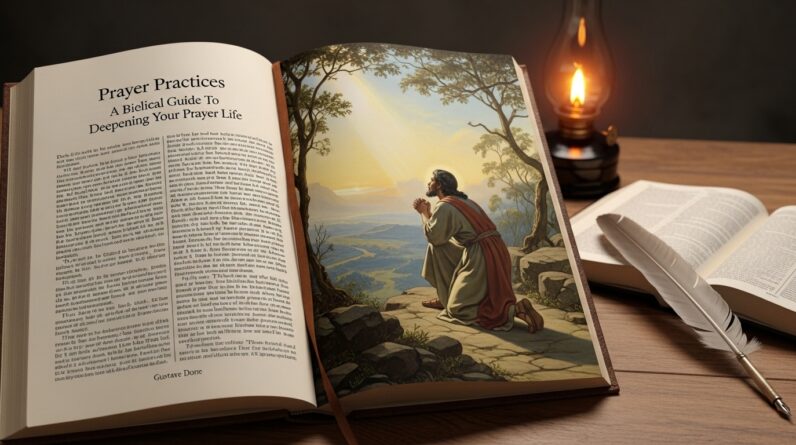
For a deeper biblical foundation on building a consistent and powerful prayer life, read Prayer Practices: A Biblical Guide to Deepening Your Prayer Life. This pillar resource gives you an overarching roadmap—historical practices, scriptural patterns, and practical steps—that this micro-article applies specifically to daily routines. If you want the heady theology behind the habit and practical chapters you can follow week by week, that resource will expand everything you read here and help you move from short-term rhythm to lifelong formation.
Read Next
If this encouraged you, continue with these resources to build your rhythm and confidence:
-
Prayer Practices: A Biblical Guide to Deepening Your Prayer Life
-
The ACTS Prayer Method Explained (Adoration, Confession, Thanksgiving, Supplication)
Practical Tips for Overcoming Inconsistency
Consistency fails for many reasons: overwhelm, unrealistic goals, shame after missing days, and life unpredictability. Here are practical responses you can use right away.
Make it non-negotiable but flexible. Decide that prayer is a daily priority—non-negotiable in intention—but flexible in timing. If mornings don’t work, have a fallback time. This prevents missed days from turning into guilt cycles.
Remove friction. Prepare a small physical space: a simple cushion, a favorite pen, or a short prayer card. The less set-up required, the more likely you are to start.
Celebrate small wins. Each day you pray—even for three minutes—acknowledge it. Reward consistency in small ways to reinforce the habit.
Use reminders wisely. Alarms, sticky notes, or habit apps can help. Don’t let reminders shame you; think of them as gentle prompts.
Forgive quickly. If you miss a day, say, “I’m going to try again now,” and do it. Avoid grand declarations of failure; instead, return to the practice with curiosity about what caused the miss.
Relate prayer to identity. Remind yourself that prayer isn’t just an activity; it’s a way of living as someone who belongs to God. When your identity shifts, your motivation changes from duty to delight.
How to Tailor This Routine to Different Seasons
Life changes. Your prayer routine should flex with it. When work intensifies or family seasons demand more of you, shorten the practice rather than abandon it. During times of great crisis, increase frequency but lower the duration—multiple 2-minute breath prayers can be more sustainable than one long prayer. In slower seasons, expand your time for study and silence.
For parents with young children, incorporate prayer into caregiving moments: pray while you rock your child, put them to bed, or during a diaper change. For commuters, use transit time for breath prayers or a short scripture reading. When sleep-deprived, practice gratitude-focused prayers; gratitude narrows anxiety and reduces stress even when you’re tired.
The goal is not uniformity but continuity. The form can shift; the relationship continues.
Common Obstacles and Solutions
Obstacle: “I don’t know what to say.” Solution: Use the Pause–Praise–Present–Listen–Thank outline or the short sample prayer above. Speak honestly; prayer can be a single sentence.
Obstacle: “I fall asleep when I pray.” Solution: Change posture. Stand, walk, or pray at a different time. Try breath prayers that require less cognitive energy.
Obstacle: “I feel disconnected from God while praying.” Solution: Read one verse slowly before you pray and let it shape your words. Consider a guided prayer app or audio scripture for a season.
Obstacle: “I keep comparing myself to others.” Solution: Remember that consistency beats intensity. Two minutes every day often builds more than an hour once a week. Your journey is yours.
Obstacle: “I don’t feel the results.” Solution: Results in prayer can be subtle—peace, small shifts in perspective, or answered prayers over time. Track a prayer journal to notice changes you would otherwise miss.
Each obstacle is solvable with small adjustments. Don’t give up because of a temporary roadblock.
Creating a Sustainable Rhythm (Practical Weekly Plan)
A weekly rhythm helps you expand beyond daily five-minute prayers. Try this plan for six weeks and adjust:
- Daily (5 minutes): Pause–Praise–Present–Listen–Thank; brief breath prayers as needed.
- Twice weekly (15 minutes): Add a short scripture reading and journal one sentence about what you noticed.
- Weekly (30–45 minutes): A longer prayer or guided meditation with extended listening and response. Use this time for confession, thanksgiving, and wider concerns.
- Monthly: Review your prayer matters—what you’re praying for and any answers. Celebrate small moves of God and adjust your focus.
This plan keeps momentum while remaining flexible enough for busy lives. It’s a gradual deepening that avoids burnout.
Final Encouragement
You don’t need a perfect start—only a faithful return. Begin where you are. Choose one cue, commit to a tiny amount of time, and be kind to yourself when life interrupts. Over time, those small moments will stitch together into a steady rhythm. Your desire for consistency is a good sign: it shows you want prayer to be a true part of your life, not just a memory or a guilt point. Keep practicing, keep coming back, and let the small, daily choices shape a deeper, more resilient spiritual life.
If you want a deeper biblical foundation on building a consistent and powerful prayer life, read Prayer Practices: A Biblical Guide to Deepening Your Prayer Life. It gives you theological grounding and practical chapters that align with this micro-guide.
📖 Continue Growing in Your Faith
If you want to strengthen your prayer habit and keep growing spiritually, here’s where to go next:
👉 How to Pray According to the Bible
Learn the biblical foundation that gives your daily prayers clarity and direction.
👉 Praying Scripture: How To Turn Bible Verses Into Powerful Prayers
Discover how to use God’s Word to deepen your daily conversations with Him.
👉 How to Hold On to Faith When Prayers Go Unanswered
Find encouragement and biblical perspective when answers seem delayed.
 Recommended Christian Reading
Jesus and the Woman Caught in Adultery — Grace and Mercy Over Judgment
A powerful retelling of Gospel of John 8:1–11, exploring forgiveness, mercy, and Christ’s compassion.
If you’re reflecting on spiritual growth and obedience, this story will remind you that transformation begins with grace.


Sponsored recommendation

Acknowledgment: All Bible verses referenced in this article were accessed via Bible Gateway (or Bible Hub).
“Want to explore more? Check out our latest post on Why Jesus? and discover the life-changing truth of the Gospel!”