


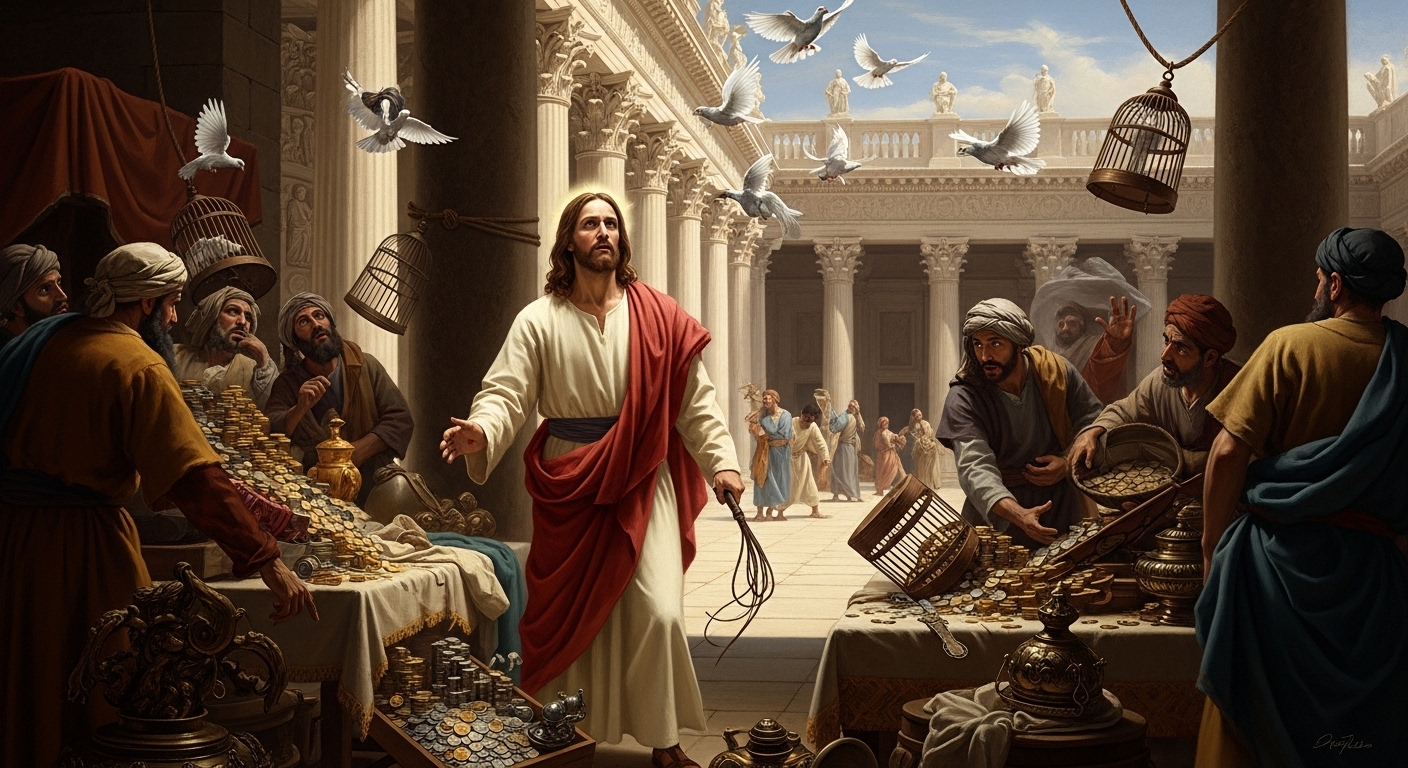
One of the most intense and surprising moments in Jesus’ ministry happens when He enters the temple—and overturns tables. You might expect the gentle, compassionate Jesus to always speak softly and heal quietly, but here He acts with authority and force. That contrast is not a contradiction; it’s a window into something deep and vital about God’s heart, His expectations for worship, and how you are called to live in honesty before Him.
You may wrestle with questions: Why would Jesus do something that looks so angry? Does this mean anger is sometimes right for Christians? How do you know when to confront sin, cleanse your own life, or confront corruption in your community? This guide promises to walk you through what happened, why it matters, and how you can apply the spiritual lessons from that dramatic day in your everyday life.
By the end, you’ll better understand the historical scene, the theological meaning, and the practical steps to let Jesus cleanse whatever in your life is keeping you from true worship.
The Key Bible Moment
Verse: Matthew 21:12–13
“Jesus entered the temple courts and drove out all who were buying and selling there…”
This scene occurs during Holy Week, shortly after Jesus’ triumphal entry into Jerusalem. The temple—meant to be a place where God’s presence met with people—had been transformed into a commercial hub. Merchants sold animals for sacrifice, and money changers exchanged currency for temple tax. What should have been a place of prayer and encounter had become a place of profit, convenience, and exploitation.
When you read the account, notice both the action and the words. Jesus overturns tables and declares the temple a house of prayer. The physical act is dramatic, but the theological point is clear: worship must be protected from anything that diminishes or distorts its purpose.
Historical and Cultural Context
Understanding the historical background helps you see why Jesus’ actions were so charged. The temple was the focal point of Jewish religious life. Pilgrims from across the region came to Jerusalem to celebrate festivals and bring sacrifices. Merchants and money changers were there to provide the animals and currency needed for sacrificial worship, but over time these services became exploitative, with inflated prices and practices that squeezed ordinary worshipers.
In the Gospel accounts, Jesus’ cleansing of the temple can serve as both a critique of religious systems that lose their soul and a prophetic act symbolizing God’s demand for purity. When you place the event in that cultural frame, the outrage makes sense: Jesus wasn’t upset about commerce per se; He was confronting what profit and expedience had done to people’s access to God.
1. God Desires True Worship
Meaning: The temple was meant to be a place of prayer and encounter with God, yet it had been turned into a marketplace. When Jesus cleanses the temple, He’s reclaiming sacred space for its intended purpose. The statement is timeless: God desires worship that is sincere, reverent, and centered on Him rather than on ritual, appearance, or gain.
Application: Ask yourself whether your worship is genuine or routine. It’s easy to attend meetings, say the right words, and go through motions while your heart drifts away. You can cultivate true worship by intentionally creating space to listen, pray, and be honest with God about where you’re distracted or self-focused. Worship becomes authentic when you make it more about God’s presence and less about performance.
Verse reference: Matthew 21:12–13
What true worship looks like
True worship isn’t only a set of actions; it’s a posture of heart. When worship is genuine, you come with humility, expectation, and a willingness to be changed. You bring your brokenness and praise, your questions and trust. This kind of worship refuses to let commerce, selfish ambition, or shallow performance take the place of a tender encounter with God.
How to evaluate your worship
Regular self-checks help you stay honest. Ask: Are my prayers rehearsed or heartfelt? Are my songs opportunities to meet God or a checklist to complete? Are my devotional practices helping you grow in love and holiness? Use these questions not as a source of condemnation but as invitations to deeper devotion.

2. Jesus Confronts Sin Boldly
Verse: John 2:16
“Stop turning my Father’s house into a market!”
Context: In John’s Gospel the cleansing happens earlier in Jesus’ ministry, which emphasizes its theological significance rather than a merely chronological event. Jesus confronts the misuse of the temple directly, speaking with authority as the Son who defends the Father’s house.
Meaning: Jesus demonstrates that love does not ignore wrongdoing. Confrontation is not the opposite of compassion; sometimes it is an act of love. When you see systems, practices, or behaviors that exploit others or distance people from God, Jesus’ example shows you that it’s appropriate to speak up and take action.
Application: When you’re called to confront, do it with courage and humility. Don’t confuse harshness with righteousness. Your aim should be restoration and truth, not self-righteousness. Prepare your heart, verify facts, and speak truth in love. Confrontation is most effective when it is rooted in prayer and guided by wisdom.
How to confront with Christlike courage
Confrontation needs a framework so it doesn’t devolve into personal attack. Begin with prayer and ask for discernment. Clarify your motives—are you protecting people, defending truth, or feeding your ego? Use Scripture and compassionate honesty. Invite dialogue rather than dictate, and always be open to correction yourself.
3. Righteous Anger Has a Purpose
Meaning: Jesus’ anger in the temple was not uncontrolled rage. It was intentional, focused, and rooted in holiness. That kind of holy anger is different from sinful anger: it is anger that mourns injustice, defends the vulnerable, and seeks God’s righteousness.
Application: When you feel anger, pause before reacting. Assess whether your anger aligns with God’s truth and love. If it does, channel it into constructive action—advocacy, corrective conversation, or practical help for those harmed. If it doesn’t, invite God to expose the deeper issues in your heart—pride, bitterness, or selfishness—and be willing to repent.
Verse reference: Mark 11:17
Distinguishing righteous anger from sinful anger
Righteous anger is always coupled with a desire for restoration. Sinful anger focuses on self and often seeks revenge or domination. You can tell the difference by the fruit that follows: does your anger produce humility, justice, or reconciliation? Or does it incite escalation and division?
Practical responses to anger
Develop spiritual habits to handle anger healthily. Give yourself a pause—breathe, pray, and name the feeling. Seek wise counsel if the situation is complex. Pray for God’s perspective and strength to act in line with His will. These steps help you avoid reactive behaviors that harm relationships and testimony.

4. Spiritual Corruption Grieves God
Verse: Mark 11:17
“My house will be called a house of prayer for all nations…”
Context: Jesus emphasizes that the temple was intended to welcome all people. Corruption—whether economic, social, or religious—creates barriers that keep people from accessing God. That grieves God, who desires justice, mercy, and accessibility.
Meaning: God cares deeply about integrity and justice. When religious leaders or institutions prioritize wealth, status, or power over people, they are participating in a form of spiritual corruption that distorts God’s mission. Your faith will be tested by how you respond to such distortions—whether you join the status quo, stay silent, or stand against it.
Application: Examine your life and community for anything that creates distance between people and God. Are there practices that privilege a few while excluding many? Do you tolerate injustice because it benefits you or your group? Begin with personal integrity, then advocate for fair and accessible practices—whether in church leadership, community service, or personal interactions.
Why justice matters to God
God’s heart for justice threads through Scripture, from the prophets to Jesus’ ministry. He consistently lifts up the poor, widows, and foreigners—those vulnerable to exploitation. Your faith must reflect that same concern. Worship that ignores justice is incomplete; true worship leads to compassionate action.
5. Your Life Is God’s Temple
Verse: 1 Corinthians 6:19
“Do you not know that your bodies are temples of the Holy Spirit…”
Context: With Jesus’ resurrection and the outpouring of the Spirit, the idea of temple shifts from a building to people. Believers themselves become the dwelling place of God. This personalizes the temple-cleansing imagery: Jesus’ demand for purity and worship is now aimed at your heart.
Meaning: The ancient cleansing of the temple points forward to the ongoing work God wants to do inside you. If God dwells within you, it matters what occupies your heart and mind. Competing loyalties—ambition, comfort, sin—can become marketplaces where something other than God sells itself as master.
Application: Ask yourself what needs to be removed from your life. Identify idols—substances, relationships, ambitions, or comforts that function as replacements for God. Make concrete changes: limits on media, accountability with trusted friends, repentance where necessary, and renewed devotion practices. Treat your life as sacred ground where God wants to live and work.
Elements of a cleansed life
A cleansed life makes room for prayer, service, generosity, and rest in God. It refuses to let busyness or greed push out intimacy with the Lord. You create space by simplifying schedules, saying “no” to draining commitments, and saying “yes” to practices that deepen dependence on God.
What Jesus’ Cleansing Teaches About Leadership
When leaders see the temple defiled and do nothing, they fail in their calling. Jesus’ action implicitly critiques passive or complicit leadership. If you lead—whether in your family, workplace, or church—you bear a responsibility to protect integrity and promote access to God for those under your care.
Leadership application: Lead with humility and accountability. Confront problems clearly and lovingly. Prioritize justice and accessibility. Cultivate a culture where people can offer correction without fear. As you lead, model repentance, transparency, and sacrificial service.
Accountability structures that help
Healthy structures prevent corruption—regular review processes, financial transparency, and outside oversight help keep leaders honest. If you’re part of a community that lacks these practices, press for them gently and persistently. Leadership without accountability tends toward abuse; accountability without grace produces fear. Aim for both truth and love.
When Confrontation Is Necessary—and How to Do It
There are seasons for gentle persuasion and seasons where direct action is required. Jesus modeled direct action when silence would enable ongoing harm. You’ll need discernment to know when to escalate a concern and when to seek restoration through private conversation first.
Steps for wise confrontation:
- Pray and seek clarity about your motives.
- Gather facts and listen to impacted people.
- Address private issues privately; public injustices may require public action.
- Speak the truth with humility and offer a way forward.
- Be prepared to participate in remedies and restoration.
Courage mixed with compassion
True courage isn’t brash or hurried. It listens, seeks truth, and moves to protect others even at personal cost. Compassion keeps you from becoming a hard judge; courage keeps you from being silent in the face of harm.
How to Let Jesus Cleanse Your Heart: Practical Steps
Cleansing is both a one-time turning to God and an ongoing, daily practice. The temple story invites you into regular heart-checks and spiritual disciplines that create ongoing space for God.
Daily practices:
- Start your day with honest prayer—name what competes for your affection and ask God to clean the place.
- Practice confession and repentance regularly—don’t wait for crisis to bring you back.
- Simplify your commitments so you can sustain worship and service.
- Serve the marginalized—justice and worship go together.
- Establish accountability with trusted friends or mentors.

Weekly and seasonal rhythms
Set a weekly rhythm for corporate worship, rest, and service. Use seasons like Lent or Advent, or personal sabbaticals, to recalibrate. Periodic “cleanses”—fasting from certain media, reducing purchases, or dedicating time to prayer—can help you re-center on God.
Common Objections and Answers
You may object: Isn’t Jesus’ temple-cleansing too violent? Isn’t this an isolated incident? How do we avoid using Jesus as a model for personal rage?
Answer: Jesus’ action was controlled and purposeful—aimed at restoring worship and stopping exploitation. It was not an uncontrolled outburst. The event is both historical and symbolic: historical in confronting a real injustice, symbolic in representing God’s distaste for hollow religion. Use Jesus as a model for holiness and justice, not for unchecked anger. Always let Scripture and the fruit of the Spirit shape your responses.
What about legalism?
Some fear that attention to purity slides into legalism. The distinction is motive. Legalism is about earning favor through rules; cleansing is about removing obstacles to a genuine relationship with God. Rules can help, but only when they point to grace and transformation rather than self-righteousness.
Group Reflection Questions
When you talk this through with a small group, ask each other honest questions that lead to transformation. These conversations are not for judgment but for mutual encouragement toward authenticity.
Questions to use:
- In what ways has worship in our community become routine or performative?
- Where do we tolerate practices that exclude people or favor the privileged?
- What is one change we can make this month to prioritize access to God for all?
Creating safe spaces for honesty
Make your group a place where confessions are met with grace and practical help. Encourage vulnerability, and resist the urge to quickly solve or minimize another’s struggle. True cleansing often happens in the soil of trustworthy relationships.
A Short Devotional: Five Days of Reflection
If you want a practical place to start, try a five-day devotional reflecting on the temple cleansing. Each day focuses on a theme—worship, honesty, anger, justice, and personal temple—and includes a short scripture reading, a reflection, and an action step.
Day 1: Worship—Read Matthew 21:12–13. Reflect on ways your schedule competes with worship. Action: Create a 15-minute silence time.
Day 2: Honesty—Read John 2:16. Reflect on one hidden area you can bring to God. Action: Confess to a trusted friend.
Day 3: Anger—Read Mark 11:17. Reflect on where righteous anger may be needed. Action: Pray for discernment and write a calm plan.
Day 4: Justice—Reflect on how your resources serve others. Action: Commit to one act of generosity.
Day 5: Personal Temple—Read 1 Corinthians 6:19. Reflect on habits to change and set a 30-day practice to remove an idol.
These short daily exercises help you convert insight into action, turning the temple moment into personal transformation.
Personal Stories and Contemporary Examples
You’ll find modern parallels where institutions or individuals profit from faith instead of serving it. Churches that prioritize programming over people, ministries that exploit vulnerable donors, and communities that silence victims all echo the temple marketplace. But you’ll also find stories of renewal—churches that repented, leaders who stepped down to protect a community, and individuals who chose costly honesty over comfortable silence.
These stories are reminders that the cleansing work of Jesus is ongoing and personal. You can be part of renewal in your context by choosing integrity, transparency, and sacrificial love.
Closing Reflection
Jesus cleansing the temple calls you to a faith that is both tender and courageous. It’s a faith that worships with sincerity, confronts injustice with love, and guards the sacred space of your heart and community. When you let Jesus cleanse the areas that block intimacy with God, worship becomes a living encounter rather than a rote activity.
Choose to examine your life, remove what doesn’t belong, and return to true worship. Let the temple story be not only a dramatic episode in history but a continuing invitation to let Jesus purify and dwell within you.
Closing Prayer
Lord, Search my heart and remove anything that does not honor You. Help me live a life of true worship, sincerity, and devotion. Teach me to follow You with a clean heart and faithful spirit. Give me courage to confront wrong with humility and to pursue justice with compassion. Make my life a house of prayer where Your presence is welcome and everything that distracts is cleared away. In Jesus’ name, Amen.
🔗 Internal Resources to Explore
If you want to explore Palm Sunday, Holy Week, and related themes more deeply, these resources will help you understand how this moment connects to the larger story of Jesus’ mission:
Main Hub
Related Articles
- Why Did Jesus Christ Ride a Donkey? (Meaning Explained)
- Palm Sunday Meaning and Bible Verses
- What Happened on Good Friday?
- The Meaning of Easter Sunday
These topics will help you see how Jesus cleansing the temple fits within the journey from His arrival in Jerusalem to the cross and ultimately the resurrection—and why true worship matters in light of His sacrifice.
Sponsored recommendation

Acknowledgment: All Bible verses referenced in this article were accessed via Bible Gateway (or Bible Hub).
“Want to explore more? Check out our latest post on Why Jesus? and discover the life-changing truth of the Gospel!”