



Introduction
You might have raced past the story of the resurrection and moved straight to the ascension or Pentecost. That’s understandable—those scenes are dramatic and full of action. But the forty days between Jesus rising from the dead and His ascension are a remarkably rich, often-overlooked season that shapes everything you believe about who Jesus is, how God works, and what your life of faith should look like. During this time Jesus didn’t just disappear after a triumphant comeback; He walked among His followers, taught them, healed their doubts, and intentionally prepared them to carry on His mission. If you slow down in this period, you’ll find a masterclass in faith-building, community formation, and missional commissioning that applies directly to your life.
Quick answer
The forty days after the resurrection were a concentrated season when Jesus repeatedly appeared to his followers, offered physical proof that He was alive, taught them the meaning of Scripture in light of His death and resurrection, and prepared them for their next step—being witnesses empowered by the Spirit. Those days weren’t filler; they were formative.
The biblical anchor: Acts 1:3
Acts 1:3 summarizes the period with clarity: “He appeared to them over a period of forty days and spoke about the kingdom of God.” This short verse is a key doorway into understanding the purpose behind those appearances. The resurrection was not an endpoint—it was the living hinge between Jesus’ earthly ministry and the launch of the church’s mission. During the forty days Jesus made sure His followers would recognize the kingdom, understand the Scriptures, and be ready to act.
What actually happened during the 40 days?
There isn’t a single continuous narrative that covers every day, but the Gospels and Acts provide snapshots that together form a clear picture: appearances, proof, teaching, commissioning, and the final ascension. Each episode serves a purpose and, taken together, equips you to live with confidence in the risen Christ.
A time of proof
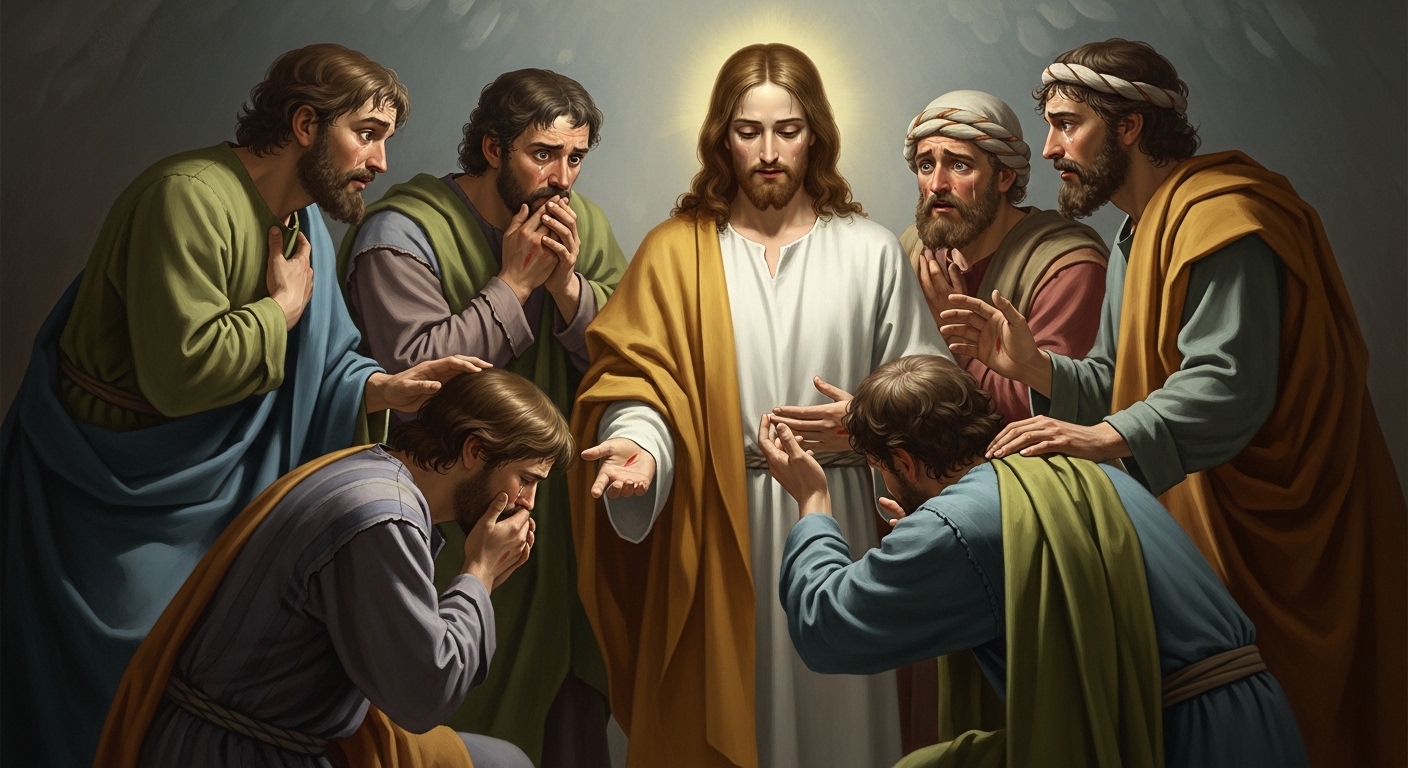
One of the most immediate needs the disciples had was proof: that Jesus’ resurrection was real, that He was not a ghost or a visionary, and that the wounds of crucifixion testified to the continuity of His person. Jesus addressed that need. He invited Thomas to touch His wounds (John 20:24-29), He ate fish with the disciples to show He had a physical body (Luke 24:36-43), and He walked with the two travelers on the road to Emmaus in a way that moved from initial unrecognition to clear revelation (Luke 24:13-35). Paul later summarizes that Jesus appeared to many, including more than five hundred at once, emphasizing the tangible reality of these encounters (1 Corinthians 15:3-8). For your faith, these proofs matter: God often confirms truth with visible, relational evidence so you can move from doubt to trust.
A time of teaching
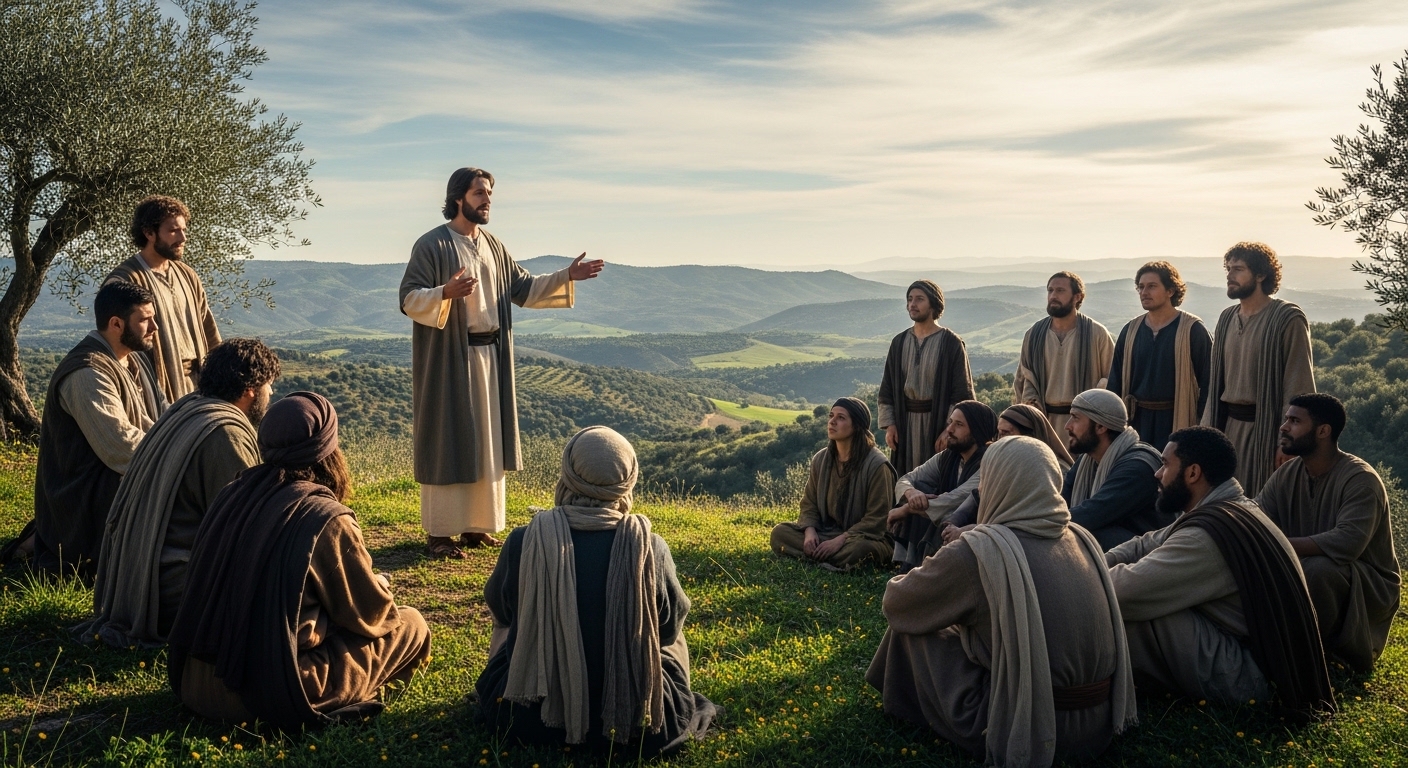
Proof without understanding can leave you uncertain about what to do next. So Jesus used these appearances to teach and interpret Scripture in light of the resurrection. After revealing Himself on the road to Emmaus, He opened the Scriptures to show how the Messiah’s suffering and glory had been foretold (Luke 24:25-27). He continued to explain how the Law, the Prophets, and the Psalms pointed to these events and their kingdom implications (Luke 24:44-49). Jesus’ teaching reframed the disciples’ understanding: the cross was not a tragic detour but the center of God’s redemptive plan, and resurrection inaugurated a new kind of kingdom—both present and coming. For your life, this means God wants you to understand doctrine in a way that changes how you live, not just what you believe.

A time of preparation and commissioning
Teaching led directly to preparation for mission. Jesus gave practical instructions and a clear calling. He commissioned the disciples with a mission to make disciples of all nations (Matthew 28:16-20), and He promised them power from on high—the Holy Spirit—so they could be effective witnesses (Acts 1:4-8). Those promises were not theoretical; they were the means by which the early church would flourish. For your faith, this teaches that God doesn’t send you out raw—He prepares you and equips you by His Spirit.
The ascension: the end of the forty days and the start of a new era
The forty days culminate in the ascension, when Jesus is lifted up and taken into heaven while His followers watch (Luke 24:50-53; Acts 1:9-11). The ascension is not abandonment; it signals the opening of a new phase where Jesus reigns from the Father’s right hand and sends the Holy Spirit. For you, the ascension means Jesus’ presence changes form: He’s no longer walking beside you in the same bodily way, but He is present by the Spirit and reigning in glory. That shapes how you pray, worship, and wait for the Spirit’s power.

Themes that matter for your faith
Several theological themes emerge from those forty days that are profoundly relevant to your life.
- Resurrection as historical reality: The appearances confirm that resurrection is not merely spiritualizing Jesus’ message; it is the bodily vindication of who He is and what God accomplished. This reality anchors your hope in a God who defeats death.
- Continuity and transformation: Jesus is the same person who lived, taught, and died, but now He is raised and empowered. You live with continuity in identity but with transformation in destiny and mission.
- Kingdom orientation: Jesus focused conversation on “the kingdom of God.” That shapes your priorities: God’s rule, present yet coming, reshapes how you invest time, resources, and relationships.
- Mission rooted in empowerment: The promise of the Spirit shows that mission is not your strength alone. God equips you to be His witness.
Each theme invites you to rethink how you live—faith is not just believing facts, it is participating in God’s ongoing work in the world.
How the forty days strengthen your faith
If you’re wondering how a first-century historical window matters for your modern spiritual life, here’s how those forty days strengthen you.
- They validate truth in ways that move you from skepticism to conviction. Jesus used tangible proof to address doubt; God knows your doubts and meets you there.
- They show that God teaches in stages. You don’t always receive the whole story at once. Jesus unfolded meaning over time, so patience with your own growth is God-honoring.
- They demonstrate purposeful waiting. The disciples were not immediately sent out; their time with Jesus included preparation and prayerful expectation. Waiting can be formative, not wasted.
- They model a mission formed around relationship and Scripture. Jesus taught, then sent; He never separated truth from community. Your witness will be shaped by your love for God and others and by your understanding of Scripture.
- They transition presence from physical to spiritual. The resurrection and ascension teach you how to trust Jesus’ presence when it is unseen—you are trusted with His work even when His bodily presence has changed.
These strengths are not abstract; they are tools God gives you to live with confidence and humility.
Practical ways to apply the 40-day lessons to your life
You’ll get the most out of this study if you translate it into action. Here are specific, practical ways to live out what Jesus showed His followers during those forty days.
- Allow proof to heal doubt, but then learn. If you’re wrestling with belief, be honest—and also seek understanding through Scripture and community. Let God’s truth shape your mind and heart.
- Use waiting seasons as preparation. If you feel stuck or in-between, ask how God is forming you. Pray, learn, service—these are the disciplines Jesus used to ready His people.
- Make Scripture central. Jesus interpreted the Old Testament in the light of His work. Let the Bible shape how you understand suffering, purpose, and destiny.
- Embrace mission as both calling and practice. The Great Commission is not just for religious elites. Ask who in your immediate circles needs good news and how you can share with sensitivity and power.
- Expect empowerment by the Spirit. Don’t confuse quiet seasons with weakness; often God is preparing you for Spirit-led boldness. Cultivate prayerful dependence and openness to God’s gifts.
- Practice honest community. The disciples processed fear, doubt, and joy together. Share your questions and victories with a trustworthy faith community.
Applying these will make your faith resilient and practical.
Reflection questions to guide your response
Pause and ask yourself honest questions that help you internalize the lessons.
- What season is God preparing me in right now—waiting, learning, or being sent?
- Where do you need proof from God, and where are you resisting the invitation to trust?
- How is Scripture shaping your understanding of recent hardships or joys?
- What practical steps can you take this week to move from being prepared to being sent?
Reflection is an active habit; write down answers, pray over them, and discuss them with a friend or leader.
Common misunderstandings and helpful clarifications
Because the forty days sit at a crossroads of narrative, several misunderstandings have arisen that can create confusion.
- It’s not about a magical number. The number forty is significant in Scripture (testing, preparation, transition), but the power here is in the events, not numerology.
- Appearances were not all the same. Some were private (to Mary or Thomas), some were public (to the five hundred), and some involved teaching moments. They weren’t merely visions but encounters with a resurrected body.
- The long ending of Mark (Mark 16:9-20) has textual issues in some manuscripts, but it still echoes the themes of appearances and commissioning. Read it with awareness of textual history (Mark 16:9-20).
- Don’t reduce the forty days to proof only. The period includes profound teaching and commissioning; its purpose was to form a people, not just to resolve doubt.
Understanding these points helps you interpret the accounts more faithfully and apply them more wisely.
How church history and tradition have treated these days
From the earliest church, those forty days were commemorated as a season of revelation and transition. The ascension became an early feast day (Ascension Day), and the period between Easter and Pentecost was viewed as a time of preparation. Church fathers and liturgical traditions emphasized how the risen Christ’s teaching and promise of the Spirit created continuity between Jesus’ earthly mission and the church’s mission. In your spiritual practice, these traditions invite you to mark seasons—celebration, preparation, and commissioning—so your life follows a rhythm shaped by the gospel.
Practical next steps for your faith today
What should you do next after reflecting on the forty days? Here are concrete steps you can start now to put this season’s lessons into practice.
- Re-read key passages slowly this week: Acts 1:3 (Acts 1:3), Luke 24 (Luke 24:1-53), John 20 (John 20:1-29). Let them form your prayers.
- Journal about a “waiting season” you’re in and ask what preparation God might be doing in you.
- Find one person you can invite into a conversation about faith or Scripture—practice being a witness by sharing what the resurrection means to you.
- Pray for openness to the Spirit’s empowerment and for boldness to act when God calls.
- Join or start a small group that studies the resurrection accounts and looks for practical applications together.
These steps are simple, but they move reflection into responsible action.
A short prayer for the journey
Lord Jesus, as You rose and walked among Your friends, walk with me now in ways that turn doubt into faith, confusion into understanding, and waiting into readiness. Open my eyes to Your presence, teach me by Your Word, and send me, empowered by Your Spirit, to be a faithful witness. Amen.
 Internal Resources to Explore
If you want to dig deeper, consider reading the resurrection passages in sequence and consult trusted commentaries or articles that explore the forty-day period. Reflective books on the resurrection, the kingdom of God, and the Holy Spirit’s role in mission will enrich your understanding. Also consider the internal resources you may find useful for timeline and deeper study:
 Main Hub
 What Happened After Jesus Rose From the Dead? (Full Timeline Explained)
- How Long Did Jesus Stay on Earth After He Rose?
- 10 Things Jesus Did After the Resurrection
Conclusion
The forty days after the resurrection were anything but empty. They were a concentrated season of proof, instruction, formation, and commission. Jesus intentionally built the disciples’ faith—addressing doubts, clarifying Scripture, shaping mission, and promising the Spirit. For your faith today, that season models how God prepares you, teaches you, and equips you for work that matters. Whether you’re in a season of waiting, learning, or doing, the gospel invites you to trust that God is at work, forming you to be a witness to his life and kingdom.
Bible verses referenced
- Acts 1:3 — Acts 1:3
- John 20:24-29 — John 20:24-29
- Luke 24:36-43 — Luke 24:36-43
- Luke 24:13-35 — Luke 24:13-35
- 1 Corinthians 15:3-8 — 1 Corinthians 15:3-8
- Luke 24:25-27 — Luke 24:25-27
- Luke 24:44-49 — Luke 24:44-49
- Matthew 28:16-20 — Matthew 28:16-20
- Acts 1:4-8 — Acts 1:4-8
- Luke 24:50-53 — Luke 24:50-53
- Acts 1:9-11 — Acts 1:9-11
- Mark 16:9-20 — Mark 16:9-20
Sponsored recommendation

Acknowledgment: All Bible verses referenced in this article were accessed via Bible Gateway (or Bible Hub).
“Want to explore more? Check out our latest post on Why Jesus? and discover the life-changing truth of the Gospel!”