

The Role Of Community: How Fellowship Strengthens Our Faith

Opening Reflection
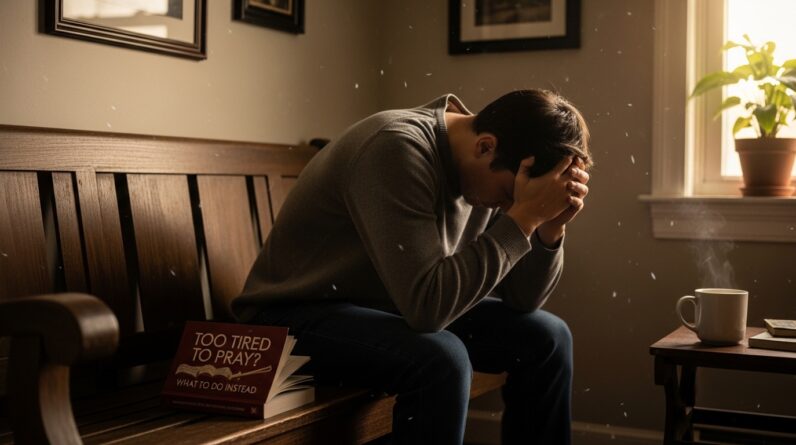
You wake before sunrise, heart heavy, wondering how long this waiting will last. The prayers you prayed still hang in the quiet like unanswered letters. You’ve read the promises, but the days feel long and your courage, thin.
In those slow hours you might be tempted to pull back inward—trying to carry everything alone. It feels safer at first, but isolation often deepens the fear rather than freeing you from it.
If you’re tired, discouraged, or in a season of waiting, you’re not failing — you’re human. God’s design includes you, and He often places others beside you so your faith can be sustained and strengthened.
Scripture Foundation
Sponsored recommendation

Hebrews 10:24–25 — Our Call to One Another
Let this verse be your anchor: Hebrews 10:24–25. The writer of Hebrews reminds believers, in a time of pressure and uncertainty, not to neglect gathering together but to encourage one another toward love and good deeds.
Context matters here. Hebrews was written to a community facing persecution and the temptation to withdraw from faith. This passage isn’t only about attendance at meetings; it’s about active, mutual care. Gathering together was a spiritual lifeline—a gentle pull back toward hope and holy living.
Read it slowly. Let the words feel like an invitation, not an obligation: to look up, to lean in, to spur one another on when hope is small.

Core Message: What This Teaches Us in Trials
Where is God in the middle of the struggle?
God is never distant in your pain. He often sends His presence through the hands and voices of others. Scripture shows time and again that God works through community—an Elijah who rested because an angel and a stranger helped; Paul who received letters and visits that carried strength; the early church who met, broke bread, and prayed together (Acts 2:42–47).
When life is hard, God’s nearness frequently comes incarnationally—God with skin on, in the form of friends, family, mentors, and sometimes people you haven’t met yet. You don’t bear the burden alone because God’s provision is often relational.
What does faith look like when life is hard?
Faith in difficulty is not perfect confidence; it’s shared persistence. It’s when you tell someone the honest truth about your heart and they hold you in prayer. It’s when you gather, even when you don’t feel like talking, and find strength simply in the physical presence of others.
Faith becomes visible when burdens are divided. Scripture teaches practical ways to do this: laughter with those who rejoice and weeping with those who weep (Romans 12:15); carrying each other’s burdens to fulfill Christ’s law (Galatians 6:2). These aren’t abstract ideals. They’re concrete practices that reshape your heart in the hard places.
A simple illustration
Imagine your faith like a candle on a windy night. Left alone, the flame flickers and risks going out. When friends gather around with their own candles, the warmth multiplies and the light steadies. Every shared story, every offered prayer, every silent presence becomes a gust shield—you breathe easier.
Biblical example: the early church
The early church didn’t have a perfect model, but they practiced devotion intentionally: teaching, fellowship, breaking of bread, and prayer. Their togetherness was designed to nourish faith in times of persecution and doubt (Acts 2:42–47). Their example tells you that community isn’t optional when life is hard—it’s a means God uses to keep you anchored.
How Fellowship Strengthens Faith
Fellowship brings accountability without shame
When you belong to a community, others can gently point you back toward hope. Accountability isn’t about condemnation; it’s about lovingly reminding one another of God’s truth when your vision narrows. It’s someone who helps you confess fear, who prays with you and for you, and who celebrates small steps of obedience.
Fellowship supplies practical care
Faith is formed in ordinary acts. Meals delivered during hospital stays, rides to doctor appointments, a text sent at 2 a.m.—these are the tangible ways the Body of Christ ministers hope. These acts don’t minimize your pain; they show that you aren’t carrying it alone.
Fellowship multiplies spiritual gifts
God equips His people in different ways. Some comfort, some counsel, some shepherd. When you gather, gifts complement one another. Someone’s faithful listening meets a need you couldn’t name. Another’s prayer cuts through the fog of doubt. When gifts converge, faith grows.
Fellowship refocuses your story
In community, your story becomes part of a larger story—God’s story of redemption. Hearing others’ testimonies reshapes despair into a tapestry of faithfulness. You’re reminded that your struggle exists within a narrative where God has acted and will act again.
Life Application (Very Practical)
These next steps are gentle and doable. Choose one or two and practice them slowly.
- Invite one trusted person into one honest conversation this week.
- Begin with a simple phrase: “I need to tell you what’s hard right now.” Don’t aim to fix everything; aim to be known.
- Create a one-line prayer card for your pocket or phone.
- Write a short, repeatable prayer: “Lord, be near today.” Offer it to God when anxiety rises.
- Join a small group or prayer circle, even online, that meets weekly.
- Look for groups that prioritize listening, Scripture, and mutual care rather than performance.
- Practice a weekly “check-in” with two people.
- Ask, “How are you really doing?” and allow space for silence. Offer to pray and follow up.
- Serve in a small, practical way for someone else.
- Deliver a meal, run an errand, or send a note. Serving reminds your heart that giving and receiving go together.
Each of these is small enough to do without additional pressure, but consistent practice rewires your heart to rely on God through people.

Reflection
Take a moment—slow your breath. Sit in the quiet for one minute and let God’s presence be enough. Then consider these questions:
- Who in your life can you invite into honest companionship today?
- When was the last time someone’s presence steadied your faith?
- What one small step could you take to both receive and give care this week?
Invite silence, then prayer, or journal your answers. Allow your responses to be simple acts of obedience, not heavy tasks.
Encouragement from Scripture
When you’re tempted to go it alone, remember Jesus’ prayer for His disciples: that they would be one, that they would love one another, and in that love the world would see Him (John 17:20–23). The unity of the people of God is itself a witness and a source of strength.
And when sorrow presses close, take comfort in the promise that God draws near to the brokenhearted and saves those crushed in spirit (Psalm 34:18). He often chooses to be near through the touch of another’s hand and the steady prayer of a friend.
Practical Encouragement for Waiting Seasons
Waiting can feel passive, but community makes waiting active. Here are gentle ways to make your waiting fruitful:
- Keep a shared prayer list with a friend and update it weekly.
- Read Scripture aloud together—two verses a day—so God’s voice is heard in community.
- Practice Sabbath rhythms with others: a call, a walk, or an evening of silence together once a month.
Waiting with others softens the sharp edges of time. Your patience becomes a shared discipline rather than a solitary burden.
When Community Hurts
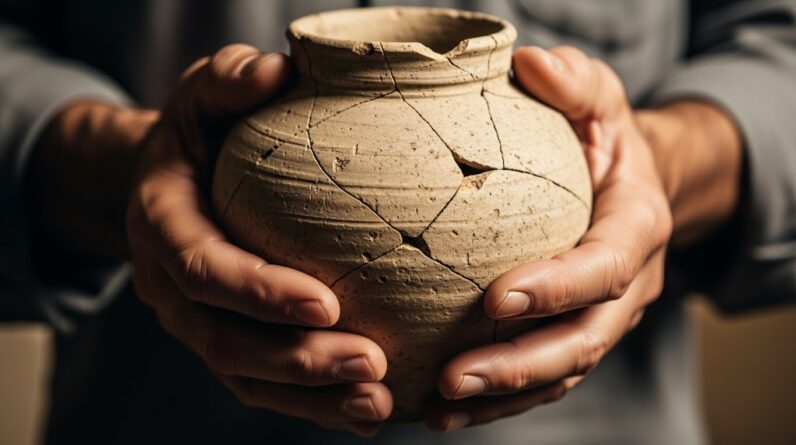
Community can sometimes fail—words spoken poorly, misunderstandings, or absence when you needed help most. These experiences are real and painful.
When this happens, name the hurt gently. Seek out a safe person to talk with, and remember that one broken branch doesn’t describe the whole tree. There are healthy bodies of believers who will receive you well. If a church or group feels unsafe, it’s okay to step back and find a different place to heal.
Forgiveness and boundaries can coexist. You don’t need to rush forgiveness; you can pursue healing and truth alongside it, asking God for wisdom and for people who can walk with you in a healthy way.
Related Reading
If this article resonated, you might find comfort in our piece on faith during trials: “Faith During Trials: Holding On When Hope Feels Small.” For steady daily practice, see our broader devotional pillar, “Daily Bread: Short Devotions for Everyday Faith.” Both explore practical ways to remain anchored when life is hard.
Closing Prayer
Lord, you know the weariness that rests on our hearts. You see the nights of waiting and the mornings that feel too heavy to face.
Bind us together in your love. Send friends, guides, and companions who will carry burdens, pray without ceasing, and point us back to you. Give us courage to ask for help and the grace to receive it. Hold our fears with your steady hands and help our faith grow strong in the warmth of fellowship. Amen.

Part of the Faith During Trials Series
-
Standing Strong: How Faith in God Helps Us Through Life’s Trials
(standing strong through trials, enduring faith) -
Strength in Weakness: How God’s Power Shows Up in Our Struggles
(strength in struggle, God working through weakness) -
How to Pray When You Feel Discouraged or Afraid
(praying when afraid, honest prayer) -
Holding on to God When Life Feels Unfair
(when suffering feels unfair, holding onto God)
Sponsored recommendation
Acknowledgment: All Bible verses referenced in this article were accessed via Bible Gateway (or Bible Hub).
“Want to explore more? Check out our latest post on Why Jesus? and discover the life-changing truth of the Gospel!”