


What Is Purgatory? From A Biblical View (Hebrews 10:14)

TL;DR — Simple Answer
Purgatory is a temporary state of purification after death for believers not yet fully sanctified, based on biblical images of refining fire and Christ’s ongoing work of making believers holy (Hebrews 10:14). Scripture emphasizes Christ’s finished sacrifice and calls us to trust Him, pursue holiness now, and understand purification in light of both biblical texts and tradition.
Introduction
This topic matters because it touches your hope after death, how you relate to Christ’s work, and how you live now. Questions about purgatory aren’t only academic; they shape pastoral care, prayers for the dead, how you grieve, and what you teach your children about God’s holiness and mercy. Whatever tradition you come from, your faith and discipleship are at stake: is salvation completed the moment you die, or is there a loving, holy process by which God finishes what He began in you? In exploring this, keep your eyes on Jesus — His sacrifice, His mercy, and His power to make you clean.
SIMPLE BIBLICAL MEANING
Put simply, purgatory (from the Latin purgare, “to cleanse”) describes a post-death purification that prepares a believer for full communion with God. It represents God’s concern for holiness and the reality that sin has consequences that may require purification. The Bible repeatedly teaches that God is both just and merciful: justice requires holiness; mercy provides a way for sinners to be reconciled. What God is revealing through these images is that He refuses to leave sin unaddressed — yet He also provides means for cleansing. Whether that cleansing happens only through Christ’s death before you die, or whether God sometimes completes purification after death, is the core debate.
WHAT DOES THE BIBLE SAY?
When Scripture speaks about purification after death, it uses metaphors like refining fire, testing, and final judgment. Several passages are commonly cited in discussions about purgatory:
- Hebrews 10:14 — the author states that “by one sacrifice he has made perfect forever those who are being made holy,” a verse that raises the question: how can perfection and being made holy happen simultaneously?
- 1 Corinthians 3:11–15 — Paul speaks of each person’s work being tested by fire on the Day, and a person being saved “as through fire” if their work is burned up.
- 1 Peter 1:6–7 — trials refine faith like gold refined by fire.
- 2 Maccabees 12:43–46 — an example from the Deuterocanonical books of prayer for the dead and belief in atonement for the deceased, though this passage is accepted by some traditions and not others.
- Matthew 12:32 — Jesus says blasphemy against the Holy Spirit “will not be forgiven… either in this age or in the age to come,” which implies there are things forgiven in the age to come.
Each of these verses contributes a piece to the conversation; none give a detailed system called “purgatory.” The Bible is more focused on Christ’s atonement and the reality of final purification and judgment than on technical descriptions of the afterlife process.
The Bible Foundation
Hebrews 10:14 — “For by one sacrifice he has made perfect forever those who are being made holy.”
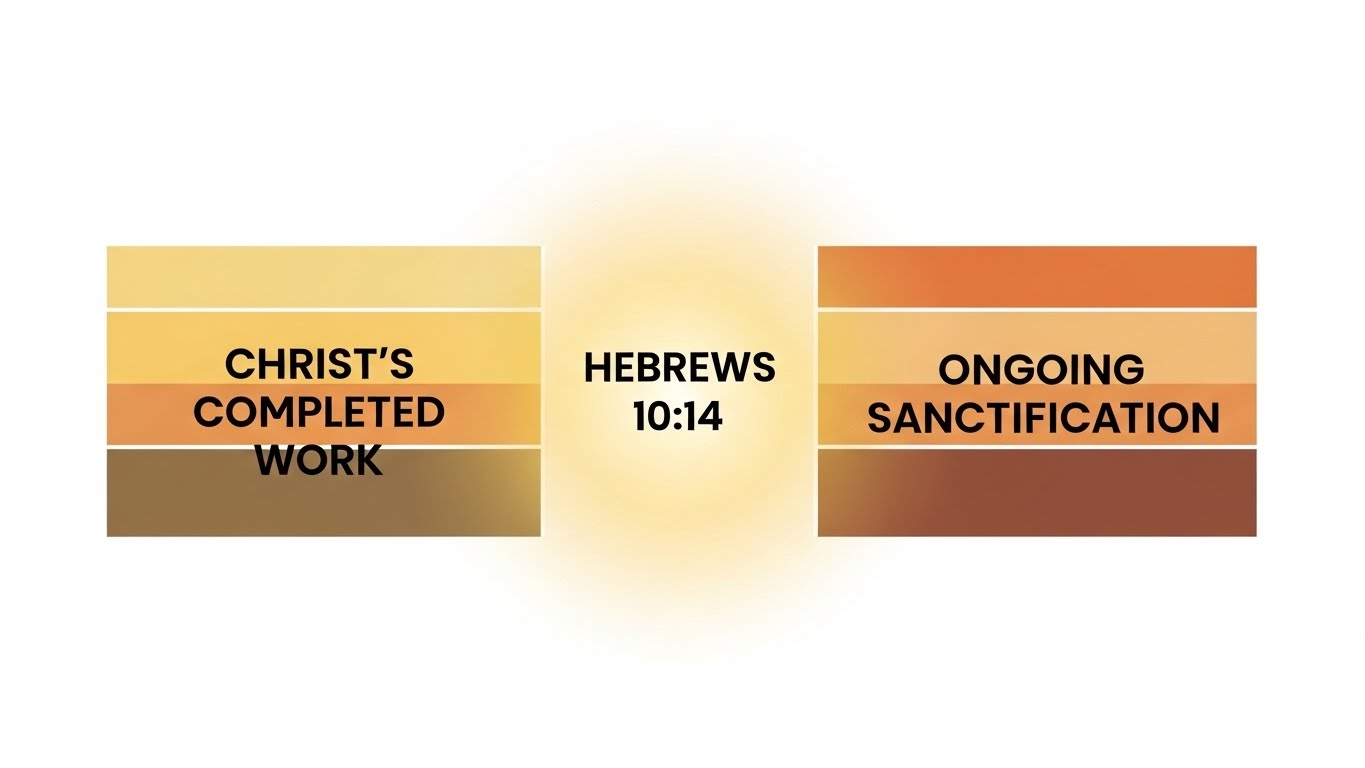
This verse captures the tension: Christ’s sacrifice is wholly sufficient (“made perfect forever”) while believers remain in a state of ongoing sanctification (“being made holy”). This dual reality is foundational to any biblical reflection on purification, whether you interpret that completion as solely positional and future-fulfilled in heaven, or as possibly involving a temporary post-death purification.

QUICK ANSWERS PEOPLE ASK (PAA SECTION)
- What does purgatory mean biblically?
The Bible doesn’t define “purgatory” as a formal system, but it does teach that God refines and purifies His people (e.g., 1 Peter 1:6–7). Whether that refining happens only during life or can continue after death is interpreted differently across traditions. - Does Hebrews 10:14 teach purgatory?
Hebrews 10:14 highlights both the completeness of Christ’s sacrifice and the ongoing process of making holy. Some read this as leaving room for a final purification; others stress that Christ’s one sacrifice is fully sufficient so no further purification is needed. - Is praying for the dead biblical?
Scripture includes examples such as 2 Maccabees 12:43–46, and early church practice supports remembrance of the dead. Whether Christians pray for the dead today depends on their tradition and how they understand God’s mercy and Christ’s sufficiency.
GOD’S PURPOSE, PROTECTION & PROMISE
God’s purpose is to make you holy because He is holy. He is both just — so sin cannot remain — and merciful — so He provides a way of cleansing. Christ’s role is central: His one sacrifice on the cross accomplished what no other could. Hebrews insists on the once-for-all nature of Christ’s work, yet it also affirms that believers are being sanctified.
God protects you by guaranteeing the results of Christ’s work; you are not abandoned to arbitrary purification. The promise is this: God perfects what He begins (see Philippians 1:6). That promise is both comforting and a sober call to live in obedience, trusting that God’s justice and mercy will meet human need.
GOING DEEPER — BIBLICAL CONTEXT
Old Testament: The Old Testament contains imagery of purification and sacrifice that set the theological background. Levitical sacrifices pointed to purification and reconciliation (see Leviticus 16). The prophetic literature often pictures the refining of God’s people through judgment and restoration (e.g., Isaiah 1:25).
Gospels: Jesus speaks of the seriousness of sin and the need for repentance. In Matthew 12:32, His words about forgiveness in “this age or in the age to come” are sometimes read as implying post-death possibilities for forgiveness and correction, though the primary thrust is pastoral — warning against final, hardened rejection of the Spirit.
Epistles: Paul and Peter use refining metaphors. 1 Corinthians 3:11–15 speaks of works tested by fire and a kind of salvation that endures though a person’s works are consumed. 1 Peter 1:6–7 explains trials as refining faith, indicating God’s purpose to present you faultless before Him.
Theological continuity: Across Scripture, the theme is consistent — sin mars God’s people, God purifies, and Christ secures redemption. Where traditions diverge is in the timing and mechanics of final purification: is it accomplished entirely by Christ up to death, or can God complete sanctification after death in some form? Scripture offers images rather than a system, so theology must hold closely to Christ-centered reading and pastoral humility.
MODERN CONNECTION — DAILY LIFE APPLICATION
How does this matter for your daily life? If you worry about purgatory you may be anxious about final judgment; let Scripture redirect your concern to Christ’s finished work. If you belong to a tradition that affirms purgatory, let that motivate holiness and trust in God’s mercy. Either way, Scripture calls you to live as a forgiven, sanctified person now: confess sin, pursue holiness, love others, and practice spiritual disciplines. When you grieve, find comfort that God is just and merciful and that Christ is central in your hope beyond death.
PRACTICAL APPLICATION (BULLET POINTS)
- Confess and repent regularly; don’t postpone holiness. Prayer and honest confession keep you growing in sanctification now.
- Cultivate trust in Christ’s finished work; memorize verses like Hebrews 10:14 and 1 John 1:9 to anchor faith.
- Live a life of sacrificial love; acts of mercy reflect Christ’s sanctifying work in you.
- Participate in the means of grace — Word, sacraments, prayer, Christian community — which nurture your holiness.
- If your tradition prays for the dead, do so with humility and hope; if it doesn’t, offer thanksgiving for Christ’s mercy and pray for the living.
- Prepare practically for the end of life: reconcile relationships, make a will, and ensure spiritual matters are in order.
- Teach children a Christ-centered hope: emphasize Jesus rather than mechanisms of afterlife purification.

 “Every God-given message deserves to be shared.”


Don’t let your calling stay hidden. Start a Christian blog or website using Hostinger — with 99.9% uptime, a free domain, and SSL, your voice can shine for God’s glory anytime, anywhere. Begin today.
  Try it RISK-FREE!

FAITH REFLECTION BOX
Pause and reflect: If Christ has “made perfect” you and is “making you holy,” where do you need to surrender control and trust His sanctifying work more fully today?
Key Takeaways:
- Christ is central: His one sacrifice accomplishes salvation.
- Sanctification is both immediate and ongoing: live holy now, trusting God to finish it.
- Love and obedience matter: pursue practical holiness and care for others.
- Scripture, not speculation, should guide your beliefs about the afterlife.
- Prayer and community shape how you live and grieve.
FREQUENTLY ASKED QUESTIONS (SCHEMA-READY)
Q1: Does Hebrews 10:14 teach that we must be purified after death?
Answer: Hebrews 10:14 says, “For by one sacrifice he has made perfect forever those who are being made holy” (Hebrews 10:14). The verse intentionally holds two realities together: Christ’s definitive work and the ongoing process of sanctification.
Some read this to allow for final purification after death; others insist the verse shows Christ’s sacrifice is entirely sufficient so that no further purification is needed beyond what He accomplished. The text itself does not describe a post-death process; it emphasizes both the completeness of Christ’s achievement and the reality that God continues to make you holy. In practice, you should rest in Christ’s work and allow the Spirit to sanctify you now.
Related: Do Christians Go To Heaven Immediately After Death? (2 Corinthians 5:8, Philippians 1:23)
Q2: Is 1 Corinthians 3:11–15 proof of purgatory?
Answer: 1 Corinthians 3:11–15 speaks of works tested by fire and the image of someone being saved “as through fire.” That language suggests that some elements associated with a believer might be consumed yet the person is ultimately saved. Some traditions use this as a biblical basis for a cleansing after death. Others interpret Paul as speaking of God’s judgment of works, not a remedial post-death purification for sin. Either way, Paul’s point is pastoral: live for enduring value and recognize that God will judge rightly. Trust Christ’s work and pursue lasting kingdom fruit.
See also: Who Will Go To Heaven? (Matthew 7:21-23, John 14:6)
Q3: What about the practice of praying for the dead in the Bible?
Answer: The clearest biblical support often cited is 2 Maccabees 12:43–46, where prayers for the dead and atonement are mentioned. This book is part of the Deuterocanonical writings accepted in some traditions (e.g., Roman Catholic, Orthodox) but not in most Protestant canons.
The New Testament does not give explicit instructions to pray for the dead, though early Christian practice did include remembrance and prayers. Whether you should pray for the dead depends on your theological tradition and how you interpret the balance of Scripture, tradition, and pastoral need. In every case, let Christ’s sufficiency and God’s justice shape your practice.
GODLY CONTEXT FROM THE EARLY CHURCH AND TRADITION
The early church wrestled with the reality of purification and how to care for the dead. You’ll find references in patristic writings about prayers for the dead and belief in some form of purifying process. Councils in later centuries — including councils that helped shape Roman Catholic doctrine — articulated understandings that led to the formal doctrine of purgatory.
The Reformation reacted strongly, emphasizing sola fide and the sufficiency of Christ’s work, which led most Protestant traditions to reject purgatory as taught in Catholic theology. As you read church history, notice that differences often stem from how Scripture is read, how the canon is received, and pastoral concerns about sin and mercy.
SCRIPTURE-DRIVEN CONSIDERATIONS
When you examine the scriptural texts, ask: Do they point primarily toward a post-death remedial suffering for sin, or toward God’s final, just, and merciful judgment which is completed in Christ? Scripture emphasizes both God’s holiness and His mercy. Verses like 1 John 1:7–9 call for confession and cleansing now; verses like Romans 8:30 and Philippians 1:6 guarantee God’s commitment to complete the work He began in you. Biblical interpretation must hold these together without elevating speculation over Christ’s work.
HOW DIFFERENT TRADITIONS SEE PURGATORY
Catholic perspective: The Roman Catholic Church defines purgatory as a state of purification for the saved who die in God’s friendship but still need purification. The Church bases this on Scripture, tradition, and theological reasoning, pointing to passages like 1 Corinthians 3:11–15 and the Deuterocanonical books.
Orthodox perspective: The Eastern Orthodox generally affirm that the dead can benefit from prayer and that there is a process of purification, but they avoid the juridical and overly defined aspects of the later Western doctrine.
Protestant perspective: Most Protestant traditions deny purgatory as a post-death punitive purification. They emphasize justification by faith and the once-for-all nature of Christ’s atonement (Romans 3:24–25). Many Protestants practice remembrance and commendation of the dead to God rather than intercessory rites for purification.
Where you land will depend on how you weigh Scripture, the wider canon and tradition, and pastoral concerns. Whatever your position, keep Christ at the center.
PRACTICAL PASTORAL GUIDANCE
If you’re ministering to those worried about purgatory, prioritize Christ’s mercy and the promise of God’s perfect justice. Give pastoral care that:
- Reassures people of Christ’s sufficiency.
- Encourages ongoing repentance and holiness.
- Offers compassionate rituals of grief and remembrance grounded in Scripture.
- Avoids fear-based ultimatums and speculative claims about what happens immediately after death.
If you belong to a tradition that holds purgatory as doctrine, emphasize the grace in God’s mercy and encourage holy living rather than transactional efforts to “buy” God’s favor.
QUICK SCRIPTURAL CROSS-REFERENCES
- Hebrews 10:14 — One sacrifice, perfecting those being made holy.
- 1 Corinthians 3:11–15 — Works tested by fire; saved as through fire.
- 1 Peter 1:6–7 — Trials refine faith like gold.
- 2 Maccabees 12:43–46 — Example of prayer for the dead (Deuterocanonical).
CONFRONTING COMMON MISUNDERSTANDINGS
Some Christians fear that belief in purgatory undermines Christ’s work. That fear is understandable, and Scripture must address it directly. Hebrews and the epistles insist on the sufficiency of Christ, while also recognizing God’s ongoing sanctification. Another misunderstanding is thinking purgatory equals damnation; traditional doctrine defines it as temporary purification for those already in Christ, not as a second chance for the unrepentant. Keep theological humility and pastoral sensitivity at the forefront.
WHAT THIS MEANS FOR YOUR DECISIONS AND ANXIETIES
If you’re anxious about whether a loved one is “in purgatory” or “in heaven,” remember that only God fully knows hearts. Your responsibility is to live faithfully, trust God’s justice and mercy, and to comfort others with the gospel. Make practical decisions (wills, funeral plans, reconciliations) with the confidence that Christ is your hope. Let Scripture guide your prayers and pastoral actions, rather than fear or speculative claims.
CONCLUSION & PRAYER
Conclusion: The Bible gives you images of refinement, testing, and final judgment, while firmly centering the work of Christ. Hebrews 10:14 captures the tension: Christ’s one sacrifice makes you perfect in God’s sight while the Spirit continues to sanctify you. Whether you affirm a formal doctrine of purgatory or not, the main biblical truths are clear: Christ is sufficient, God is holy and merciful, and you are called to holiness now. Trust Jesus, pursue obedience, and find hope in God’s faithful promise to complete the work He began in you (Philippians 1:6).
Prayer: Lord Jesus, you who have made us perfect by your one sacrifice, help us to rest in Your finished work. Teach us to pursue holiness without fear, to love mercy, and to walk in repentance. Comfort those who mourn and give wisdom to all who seek truth about life after death. Keep our hearts fixed on you until that day when we see you face to face. Amen.
RELATED TOPICS
You may find these related studies helpful as you continue:
What Is Eternal Life And How Is It Related To Salvation? (John 17:3, Romans 6:23)
What Does The Bible Say About Forgiveness? (Matthew 6:14-15, Ephesians 4:32)
What Happens After We Die According To The Bible? — Hebrews 9:27
 As a ClickBank & Amazon Affiliate, I earn from qualifying purchases.
 Acknowledgment: All Bible verses referenced in this article were accessed via Bible Gateway (or Bible Hub).
 Want to explore more?
  Dive into our new post on Why Jesus? and experience the life-changing truth of the Gospel!