


What Is The Fruit Of The Spirit? (Galatians 5:22-23)
Introduction
Have you ever wondered what it looks like when a life is shaped by God’s Spirit? Maybe you’ve seen people who seem calm in crisis, generous without expecting anything, or gently steady in relationships, and you’ve asked, “How do they get that way?” The phrase “fruit of the Spirit” in Galatians is Paul’s way of describing the inner character and visible qualities that grow when God’s Spirit is at work in you. This isn’t about a checklist of behaviors you have to fake; it’s about a transformed heart that produces lasting goodness. In this article you’ll discover what the Fruit of the Spirit means, why it matters for your everyday life, and practical ways you can cooperate with God so these qualities grow in you.
📖 The Bible Foundation
Galatians 5:22–23 (NIV): Galatians 5:22-23
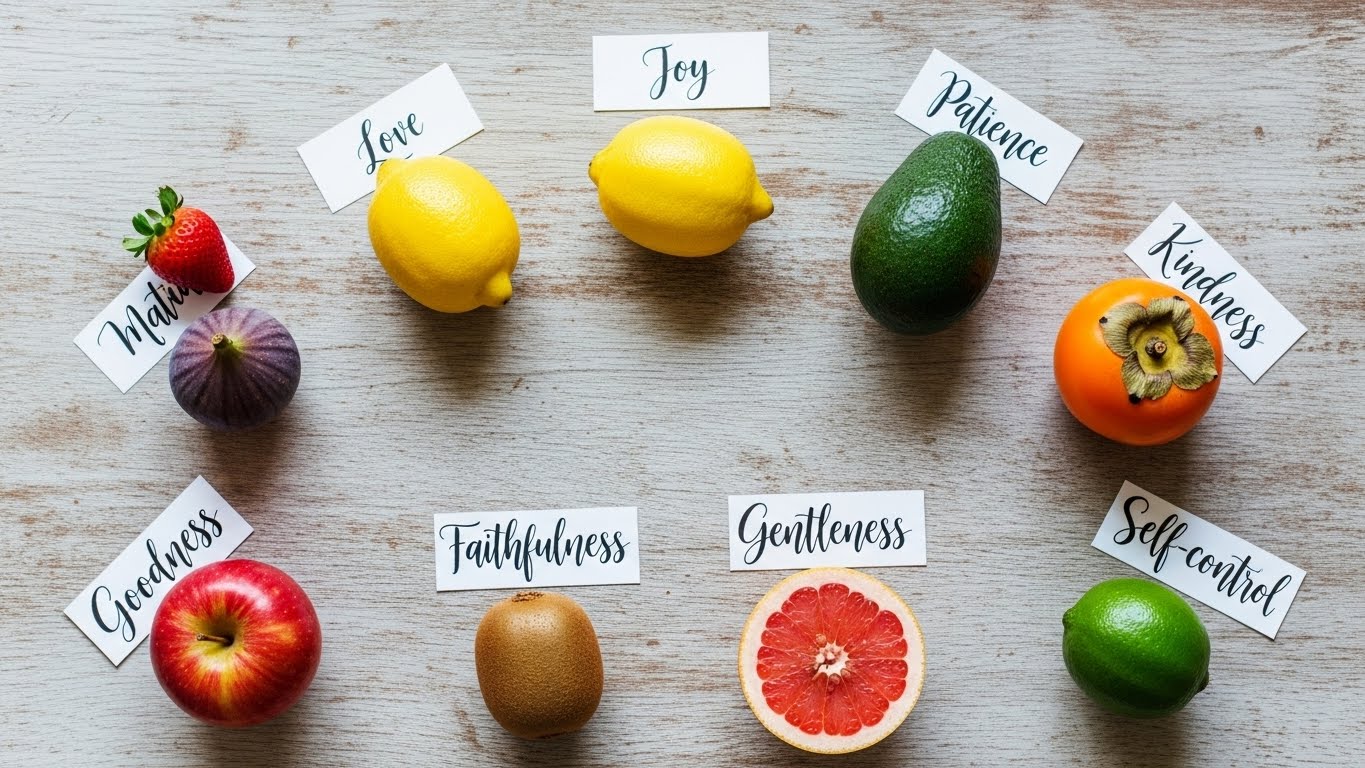
“22 But the fruit of the Spirit is love, joy, peace, forbearance, kindness, goodness, faithfulness, 23 gentleness and self-control. Against such things there is no law.”

Paul writes this in a letter to the churches in Galatia to contrast life driven by the Spirit with life driven by selfish desires. He isn’t giving a list of virtues to pursue in your own strength; he’s describing the character that naturally grows when you live by the Spirit. The words are simple enough for an eighth grader to read, but their power comes from the promise that God’s Spirit produces these qualities inside you. Imagine a tree: if it’s healthy and rooted, it naturally bears fruit. Paul is saying the same about lives rooted in Christ.
Starting a Christian blog or ministry website?
Many faith creators choose Hostinger because it’s affordable, fast, and beginner-friendly for WordPress. See Hostinger plans here
🧠 Understanding the Core Truth
At its core, the Fruit of the Spirit shows you what God’s life in you looks like. You don’t manufacture these characteristics through sheer willpower alone; rather, as you walk with God, the Spirit shapes you. Love, joy, peace — these are relational and internal qualities. Forbearance (often translated “patience”), kindness, goodness, faithfulness, gentleness, and self-control are the practical outworking of God’s character through you. The key truth is that the Spirit’s work changes your desires, not merely your actions. When your desires are transformed by the Spirit, your behavior follows naturally, and your life becomes a testimony of God’s presence.
To connect this to another scripture, Paul writes earlier in Galatians: Galatians 5:16 — “16 So I say, walk by the Spirit, and you will not gratify the desires of the flesh.” This is practical: walking with the Spirit means allowing daily dependence and guidance, not a one-time event.
🌊 Going Deeper — The Hidden Meaning

The deeper lesson is about identity and dependence. The Fruit of the Spirit is singular: Paul speaks of “fruit,” not “fruits.” That tells you this is a unified, interconnected reality. You don’t pick and choose one quality to develop while neglecting the rest. If true spiritual fruit is growing, it will show itself in a whole cluster of character traits that flow from a heart surrendered to Jesus.
Consider the story of the vine in John: John 15:4–5 — “4 Remain in me, as I also remain in you. No branch can bear fruit by itself; it must remain in the vine. Neither can you bear fruit unless you remain in me. 5 ‘I am the vine; you are the branches. If you remain in me and I in you, you will bear much fruit; apart from me you can do nothing.’” The hidden meaning is relational: fruit grows out of union with Christ. It’s not a performance but a connection.
A heart-level example: imagine you’re trying to be patient with a difficult coworker. If you rely on grit alone, you might hold it together for a day or two, but you’ll likely snap later. If you’re rooted in Christ and asking the Spirit to shape your heart, patience grows out of trust, not just restraint. That inner trust sustains you when tests come.
💡 Modern Connection — Relevance Today
The Fruit of the Spirit is not ancient poetry — it’s a blueprint for how you relate to your world today. Think about families, workplaces, online conversations, and community life. When you show gentleness and self-control in a heated comment thread, you model a different way of relating. When you offer kindness to a stressed coworker, you’re practicing a fruit that invites others to Christ. In a culture that often rewards assertiveness or immediate gratification, the Spirit’s fruit counters the noise with steady love and patient faithfulness.
In a practical sense, these qualities shape leadership, parenting, and friendships. A leader who exhibits faithfulness and goodness fosters trust. A parent who shows patience and gentleness teaches children how to handle emotions. In your spiritual struggles, the Fruit of the Spirit becomes evidence that God is at work in you; the more you cooperate, the more you’ll see tangible change.

❤️ Practical Application — Living the Message
You don’t become loving, joyful, and self-controlled overnight, but you can take small, faithful steps that allow the Spirit to work.
- Start each day with a simple prayer: ask the Spirit to grow one specific fruit in you today.
- Practice “pause and pray” moments: before reacting, take a breath and ask for gentleness or self-control.
- Build habits that express goodness and kindness: volunteer, write a note of encouragement, or intentionally listen without offering a solution.
- Remain in the Word: read short passages (like John 15 or Galatians 5) and ask how God wants to shape your attitude.
- Remember community: invite a trusted friend or mentor to speak truth into your life and help you grow in faithfulness.
Practicality matters: choose one fruit to focus on for a month. Ask God to reveal where you’re proud or defensive, and invite Him to transform that area. Growth often happens through small repeated choices rather than dramatic shifts.
🌿 Faith Reflection Box
Take a moment to reflect or journal: Where have you seen the Spirit’s fruit in your life recently? What one attitude would you like God to grow in you this week?
Key Takeaways:
- The Fruit of the Spirit describes the character God produces in a life connected to Jesus.
- It’s relational, not performance — fruit grows from union with Christ.
- Focused, small steps (prayer, Scripture, community) help the Spirit cultivate lasting change.
- The fruit shows itself across many areas of life: family, work, friendships, and inner peace.
👉 Q&A
Q1: Isn’t the Fruit of the Spirit just a list of morals to follow? Answer: The Fruit of the Spirit isn’t primarily a moral checklist you polish through effort; it’s what happens when God’s Spirit lives in you and shapes your desires. Think of it like a tree: you don’t command a tree to produce apples; you tend the soil and water it. Paul explains that the fruit is produced as you walk by the Spirit, not as you try harder in your own strength. See Galatians 5:22-23 — “But the fruit of the Spirit is…”. The invitation is relationship first; behavior change flows from that relationship.
Related: 7 Ways to Walk in the Fruit of the Spirit Daily
Q2: How do you know if the fruit is really from the Spirit or just your own effort? Answer: Discernment comes through patterns over time and the heart’s motivation. If your kindness or patience comes from fear of judgment or self-preservation, it’s likely more your own effort. But if your actions flow from gratitude, love for God, and a sense of dependence, they’re likely Spirit-led. Check your inner life: are you drawing closer to God when you show these traits? Also, Scripture gives tests — for example, Jesus teaches that love and a humble heart are hallmarks of true discipleship (see John 15:4-5). Over time, genuine fruit aligns with God’s character and brings peace rather than performance.
Q3: Can someone grow the Fruit of the Spirit without being a Christian? Answer: Spiritual fruit by definition comes from the Holy Spirit working in someone who is connected to Christ. However, God uses common grace — shared human virtues — to reflect goodness across cultures and faiths. Some non-Christians may display kindness, patience, or self-control through moral conviction or upbringing. The difference for believers is the source and the long-term transformation: the Spirit brings deeper, sustaining change and seals a relationship with God (see Romans 5:5: “5 And hope does not put us to shame, because God’s love has been poured out into our hearts through the Holy Spirit, who has been given to us.”). Real growth in the Fruit of the Spirit is tied to God’s presence and the ongoing work of the Spirit.
See also: The Difference Between Gifts and Fruit of the Spirit
🙏 Conclusion & Reflection
The Fruit of the Spirit is less about striving and more about surrender. When you remain in Christ, invite the Spirit’s daily work, and practice small faithful steps, God will shape your heart to reflect His love, joy, peace, patience, kindness, goodness, faithfulness, gentleness, and self-control. These qualities make your life an invitation — not by force or rule — but by the attractive witness of transformed character.
A short prayer you can use: “Lord, help me to remain in you. Grow in me the Fruit of your Spirit. Where I try to perform, replace my effort with your life. Where I lack, fill me with your love, joy, peace, and strength. Shape me day by day to reflect Jesus. Amen.”

Related/Next Reads
For deeper insight into Isaiah 40:31 and how it renews your strength in both faith and daily life
For practical lessons on compassion and neighborliness from the Good Samaritan
For a clear explanation of what we can learn from the Parable of the Good Samaritan
For meaningful insights from the Parable of the Pearl and its hidden treasures
For a deeper look at the Rich Man and Lazarus and what it reveals about the afterlife
For guidance on the Parable of the Ten Virgins and preparing for God’s Kingdom
For clarity on the Parable of the Lamp and how it calls us to shine our light
For insights from the Parable of the Wedding Feast and the meaning behind the invited guests

 Jesus and the Woman Caught in Adultery – Grace and Mercy Over Judgement
A powerful retelling of John 8:1-11. This book brings to life the depth of forgiveness, mercy, and God’s unwavering love. Check it now on Amazon 


 “Every great message deserves a home online.”


Don’t let your calling stay hidden. Start a Christian blog or website using Hostinger — with 99.9% uptime, a free domain, and SSL, your voice can shine for God’s glory anytime, anywhere. Begin today. Try it RISK-FREE! 

 “Your body is God’s temple — care for it with purpose.”


Renew your energy and restore balance naturally. Mitolyn helps support a healthy metabolism, giving you the vitality to live out God’s calling with strength and confidence.
Unlock Your Metabolic Power!  Burn More Calories & Feel Great With Mitolyn.
Start Today.  Check Price Now.
As a ClickBank & Amazon Affiliate, I earn from qualifying purchases.
 Acknowledgment: All Bible verses referenced in this article were accessed via Bible Gateway (or Bible Hub).
Want to explore more? Dive into our new post on Why Jesus? and experience the life-changing truth of the Gospel!