

What Is The “Holy Of Holies” And Its Relation To Heaven? (Hebrews 9:3-4, Exodus 26:33)
INTRODUCTION
Why this topic matters: the “Holy of Holies” is more than an archaeological curiosity—you’re looking at a Bible image that shapes how you understand God’s presence, Christ’s work, and your access to the living God. The Old Testament tabernacle and its Most Holy Place (the Holy of Holies) taught Israel about God’s holiness, separation, and yet promise of fellowship. The New Testament then reinterprets that space in Christ, showing you how God’s purpose and protection find their fullest expression in Jesus.
Understanding the Holy of Holies affects daily faith: it reshapes your prayer life, grounds your hope of heaven, and steadies your confidence in God’s redemptive plan. If you want to explore how the tabernacle points beyond itself to Christ and eternal realities, see related teaching at /articles/what-is-heaven which complements this study. As you read, you’ll see how Exodus and Hebrews connect the earthly sanctuary to a heavenly reality and what that means for your faith and practice today.
What Is the “Holy of Holies” — SIMPLE BIBLICAL MEANING
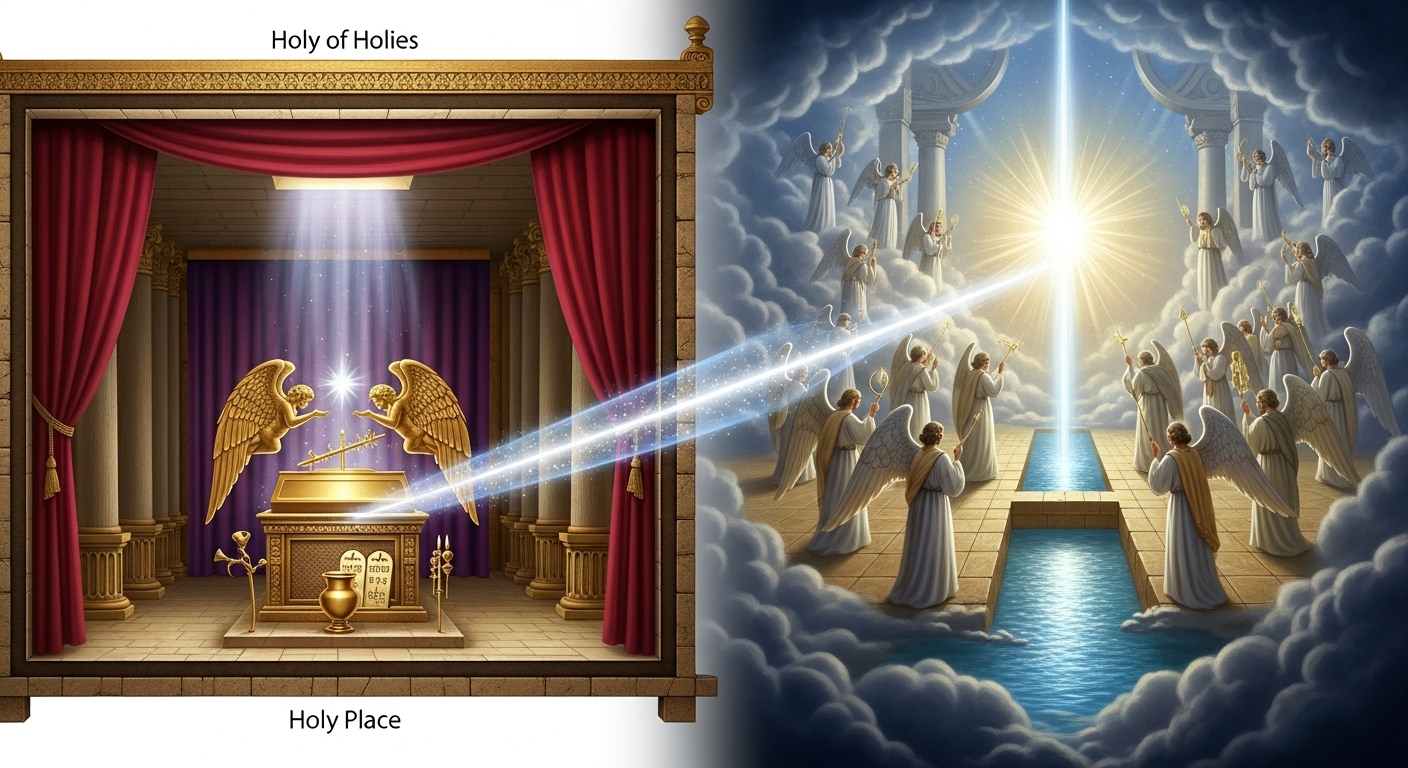
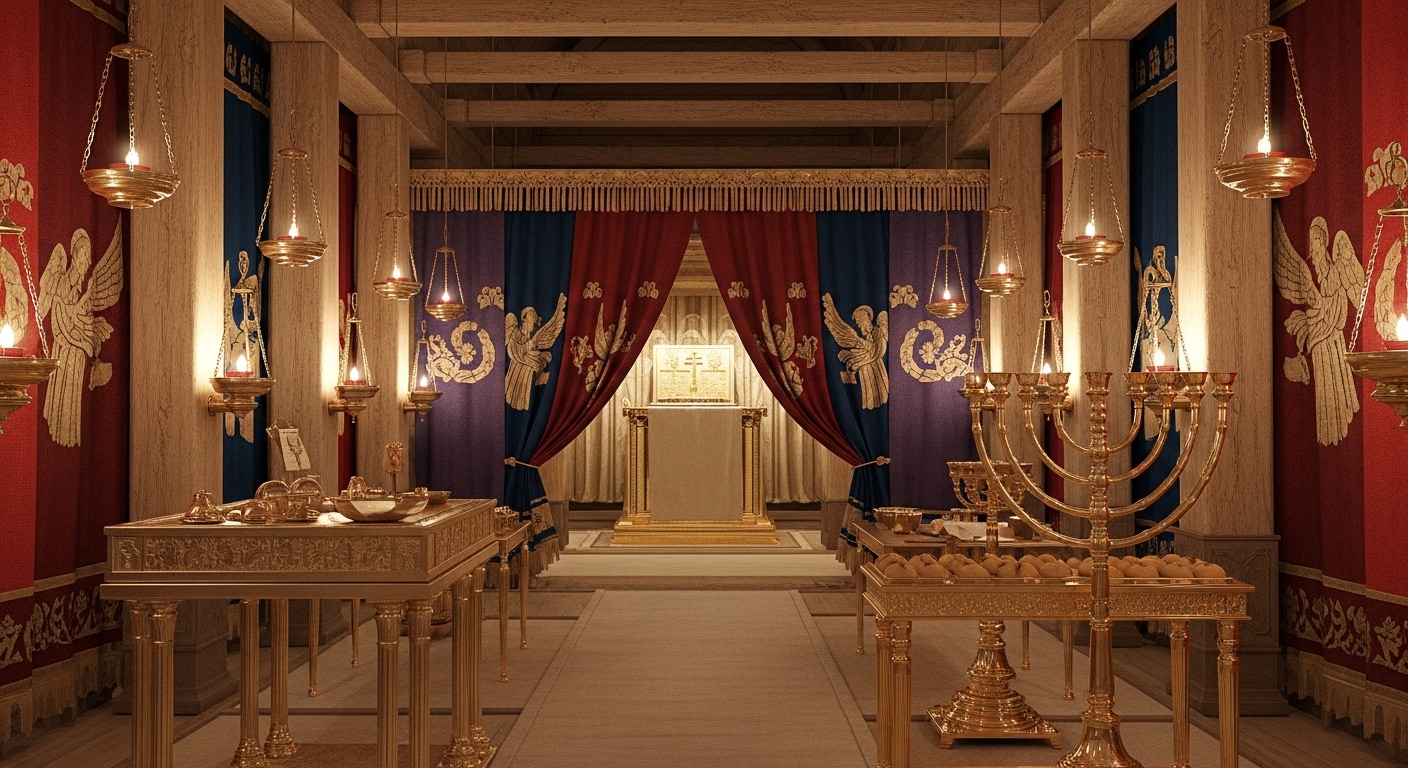
In simple terms, the Bible teaches that the Holy of Holies (also called the Most Holy Place) was the innermost chamber of the tabernacle and later the temple—a space set apart where God’s presence was specially symbolized. It contained the Ark of the Covenant and was separated from the rest of the worship area by a veil or curtain. That physical separation taught Israel about God’s holiness and the cost of approaching Him.
For you today, the Holy of Holies symbolizes both God’s absolute holiness and the promise that, through Christ, access to God is restored. Christ fulfills the typology: the veil is torn, the way is opened, and heaven is the ultimate fulfillment of the presence signified in that inner room.
WHAT DOES THE BIBLE SAY ABOUT THE “HOLY OF HOLIES”?
The Bible describes the Holy of Holies clearly in Exodus and later reflects on its meaning in Hebrews. For instance, Exodus 26:33 instructs the separation of the Most Holy Place: Exodus 26:33. Hebrews points you beyond the tent to a heavenly sanctuary and identifies the contents and symbolism of that inner room: Hebrews 9:3-4.
Those passages together show you a movement: God gives a physical, symbolic space for His presence, then the New Testament explains how Christ fulfills and transcends that space.
📖 BIBLE FOUNDATION
Quoted verse(s)
- Hebrews 9:3-4 (NIV): “Behind the second curtain was a room called the Most Holy Place, which had the golden altar of incense and the ark of the covenant. This ark contained the gold jar of manna, Aaron’s staff that had budded, and the stone tablets of the covenant.”
- Exodus 26:33 (NIV): “Hang the curtain from the clasps and put the ark of the covenant law behind the curtain. The curtain will separate the Holy Place from the Most Holy Place.”
Speaker
- Exodus: Instructions given by God through Moses to Israel (Exodus 25–31; 35–40). The commands are divine directives for building the tabernacle.
- Hebrews: The author (traditionally associated with Paul or an anonymous early Christian teacher) writing to Jewish Christians, explaining Christ’s work in light of the temple imagery.
Audience
- Exodus: Israel preparing for covenant worship as they journeyed to the Promised Land.
- Hebrews: Followers of Jesus familiar with temple practices who needed to see Christ’s supremacy and the new access to God He opens.
Historical and biblical context
- The tabernacle and later the temple were central to Israel’s corporate worship. The Holy of Holies housed the Ark of the Covenant and symbolized God’s special dwelling among His people, but access was tightly controlled—only the high priest, once a year on the Day of Atonement, entered (see Leviticus 16). Hebrews interprets the tabernacle as a shadow of the heavenly reality, arguing Christ entered not an earthly room but heaven itself to secure eternal redemption (Hebrews 9:11-12; Hebrews 9:24).
UNDERSTANDING GOD’S PURPOSE, PROTECTION, AND PROMISE
The core theological truth is that God is both transcendent (wholly other, holy) and immanently present (dwelling among His people). The Holy of Holies taught you four things about God:
- God’s holiness requires separation and reverence. The veil and the exclusivity of the Most Holy Place reminded Israel that God is not casual or common.
- God provides a means of approach. Though separated by a veil, God gave sacrificial systems and the high priestly ministry to mediate reconciliation—pointing forward to Christ.
- God’s purpose is to dwell with His people. The Ark, the incense, and the rituals all signify a desire for covenant fellowship.
- God’s promise is fulfilled in Christ, who enters the true heavenly sanctuary to bring redemption and open direct access to God’s presence.
Christ’s supremacy is central: He doesn’t merely clean up the old system; He fulfills and replaces it. Where Israel’s high priest entered the Most Holy Place with blood that temporarily covered sin, Christ entered heaven with His own blood and secured eternal redemption (Hebrews 9:11-12). That reality grounds your faith and removes fear—not by denying God’s holiness, but by showing God’s provision in Christ.

🌊 GOING DEEPER — BIBLICAL CONTEXT
Cross-references
- Exodus 26:31–35 (construction of the veil and the Most Holy Place): Exodus 26:31-35
- Leviticus 16 (Day of Atonement regulations): Leviticus 16
- Hebrews 9:11–14, 9:24 (Christ entering heaven itself): Hebrews 9:11-14, Hebrews 9:24
- Hebrews 10:19–22 (our confidence to enter): Hebrews 10:19-22
- Revelation 21:22 (the consummation where God and the Lamb are the temple): Revelation 21:22
One biblical narrative example
- The Day of Atonement (Leviticus 16) offers a concrete example of how the Holy of Holies functioned: the high priest entered once a year to make atonement for Israel’s sins, symbolizing the gravity of sin and the need for mediation. This ritual foreshadows Christ’s once-for-all entry into heaven to secure eternal atonement (Hebrews 9:12).
Clear theological continuity
- The tabernacle’s Most Holy Place points forward to heaven and backward to God’s presence among Israel; the New Testament reveals Christ as the reality behind the symbol. In short, the Holy of Holies is a divinely appointed signpost that leads you from earthly worship to heavenly access in Christ. For more on how the Old Testament types relate to New Testament fulfillment, see /articles/atonement-explained.
DOES THE “HOLY OF HOLIES” PROMISE EARTHLY SECURITY OR MATERIAL BLESSINGS?
It’s important to correct a common misunderstanding: the Holy of Holies is not a magical talisman promising earthly prosperity or physical protection. The tabernacle and temple rites depicted spiritual realities—God’s holiness, sin’s seriousness, and the costly means by which God restores relationship. Scripture never equates temple symbolism with guaranteed material wealth.
Biblical passages that refocus expectation:
- Jesus warns against trusting earthly treasures and invites you to store up treasures in heaven (Matthew 6:19-21).
- Paul reminds Timothy to place hope in God rather than riches (1 Timothy 6:17).
- The ultimate promise tied to the Holy of Holies motif is access to God and eternal fellowship with Him—not a guarantee of a life free from hardship. Christ secures eternal redemption and communion with God (Hebrews 9:12; Hebrews 10:19-22).
So when you wrestle with anxiety over provision, remember the biblical pattern: God’s covenant care centers on relationship and redemption, which will ultimately unfold in the new creation, not simply a trouble-free earthly life.
💡 LIVING IN LIGHT OF ETERNITY
Knowing what the Holy of Holies signifies changes how you live day-to-day. Here’s how that eternal perspective practically shapes your life:
- How you face anxiety and uncertainty: When you see Christ as the one who entered the true sanctuary in heaven, you gain confidence that your salvation and future rest are secure in God’s hands. Trust shifts from circumstances to God’s covenant faithfulness (Romans 8:28).
- How decisions are made with eternal perspective: Choices about time, money, and relationships gain new priority when you value heavenly things over short-term gain (Matthew 6:33).
- What it means to trust God beyond visible outcomes: The veil image reminds you God is utterly holy; the torn veil (in the Gospels) reminds you of access through Christ. You act in faith because Christ has entered the true holy place on your behalf (Mark 15:38; Hebrews 9:24).
- Worship rooted in hope, not fear: Your worship is shaped by knowing that God is both holy and merciful. That balance produces reverence, gratitude, and obedience (Hebrews 12:28).
- Faithfulness in everyday life: If Christ’s work in the heavenly sanctuary secures your place before God, then daily faithfulness—service, repentance, evangelism—becomes your grateful response, not a means to earn God’s favor.
📖 GOD’S PROMISES, ANGELS, AND TRUST IN HIS SOVEREIGN CARE
Some readers may wonder whether the Holy of Holies involves angels, signs, or secret access techniques. Scripture clarifies: God’s promises rest on His character and the finished work of Christ, not on symbols or spiritual experiences.
- Angels are ministering spirits sent to serve believers (Hebrews 1:14), but they’re not the foundation of your access to God.
- The tabernacle’s elements (ark, veil, incense) are meaningful symbols that point to deeper realities; they are not substitutes for Christ’s mediation (Colossians 2:16-17).
- Christ is the ultimate revelation of God (John 1:14) and the one who entered heaven to appear for you before God (Hebrews 9:24).
Faith is grounded in God’s sovereignty and in the historical, redemptive work of Christ—not in objects, rituals, or speculative visions. Trust the God who spoke, who tabernacled with Israel, and who fulfilled the types in Christ.
❤️ PRACTICAL APPLICATION
Apply what you’ve learned with these practical steps that connect doctrine to daily faithfulness:
- Pray with confidence: approach God directly because Christ secured your access (Hebrews 10:19-22).
- Practice reverence: remember God’s holiness in worship and in how you live (Leviticus 10:3).
- Teach the next generation: explain the tabernacle’s symbols and how Christ fulfills them so faith is rooted in Scripture.
- Prioritize eternal investments: give time and resources to gospel work rather than chasing temporary comforts (Matthew 6:19-21).
- Live as a covenant people: let your identity in Christ shape moral choices, hospitality, and mercy.
🛠️ Faithful Stewardship Tip For believers wanting to create and share faithful biblical teaching online, choosing a reliable hosting platform is part of wise stewardship. Consider using Hostinger to host a ministry site or teaching blog so you can responsibly steward resources and reach others with gospel-centered content.
🪞 FAITH REFLECTION BOX
Take a moment to reflect: Christ has entered the true sanctuary on your behalf. How does that change the way you pray today? Offer gratitude for access, confess where fear still governs you, and ask God for the courage to live in light of the heavenly reality secured by Christ.
A PRACTICAL TAKEAWAY
- The Holy of Holies was the tabernacle’s innermost room, signifying God’s special presence.
- The veil symbolized God’s holiness and the seriousness of sin.
- Christ fulfills the tabernacle types by entering heaven and securing eternal redemption (Hebrews 9:11-12).
- Your access to God is now direct in Christ; live with thankful confidence (Hebrews 10:19-22).
- Steward your time, gifts, and witness with eternity in view.
❓ Q&A — BIBLE ANSWERS EXPLAINED
Q1 (Doctrinal): Does the Holy of Holies literally become heaven?
- A1: The Holy of Holies was an earthly, symbolic space that foreshadowed the heavenly sanctuary. Hebrews explains that Christ entered the real heavenly sanctuary, not an earthly chamber, to secure redemption (Hebrews 9:24). The earthly room pointed to the heavenly reality.
Q2 (Practical): How should I approach God now that Christ has opened access?
- A2: Approach with reverent confidence—draw near in prayer, confess sin, and receive mercy because Christ’s sacrifice gives you boldness before God (Hebrews 10:19-22). Practice both reverence and intimacy.
Q3 (Misconception): Does owning or displaying tabernacle imagery protect me spiritually?
- A3: No. The power is not in objects but in Christ. The tabernacle’s elements are symbols pointing to God’s work in Christ; protection and promise come from trusting God, not relying on relics or images (Colossians 2:8-10; Hebrews 9:12).
CONCLUSION & PRAYER
The Holy of Holies reminds you that God is holy, that sin is serious, and that God provided a way of access through the sacrificial system which points to Christ. In Jesus, the veil is torn; the way into God’s presence is open. You are invited to approach God with confidence because Christ has entered the true heavenly sanctuary on your behalf.
Prayer Lord Jesus, thank You for entering the true sanctuary on our behalf. Help us to live with reverence and confidence, relying on Your finished work to draw near to the Father. Give us boldness to pray, wisdom to steward what You’ve given, and faithfulness to honor You in all we do. Amen.
📖 RELATED BIBLE TEACHINGS
- Understanding Heaven and Hell (Afterlife)
- Salvation: What the Bible Says About Being Saved
- Living with Eternal Hope: How Salvation Shapes Life
Sponsored recommendation

Acknowledgment: All Bible verses referenced in this article were accessed via Bible Gateway (or Bible Hub).
“Want to explore more? Check out our latest post on Why Jesus? and discover the life-changing truth of the Gospel!”