


Where Did Old Testament Believers Go When They Died?
INTRODUCTION
This question matters because you, as a follower of Jesus, want clarity about God’s justice, His promises, and what death meant for those who trusted Him before Christ’s coming. Where Old Testament believers went when they died touches the heart of Christian hope: God’s purpose for the redeemed, His protection for those who trust Him, and the promise of final resurrection and restoration. Understanding this helps you worship with confidence, grieve rightly, and live with purpose.
You’ll see in the Bible that God’s plan unfolds across covenants, and that the Old Testament saints were not left outside God’s saving work. Their hope was anchored in God’s promises and ultimately fulfilled in Christ. If you want to learn more about how the Bible talks about afterlife and resurrection, see our other article on What Happens After Death? which explores related passages and pastoral implications.
Where Did Old Testament Believers Go When They Died?
In simple terms: Old Testament believers entered the realm of the dead (often called Sheol or Hades in Scripture) but were not abandoned there. Their hope was in God’s promise of resurrection and restoration, and the Bible ultimately presents their destiny as being secured through Christ. They experienced a present, sometimes shadowy existence after death in Sheol, yet God held them in covenant rather than consigning them to final ruin. Christ’s redemptive work brings clarity: what looked incomplete under the old covenant is brought to fulfillment in the new covenant.
This matters for you because the Bible’s arc shows continuity—God’s saving purpose does not reset at Christ; it matures. The Old Testament saints were counted righteous by their faith (their relationship to God), and the final expression of that righteousness arrives in Christ and the resurrection. That truth gives you comfort when you grieve and courage to live faithfully now.
WHAT DOES THE BIBLE SAY ABOUT WHERE OLD TESTAMENT BELIEVERS WENT WHEN THEY DIED?
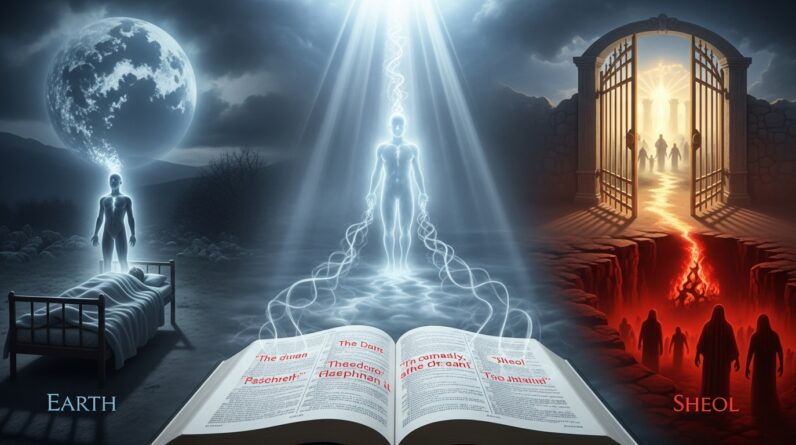
The Bible uses several images and words to describe the state of the dead in the Old Testament era. Hebrew writers commonly used the word Sheol to refer to the abode of the dead, a realm where life’s normal activity ceases. Some Old Testament passages describe the dead as sleeping or unconscious (for example, Ecclesiastes 9:5), while other passages and later Jewish literature picture more conscious existence and even expectation of vindication (see Psalm 49:15 and Isaiah 26:19). The New Testament clarifies that the faithful of the Old Testament were included in God’s saving promises and that the completion of those promises comes through Christ (see Hebrews 11:13-16 and Hebrews 11:39-40).
In short, the biblical testimony is twofold: on the one hand, the Old Testament describes death with images of Sheol and sleep; on the other, it holds hope for vindication and resurrection.
1. Jacob (a righteous patriarch) expected to go to Sheol
Genesis 37:35 (ESV)
“I shall go down to Sheol to my son, mourning.”
📌 Jacob fully expected to go to Sheol, the same place where he believed Joseph was. This shows Sheol was not only for the wicked.
2. Job (a righteous man) expected rest in Sheol
Job 14:13 (ESV)
“Oh that you would hide me in Sheol, that you would conceal me until your wrath be past…”
📌 Job speaks of Sheol as a place of rest and waiting, not punishment.
3. David expected God to preserve him in Sheol
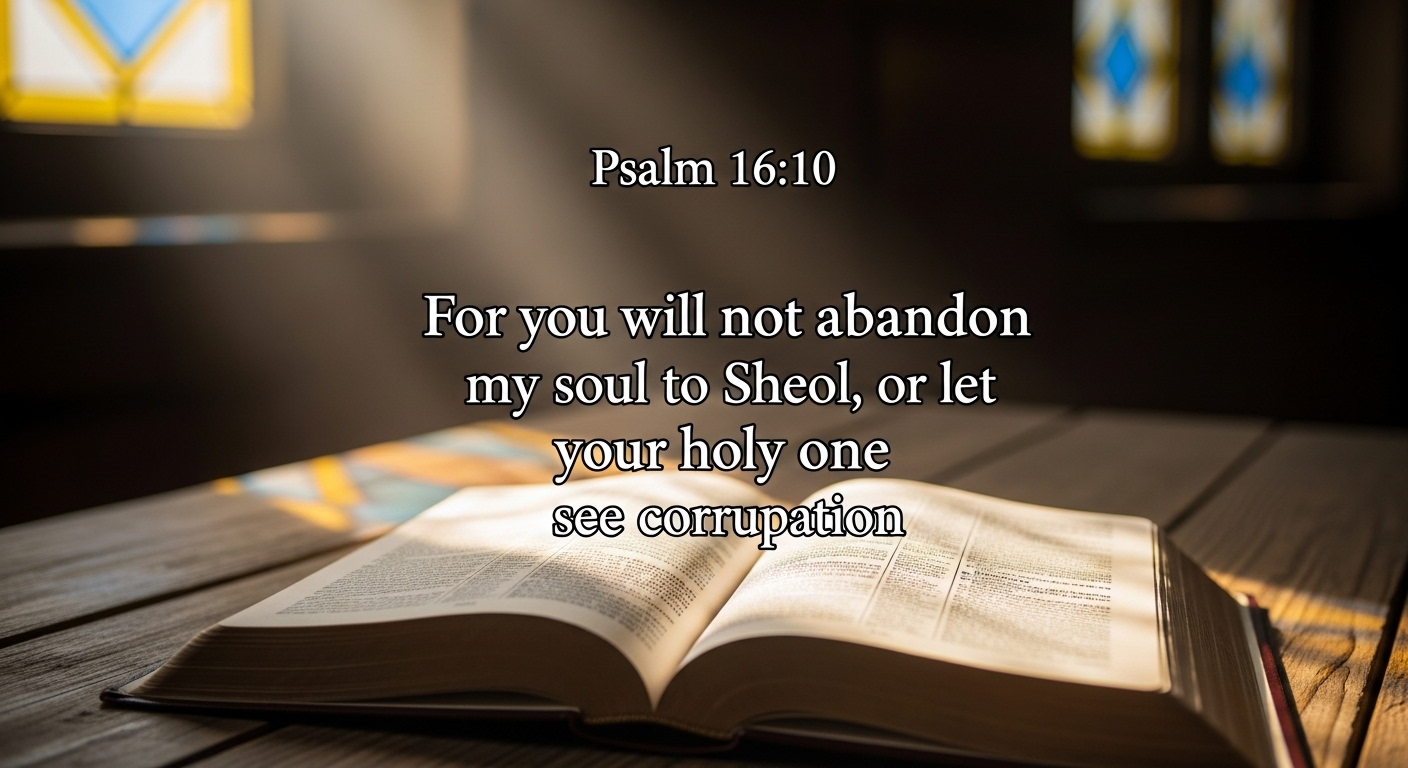
Psalm 16:10 (ESV)
“For you will not abandon my soul to Sheol, or let your holy one see corruption.”
📌 David acknowledges entering Sheol, yet trusts God would not abandon him there.
➡️ This verse is later applied to Christ (Acts 2:27), showing continuity.
4. All the dead — righteous included — went to Sheol
Ecclesiastes 9:10 (ESV)
“There is no work or thought or knowledge or wisdom in Sheol, to which you are going.”
📌 Sheol is presented as the common destination of the dead in the Old Testament era.
5. Samuel appears after death (from Sheol)
1 Samuel 28:13–15 (ESV)
“I see a god coming up out of the earth… an old man is coming up.”
📌 Samuel, a faithful prophet, is described as coming up from the realm of the dead, consistent with Sheol being “below.”
6. New Testament confirmation: OT saints were not yet perfected
Hebrews 11:39–40 (ESV)
“And all these, though commended through their faith, did not receive what was promised… that apart from us they should not be made perfect.”
📌 Old Testament believers waited for Christ’s redemptive work.
7. Jesus affirms Hades as the realm of the dead (pre-resurrection)
Luke 16:22–23 (ESV)
“The poor man died and was carried by the angels to Abraham’s side. The rich man also died and was buried, and in Hades, being in torment…”
📌 This passage shows two distinct experiences within Hades:
-
Abraham’s side (comfort for the righteous)
-
Torment (for the wicked)
This fits the Old Testament understanding of Sheol as a realm with divisions, not final judgment. The New Testament links that hope to Christ, making clear that the faithful who lived before Christ are beneficiaries of God’s redemptive plan fulfilled in Jesus.
📖 BIBLE FOUNDATION
Quoted verse(s):
- “All these people were still living by faith when they died. They did not receive the things promised; they only saw them and welcomed them from a distance, admitting that they were foreigners and strangers on earth.” — Hebrews 11:13
Speaker: The author of Hebrews (traditionally anonymous, writing to Jewish Christians) is summarizing the faith of Old Testament saints and explaining how their hope looked forward to a better country.
Audience: Jewish Christians who needed encouragement to persevere amid trials, reminding them that their faith connects them to the faithful who came before.
Historical and biblical context: Hebrews places Old Testament faith in the trajectory of God’s redemptive purposes. It recognizes that the promises of God extended beyond the immediate lifetimes of Abraham, Moses, David, and the prophets. While the Old Testament language often uses Sheol to describe the realm of the dead, the New Testament explains that God’s end goal is resurrection and consummation in Christ. Passages like Psalm 16:10, later cited by Peter in Acts 2:27, anticipate God’s victory over the realm of the dead and point forward to resurrection hope.
UNDERSTANDING GOD’S PURPOSE, PROTECTION, AND PROMISE
The core theological truth is that God is sovereign over life and death, and Christ’s supremacy secures the destiny of those who trust God across both Testaments. That means you can trust that God’s purposes are consistent: He promises rescue, restoration, and a final resurrection. God’s protection is not a guarantee of temporal safety or wealth; rather, it’s the promise that He is working to bring believers—past and present—into eternal fellowship with Himself.
Because Jesus accomplished redemption by his death and resurrection, the Old Testament saints’ hope is fulfilled in him. Hebrews makes this explicit: the faithful exercised trust in God’s promises, and although they did not receive the promised fullness in their earthly lives, God’s plan includes them in the final redemption. This removes the need for you to fear that God is unjust to earlier believers; the Bible insists that faith in God counts, and in Christ that faith reaches completion.
Avoid speculation about the precise mechanics of intermediate states; stay anchored to Scripture’s main claims: God is just, Christ is supreme, and resurrection is promised. Hold faith over fear, certainty of God’s purposes over the wish to map every detail of what happens between death and the final resurrection.
🌊 GOING DEEPER — BIBLICAL CONTEXT
The biblical vocabulary for death includes Sheol (Hebrew) and Hades (Greek), and the New Testament adds language of being “absent from the body” and “present with the Lord” to describe the believer’s hope. See cross-references such as Ecclesiastes 9:5, which reflects on the dead not knowing anything, and Psalm 49:15, which speaks of God redeeming a life from the realm of the dead. The New Testament passages 2 Corinthians 5:8 and Philippians 1:23 describe the Christian hope of being with the Lord after death, and Hebrews 11:39-40 ties the dots by showing the Old Testament faithful share in the ultimate fulfillment.
One biblical narrative example is Abraham. God promised Abraham descendants and land, and Abraham believed God’s promise and was credited as righteousness (Genesis 15:6). Abraham died before the fulfillment but remained counted righteous because of his faith—his hope was in the promise, not in the present realization. This continuity explains why the New Testament calls Abraham “our father in faith” and places him among those whose faith points forward to the completed work in Christ.
For further study on resurrection and final hope, see our related examination of eschatology and comfort in loss here: Resurrection Hope for Believers.
💡 MODERN CONNECTION — FAITH, ANXIETY, AND DAILY LIFE
When grief or fear of death surfaces, anchor yourself in God’s consistent promises across Scripture. Your decisions, whether about vocation, generosity, or family, should be shaped by the reality that God’s purposes extend beyond the here-and-now. Trusting God means you live with eternity in view: you love others, steward resources wisely, and serve faithfully because you know that God’s protection is ultimately about relationship and resurrection, not merely earthly comfort.
Anxiety about death often comes from imagining God’s disconnection from those who died before Christ. The biblical message counters that fear: the faithful are embraced by God’s covenantal promises and are included in Christ’s redemption. When making hard decisions, let this hope guide you—seek wisdom, pray for clarity, and act courageously out of trust in God’s sovereign purpose. Worship and regular fellowship with other believers will strengthen your confidence and reduce the sting of fear.
🛠️ Faithful Stewardship Tip For believers who want to share biblical teaching or faith resources online as part of your ministry or stewardship, choosing a reliable website host supports long-term service. Hostinger provides stable hosting that can help you create and maintain a digital space for teaching Scripture, sharing sermons, and stewarding resources for God’s glory.
❤️ PRACTICAL APPLICATION
- Make prayer a daily habit: bring your fears about death and loss to God and rehearse the gospel promises aloud to yourself and your family.
- Read Scripture that grounds hope—like Psalm 23, Isaiah 25:8, and 1 Corinthians 15:20-22—so your mind is saturated with truth.
- Serve others in grief: show up for those who mourn with hospitality and listening, reflecting the resurrection hope you hold.
- Teach children the story of God’s redemptive plan from creation to new creation, emphasizing continuity: God keeps his promises.
- Practice stewardship: give, invest in gospel work, and build things—churches, ministries, content—that point people to Christ and outlast your lifetime.
🌱 Building With Purpose If you’re creating a website or digital ministry to teach these biblical truths, hosting your content on a reliable platform like Hostinger can help you steward what God gives you—so the gospel resources you build remain accessible and secure for future generations.
🪞 FAITH REFLECTION BOX
Take a quiet moment: remember one faithful believer from the Old Testament whose faith inspires you—Abraham, Moses, David, or one of the prophets. Reflect on how their hope in God’s promise helps you trust God with your own future. Pray that the same faith would steady you amid uncertainty and point you to Christ.
A PRACTICAL TAKEAWAY
- Old Testament believers entered Sheol, the realm of the dead, but Scripture promises God’s ultimate vindication and resurrection for the faithful.
- The New Testament reveals that Christ’s death and resurrection secure the destiny of God’s people across both Testaments.
- God’s protection is about covenantal promise, not guaranteed earthly prosperity.
- Your hope in death is centered on Christ’s victory and the resurrection to come.
- Live with eternity in view: steward, serve, worship, and trust in God’s unchanging purpose.
❓Q&A — BIBLE ANSWERS EXPLAINED
Q1 — Do Old Testament believers go to the same place as New Testament believers after death?
A1 — Scripture affirms continuity: the faithful of both Testaments are included in God’s saving purposes. Hebrews explains that the Old Testament saints lived by faith and are part of the same consummation brought by Christ (Hebrews 11:39-40). The New Testament clarifies the final outcome—resurrection and being with the Lord (2 Corinthians 5:8).
Q2 — How should I respond to anxiety about death in everyday life?
A2 — Anchor your mind in gospel truth: read Scriptures that declare God’s victory over death (for example, Psalm 16:10 and 1 Corinthians 15:54-55), pray regularly, and participate in sacramental and communal practices that strengthen hope. Trust in Christ’s promises rather than human speculation (Philippians 4:6-7).
Q3 — Did Old Testament believers stay conscious in Sheol or “sleep” until the resurrection?
A3 — The Bible uses varied imagery—some passages suggest a “sleep” metaphor (Daniel 12:2), others show conscious experience (Luke 16:22). Rather than forcing a single technical system, Scripture teaches the essential truths: death is not the end, God will vindicate the righteous, and final resurrection is certain (Isaiah 26:19). Theologically, hold to the resurrection as the definitive promise.
CONCLUSION & PRAYER
In conclusion, Old Testament believers went to the realm of the dead described as Sheol, but their hope was never limited to that interim state. Scripture shows God’s protective, covenantal promise and points forward to the resurrection fulfilled in Christ. You can stand on the assurance that God’s purposes cross generations and that the faithful—both before and after Christ—are recipients of God’s redemptive plan.
Short Prayer: Lord God, thank you that you are sovereign over life and death and that your promises do not fail. Strengthen our faith to trust your unfolding plan, comfort those who grieve, and lead us to live for your glory in light of the resurrection. Amen.
📖 RELATED BIBLE TEACHINGS
 Acknowledgment: All Bible verses referenced in this article were accessed via Bible Gateway (or Bible Hub).
 Want to explore more?
  Dive into our new post on Why Jesus? and experience the
  life-changing truth of the Gospel!