

Abraham’s Journey to the Promised Land (Genesis 12:1-4)
Introduction
Have you ever been asked to step into something unknown because someone wiser promised it would be worth it? You probably know that uneasy mix of fear and excitement. That’s exactly the emotional landscape you walk into with Abraham’s Journey to the Promised Land. This story isn’t just an ancient tale; it’s a vivid, living example of what it looks like to trust God when the directions are unclear and the destination is unseen.
As you read, you’ll find the story both simple and deep: a call, a covenant, tests, growth, and ultimately a life shaped by a promise. You’ll see how his willingness to go teaches you practical ways to follow when God nudges you out of comfort and into faith.

The Bible Foundation
Genesis 12:1-4 — The Call to Go
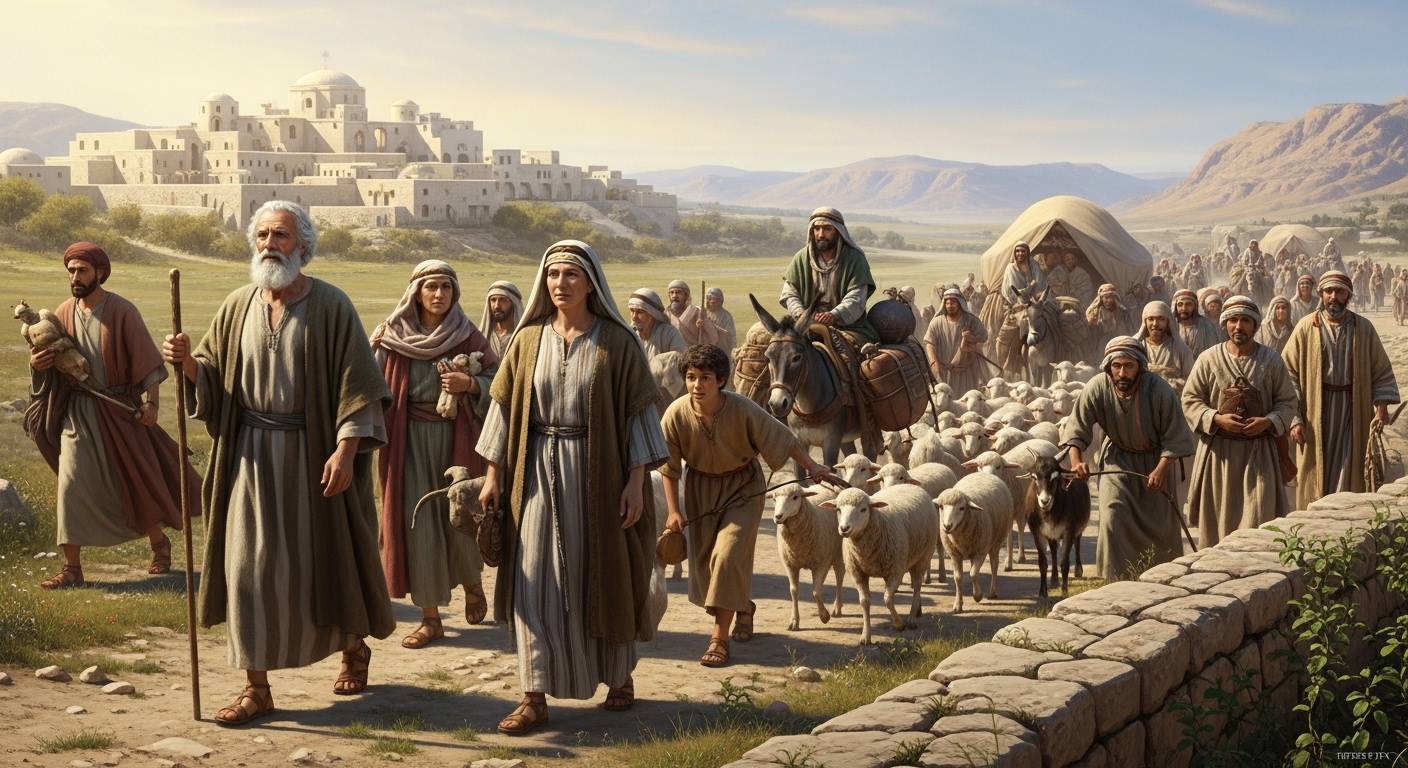
Genesis 12:1-4 (NIV): “The Lord had said to Abram, ‘Go from your country, your people and your father’s household to the land I will show you. I will make you into a great nation, and I will bless you; I will make your name great, and you will be a blessing. I will bless those who bless you, and whoever curses you I will curse; and all peoples on earth will be blessed through you.’ So Abram went, as the Lord had told him, and Lot went with him. Abram was seventy-five years old when he set out from Harran.”
Read it on Bible Gateway: https://www.biblegateway.com/passage/?search=Genesis+12:1-4&version=NIV

This is the pivotal moment: God calls Abram (later Abraham) to leave everything familiar and go to a land God will show him. The instruction is simple yet seismic — leave, and you will be part of a divine plan. In real life, that kind of call might look like a career change, a move, or stepping into a new role in your family or church.
Genesis 15:6 — Faith Counted as Righteousness
Genesis 15:6 (NIV): “Abram believed the Lord, and he credited it to him as righteousness.”
Read it on Bible Gateway: https://www.biblegateway.com/passage/?search=Genesis+15:6&version=NIV
This short verse is a cornerstone. It shows that Abraham’s journey wasn’t just geographical; it was spiritual. Believing God — trusting His character and promises — is what made Abraham righteous in God’s sight. It teaches you that your response matters more than your resume.
Hebrews 11:8-10 — Faith and Direction
Hebrews 11:8-10 (NIV): “By faith Abraham, when called to go to a place he would later receive as his inheritance, obeyed and went, even though he did not know where he was going. By faith, he made his home in the promised land like a stranger in a foreign country; he lived in tents, as did Isaac and Jacob, who were heirs with him of the same promise. For he was looking forward to the city with foundations, whose architect and builder is God.”
Read it on Bible Gateway: https://www.biblegateway.com/passage/?search=Hebrews+11:8-10&version=NIV
Hebrews frames Abraham as an archetype of faith. He followed God’s call with hopeful expectancy, living as a sojourner whose true citizenship was in God’s hands. You can see how faith looks like action — not passive waiting, but active trust.
Understanding the Core Truth
At the heart of Abraham’s Journey to the Promised Land is a simple truth: God’s call often asks you to leave what’s comfortable so you can receive what He promises. That call invites obedience, tests character, and shapes identity. God’s promise to Abraham wasn’t merely about land or descendants; it was about forming a people who reflect God’s blessing to the world.
Put plainly: God asks for trust before He reveals the full map. Your response — faith expressed as obedience — matters more than perfect knowledge about every step. That’s the core truth you can apply: God’s direction will often be revealed in stages, and faithful steps matter.
Going Deeper — The Hidden Meaning

Abraham’s story hides deeper lessons about identity, patience, and relational trust. When God told Abraham to go, He was also redefining Abraham’s identity from a member of a clan to the founder of a covenant people. That’s powerful for you: God may call you not only to a place or task but to a new identity shaped by His promises.
Consider the moments of silence and waiting in Abraham’s life — from the long wait for Isaac to the test of offering him (Genesis 22). Those periods weren’t wasted; they refined Abraham’s trust and clarified the nature of the promise. The deeper meaning is that waiting and testing are often integral to the promise. They reveal whether you trust God’s character more than your own plans.
A practical, relatable example: when you take a difficult step in your career or relationships because you sensed God’s leading, the months that follow might test your patience. Instead of seeing delay as failure, view it as refining time — God shaping your faith and preparing you for what’s next.
Modern Connection — Relevance Today

How does Abraham’s Journey to the Promised Land land in your modern life? Very naturally. You face decisions that feel like crossroads: a job with potential but risk, a move to a new city, a marriage choice, a calling to serve in a vulnerable place. Each of these is a “go” moment.
Abraham’s example gives you a framework: listen for God’s call, be willing to leave comfort, expect growth through challenges, and cling to God’s promises even when details are unclear. In families, this might look like trusting God through financial uncertainty. In work, it could mean taking responsibility for ethical choices even when the path forward is uncertain. In faith, it’s daily obedience — small acts that accumulate into a life shaped by God’s promise.
You’ll also find modern encouragement in how Abraham’s faith impacts others: God’s blessing through Abraham extended beyond his family to “all peoples on earth.” Your faithful steps can also bless others in ways you won’t always see.
Practical Application — Living the Message
What does obedience and trust look like for you today? Here are simple, doable steps to practice Abraham’s faith:
- Pause and Pray: When you sense a call, take time to pray and seek wise counsel. Obedience usually follows prayerful consideration.
- Take One Step: You don’t have to map the whole journey. Take the next practical step — apply, meet someone, move a box — and trust God with tomorrow.
- Keep Records: Like Abraham counting stars and promises, write down what you believe God is saying. Remembering God’s faithfulness strengthens faith.
- Embrace Waiting: View waiting periods as active seasons of growth. Use them for learning, serving, and spiritual development.
- Bless Others: Let your steps of faith become a blessing to your family, community, and workplace. Small acts of faith multiply.
Each of these is a bite-sized way to live Abraham’s Journey to the Promised Land in your own story.
Faith Reflection Box
Pause and reflect: Where is God asking you to leave comfort and follow? What one practical step can you take this week toward that call?
Key Takeaways
- Obedience to God often starts with a simple step, not perfect knowledge.
- Waiting and testing refine faith — they are part of the journey, not detours.
- Your response of faith can bless others beyond what you see.
- Keep a record of God’s faithfulness to strengthen your next step.
Q&A
Q1: Was Abraham’s move to the Promised Land a guarantee of an easy life? Answer: No. Abraham’s move was a promise of God’s presence and purposes, not an instant guarantee of ease. Genesis 12 begins the journey, but the story includes famine (Genesis 12:10), family conflict, and long waits for the fulfillment of the promise. What God promised was a relationship, a blessing, and an unfolding plan — He walked with Abraham through the difficulties rather than removing them. Your life can echo that pattern: God’s call brings His presence and purposes even amid hardship, shaping character and trust (see Genesis 12:1-4, Hebrews 11:8-10.
Related: Faith Like Abraham: Trusting God When You Can’t See the Way – Genesis 12:1-4
Q2: How do I know if a change is truly God’s call, as Abraham experienced? Answer: Discernment combines prayer, Scripture, wise counsel, and peace over time. Abraham’s call came directly, but for most of us, God’s voice emerges through aligning possibilities with Scripture, the counsel of mature believers, and inner conviction that persists. Test the call: does it lead you toward Christlike character, serve others, and align with God’s revealed will? Also watch for confirmation in circumstances and a sense of peace that seems to settle even amid uncertainty (see Proverbs 11:14, James 1:5.
Q3: What if I step out in faith and things go wrong — did I mishear God? Answer: Not always. Stepping out in obedience doesn’t make you immune to setbacks. Sometimes, God’s plan includes hardships that refine character; other times, your step reveals areas that need adjustment. Abraham experienced setbacks and seasons of correction, yet God’s promise persisted. If things go wrong, examine your motives, seek counsel, confess your mistakes, and trust God to redirect you. Remember, God often works through imperfect obedience rather than perfect plans (see Romans 8:28, Psalm 119:105)
See also: The God of Abraham, Isaac, and Jacob (Exodus 3:6)
Conclusion & Reflection
Abraham’s Journey to the Promised Land invites you to step, trust, wait, and allow God to shape your identity through His promises. His story reminds you that faith isn’t a one-time decision but a lifetime of choosing God’s way over the world’s shortcuts. You don’t need to have every detail mapped — you need willingness and a heart open to God’s leading.
A short prayer: Lord, give me the courage to take the next faithful step. Help me to trust You when the map is unclear and to see waiting as part of Your shaping work. Make my life a blessing to others as You were to Abraham and his family. Amen.

More Inspiration Awaits — Read These Next
👉 For deeper insight into Isaiah 40:31 and how it renews your strength in both faith and daily life
👉 For practical lessons on compassion and neighborliness from the Good Samaritan
👉 For a clear explanation of what we can learn from the Parable of the Good Samaritan
👉 For meaningful insights from the Parable of the Pearl and its hidden treasures
👉 For a deeper look at the Rich Man and Lazarus and what it reveals about the afterlife
👉 For guidance on the Parable of the Ten Virgins and preparing for God’s Kingdom
👉 For clarity on the Parable of the Lamp and how it calls us to shine our light
👉 For insights from the Parable of the Wedding Feast and the meaning behind the invited guests

📘 Jesus and the Woman Caught in Adultery – Grace and Mercy Over Judgement
A powerful retelling of John 8:1-11. This book brings to life the depth of forgiveness, mercy, and God’s unwavering love.
👉 Check it now on Amazon 🛒💥

🔥 “Every great message deserves a home online.” 🌍💬🏡
Don’t let your calling stay hidden. Start a Christian blog or website using Hostinger — with 99.9% uptime, a free domain, and SSL, your voice can shine for God’s glory anytime, anywhere.
💥 Begin today. 🛒 Try it RISK-FREE! ✅

✝️ “Your body is God’s temple — care for it with purpose.” 💪💖🏛️
Renew your energy and restore balance naturally. Mitolyn helps support a healthy metabolism, giving you the vitality to live out God’s calling with strength and confidence.
🔥 Unlock Your Metabolic Power! ⚡Burn More Calories & Feel Great With Mitolyn. 💪
👉 Start Today. 🚀 Check Price Now. 🛒💰
💰 As a ClickBank & Amazon Affiliate, I earn from qualifying purchases.
📖 Acknowledgment: All Bible verses referenced in this article were accessed via Bible Gateway (or Bible Hub).
🚀 Want to explore more? 👉 Dive into our new post on Why Jesus? and experience the 🔥 life-changing truth of the Gospel!