

How Does The Bible Describe Hell? (Matthew 13:50, Luke 16:19-31)
Introduction
Have you ever wondered what the Bible actually says about hell? Maybe you’ve heard dramatic images — flames, darkness, weeping and gnashing of teeth — but you want to know what Scripture truly teaches. You’re not alone. These descriptions can be unsettling, and they raise big questions about justice, mercy, and God’s character.
This article looks closely at two important passages — Matthew 13:50 and Luke 16:19–31 — and other key verses so you can see how the Bible describes hell. You’ll get plain explanations, spiritual insight, and practical ways this teaching shapes your life and faith. The goal isn’t to scare you but to help you understand, reflect, and respond with wisdom and hope.

The Bible Foundation
Read Matthew 13:50: Matthew 13:50 (NIV) “and throw them into the blazing furnace, where there will be weeping and gnashing of teeth.”
Read Luke 16:19–31: Luke 16:19–31 (NIV) “There was a rich man who was dressed in purple and fine linen and lived in luxury every day. At his gate was laid a beggar named Lazarus, covered with sores and longing to eat what fell from the rich man’s table. Even the dogs came and licked his sores.
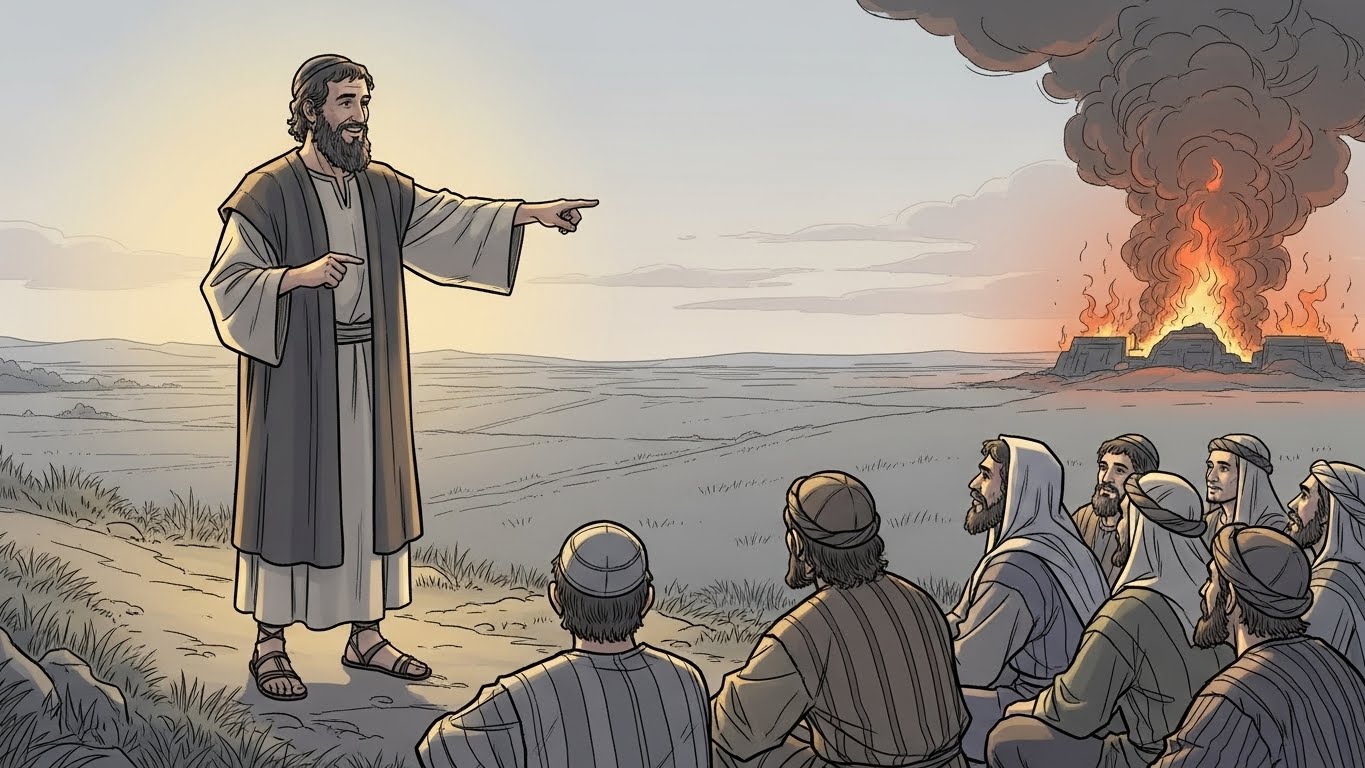
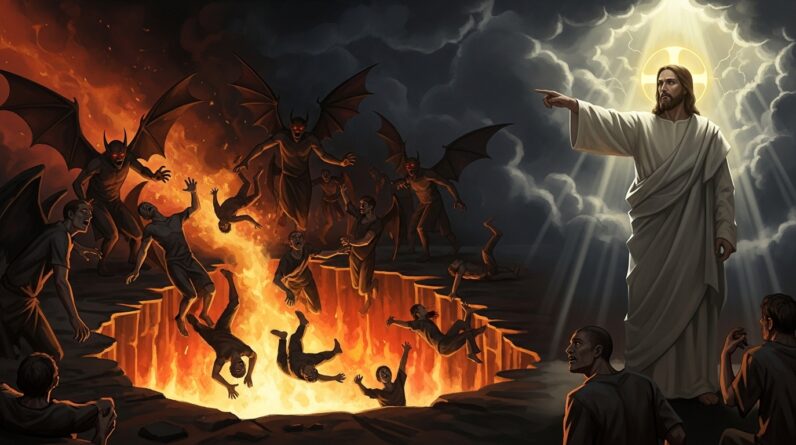
“The time came when the beggar died and the angels carried him to Abraham’s side. The rich man also died and was buried. In Hades, where he was in torment, he looked up and saw Abraham far away, with Lazarus by his side. So he called to him, ‘Father Abraham, have pity on me and send Lazarus to dip the tip of his finger in water and cool my tongue, because I am in agony in this fire.’
“But Abraham replied, ‘Son, remember that in your lifetime you received your good things, while Lazarus received bad things, but now he is comforted here and you are in agony. And besides all this, between us and you a great chasm has been set in place, so that those who want to go from here to you cannot, nor can anyone cross over from there to us.’
“He answered, ‘Then I beg you, father, send Lazarus to my family, for I have five brothers. Let him warn them so that they will not also come to this place of torment.’
“Abraham replied, ‘They have Moses and the Prophets; let them listen to them.’
“‘No, father Abraham,’ he said, ‘but if someone from the dead goes to them, they will repent.’
“He said to him, ‘If they do not listen to Moses and the Prophets, they will not be convinced even if someone rises from the dead.’”
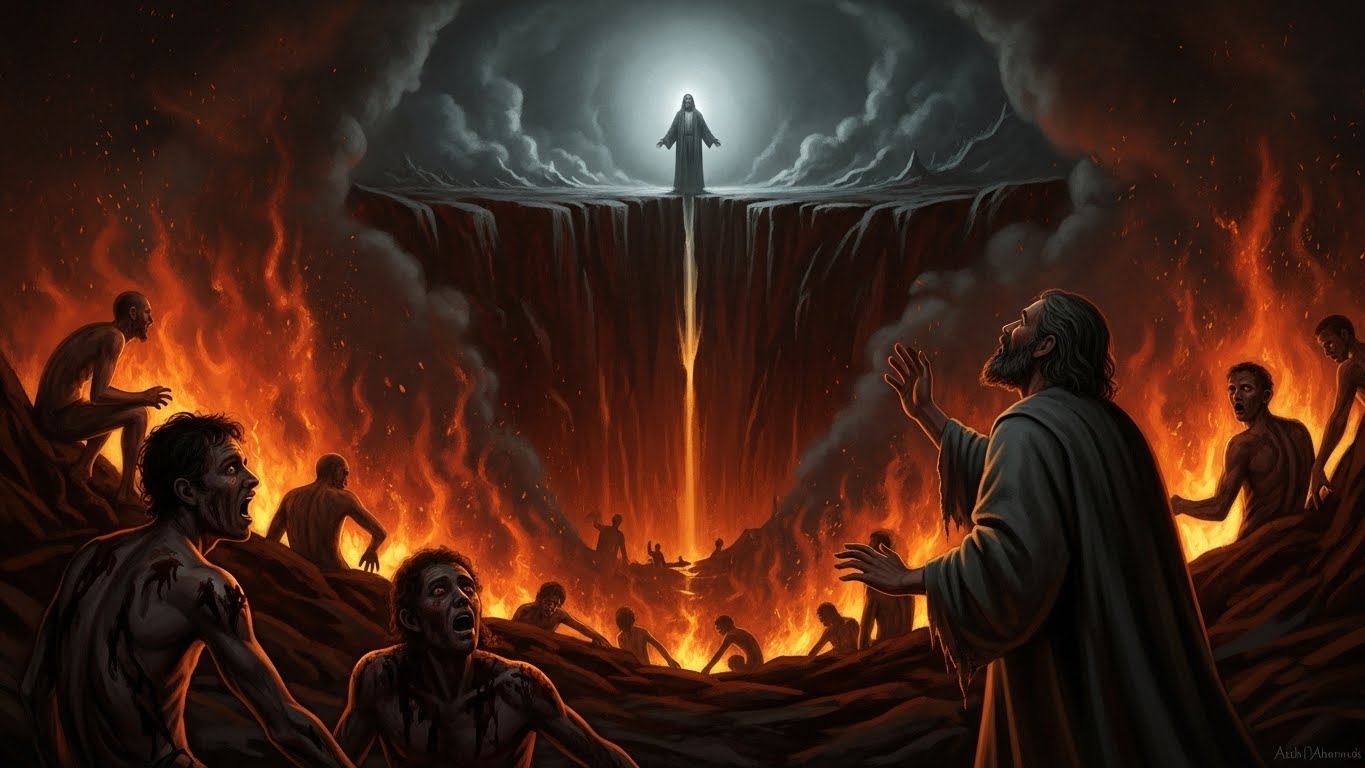
These passages use strong images: fire, weeping, gnashing of teeth, torment, and a chasm. The Bible uses language you can visualize so you don’t miss the seriousness of separation from God and the moral reality of choices.
Understanding the Core Truth
At its core, the Bible presents hell as real separation from God and the consequences of rejecting His justice and grace. Matthew’s furnace image and Luke’s story of the rich man in torment both emphasize the finality and seriousness of that separation.
You’ll notice two themes: justice and consequence. Hell is pictured as a place of judgment where evil is acknowledged and addressed, and as a state of suffering for those who persist in rejecting God. This isn’t a tiny theological detail — it shapes how you think about God’s holiness, human responsibility, and the urgency of sharing the gospel.
Going Deeper — The Hidden Meaning
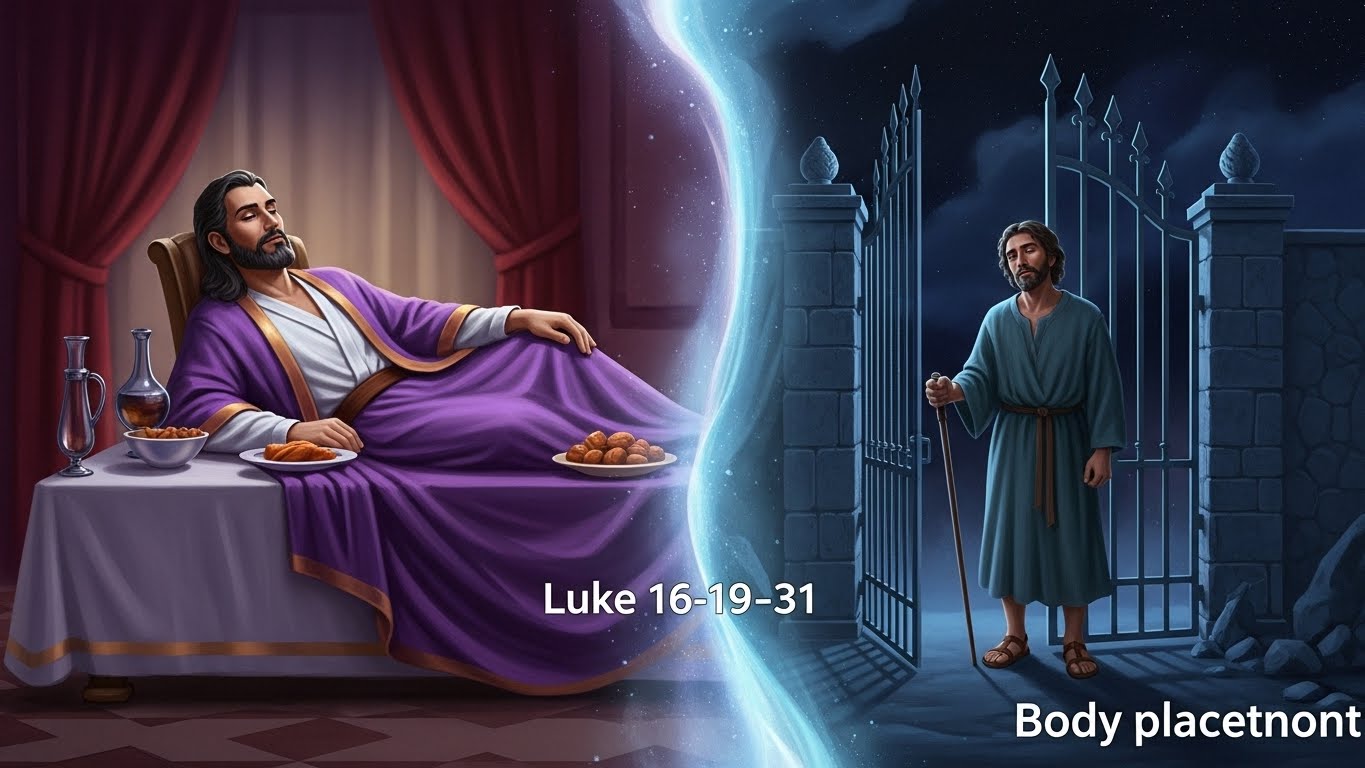
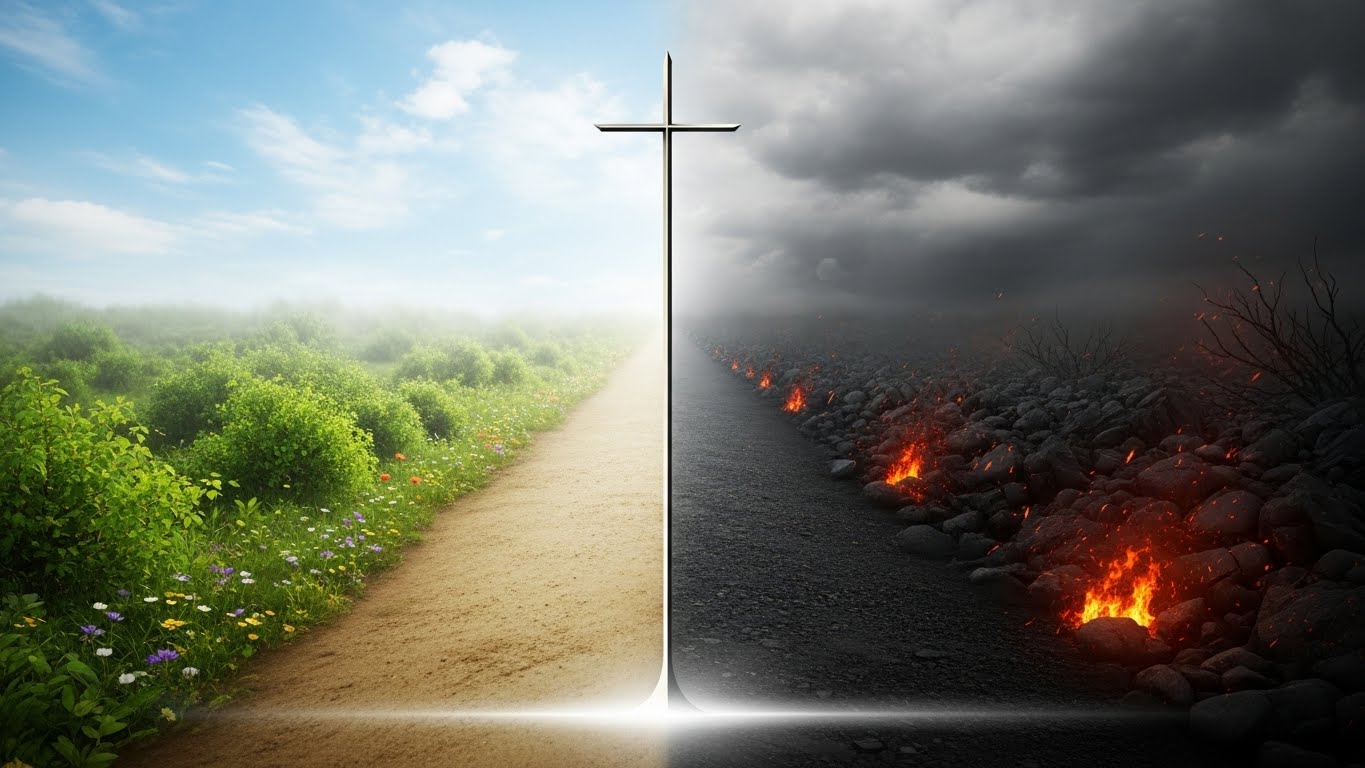
When you dig deeper, you see these images are both concrete and communicative. Jesus often used parables and vivid images to break through complacency. The “blazing furnace” communicates intensity; “weeping and gnashing of teeth” communicates regret, anger and hopelessness; the chasm in Luke communicates irreversibility.
Consider an everyday example: a parent warns a child about a busy street. The parent’s words are serious because the danger is real. Jesus’ images function similarly — they warn because choices matter eternally. The deeper lesson is not to manipulate with fear, but to awaken you to the reality that your choices about God, mercy, and love have consequences.
Other passages add depth. Revelation 20:14–15 speaks of the lake of fire as the second death, highlighting finality; Revelation 20:14–15 (NIV) “Then death and Hades were thrown into the lake of fire… Anyone whose name was not found written in the book of life was thrown into the lake of fire.” Mark 9:43–48 warns against sin that leads to destruction, using the language of unquenchable fire; Mark 9:43 (NIV)
These passages together show hell as both a divine response to justice and a tragic result of human rebellion.
Modern Connection — Relevance Today
You might wonder: how does this ancient teaching apply in the 21st century? It affects how you take sin seriously, how you recognize your need for God, and how you view others. Hell matters for pastoral care, evangelism, and moral urgency.
In daily life, the teaching reminds you to live intentionally. If choices matter eternally, then repentance, kindness, and telling others about Jesus take on renewed urgency. It also challenges religious complacency — faith isn’t just cultural or ritual, it requires a real turning to God.
But it’s also pastoral: Scripture pairs warnings with invitations. Jesus warns about hell and at the same time offers himself as the rescue. Your response isn’t fear alone but faith — trust in Christ who saves you from the consequences you cannot fix yourself.
Practical Application — Living the Message
How can you live in light of what the Bible says about hell? Here are simple, doable steps:
- Reassess urgency: If eternal consequences are real, prioritize your relationship with Jesus. Make time for prayer, Scripture, and community.
- Share compassionately: Talk with friends and family about faith with love, not condemnation. Use truth and grace together.
- Repent regularly: Not as legalism but as spiritual health. When you see patterns of selfishness, confess and turn.
- Live sacrificially: Generosity, service, and humility reflect the heart of the gospel that rescues people from spiritual ruin.
These are practical, everyday ways to respond — not to live in fear, but to live wisely and faithfully.
Faith Reflection Box
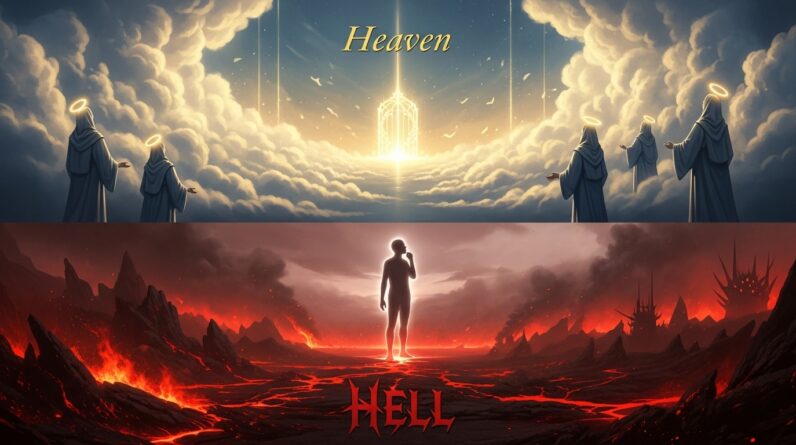
Take a moment and ask: If heaven and hell are real, how would that shift my priorities this week? What one action can I take to draw closer to Jesus and to help someone else know him?
Key Takeaways
- Hell is presented in Scripture as real separation from God and the result of rejecting his mercy.
- Jesus uses strong images (fire, weeping, chasm) to warn and awaken hearts, not to sensationalize.
- The doctrine calls you to serious repentance, compassionate evangelism, and wholehearted trust in Christ.
- God’s warnings are paired with invitations — Jesus is the rescue from the judgment you cannot avoid by your own strength.
Q&A
Q1: Is the rich man in Luke 16 a true description of the afterlife or a parable? Answer: Luke 16 is often read as a parable-like story with a real moral lesson. Jesus uses a vivid narrative that sounds historical to make a theological point about justice, reversal, and the consequences of selfishness. Whether you read it as a parable or a true account, the point is clear: choices in this life have eternal consequences, and listening to God’s Word matters. Jesus uses concrete images to communicate spiritual truth that was immediately understandable to his audience. See also Luke 16:19–31 (NIV).
Related: Is Hell Real According To Scripture? (Matthew 10:28)
Q2: How do images like “fire” and “weeping and gnashing of teeth” fit with the idea of a loving God? Answer: These images emphasize God’s holiness and the seriousness of moral choice. Love doesn’t cancel justice; God’s love provides rescue (through Christ) while his justice addresses evil. The disturbing imagery shows the consequences of rejecting God’s goodness. God’s heart is to see people saved (2 Peter 3:9), but he also honors human freedom and the moral order. So the warnings are meant to awaken, not to contradict God’s love. Read 2 Peter 3:9 (NIV) and Matthew 25:41 (NIV) for balance.
Q3: Can someone be saved after death if they didn’t believe in Jesus in life? Answer: The Bible’s consistent message is that this life is the time of decision; after death, the state is fixed. Passages like Luke 16 and Revelation 20 suggest final judgment follows death and resurrection, and the opportunity to repent is before that day. The urgency of the gospel is that Christ’s grace must be received in life. This view stresses the need for you to respond now to God’s offer of forgiveness and new life in Jesus (see Hebrews 9:27 (NIV) and Revelation 20:11–15 (NIV)).
See also: Is Hell Eternal Punishment? (Matthew 25:46, Mark 9:43–48)
Conclusion & Reflection
You’ve walked through difficult but vital territory. The Bible’s descriptions of hell — in Matthew 13:50, Luke 16:19–31, and other passages — are honest and sobering. They remind you that God is holy, that sin has consequences, and that Jesus offers a way of rescue. This truth isn’t meant to deaden your heart but to awaken it to the reality of God’s mercy and the urgency of faith.
A short prayer you can use: Lord Jesus, thank you for your warnings and your rescue. Help me to take your words seriously, to repent where I’ve turned away, and to share your love with urgency and compassion. Guard my heart, give me boldness to tell others about you, and lead me in your ways. Amen.

More Inspiration Awaits — Read These Next
 For deeper insight into Isaiah 40:31 and how it renews your strength in both faith and daily life
For practical lessons on compassion and neighborliness from the Good Samaritan
For a clear explanation of what we can learn from the Parable of the Good Samaritan
For meaningful insights from the Parable of the Pearl and its hidden treasures
For a deeper look at the Rich Man and Lazarus and what it reveals about the afterlife
For guidance on the Parable of the Ten Virgins and preparing for God’s Kingdom
For clarity on the Parable of the Lamp and how it calls us to shine our light
For insights from the Parable of the Wedding Feast and the meaning behind the invited guests
 Jesus and the Woman Caught in Adultery – Grace and Mercy Over Judgement
A powerful retelling of John 8:1-11. This book brings to life the depth of forgiveness, mercy, and God’s unwavering love. Check it now on Amazon 


 “Every great message deserves a home online.”


Don’t let your calling stay hidden. Start a Christian blog or website using Hostinger — with 99.9% uptime, a free domain, and SSL, your voice can shine for God’s glory anytime, anywhere. Begin today. Try it RISK-FREE! 

 “Your body is God’s temple — care for it with purpose.”


Renew your energy and restore balance naturally. Mitolyn helps support a healthy metabolism, giving you the vitality to live out God’s calling with strength and confidence.
Unlock Your Metabolic Power!  Burn More Calories & Feel Great With Mitolyn.
Start Today.  Check Price Now.
As a ClickBank & Amazon Affiliate, I earn from qualifying purchases.
 Acknowledgment: All Bible verses referenced in this article were accessed via Bible Gateway (or Bible Hub).
Want to explore more? Dive into our new post on Why Jesus? and experience the life-changing truth of the Gospel!