

Are Demons In Hell Right Now? (Jude 1:6, Revelation 20:1–3)

INTRODUCTION
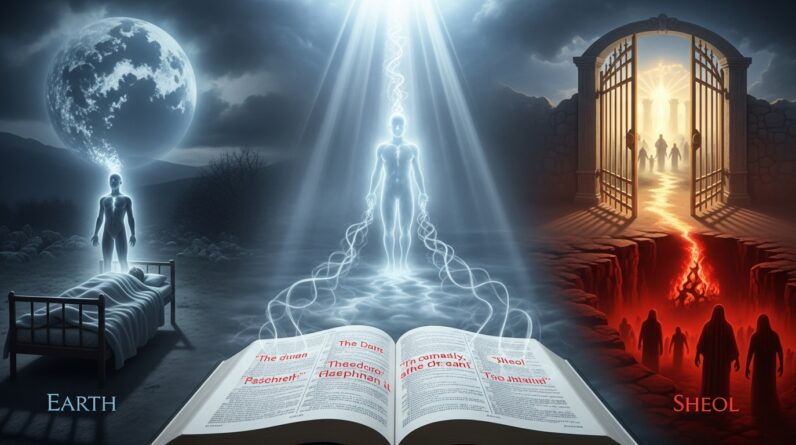
You may have heard sermons, read commentaries, or seen online debates that assert demons are already chained in hell—or you may have heard the opposite, that they roam freely. This question matters because it shapes how you understand spiritual warfare, fear, hope, and God’s sovereignty. Your response to temptation, your prayer life, and the courage you feel to share the gospel are all influenced by how you picture the present authority of evil and the future judgment God promises.
The Bible is not primarily a manual for sensational speculation; it is God’s revelation for faith and life. When you ask “Are demons in hell right now?” you are asking a theological and pastoral question: what do Scripture and Christ-centered truth tell you about God’s purpose, protection, and promise in the face of evil? For a fuller look at related teachings on afterlife and judgment, see our article Heaven and Hell Explained: What the Bible Really Says About Eternity.
This article walks you carefully through the Bible’s relevant passages—so that you can move from anxious curiosity toward confident trust in God’s sovereignty and Christ’s victory. You will get clear explanations, practical application, and pastoral encouragement to live faithfully today.
Are Demons In Hell Right Now?
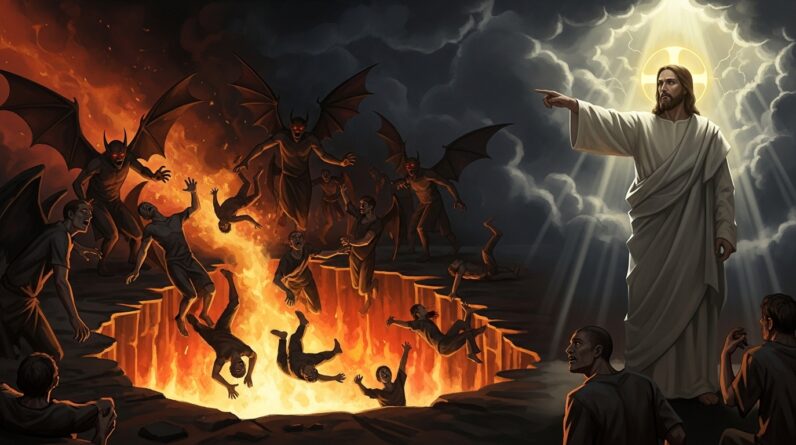
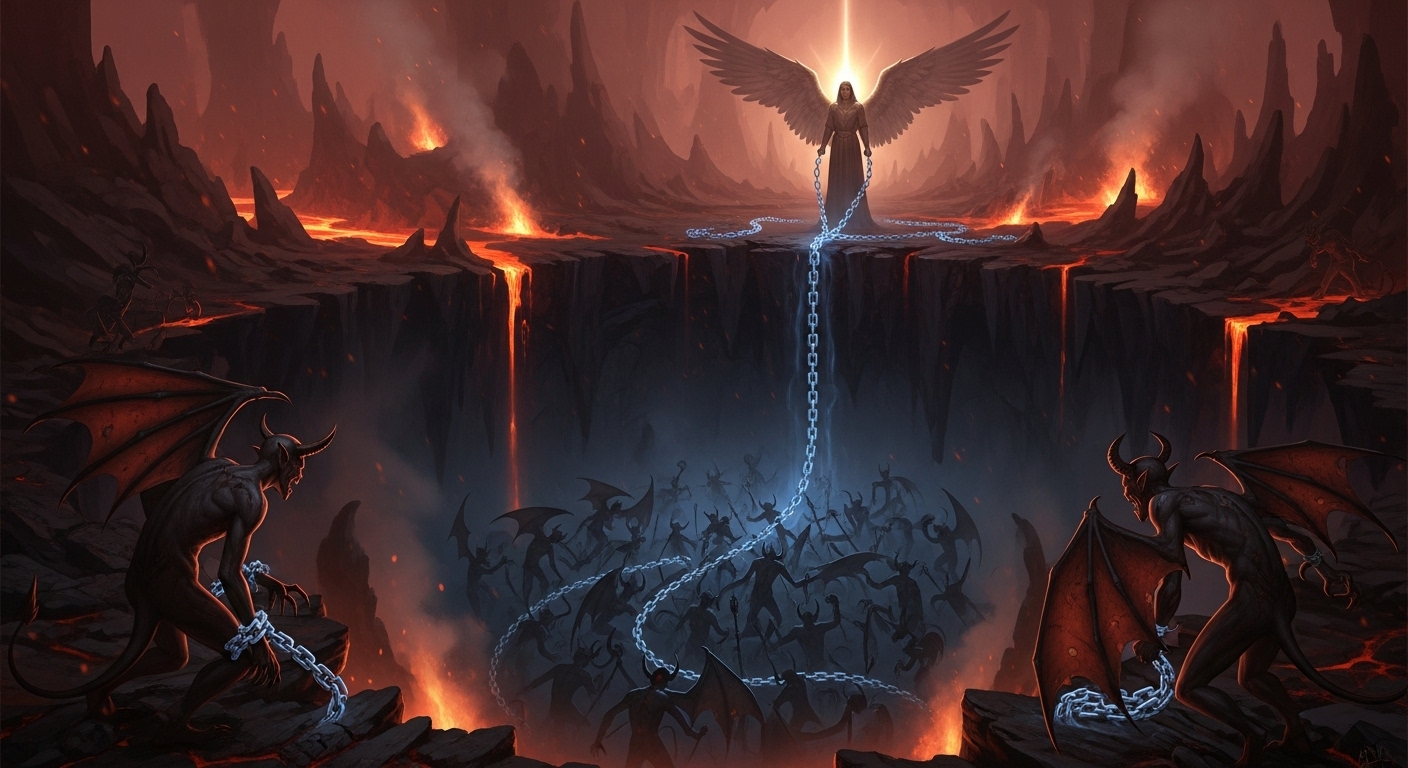
In simple terms: Scripture teaches that certain fallen angels are punished and restrained, but the final and full judgment of all demonic forces awaits God’s appointed time under Christ’s authority. Jude 1:6 speaks of angels kept in chains for judgment, and Revelation 20:1–3 describes a future binding of Satan for a thousand years. Taken together, these passages show God’s righteous action against rebellion and His progressive carrying out of justice, but they do not require you to conclude that every demonic being is currently confined in hell.
The biblical meaning is pastoral and purposive: God is sovereign over evil, He restrains what needs restraining for His purposes, and He promises ultimate vindication for Christ and His people. That truth affects how you pray, how you resist temptation, and how you keep faith in suffering. Christ remains the center—His cross, resurrection, and ascension define the victory over Satan and sin.
WHAT DOES THE BIBLE SAY ABOUT ARE DEMONS IN HELL RIGHT NOW?
Directly: Jude 1:6 and Revelation 20:1–3 indicate restraint and future binding, not a single moment that collapses all demonic activity into present-day hell. Read plainly, Jude tells of angels kept in gloomy chains awaiting judgment, and Revelation narrates an angel binding the dragon (Satan) for a thousand years. Neither passage says that all demons are now in hell with no access to the world. Scripture elsewhere shows demonic activity in Jesus’ earthly ministry (for example Luke 8:26–39), and the New Testament warns believers to be alert because the enemy prowls (for example 1 Peter 5:8). So the Bible presents a tension: God restrains and will finally judge, yet there is present spiritual opposition that Christ already decisively overcame.
📖 BIBLE FOUNDATION
Quoted verses (NIV):
- Jude 1:6 — “And the angels who did not keep their positions of authority but abandoned their proper dwelling—these he has kept in darkness, bound with everlasting chains for judgment on the great Day.” Jude 1:6
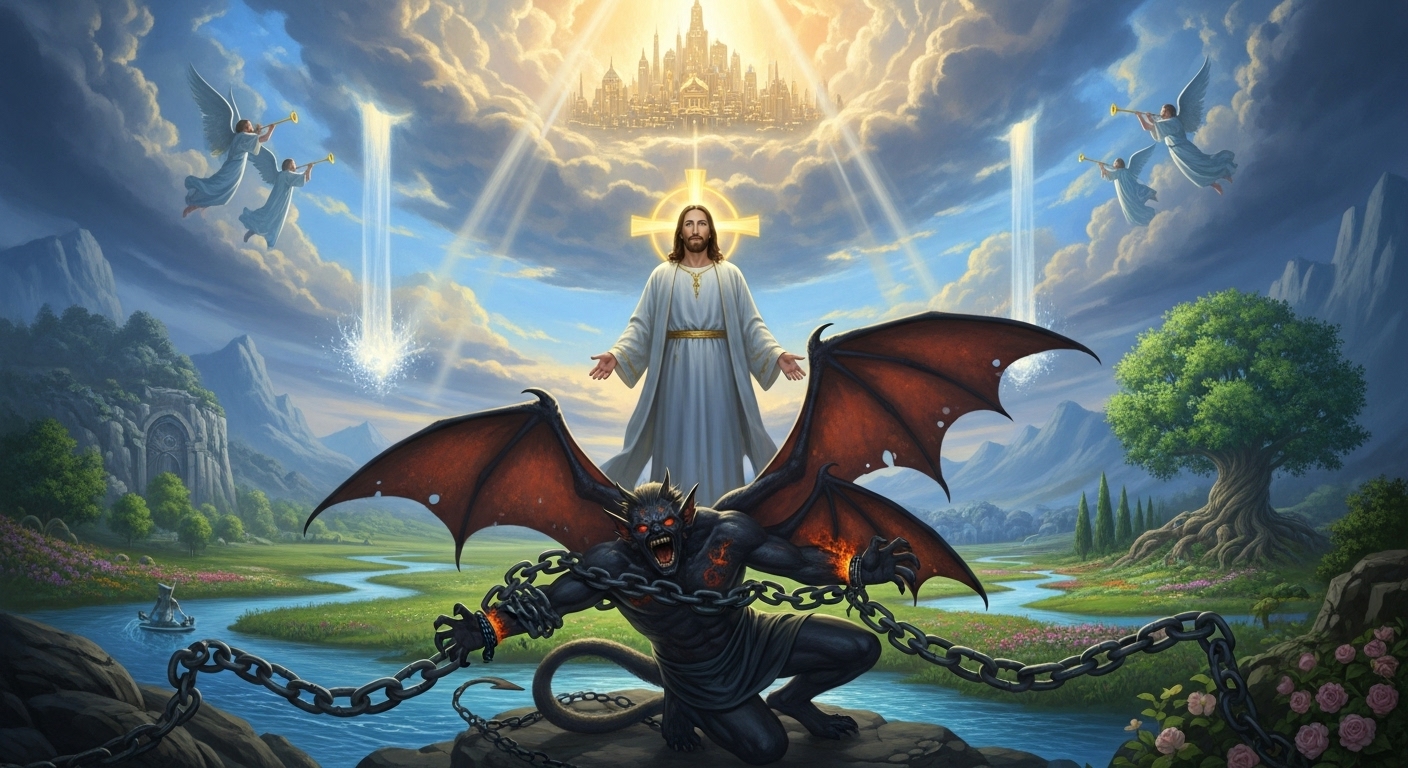
- Revelation 20:1–3 — “And I saw an angel coming down out of heaven, having the key to the Abyss and holding in his hand a great chain. He seized the dragon, that ancient serpent, who is the devil, or Satan, and bound him for a thousand years. He threw him into the Abyss, closed it and sealed it over him, to keep him from deceiving the nations anymore until the thousand years were ended.” Revelation 20:1-3
Speaker, audience, and context:
- Jude 1:6: Speaker — Jude, the brother of James (and likely of Jesus), writing to a mixed audience of believers facing false teachers. Audience — early Christians challenged by immoral teachers and who needed reassurance about God’s judgment and the certainty of His justice. Historical context — a short letter written in the late first century urging believers to defend the faith and to remember that God judges rebellion, with examples from Scripture and tradition. Jude uses nocturnal imagery of angels kept in darkness to emphasize certain and severe divine judgement.
- Revelation 20:1–3: Speaker — the seer John, writing under inspiration about visions he received of Christ’s ultimate triumph. Audience — the seven churches in Asia Minor and, by extension, all Christians who needed perseverance and hope amid persecution. Historical context — Revelation is apocalyptic literature written near the close of the first century; its imagery is symbolic, aimed at encouraging faithfulness under trial. Revelation 20 appears in the final sequence of judgment and renewal; it depicts a future binding of Satan that prepares the way for Christ’s final judgment and the new creation.
Historical and biblical context combined: both Jude and Revelation use strong, sometimes symbolic language to assure believers that rebel spiritual forces are not beyond God’s control. Jude draws from Jewish-Christian traditions that emphasize divine retribution against celestial rebels, while Revelation situates the binding of Satan within God’s eschatological plan—Christ’s victory unfolding toward final restoration. Both passages function pastoraly: they strengthen confidence in God’s righteous governance even when evil appears rampant.
UNDERSTANDING GOD’S PURPOSE, PROTECTION, AND PROMISE
At the heart of these texts is a consistent theological truth: God is sovereign over spiritual powers. That sovereignty serves a purpose: to accomplish redemption through Christ and to protect the unfolding of God’s covenant promises until the appointed time. God’s protection takes many forms—some visible, some hidden—and it is guided by His purposes rather than by human fear or superstition.
God’s purpose: He will judge rebellion and restore creation. The restraint of certain angels and the future binding of Satan serve the purpose of carrying out God’s redemptive timeline, ensuring that human history leads toward the consummation in Christ.
God’s protection: God’s protective rule is not a promise that evil will be absent now; rather, it is the guarantee that evil will not ultimately thwart His plan. Christ’s work ensures that you can live in hope, resisting temptation and proclaiming the gospel without panic.
God’s promise: The final promise is the eradication of evil and the renewal of creation. Those promises are anchored in the resurrection of Christ and the victory He secured. Your faith rests in that promise, which shapes how you engage with fear, spiritual anxiety, and the call to faithful witness.
This framework avoids speculative fantasies about dates or secret whereabouts of every demonic being. Scripture calls you to trust God’s timing, to resist the enemy with sober vigilance (see 1 Peter 5:8–9), and to rest in Christ’s ultimate victory (1 Corinthians 15:24–26).
🌊 GOING DEEPER — BIBLICAL CONTEXT
To go deeper, compare Jude and Revelation with other scriptural passages that help you form a consistent theological picture.
Cross-references:
- 2 Peter 2:4 — Peter speaks of God not sparing angels when they sinned, but putting them into chains of darkness to be held for judgment.
- Matthew 25:41 — Jesus refers to the eternal fire prepared for the devil and his angels.
- Luke 10:18 — Jesus says he saw Satan fall like lightning from heaven, indicating a decisive defeat.
- 1 Corinthians 15:24–26 — Paul describes Christ putting all enemies under his feet, culminating in the destruction of death.
- Ephesians 2:2 — Paul identifies the ruler of the present spiritual darkness, recognizing present influence but not ultimate power.
A biblical narrative example: Consider Jonah’s mission to Nineveh (see Jonah). God limits and redirects the exercise of power by sovereignly choosing mercy over immediate destruction for the repentant city. The point: God’s exercise of power, whether in judgment or restraint, serves His covenantal purposes. Similarly, God restrains or times His punishment of rebellious angels in a manner that fits His redemptive plan.
Theological continuity: Scripture consistently teaches that evil is real and active now but ultimately under God’s control. There is no contradiction between the presence of demonic activity and the assurance that certain angels are held for judgment. The New Testament repeatedly balances warnings about present spiritual danger with confident promises about Christ’s consummating rule.
💡 MODERN CONNECTION — FAITH, ANXIETY, AND DAILY LIFE
How does all this affect your daily life? First, understanding God’s sovereignty over demonic powers should reduce irrational fear and drive you to spiritual disciplines that strengthen faith: Scripture reading, prayer, corporate worship, and wise fellowship. You are not called to obsess over maps of hell or timelines; you are called to be vigilant, loving, and bold in witness.
When you feel anxious about spiritual forces, remind yourself of Christ’s victory on the cross and the presence of the Spirit who empowers you to resist evil. Practice discernment: test teachings by Scripture (1 John 4:1), and avoid sensational content that stokes fear rather than faith. Put your energy into acts of obedience—serving the poor, sharing the gospel, forgiving—and trust God to manage the cosmic realities beyond your control.
Practical daily trust also means using Scripture to reframe fearful thoughts, praying for protection without making every prayer a speculative plea about demons, and engaging your community for mutual support. The Christian life is lived between the already of Christ’s victory and the not-yet of the final consummation.

❤️ PRACTICAL APPLICATION
- Read and memorize key passages: focus on Christ’s victory (for example Colossians 2:15) to anchor your confidence.
- Pray with both realism and hope: confess fear, ask for protection, and affirm God’s sovereignty.
- Practice spiritual disciplines: regular Bible study, community worship, and service direct your attention to God’s kingdom work rather than to fear.
- Exercise discernment: avoid sensationalist media and prioritize trustworthy biblical teaching.
- Serve and witness courageously: let the reality of Christ’s victory motivate you to love your neighbor and share the gospel.
🪞 FAITH REFLECTION BOX
Take a moment to reflect: where do you place your trust when fear arises—knowledge about spiritual beings, or the finished work of Christ? Breathe, pray, and name one truth from Scripture that you will hold onto today to replace anxious thoughts.
A PRACTICAL TAKEAWAY
- Jude 1:6 and Revelation 20:1–3 teach restraint and future binding of certain rebellious angels under God’s justice.
- Scripture balances warnings about present demonic activity with the assurance of Christ’s decisive victory.
- God’s sovereignty means He times and limits evil for His redemptive purposes, not necessarily that every demon is presently in hell.
- Your security is in Christ, not in secret knowledge of spiritual geography.
- Live courageously with healthy vigilance: pray, obey, and witness.
❓Q&A — BIBLE ANSWERS EXPLAINED
Q1 — Do Jude 1:6 and Revelation 20:1–3 teach that all demons are already in hell?
A1 — No. Jude refers to certain angels kept in darkness for judgment (Jude 1:6), and Revelation depicts a future binding of Satan (Revelation 20:1-3). Together they show God’s judgment but do not say all demons are presently confined to hell; other passages indicate ongoing demonic activity (Luke 8:26–39).
Q2 — How should I respond when I feel anxious about spiritual forces?
A2 — Anchor yourself in Christ’s victory and use spiritual practices: pray, read Scripture, seek community, and resist fear with truth (1 Peter 5:8–9). Trust that God restrains and will ultimately judge evil (1 Corinthians 15:24–26).
Q3 — Is thinking that demons are already in hell a common misconception?
A3 — Yes—assuming all demons are imprisoned right now simplifies Scripture and can lead to complacency or false security. Scripture warns of current spiritual opposition (Ephesians 6:12) and calls for sober vigilance and trust in God’s timing (James 4:7).
CONCLUSION & PRAYER
In conclusion, Scripture offers you a balanced hope: God restrains evil and has reserved final judgment for His appointed time. Jude 1:6 and Revelation 20:1–3 affirm God’s justice and serve to strengthen your confidence in Christ’s ultimate victory. Rather than fueling fear or curiosity about where each demonic being resides, let these passages deepen your trust in God’s sovereign plan and motivate faithful living today.
Prayer: Lord Jesus, thank you that you have triumphed over sin, death, and the powers of darkness. Help me to trust your sovereign timing, to resist fear, and to live boldly for your kingdom. Give me wisdom, courage, and a heart to serve others in your name. Amen.
📖 RELATED BIBLE TEACHINGS
- Heaven and Hell — What the Bible Really Teaches
- Afterlife and Judgment — Biblical Hope and Clarity
- Salvation and Assurance — Living Secure in Christ
 Acknowledgment: All Bible verses referenced in this article were accessed via Bible Gateway (or Bible Hub).
 Want to explore more?
  Dive into our new post on Why Jesus? and experience the
  life-changing truth of the Gospel!