


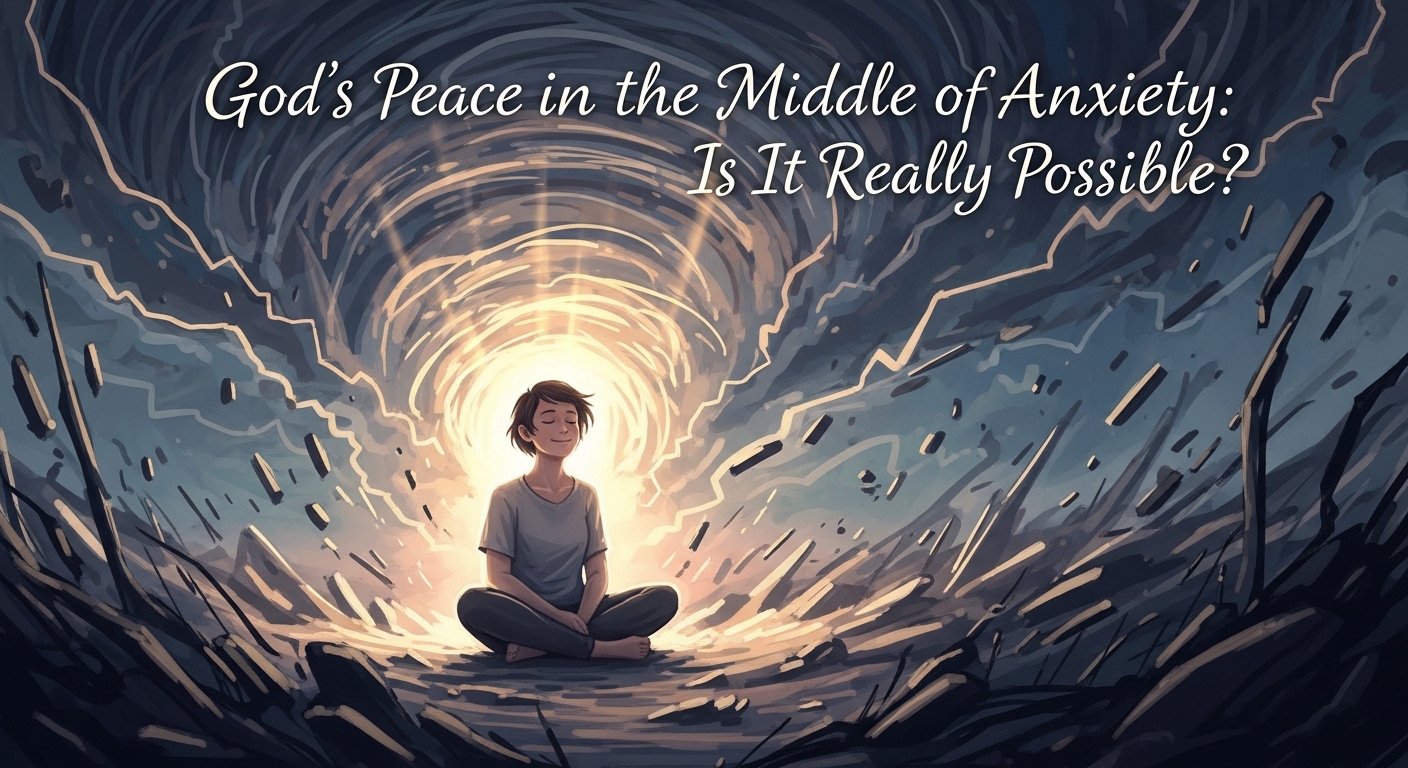
God’s Peace in the Middle of Anxiety: Is It Really Possible?
Introduction
You feel tension in your chest even before the day starts. Your mind runs ahead to worst-case scenarios, your stomach knots at ordinary tasks, and prayer sometimes feels like a polite conversation you’re too tired to finish. You’re not imagining this — anxiety can be relentless, even for people who love God and pray faithfully.
You’re not alone in this. Many believers discover that anxiety can return even after prayer, seasons of feeling close to God, or spiritual breakthroughs. That doesn’t mean your faith has failed; it means you’re human, living in a broken world that presses on the heart in persistent ways.
There is help. God’s presence is not a distant idea; Scripture points to a peace that meets you amid worry. You can begin to experience that peace today, and this article will walk you through what that looks like, how to practice it, and where real, lasting change tends to happen.
Sponsored recommendation


Why This Feels So Hard
You’re exhausted. Anxiety drains energy not only from your body but from your mind and spirit. Worry is repetitive by design: it loops through the same scenarios, rehearses the same fears, and quietly convinces you that safety depends on your vigilance. That mental exhaustion makes it harder to think theologically, harder to pray, and harder to rest in God.
You also face cycles. Maybe you’ve had nights of calm after prayer only to find the old pattern resurface next month. Those repeated cycles make you doubt whether peace is durable. Fear of losing control presses in: when you’ve had seasons where things spiraled, it’s natural to cling to the illusion that more control equals safety.
Because of all this, you often feel misunderstood. You may think, “If I had more faith, I wouldn’t feel this way.” But faith doesn’t mean the absence of struggle. The Bible shows many faithful people who wrestled deeply with fear, doubt, and heavy emotion. The hard truth is this: anxiety is both a spiritual and human experience. Recognizing that is the first step toward compassionate, effective change.

What Scripture Shows Us to Do
Scripture gives practical direction framed by gospel reality — commands, invitations, promises, and real examples of people who walked through fear.
- A clear command: Jesus tells you, “Do not be anxious about your life” in a context that calls you to reorient your trust toward your Father rather than your own plans. See Matthew 6:25 for the exact charge and context: Matthew 6:25.
- A compassionate invitation: The New Testament invites you to bring your cares to God. You’re told to cast your anxieties on him because he cares for you. This is a gentle, actionable invitation you can accept right now: 1 Peter 5:7.
- A promise of peace: Paul gives a promise that God’s peace — a peace that transcends human understanding — can guard your heart and mind when you pray and present your requests with thanksgiving. This is not therapy-only language; it’s spiritual assurance you can claim: Philippians 4:6-7.
- Approach and rest: Hebrews encourages you to approach God’s throne with confidence so you can receive mercy and find grace to help in time of need. That picture is life-changing for how you come to God in anxious seasons: Hebrews 4:16.
- A real-life example: David, in the Psalms, expresses honest fear and asks God for deliverance again and again — and through that honesty he experiences God’s rescue and comfort. You can see both his raw emotion and his trust in Psalm 34:4: Psalm 34:4.
Scripture does not minimize your feelings. Instead, it names your experience and gives a pathway: be honest with God, bring your cares, practice prayer and gratitude, and trust the Spirit to steady your heart.
A Simple Way to Practice Faith Right Now
You don’t need an hour or a perfect environment to start practicing faith that meets anxiety. Here are a few small, practical rhythms you can try that fuse the spiritual and the simple.
- Breathe and pray: Take 60 seconds to breathe slowly in and out. On the inhale, silently say, “Lord, I need you.” On the exhale, pray, “Help me rest in you.” Repeat three times. This combines physiological calming with a short, honest prayer.
- Short verse meditation: Choose one short verse you can hold through the day. For example, claim Isaiah 26:3: “[You] will keep in perfect peace those whose minds are steadfast, because they trust in you.” Read it once slowly: Isaiah 26:3. Repeat it when worry begins.
- Surrender statement: Speak a one-sentence surrender: “Lord, I give you this worry and choose to trust You with the outcome.” Say it out loud or silently whenever an anxious thought grabs you.
- Gratitude pivot: When fearful thinking begins, deliberately list one small thing you’re thankful for — a warm cup of tea, a steady friend, a roof overhead — then thank God for that thing. Gratitude reorients the mind toward God’s gifts.
These practices are sticky because they’re brief and repeatable. You can do them at your desk, in the car (when parked), or before sleep. Over time they teach your nervous system and your soul a new narrative about who holds your life.

Where Real Change Slowly Happens
Real, lasting change usually doesn’t arrive as one grand moment. Instead, change is gradual, messy, and grace-driven.
You’ll notice small shifts first: a shorter reaction to worry, a prayer that doesn’t feel hollow, a night of sleep that’s less fragmented. Those are signs your nervous system and your spirit are learning new rhythms.
Change tends to follow habit formation. When you create short, daily spiritual practices — a verse repeated each morning, a one-minute surrender at first alarm, a ten-minute honest prayer before bed — you’re stacking small wins. Over weeks and months these wins build resilience and a renewed orientation toward God.
Also expect setbacks. Grace doesn’t erase setbacks; it accompanies you through them. When anxiety returns, treat it as part of the process, not proof of failure. Get curious about what triggered you, use the small practices above, and return to God with honesty.
Finally, remember growth requires community. You weren’t meant to do this alone. Trusted friends, a pastor, or a Christian counselor can provide perspective and encouragement while you learn new habits. Where slow, steady spiritual formation meets wise support, your inner life gradually becomes more stable.
Learn the Bigger Picture of Mental Health & Faith
Your experience of anxiety sits within a larger theological and practical picture. God created you as an embodied person — mind, soul, and body — and cares for every part. That means spiritual practices matter, but so do sleep, nutrition, movement, and professional help when needed. Faith and mental health are not opposed; they feed each other.
For a fuller biblical foundation on how God brings peace and stability to our inner life, see Mental Health and Faith: Finding Peace and Strength Through God. That resource lays out theological support for integrating clinical care and spiritual formation so you don’t have to choose between honest medical help and deep spiritual trust.
Other Biblical Stories That Give Hope
It helps to see biblical characters who faced intense pressure and found God present in the struggle.
- David — In the Psalms, David often voices raw fear and then turns those feelings into prayer. His life shows that honesty with God and persistent reliance can coexist with deep distress. See Psalm 23:4 where David acknowledges danger and yet trusts God’s presence: Psalm 23:4.
- Joseph — Wrongly accused and imprisoned, Joseph experienced prolonged uncertainty. His patience and trust in God’s sovereign purposes eventually led to restoration. Consider Genesis 50:20 where Joseph interprets his suffering within God’s redemptive plan: Genesis 50:20.
- Job — Job’s anguish is biblical honesty at its rawest. He demands answers, wrestles with God, and yet is sustained by a steadfast relationship with the Lord. His story models faithful lament in suffering; see Job 23:10 for a note of hope in the middle of trial: Job 23:10.
These characters don’t give glib answers. They show you that faith can be deeply tested and still be real. Their stories provide language and permission to bring your own fear to God.

A Short Prayer for This Moment
Lord, you know the worry that sits with me right now. I bring these anxious thoughts to you and ask for your calm to meet my racing heart. Help me to remember your promises, to breathe in your presence, and to trust that you care for me. Give me small, steady steps forward today — help, wisdom, and a quieting of fear. In Jesus’ name, amen.
Is Peace Really Possible?
Theologically, yes: peace is possible because God himself is the source of peace. The New Testament promises a peace that surpasses human understanding when you present your requests to God in prayer with thanksgiving. This isn’t airy optimism; it’s a supernatural reality grounded in the resurrection and the Spirit’s work. Read Paul’s promise in Philippians 4:6-7 — it links prayer, thanksgiving, and God’s guarding presence.
Practically, peace looks like fewer spirals, more moments of trust, and a steadier hope even if fear still appears. You may never be free from anxious thoughts entirely this side of heaven, but God promises to walk with you through them. Scripture teaches both a present peace and a future culmination when God will wipe away all distress. Claim both the present help and the future hope.
Final Encouragement
You don’t have to “fix” yourself before you come to God. He meets you in the middle of your messy feelings. Small, consistent spiritual practices combined with wise support and, if needed, professional care, create space for God’s peace to grow in your life. Be patient with yourself. Show up. Keep returning to simple practices of prayer, breath, and Scripture. Over time you’ll notice God shaping your inner life in quiet, powerful ways.
If you want a biblical roadmap for integrating mental health and spiritual formation, remember: For a fuller biblical foundation on how God brings peace and stability to our inner life, see Mental Health and Faith: Finding Peace and Strength Through God.
🙏 Read Next
If this encouraged you, continue here:
- Mental Health and Faith: Finding Peace and Strength Through God.
- When Anxiety Feels Overwhelming: Trusting God One Day at a Time.
- What the Bible Says to Do When Worry Won’t Go Away.
Sponsored recommendation
Acknowledgment: All Bible verses referenced in this article were accessed via Bible Gateway (or Bible Hub).
“Want to explore more? Check out our latest post on Why Jesus? and discover the life-changing truth of the Gospel!”