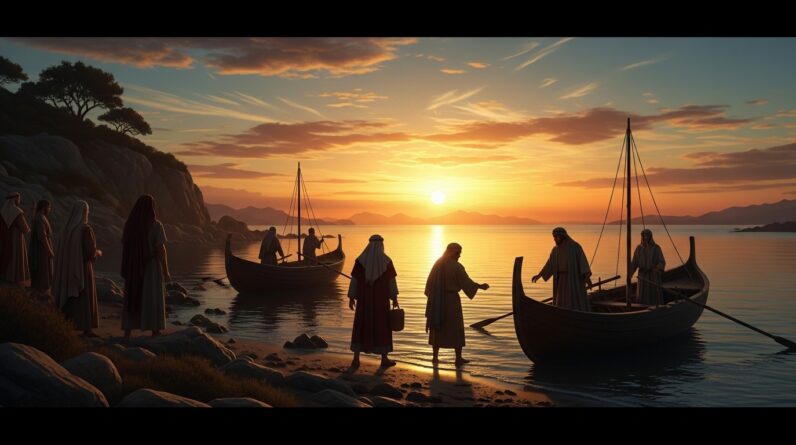


Pentecost didn’t happen in isolation—it was the fulfillment of everything Jesus promised after His resurrection and ascension. To understand the full story, follow the timeline in What Happened After Jesus Rose From the Dead? (Full Timeline Explained) and learn why Jesus had to leave in Why Did Jesus Ascend Into Heaven? (Biblical Reasons Explained).
Quick answer: At Pentecost, the Holy Spirit came upon believers, empowering them to speak boldly, witness effectively, and launch the church into mission. You’ll find this dramatic moment recorded in Acts 2:1-4, with the short verse spotlight often placed on Acts 2:4.
This article walks you through the story, what it meant to the first Christians, how it connects with Old Testament prophecy, and what it means for your life today. You’ll get simple explanations, practical application, and recommended images to help illustrate the scene.

A quick verse to anchor you
The central verse many people quote is Acts 2:4: “All of them were filled with the Holy Spirit and began to speak in other tongues as the Spirit enabled them.” This short sentence captures the heart of Pentecost: the Spirit’s arrival, the filling of believers, and the outward sign of praise and proclamation.
Why Pentecost mattered
Pentecost mattered because it marked a decisive shift. Before this moment, Jesus had died, risen, and ascended. The followers were waiting. At Pentecost, the waiting ended, and the mission began in power. This was not only a spiritual encounter but a communal, public launch of the church into its identity and calling. The event gave the early Christians boldness, supernatural gifts, and a way to cross cultural barriers. If you want to understand the beginnings of the Christian movement, Pentecost is the hinge moment.
Background: What is Pentecost?
Pentecost originally was a Jewish festival. It’s called the Feast of Weeks (Shavuot), celebrated fifty days after Passover. Jews from many nations came to Jerusalem for the festival, which explains why such a diverse crowd was on hand when the Spirit arrived. This historical and religious context matters because Pentecost would have been a time when devout Jews expected God’s blessing and remembered God’s acts of salvation history. The festival setting made the event public and ensured that people from many languages and lands would witness the Spirit’s work, which is part of why the story unfolds exactly the way it does in Acts 2:5-13.
WHY Pentecost happened
This moment was part of God’s plan, which becomes clearer in Why Did Jesus Ascend Into Heaven? (Biblical Reasons Explained).
Affiliate disclosure: This article contains affiliate links. As an Amazon Associate I earn from qualifying purchases. If you buy through these links, BibleStoriesHub may earn a small commission at no extra cost to you. This does not affect which resources we recommend.
The scene: Acts 2 in simple terms
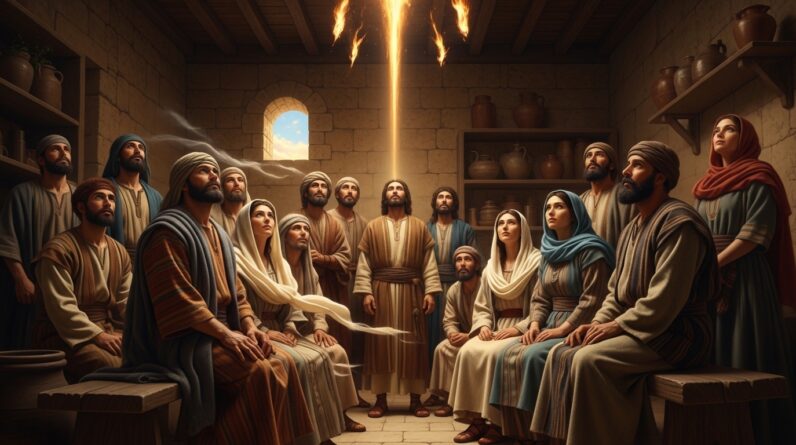
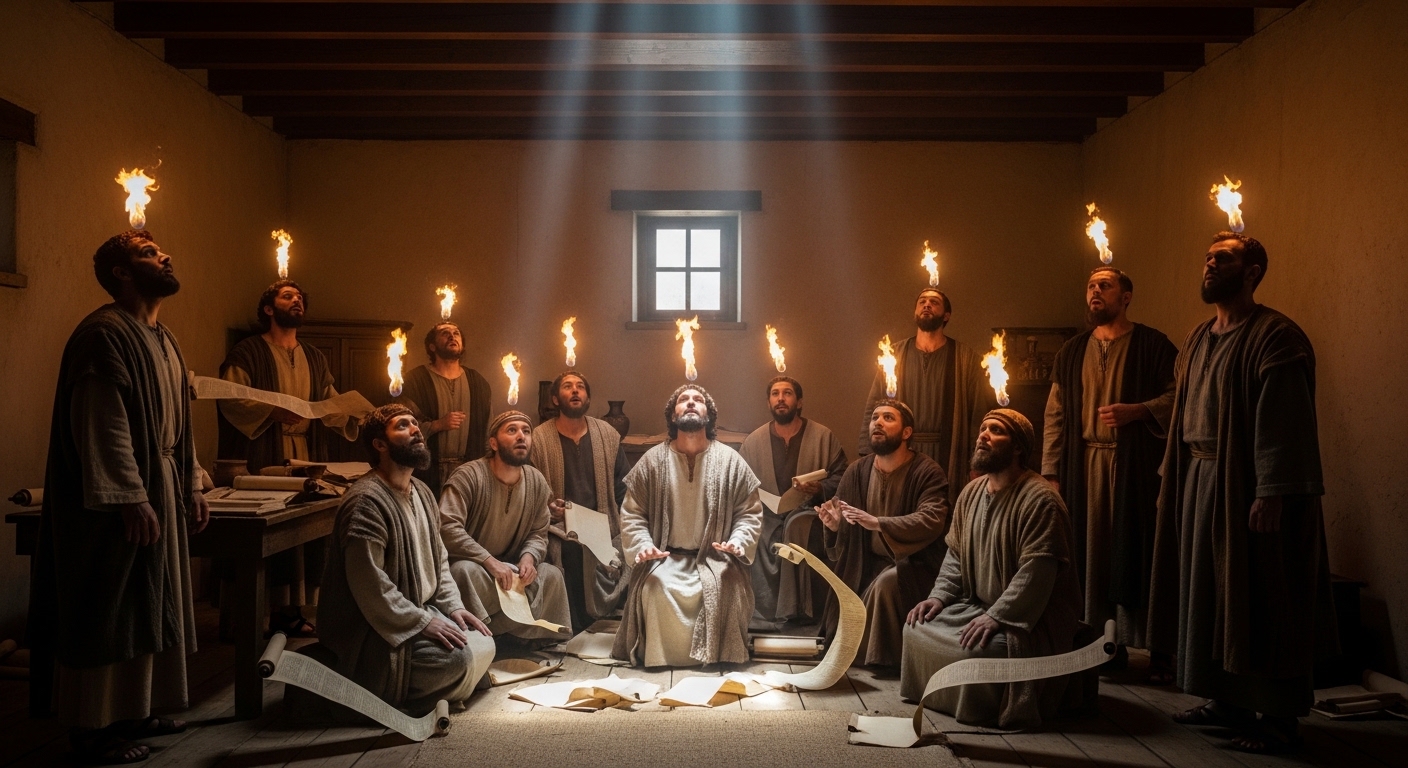
Luke, the writer of Acts, tells the story in vivid detail. The followers were in one place when suddenly there came a sound like a violent wind, tongues of fire appeared, and the disciples were filled with the Holy Spirit. As the Spirit filled them, they began to speak in other tongues—languages they had not previously known—so that visitors from many nations heard them in their own languages. That sound and those languages drew a crowd, some amazed, some confused, and some mocking. You can read the full narrative in Acts 2:1-13.
The HOLY SPIRIT
To better understand who the Holy Spirit is, read Who Is the Holy Spirit? (Simple Bible Explanation).
The dramatic signs: wind, fire, and tongues
Luke uses three vivid images: a rushing wind, tongues of fire, and speaking in other languages. Each sign carries meaning. Wind often represents God’s invisible power (note how the Hebrew word for spirit, ruach, can mean wind, breath, or spirit). Fire frequently symbolizes purification and God’s presence. Speaking in other tongues demonstrates that God was making his message accessible across cultural and linguistic barriers. Together, these signs showed that something new and public was happening—a fresh outpouring of God’s presence and power that changed the community forever.
The POWER / ROLE of the Holy Spirit
You can also explore this further in What Does The Holy Spirit Do? (7 Powerful Roles Explained).
Peter stands up: the first sermon after Pentecost
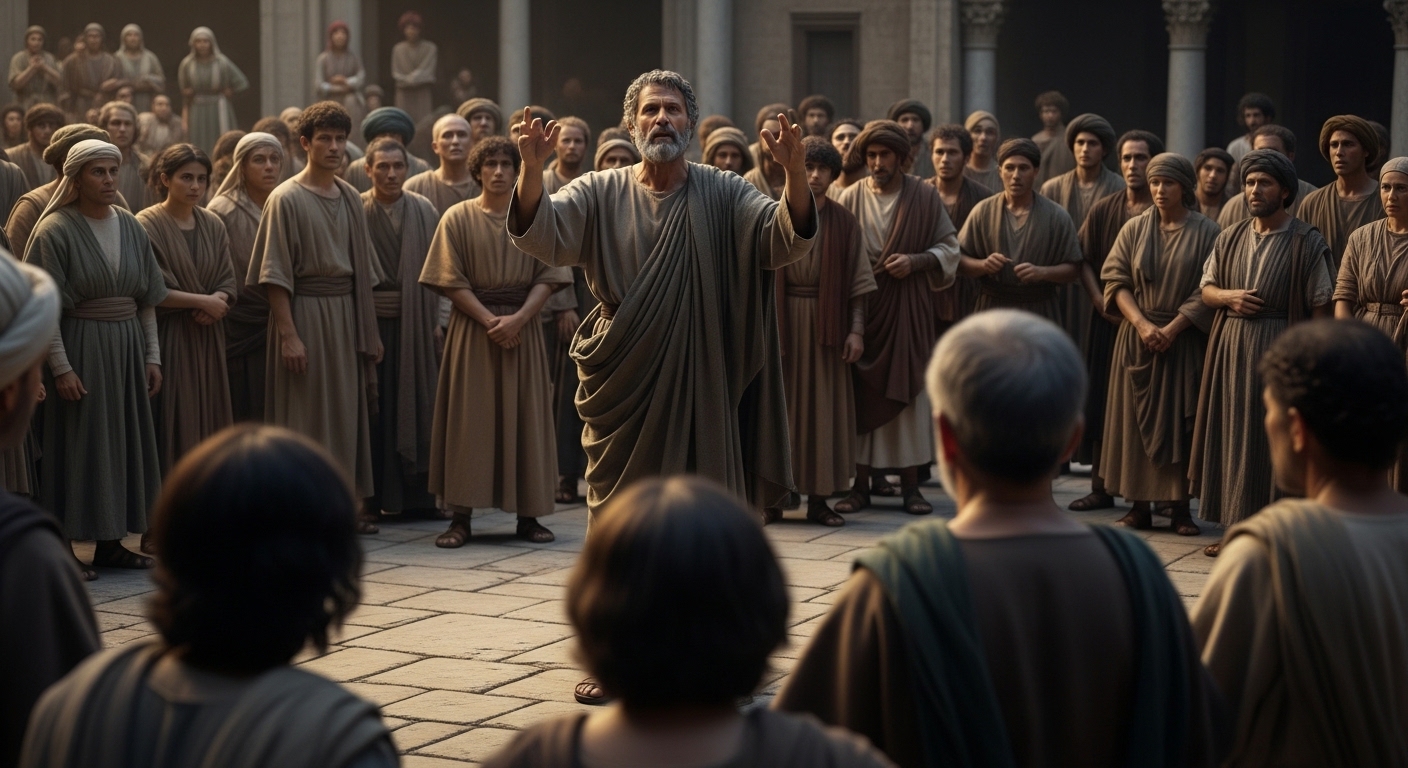
When the crowd gathered and wondered what was happening, Peter stood and explained. He argued that this was the fulfillment of prophecy—not random magic or drunkenness. Peter quoted the prophet Joel’s promise that God would pour out his Spirit, and then he connected the events to Jesus’ life, death, resurrection, and ascension. His sermon is a key portion of Acts and can be read in Acts 2:14-21. Peter’s message was both interpretive and invitational: he interpreted the phenomenon as God’s work and invited people to repent and be baptized.
Joel’s prophecy and the continuity of God’s plan
Peter quoted Joel 2:28-32 to show that the Spirit’s outpouring at Pentecost was not a brand new plan with no precedent; it was part of God’s long narrative with Israel. Joel’s words promised that sons, daughters, old men, young men, and even servants would receive God’s Spirit. By connecting Pentecost to Joel, Peter showed that the church’s birth was rooted in God’s promises and that the Holy Spirit’s work was meant for a wide and diverse community.
CONNECTION to Jesus
Pentecost is directly connected to what Jesus accomplished, as explained in The Meaning of the Resurrection of Jesus Christ.
What Peter called people to do
After explaining the event, Peter called the listeners to respond. He declared that the very man they had crucified—Jesus—was both Lord and Christ, and he urged them to repent and be baptized. Peter’s call led to a powerful communal response: about three thousand people were baptized that day and joined the new movement of believers. You can read Peter’s challenge and the result in Acts 2:36-41. This moment shows how the Spirit’s work and the proclamation of the gospel naturally lead to conversion and community.
What “being filled with the Spirit” meant then—and what it means now
In Acts, “being filled with the Holy Spirit” often includes empowerment for witness, boldness, and spiritual gifts. At Pentecost, the filling produced speech in other languages, which allowed the gospel to be heard by many nationalities. But the filling also gave courage to speak openly and convincingly about Jesus in hostile or confused surroundings. For you today, being filled with the Spirit often means being empowered to live differently, to love more fully, to serve with wisdom, and to speak boldly about Jesus as opportunities arise. The Spirit equips you for God’s mission in your everyday life.
Gifts, fruit, and mission: the Spirit’s work after Pentecost
After Pentecost, the Spirit’s work continued to show up in various ways: charismatic gifts (like tongues and prophecy), moral transformation (fruit of the Spirit), and a clear mission focus. The church in Acts is characterized by teaching, fellowship, breaking of bread, prayer, mutual care, and everyday witness. These are practical signs of Spirit-led life. The Spirit doesn’t just give spectacular experiences; he reshapes communities to reflect Jesus’ presence and purposes in the world.
Pentecost and the birth of the church
You can think of Pentecost as the church’s birthday because from that moment the followers of Jesus organized themselves, cared for each other, preached Jesus publicly, grew numerically, and formed the practices that would define Christian community. The early church didn’t immediately become perfect, but it did demonstrate remarkable unity, generosity, and zeal for the message of Jesus. That fresh sense of identity and mission was the Holy Spirit’s doing.
Common misunderstandings about Pentecost
People often misunderstand Pentecost in several ways. Some reduce it to merely emotional or theatrical experiences, ignoring its biblical purpose: empowerment for mission. Others treat tongues as the only valid sign of the Spirit’s presence, closing off the variety of ways the Spirit works. Still others separate Pentecost from the ongoing presence of the Spirit, as if God’s action was limited to a single historic moment. In fact, Pentecost was both a unique event and a pattern: the Spirit’s coming initiated a new reality that continues in varied and ongoing ways for the church and for believers like you.
How Pentecost fulfills prophecy and bridges testaments
Peter’s use of Joel shows you that Pentecost wasn’t a freak occurrence—God had promised an outpouring of his Spirit. That promise links the Old Testament hope with the New Testament reality. Pentecost is a hinge: it fulfills prophetic longing and inaugurates a new era where God’s presence is no longer tied only to a location or temple but is poured out on a people. This theological continuity helps you see God’s faithfulness across Scripture and invites you to participate in that ongoing story.
What Pentecost means for your life today
Practically, Pentecost invites you to expect God’s empowering presence in your daily life. It calls you to be bold in witness, creative in ministry, generous in community, and faithful in mission. Being filled with the Spirit shapes how you pray, how you serve, and how you share the gospel. It also encourages you to look for spiritual gifts, not as ends in themselves, but as ways to bless others and build the church. Pentecost is less about dramatic displays and more about the Spirit’s steady work in transforming lives and communities.
HOW people respond
If you’re wondering how this applies personally, read How To Receive The Holy Spirit (Biblical Guide).

How to live empowered: practical steps
If you want to follow the Spirit’s leading in your life, start with prayer and openness. Ask God to fill you, to give you courage, and to reveal how he wants to use you. Be part of a community that practices teaching, prayer, and accountability. Learn to listen—because the Spirit often speaks in quiet convictions rather than loud spectacles. Serve in small, practical ways that meet needs around you; service is a primary way the Spirit flows through believers. Finally, practice boldness in conversations about your faith—Pentecost gave the early church courage, and the Spirit still equips you for witness today.
Frequently asked questions about Pentecost
What exactly were the “tongues” spoken?
The crowd heard actual languages, so these tongues included known languages that allowed visitors to understand the message in their native tongue. The phenomenon served the mission by removing language barriers and pointing to universal access to the gospel.
Was Pentecost only for the apostles?
No. While the apostles were key leaders, the outpouring was on “all who were gathered” (Peter quotes Joel to show the Spirit is for sons, daughters, servants, and all ages). The Spirit’s gift is meant for the whole community, empowering many for various roles.
Is Pentecost the same as being saved?
Pentecost and salvation are connected but not identical. Pentecost marks the Spirit’s powerful presence and the start of the church’s public mission. Personal salvation involves repentance and faith, often accompanied by the Spirit’s work in a person’s life. Peter’s sermon and call to repent in Acts 2:36-41 show how proclamation, repentance, baptism, and Spirit-work come together.
Does the Spirit still give signs like tongues today?
Christians differ on this. Some see tongues and other gifts as ongoing; others view certain manifestations as primarily for the apostolic age. Either way, the core is the Spirit’s work in empowering, guiding, and transforming the church—gifts or no gifts.
The global and cultural impact of Pentecost
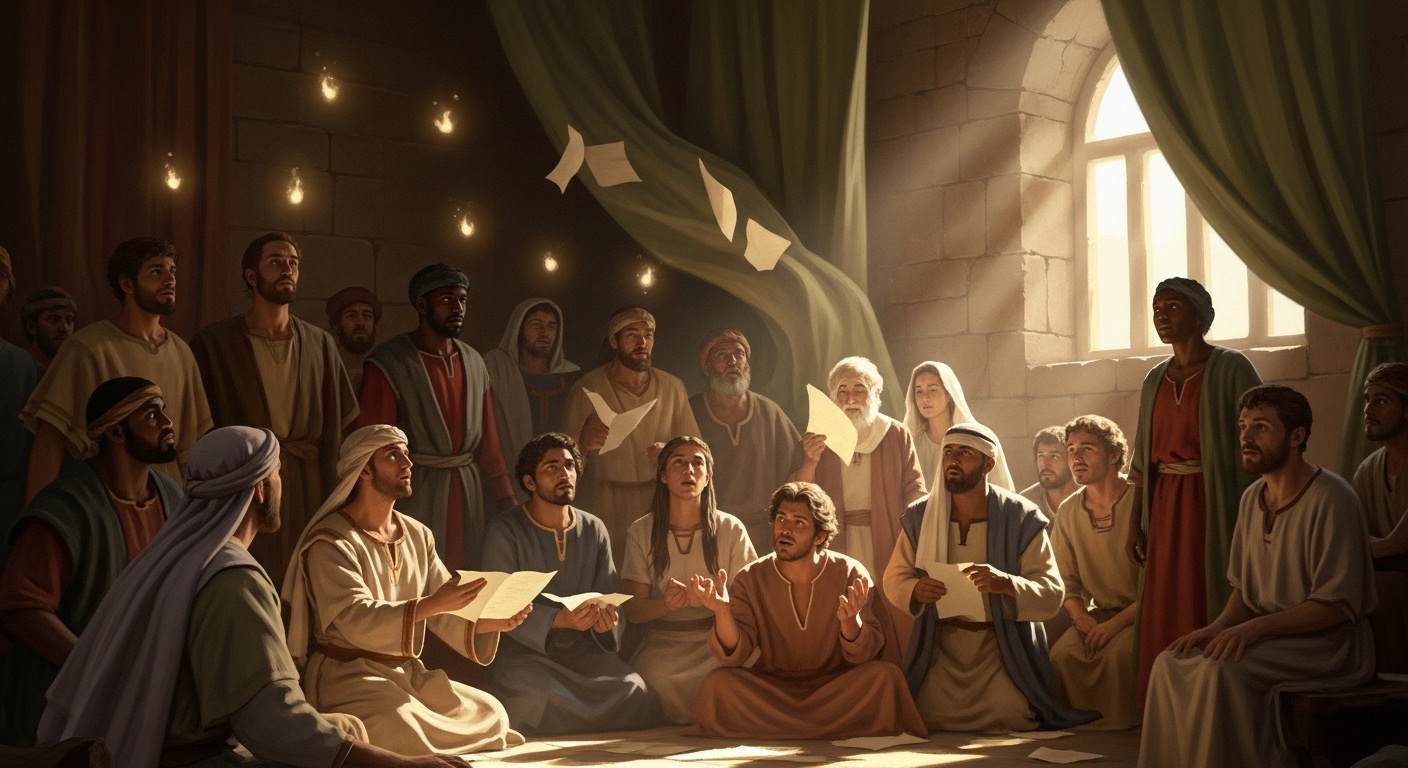
Because Pentecost involved many nationalities who heard the gospel in their own languages, it set the tone for the church’s global mission. The early church quickly became a movement that crossed ethnic, social, and geographical boundaries. Pentecost shows that God intends the gospel for all peoples, not just one ethnic or religious group. This global dimension remains central: your faith is part of a worldwide story of God redeeming people from every nation.
The difference between the Holy Spirit and the Son
Pentecost emphasizes the Spirit’s role. Jesus promised the Spirit to continue his work after his departure. The Spirit comforts, convicts, empowers, and dwells within believers. Where Jesus is the incarnate Word who revealed God’s face, the Spirit is God’s ongoing presence that makes Jesus known and applies his work to lives. If you want a short Bible anchor for the Spirit’s role, remember Jesus’ promise about the Helper, but when you quote Jesus’ words, provide the reference to help readers check for themselves (for example, see John 14:16-17 to learn how Jesus promised the Spirit to remain with believers).
How the early church lived after Pentecost
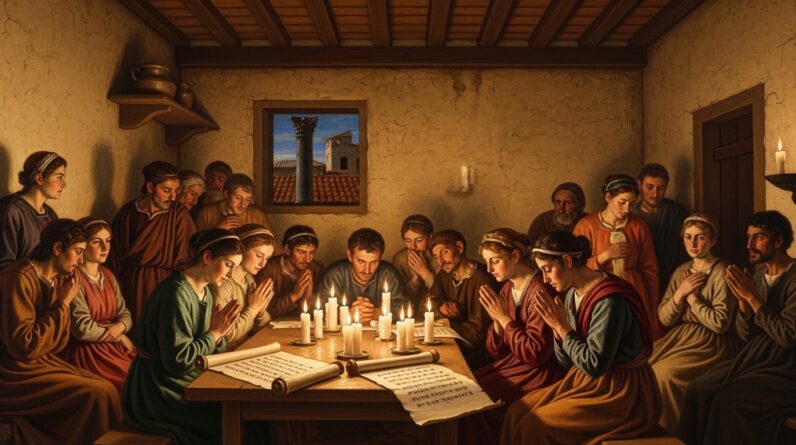
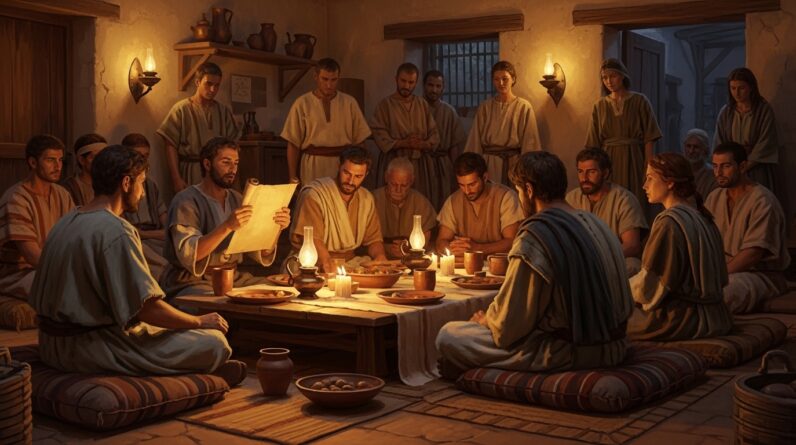
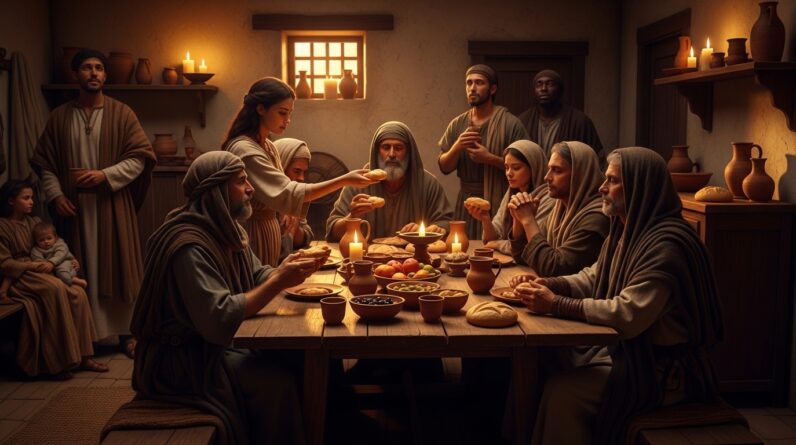
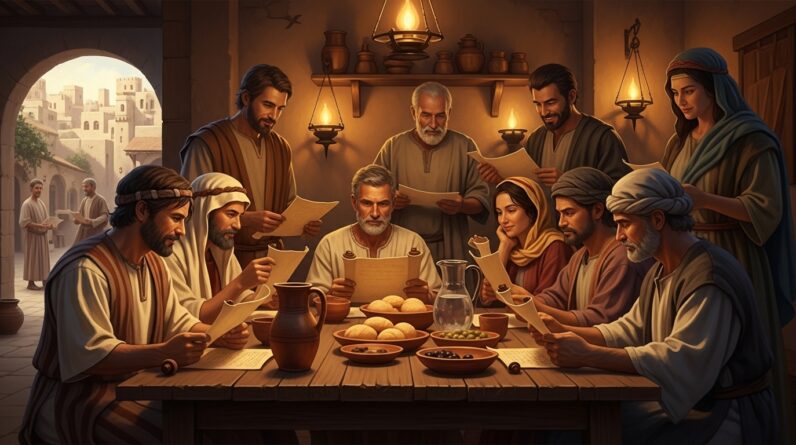
The narrative after Pentecost shows the early Christians devoted to teaching, fellowship, breaking bread, and prayer. They shared possessions, cared for the poor, and experienced favor with the people—an outward witness that attracted more converts. Acts describes this life in detail to show that the Spirit’s presence was not just for moments of ecstatic experience but for sustained community life and witness. If you want to see the Spirit at work in community, look to the practices of the early church described in Acts 2:42-47.
Misinterpretations to avoid
Be wary of reading Acts only through a single contemporary lens (e.g., focusing solely on miraculous signs). Pentecost is theological, missional, and communal—so your interpretation should reflect all three. Avoid spiritualizing the event into something vague or reducing it to an emotional high. Instead, treat Pentecost as a concrete, historical act of God with lasting theological and practical implications for faith and community.
A simple theological summary
Pentecost marks the Spirit’s inauguration of the church’s mission, fulfills prophecy, empowers believers for witness, and ushers in a new way God dwells with his people. It ties together Old Testament promise and New Testament fulfillment. It’s both an event and an ongoing reality: the Spirit came in a unique way then, and the Spirit continues to act in and through believers now.
Living out Pentecost in your daily rhythms
To embody Pentecost in daily life, start small and consistently. Pray for the Spirit’s guidance in your relationships. Read Scripture expecting God’s voice. Serve your neighbors with the gifts you have. Join a local community that practices worship, teaching, and shared life. Share your story simply and courageously. These everyday practices are how Pentecost’s power becomes visible in your world.
A few practical spiritual disciplines that help you stay open to the Spirit
Practice regular prayer and silence to cultivate listening. Engage Scripture not only as information but as a place where the Spirit speaks. Serve in congregational ministries that push you beyond comfort into sacrificial love. Practice confession and repentance to keep your heart receptive. These disciplines aren’t magic; they position you to notice and participate in the Spirit’s ongoing activity.
📚 Recommended Resources for Spiritual Growth
🥇 #1 Best Overall (Most Recommended)
👉 NIV Study Bible
✔ Beginner-friendly
✔ Clear explanations
✔ Best balance of depth + simplicity
👉 Top Pick for most readers studying the Book of Acts
👉 NIV Study Bible – Check latest price on Amazon
👉 View full details here
🥈 #2 Best For Daily Habit
👉 Jesus Calling
✔ Short daily readings
✔ Easy to stay consistent
✔ Highly engaging
👉 Top Pick for building a daily devotional routine
👉 Jesus Calling – Check latest price on Amazon
👉 Read reviews on Amazon
🥉 #3 BEST FOR REFLECTION
👉 Christian Prayer Journal Hardcover
✔ Simple and flexible
✔ Great for writing prayers
✔ Encourages consistency
👉 Top Pick for starting a prayer journal habit
👉 Christian Prayer Journal Hardcover – Check latest price on Amazon
👉 View on Amazon
Conclusion: Pentecost changed everything
Pentecost wasn’t only a past event; it was the moment the church was really born and empowered. The Spirit’s arrival changed the disciples, launched global mission, and fulfilled ancient promises. If you believe Pentecost means the same Spirit who empowered the early church can empower you—today, in your home, workplace, and neighborhood. The gospel moves forward through ordinary people who are filled with the Spirit and obedient to God’s call.
A short, simple prayer
Lord, empower me by your Spirit. Fill me with boldness to witness, wisdom to serve, and love to build community. Help me to live in a way that reflects the transforming power of Pentecost today. Amen.
🔁 To understand the FULL STORY
To see how everything connects, read What Happened After Jesus Rose From the Dead? (Full Timeline Explained) and Why Did Jesus Ascend Into Heaven? (Biblical Reasons Explained).
🔥 To go deeper into the HOLY SPIRIT
Learn more in Who Is the Holy Spirit? (Simple Bible Explanation) and What Does The Holy Spirit Do? (7 Powerful Roles Explained).
🙏 To apply this PERSONALLY
Take the next step by reading How To Receive The Holy Spirit (Biblical Guide).
✝️ To understand the FOUNDATION
Go deeper into the core message in The Meaning of the Resurrection of Jesus Christ.
Sponsored recommendation

Acknowledgment: All Bible verses referenced in this article were accessed via Bible Gateway (or Bible Hub).
“Want to explore more? Check out our latest post on Why Jesus? and discover the life-changing truth of the Gospel!”