


The fruit of the Holy Spirit is not something we produce on our own—it is the result of a life transformed by Jesus through His resurrection, ascension, and the gift of the Holy Spirit. To understand this foundation, follow the journey in What Happened After Jesus Rose From the Dead? (Full Timeline Explained) and see how it leads to the coming of the Spirit in What Happened At Pentecost? (Acts 2 Explained Simply).

You may have heard the phrase “fruits of the Spirit” in church, on a Christian podcast, or in a Bible study, but what does it truly mean for your life? In Galatians 5:22–23, Paul gives a succinct list of qualities that show up in the life of someone who’s living in step with the Holy Spirit. These are not trophies you earn by trying harder; they’re the natural result of the Spirit’s work in you. In this article you’ll find a careful explanation of each fruit, practical ways to grow them daily, related Scriptures so you can study further, and a simple prayer to ask God to cultivate this fruit in you.
Read the core verse here: Galatians 5:22–23.

Quick Answer
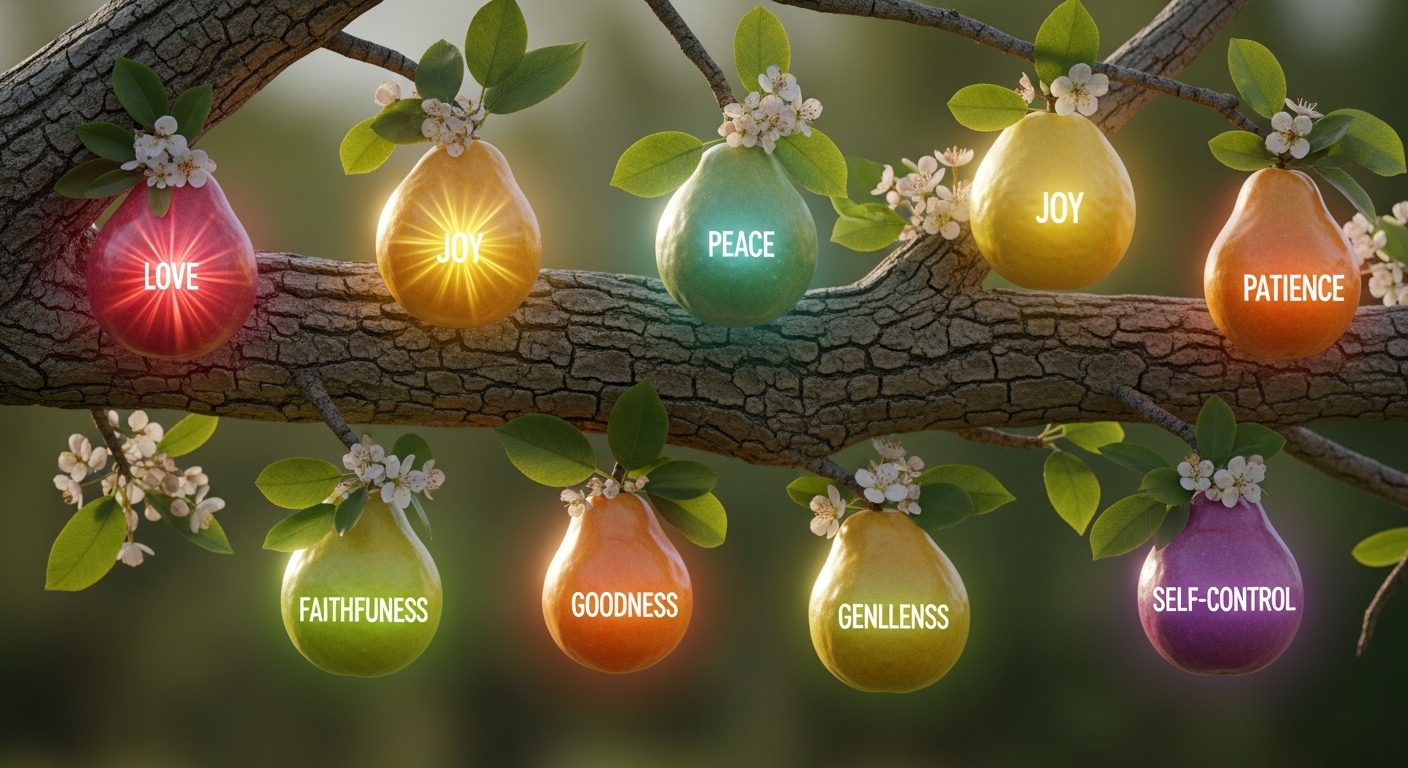
The fruits are love, joy, peace, patience, kindness, goodness, faithfulness, gentleness, and self-control. These are qualities that the Holy Spirit produces in you as you abide in Christ and respond to His presence and guidance. See the verse: Galatians 5:22–23.
The Context: Why Paul Lists These Fruits
Before you examine each fruit, it helps to know the context. Paul contrasts the “acts of the flesh” with the “fruit of the Spirit” earlier in Galatians 5. He urges you to choose life by walking in the Spirit rather than giving in to sinful desires. The fruit is evidence, not performance-based achievements.
Read the broader passage: Galatians 5:16–26.
Paul’s point is that when you live by the Spirit, your character changes in ways that bless others and glorify God. He also emphasizes dependence: you don’t manufacture these traits by sheer willpower; you cooperate with the Spirit’s transforming work.
What “Fruit” Means in This Context
When Paul uses the singular “fruit” rather than “fruits,” he suggests unity and wholeness. The qualities listed are aspects of one fruit — the Spirit’s work shaping your character. Think of a tree: different fruits can be present because the tree itself is healthy. Similarly, these nine qualities together reflect a spiritually healthy life.
You can also compare this to Jesus’ teaching about the vine and branches: when you abide in Him, you naturally bear fruit. See: John 15:1–8.
✝️ WHAT the fruit of the Spirit is
To understand who produces this in us, read Who Is the Holy Spirit? (Simple Bible Explanation)
Fruit 1 — Love
Love is first because it’s foundational. This is agape love — self-giving, sacrificial, and unconditional. It’s the kind of love Jesus modeled when He laid down His life for others. You’ll know the Spirit is at work when your decisions and actions are motivated by genuine concern for others rather than personal gain or reputation.
Study this command and model: John 13:34–35.
In practice, love shows up in the everyday — listening when someone needs to be heard, forgiving quickly, and choosing grace when you’d rather react. Love doesn’t ignore truth, but it pursues people with a redemptive heart.
Fruit 2 — Joy
Joy is deeper than happiness. It’s a settled gladness rooted in your relationship with God, independent of circumstances. While happiness comes and goes, joy endures because it rests on the promises of God and the presence of the Spirit.
See where joy in suffering is discussed: Romans 5:3–5.
When the Spirit produces joy in you, your outlook shifts. You’ll face trials with hope instead of despair and celebrate God’s goodness even in small things. Practically, you cultivate joy by practicing gratitude and remembering who God is and what He has done.
Fruit 3 — Peace
Peace here is more than lack of conflict; it’s shalom — wholeness, well-being, and right relationship with God and others. The Spirit grants you a peace that guards your heart and mind when storms rage around you.
See: Philippians 4:6–7.
A person bearing this fruit becomes an agent of reconciliation. You’ll be less driven by anxiety or quick defensiveness and more inclined to pursue harmony. You cultivate this peace by prayer, surrender, and trusting God’s sovereignty.
Fruit 4 — Patience
Patience (or forbearance) is the ability to endure difficult people, situations, and delays without losing hope or resorting to anger. The Spirit shapes your endurance so you can remain steady even when things don’t go your way.
Paul highlights endurance as part of the Christian walk: Romans 12:12.
You practice patience by slowing down your reactions — take a breath before you speak, choose long-term perspective over immediate satisfaction, and remember God’s timing isn’t your timing. Patience often grows through trials and testing.
Fruit 5 — Kindness
Kindness is the overflow of a tender heart. It’s acting with generosity, gentleness, and thoughtful helpfulness toward others. It’s practical love that meets real needs.
Jesus commands kindness in the parable of the Good Samaritan: Luke 10:25–37.
Kindness is visible in simple acts: serving a neighbor, speaking encouragement, or offering your time. It softens hearts and opens doors for gospel conversations because people experience God through the kindness you show.
Fruit 6 — Goodness
Goodness relates to moral integrity and active benevolence. It’s not just being kind in attitude; it’s doing what’s right, standing for truth, and pursuing justice that reflects God’s character.
See the call to do good: Galatians 6:9–10.
When the Spirit produces goodness in you, your public life and private choices align with God’s standards. You’ll pursue ethical behavior even when no one’s watching and seek ways to bless others practically.
Fruit 7 — Faithfulness
Faithfulness is steadfast reliability. It’s loyalty to God, dependability to others, and persistence in spiritual disciplines. When you are faithful, you keep promises, remain devoted in trials, and demonstrate trustworthiness.
Scripture ties faithfulness to God’s covenant character: Lamentations 3:22–23.
Faithfulness grows as you practice small acts of obedience and remain committed to the people and callings God has given you. It’s the quieter fruit but one with lasting impact.
Fruit 8 — Gentleness
Gentleness (meekness) is strength under control. It doesn’t mean weakness; rather, it’s humility expressed in considerate, calm behavior. Gentleness responds to provocation with restraint and love.
Jesus described Himself as gentle: Matthew 11:28–30.
In relationships, gentleness produces healing. You’ll be less defensive and more restorative when you lead with humility. You practice gentleness by listening, asking questions before judging, and speaking the truth in love.
Fruit 9 — Self-Control
Self-control is the capacity to govern your desires, impulses, and appetites. It’s the fruit that keeps the rest of the fruits from being out of balance. Without self-control, love can become permissiveness; without it, patience can be exhausted.
Paul includes self-control as a hallmark of maturity: 1 Corinthians 9:25–27.
You grow self-control by practices: solitude, regular rhythms (prayer, worship, rest), accountability, and learning to say “no” to immediate gratification. The Spirit supplies fruit; your cooperation shapes it into habit.

How the Fruit Differs from Spiritual Gifts
It’s important for you to distinguish fruit from spiritual gifts. Gifts are abilities given by the Spirit for service (teaching, prophecy, healing, etc.); fruit are character qualities produced over time. Spiritual gifts can be exercised without deep spiritual maturity, but fruit reveals the Spirit’s ongoing sanctifying work.
Paul contrasts works of the flesh and Spirit elsewhere as well; see the list in Galatians 5:19–21.
You should desire both: to use your gifts for God’s glory and to allow the Spirit’s fruit to shape your character so your ministry is healthy and sustainable.
🔥 HOW the fruit grows
This becomes clearer when you explore What Does The Holy Spirit Do? (7 Powerful Roles Explained).
Signs You’re Growing in the Fruit
Growth is rarely dramatic overnight. You’ll notice progress in small but consistent changes: you lose the habit of lashing out, you recognize joy even in pain, you respond to criticism with humility, or you choose to forgive more quickly. These are indicators the Spirit is at work.
Compare the two ways of life: living by the flesh or by the Spirit — see Galatians 5:16–18.
Expect seasons of progress and setback. Spiritual growth is often cyclical: confession, repentance, recovery, and new fruit.
Practical Ways to Grow the Fruit Daily
You grow fruit by cooperating with the Spirit. Here are practical, sustainable steps you can take that align with Scripture and help you cultivate the Spirit’s character in everyday life.
Start with abiding in Christ: your connection to Jesus is the source of fruit. See: John 15:4–5.
- Practice regular prayer and Scripture reading so the Spirit’s voice becomes familiar.
- Seek accountability with other believers who can speak truth in love.
- Intentionally choose small acts of love, service, and humility each day.
- Reflect weekly: name where you saw the Spirit move and where you struggled.
- Fast impulse-driven habits (social media, quick temper) and replace them with spiritual rhythms that build self-control and dependence.
Remember: these practices aren’t legalism; they are ways you open yourself to the Spirit’s shaping work.
🙏 To apply this PERSONALLY
Take the next step by reading How To Receive The Holy Spirit (Biblical Guide).

Obstacles to Bearing Fruit
You’ll face obstacles that can stunt growth. Pride, unrepentant sin, busyness, and isolation can all choke out fruit. Jesus warned about thorns and shallow soil in the parable of the sower — distractions, worries, and pleasures can prevent fruit from maturing.
Read the parable and its explanation: Matthew 13:3–23.
To remove obstacles, practice repentance, simplify your life, restore broken relationships, and cultivate community. The Spirit often uses struggle to bring humility and deeper reliance on God.
Fruit and Community: How Your Growth Blesses Others
Your growth in the fruits of the Spirit isn’t just personal; it’s communal. When you exhibit love, patience, kindness, and peace, you contribute to healthier relationships, stronger churches, and more effective witness to the gospel. Fruit is contagious: it encourages imitation and builds trust.
Paul encourages believers to bear one another’s burdens: Galatians 6:2.
As you change, watch how your family, friends, and workplace respond. The fruit you bear becomes a visible sign of the Spirit’s transformative power and opens doors for ministry and reconciliation.
When You Don’t See Fruit: What to Do
If you feel spiritually dry or see little fruit, don’t panic. Spiritual seasons vary. Begin with honesty before God and others, confess areas of compromise, and ask the Spirit to revive you. Seek discipleship, rest, and maybe a sabbatical from things that drain you.
David’s honest prayers model lament, which precedes renewal: Psalm 51:10–12.
Small consistent choices — a daily 10-minute prayer, a weekly confession to a friend — can reorient your heart. The Spirit is faithful to work as you make space for Him.
The Role of Grace in Bearing Fruit
You may be tempted to measure fruit as if it equals spiritual performance. Remember, growth flows from grace, not guilt. The Spirit’s fruit is evidence of God’s work in you, but it is not your badge of self-righteousness. You remain dependent on Christ’s finished work.
See Paul’s insistence that salvation is by grace: Ephesians 2:8–10.
Cultivate humility: celebrate growth, confess failure, and return to the cross for forgiveness and strength. The Spirit uses your weakness to make you more like Christ.
How Fruit Relates to Mission
Fruit-bearing has missional implications. Jesus said His Father is glorified when you bear much fruit. Fruit is tangible evidence that God’s kingdom has arrived in your life and flows outward to bless others.
See Jesus’ purpose for fruit: John 15:8.
When you reflect Christ’s character — in workplaces, neighborhoods, and families — people see the gospel lived out. Fruit-bearing is therefore both a sign of maturity and part of how you fulfill your calling to be salt and light.
Personal Practices to Encourage Each Fruit
Practical habits help you cooperate with the Spirit:
- Love: practice intentional acts of service without seeking recognition.
- Joy: keep a gratitude journal and thank God for specific blessings daily.
- Peace: develop a nightly routine of surrendering worries to God in prayer.
- Patience: practice waiting exercises — delayed responses, deliberate silence.
- Kindness: look for one person to intentionally bless each day.
- Goodness: take responsibility for ethical choices in small things.
- Faithfulness: set small, consistent spiritual disciplines you won’t abandon.
- Gentleness: choose softer words in conflict; ask clarifying questions.
- Self-control: set boundaries for media, food, or impulse like patterns.
These practices aren’t exhaustive, but they are realistic steps that help you partner with the Spirit’s work.
👣 To grow in DAILY WALK
Strengthen your spiritual life by reading How To Walk In The Holy Spirit Daily (Simple Biblical Guide).
 Recommended Resources for Spiritual Growth
 Recommended Resources for Spiritual Growth
| Tool | Best For | Difficulty | Daily Use | Recommendation |
|---|---|---|---|---|
| 📖 NIV Study Bible | Understanding Scripture | Easy | Medium | ⭐ Best Overall |
| 📘 Jesus Calling | Daily Devotional | Very Easy | High | ⭐ Best for Consistency |
| 📓 Christian Prayer Journal Hardcover | Prayer & Reflection | Easy | High | ⭐ Best for Habit Building |
 For more tools to study Acts deeper, see our recommended Bible study resources
How to Walk in the Holy Spirit Daily
Walking in the Spirit is the pathway to bearing fruit. It means relying on the Spirit’s presence and promptings through ordinary life, not just in spiritual activities. You listen, obey, and depend on God moment by moment.
A helpful guide is available here: How to Walk in the Holy Spirit Daily — consider this a starting point for practical application and daily rhythms that keep you connected.
Abiding is both posture and practice: invite the Spirit into conversations, decisions, relationships, and your schedule. Over time, this daily dependence produces lasting fruit.

Conclusion: Fruit Shows Spiritual Growth
In sum, the fruits of the Spirit are the fair-weather proof of the Spirit’s presence — love, joy, peace, patience, kindness, goodness, faithfulness, gentleness, and self-control (Galatians 5:22–23). They reflect the character of Jesus formed in you as you abide in Him. They’re not achievements to boast about but evidence to celebrate and steward. As you cooperate with the Spirit through prayer, Scripture, community, and intentional practices, you’ll see these qualities become more visible in your daily life, blessing those around you and glorifying God.
🔁 To understand the FULL STORY
To see how everything connects, read What Happened After Jesus Rose From the Dead? (Full Timeline Explained) and What Happened At Pentecost? (Acts 2 Explained Simply).
🔥 To go deeper into the HOLY SPIRIT
Learn more in Who Is the Holy Spirit? (Simple Bible Explanation) and What Does The Holy Spirit Do? (7 Powerful Roles Explained)
👣 To grow in DAILY WALK
Strengthen your spiritual life by reading How To Walk In The Holy Spirit Daily (Simple Biblical Guide).
🙏 To apply this PERSONALLY
Take the next step by reading How To Receive The Holy Spirit (Biblical Guide).
✝️ To understand the FOUNDATION
Go deeper into the core message in The Meaning of the Resurrection of Jesus Christ.
Prayer
Lord, grow Your fruit in me. Help me to love as You love, to rejoice in You always, to live in peace and patience, to show kindness and goodness, to remain faithful, to be gentle, and to exercise self-control. Fill me with Your Spirit and teach me to walk with You daily. In Jesus’ name, Amen.
Sponsored recommendation

Acknowledgment: All Bible verses referenced in this article were accessed via Bible Gateway (or Bible Hub).
“Want to explore more? Check out our latest post on Why Jesus? and discover the life-changing truth of the Gospel!”