



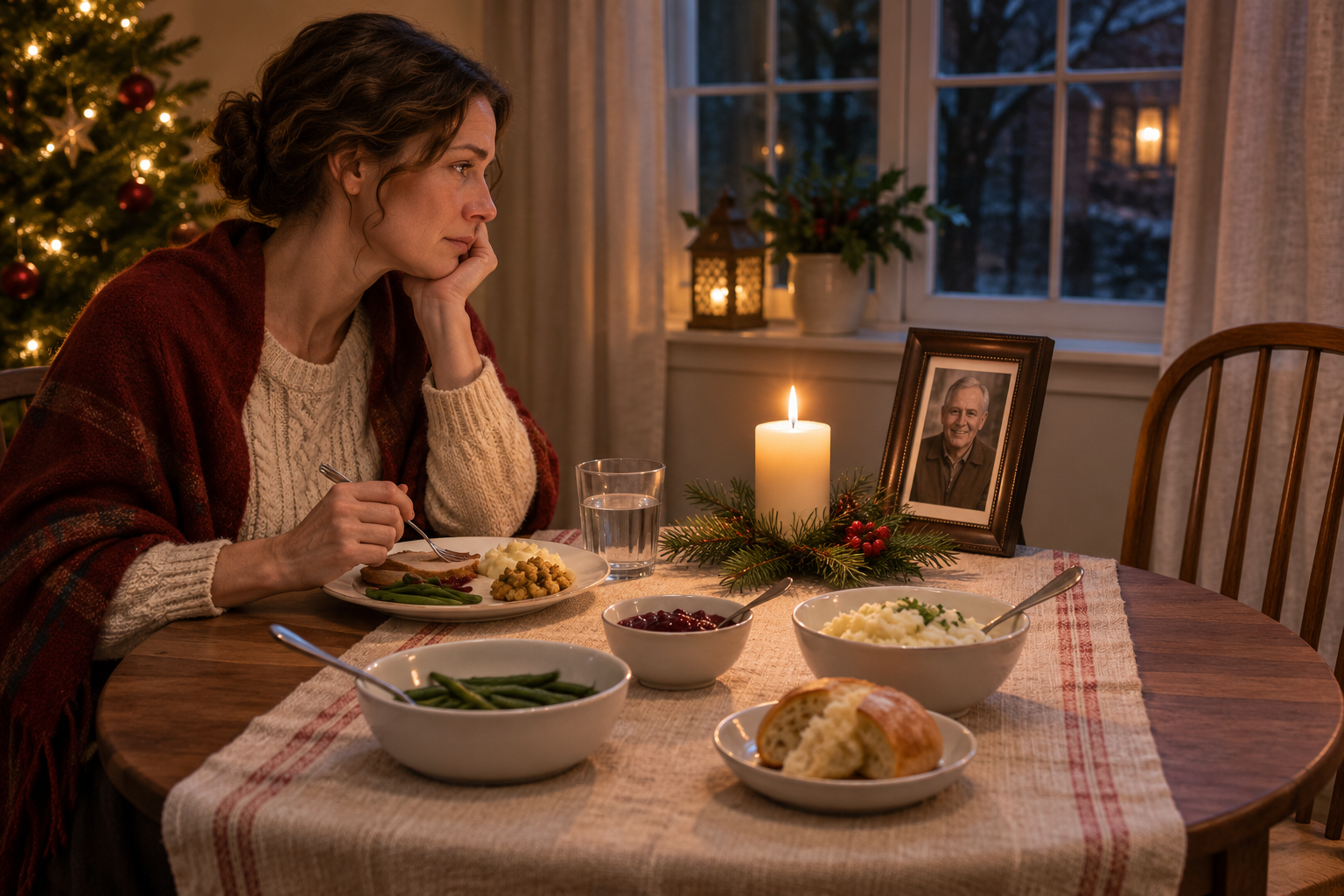
Christmas grief can make a familiar season feel unfamiliar. A favorite song, an empty chair, or a recipe in someone else’s handwriting may remind you of a person you deeply miss. You can honor that love, make smaller plans, ask for companionship, and bring your sadness honestly to God. Christian hope does not require you to pretend that loss feels good.
Perhaps this is your first Christmas after a death. Perhaps many years have passed, but December still touches a tender place. You do not have to earn permission to grieve again. The birth of Jesus points us toward a Savior who entered human suffering, wept beside mourners, and overcame death. His coming gives hope a foundation stronger than our ability to feel cheerful.
A Story of Tears in the Presence of Jesus
Read John 11:17–44. This event happened during Jesus’ ministry, not at Christmas. It helps us understand the heart of the Savior whose birth we celebrate.
When Jesus reached Bethany, Lazarus had already been in the tomb for four days. People had come to comfort his sisters, Martha and Mary. Martha went out to meet Jesus and spoke about the difference His presence could have made. Her words carried both sorrow and trust. Jesus directed her toward resurrection and toward Himself as the source of life.
Later, Mary came to Jesus and fell at His feet. She too spoke of her brother’s death. Jesus saw her weeping and the people who had followed her weeping. John describes His deep response and records that He wept. The story does not present the sisters’ tears as a failure that needed to disappear before He would care for them.
Jesus then went to the tomb and called Lazarus out. This remarkable sign revealed His authority and pointed toward the life found in Him. It is not a promise that every bereaved family will receive a loved one back before this Christmas. The passage gives us something we can trust without making that promise: Jesus is compassionate, and death does not have the final authority over Him.
For a grieving reader, that matters. You can confess faith in Christ and still cry when you set the table. The Lord who knew what He was about to do did not treat sorrow as an inconvenience. He entered a scene of mourning with both truth and compassion.

Why December Can Feel So Different
A holiday often brings together memories, routines, people, and expectations. After a loss, each can become a reminder of what has changed. The person who called first thing in the morning is absent. A family gathering has a different shape. Even deciding whether to put up decorations can feel unexpectedly difficult.
People in the same family may respond differently. One wants the usual meal; another cannot face preparing it. Someone tells stories easily while someone else grows quiet. These differences do not tell you who loved the person most. They are reasons to listen carefully and leave room for one another.
The NHS guidance on grief and loss explains that grief affects people differently and that powerful feelings can appear unexpectedly. A difficult afternoon does not erase the steps you have already taken. You can plan gently while accepting that you may need to adjust.
Let Your Christmas Be Smaller If It Needs to Be
You may keep a tradition, change it, or take a break from it this year. None of those choices measures the depth of your love. Keeping everything exactly the same can feel comforting for one person and overwhelming for another.
Before invitations arrive, consider what you can reasonably manage. You might attend a gathering for an hour, ask someone else to cook, or spend Christmas morning quietly before meeting friends later. Tell a trusted person your plan and give yourself a way to leave without a long explanation.
If others are disappointed, a simple response may help: “I want to be with you, but I have less energy this year. I can come for the meal and head home afterward.” Gentle limits can make connection possible. You do not have to choose between doing everything and disappearing completely.

Remember the Person Without Forcing a Moment
A small act of remembrance may help you acknowledge the person’s place in your life. You could cook one favorite dish, write down a memory, share a photograph, or give to a cause they cared about. Ask other family members what feels helpful rather than assuming everyone wants the same ceremony.
An imagined example may make this practical. Picture a family preparing their first Christmas meal after a grandmother’s death. They choose one of her recipes and invite anyone who wishes to share a memory. One person speaks; another listens without saying anything. Their meal does not remove the sadness. It gives them a gentle way to acknowledge love together. This is an illustration, not a reported testimony.
You can also keep a memory privately. A public tribute is not required. If remembering feels too painful today, you may return to it another time. Your relationship mattered before anyone saw a photograph or heard a story.
Bring the Unfinished Questions to God
Grief may leave questions you cannot neatly resolve. Why did this happen? Why was there so little time? Why did the answer to prayer look different from what you hoped? The Bible gives space for lament, including Psalm 13, where distress is brought directly to God.
You can begin with one honest sentence: “Lord, I miss them, and today is hard.” If words will not come, ask a trusted believer to pray beside you. Our guide to praying Scripture offers a way to respond to a passage without having to create an impressive prayer.
For a slower reflection on God’s nearness, read When Your Heart Feels Heavy. God’s care is not measured by whether tears stop during your prayer.
Receive Companionship and Practical Help
You may need someone who will listen without trying to explain the loss. Consider asking a friend to sit with you, accompany you to church, or call after the family gathering ends. A specific request is often easier for someone to answer than a general statement that everything is difficult.
Ordinary needs matter too. Accepting a meal, help with errands, or company on a walk can reduce what you must carry alone. If you are caring for another grieving relative as well, prayers for caregivers may help you name your own weariness instead of overlooking it.
If grief is making daily life hard to manage, or you are struggling with persistent low mood or anxiety, contact a qualified health professional or bereavement counselor. A pastor and a support group can offer additional companionship. Receiving professional care is compatible with trusting Christ.

Hold Christmas Hope Carefully
The message of Christmas is that the Son of God came among us. The manger belongs to the larger story of His life, death, and resurrection. Our reflection on the Word becoming flesh helps connect the birth of Jesus with who He is and why He came.
In 1 Thessalonians 4:13–18, Paul addresses believers grieving those who have died and grounds their hope in Jesus’ resurrection and return. He does not command them to feel nothing. Christian hope gives sorrow a future beyond death.
We should also speak carefully about a loved one’s eternal condition. We do not know every person’s heart or possess authority to invent comforting messages from the dead. We can entrust what we do not know to God’s justice and mercy and speak clearly about the salvation He offers in Christ.
The Prince of Peace is worthy of trust even when a room remains quiet and an answer remains unfinished. Christmas hope can be a quiet act of dependence, not a sudden change of emotion.
If You Are Supporting Someone Who Is Grieving
Remember the person after the holiday gathering as well as during it. Ask whether they would like to talk about the loved one. Offer a practical choice, such as bringing dinner or visiting for an hour, and accept a no without taking offense.
Avoid assigning a purpose to the death or saying that enough faith would remove the sadness. A simple acknowledgment is often kinder: “I remember them too. I am here if you want company.” Romans 12:15 calls believers to share both joy and sorrow. Listening can be a meaningful act of Christian love.
A Prayer for Christmas Grief
Father, You know the person I miss and the memories that return this Christmas. I bring You my sadness, my gratitude, and the questions I cannot settle. Help me receive the love of people who care. Give me wisdom to make gentle plans and courage to ask for support.
Lord Jesus, thank You for entering our suffering and for showing compassion beside a tomb. Keep my hope rooted in Your death and resurrection. Teach me to trust You without pretending that this loss does not hurt. Help our family speak kindly, remember honestly, and carry one another with patience. Amen.
One Gentle Step for Today
Choose one manageable response: tell someone that this Christmas feels difficult, arrange a short visit, or read the account of Jesus with Mary and Martha. You do not have to solve the whole season today. Bring the next hour to the Savior whose compassion and resurrection give you reason to hope.
Continue Growing
Read Walking Through the Valley in Psalm 23:4 for a reflection on God’s presence in suffering. You may also return to the Prince of Peace and praying Scripture when you need a quiet place to begin.