

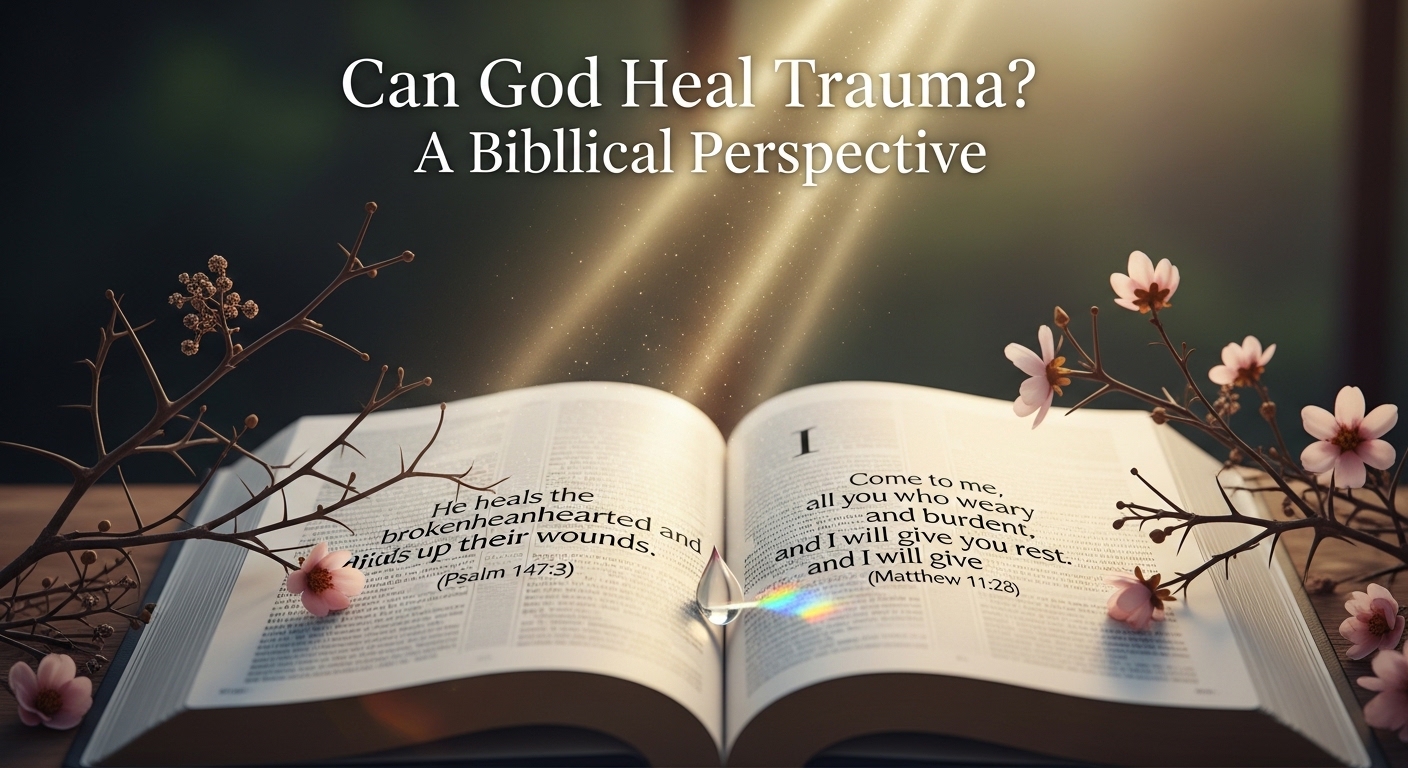
Can God Heal Trauma? A Biblical Perspective
You wake up with a tightness in your chest that prayer didn’t fully loosen. You find yourself replaying the same scene when you should be working, resting, or connecting with someone you love. You wonder whether faith can carry you through this shadow in a way that actually changes the memory, the body’s reactions, and the way you relate to the world.
You are not alone in that question. Many believers discover that anxiety, flashbacks, or a hollow ache can return even after seasons of prayer, counseling, and church support. The struggle to trust God with what seems unfixable is shared by people across every generation and background.
There is good news: Scripture, the life of Jesus, and the witness of God’s people point to a God who sees wounds, attends to them, and invites you to a slow, grace-filled path of healing. If you want a deeper, carefully shaped biblical foundation for how God meets hurt, you’ll find a fuller treatment in the pillar linked at the end of this piece.
Why This Feels So Hard
Trauma isn’t only a memory. It rewires the way your body and mind interpret safety, threat, and control. If you’ve experienced betrayal, violence, loss, or prolonged fear, your nervous system has learned to anticipate danger. You’re not failing spiritually when this happens; you’re human.
Mental exhaustion
You may feel drained in ways that prayer alone doesn’t repair. The brain’s constant scanning for threats uses real energy. Sleep can be fitful, concentration can be thin, and the simplest decisions become heavy. Scripture recognizes weariness and repeatedly invites rest, but rest for someone with trauma is not an instant flip of a switch. It’s a patient, layered work that involves your body, your story, and your relationship with God.
Repeated cycles
The same images, the same self-talk, the same fear of being overwhelmed — these cycles feel like a treadmill. You may think you escaped the worst, only to be pulled back by anniversary dates, smells, or unexpected triggers. The Christian life includes patterns of repentance and renewal, and for trauma survivors these patterns sometimes need to be re-established slowly and kindly. That’s not failure; it’s the rhythm of a body and soul learning trust again.
Fear of losing control
Trauma often leaves you afraid of giving up control because you’ve been helpless before. At times, surrendering to God might feel like stepping off a cliff. But the biblical picture of surrender is not loss; it’s entrusting your life to One who loves you—who has proved that love in Jesus. Rebuilding trust takes time, and you’re allowed to take the time you need.
When you read this, you should feel understood: these experiences are common among those who have endured deep injury. The fact that it feels hard does not mean your faith is weak. It means you are human, and God’s work often engages our entire humanity.

What Scripture Shows Us to Do
The Bible doesn’t present trauma as a simple problem with a single fix, but it gives commands, invitations, promises, and examples that shape how you live into healing. Scripture’s help is both immediate and ongoing: it gives you practices to do now and a theology to hold as you change slowly.
A command to remember
Scripture calls you to “be still” in the presence of God’s sovereignty. Psalm 46:10 says, “Be still, and know that I am God” (Psalm 46:10). For someone re-wired by trauma, stillness can be a hard-won discipline. But this command is less about legalism and more about re-orienting your attention—helping you practice noticing God’s presence instead of your fear.
An invitation to come as you are
Jesus extends an open invitation: “Come to me, all you who are weary and burdened, and I will give you rest” (Matthew 11:28). That “come” is for the wounded—not just those who have neatly processed their experiences. If you’re carrying the numbness or the replayed memories, Jesus calls you anyway.
Promises that God heals and is near
The Psalms are full of images of God tending to broken hearts. “The Lord is close to the brokenhearted and saves those who are crushed in spirit” (Psalm 34:18). God’s closeness does not promise instant erasure of trauma’s consequences, but it guarantees presence and a movement toward wholeness.
Example people who modeled restoration
Biblical characters remind you that God works through messy, long stories. Joseph endured betrayal, slavery, and imprisonment before God used his suffering to save many (see Genesis 50:20: “[You intended] to harm me, but God intended it for good” (Genesis 50:20)). David wrestled with guilt, fear, and persecution, yet Psalm after psalm shows someone who brought his pain to God and discovered Psalmic repair. These stories don’t trivialize suffering; they show a God who stays with you in the hard chapters.
A Simple Way to Practice Faith Right Now
You don’t need a perfect theology to take small steps that align your nervous system and your spirit. Here are practical practices you can start today that are faithful, repeatable, and anchored in biblical rhythms.
Breathe and pray
Begin with a simple breath prayer: inhale slowly for four counts, exhale for six, and on the out-breath say a short phrase like “Lord, be with me.” Combining intentional breathing with a brief prayer helps calm the autonomic nervous system and brings your attention to God’s presence.
Short verse meditation
Choose a short, concrete verse and repeat it slowly as you breathe. Try Philippians 4:6–7 as a practice: “Do not be anxious about anything, but in every situation, by prayer and petition, with thanksgiving, present your requests to God.” Repeat a line like “present your requests to God” and let it shape your posture of trust (Philippians 4:6-7). Even if emotions remain, your mind is planting new neural pathways.
A surrender statement
Create a two-sentence surrender you can say when fear spikes—something like, “Lord, I give you this memory and this fear. Hold me while I learn to trust again.” Saying a short, explicit surrender helps you practice handing control to God without pretending the pain isn’t real.
Gratitude pivot
When overwhelm rises, pause and name one concrete thing you’re grateful for: a cup of tea, a friend’s voice, the light through the window. Gratitude won’t erase trauma, but it can shift attention enough to let you re-engage your rational brain and receive comfort.
Each of these practices is small, portable, and repeatable. Use them not as a psychological trick, but as spiritual disciplines: ways you remind your heart of God’s nearness and your body of safety time and again.

Where Real Change Slowly Happens
Healing from trauma is typically a long, nonlinear process. You’ll make progress, have setbacks, and then find new ground. God is not absent from that slow work; often He chooses to shape you into resilience over time rather than instant transformation.
The process is gradual
Expect slow shifts rather than sudden cures. The brain’s patterns of alarm and avoidance have been reinforced over time; they will need repeated, gentle correction. This is true spiritual formation as well as psychological recovery. The same practices you repeat in prayer, therapy, and community become the work of grace.
Daily rhythms matter
Small daily practices add up. Regularly returning to God in prayer, Scripture, and community rewires trust. Quiet rhythms—morning prayers, brief scripture meditations, nightly gratitude—build a scaffold for change. These disciplines don’t minimize pain; they integrate spiritual practices with the slow rebuilding of your inner life.
Grace-driven growth
You’re not aiming for perfection. Recovery is shaped by grace: a patient, forgiving God who meets you where you are. Paul’s language about God being “the Father of compassion and the God of all comfort” (see 2 Corinthians 1:3–4: 2 Corinthians 1:3-4) helps you hold both effort and gentleness. You take faithful steps, and God supplies mercy for the rest.
Professional help complements faith
Sometimes healing requires counseling, EMDR, somatic therapy, or medical treatment. These resources are not a lack of faith; they are part of God’s ordinary means of care in the world. The Christian story has always included both spiritual and practical means of restoration.
Learn the Bigger Picture of Mental Health & Faith
Trauma sits at the intersection of body, mind, and soul. A robust theology of healing recognizes this integration: God cares for your body’s chemistry and your heart’s ache as much as your sin and repentance.
Faith and mental health are not opponents. Scripture frames suffering within a story of redemption that includes professional help, community support, prayer, and patience. When you bring your wounds to God, you’re not asked to bypass sensible care; rather, you’re encouraged to seek the means God provides. For a fuller biblical foundation on how God brings peace and stability to your inner life, see Healing Emotional Pain: Where God Meets You in Your Hurt.
If you’re ready to take your pain to God but don’t know how to start? Follow this guided prayer for deep emotional wounds and If your heart still aches beneath the trauma, find comfort in God’s nearness even when everything feels shattered. Each of these explores a different angle—prayer that feels hollow, and concrete resting practices that protect your nervous system while you heal.
Other Biblical Stories That Give Hope
The Scriptures do not sanitize suffering. Instead, they populate the landscape of faith with people who were deeply wounded and who found God’s sustaining presence amid their pain. These stories give you language for both sorrow and hope.
David
David’s life reads like a catalogue of trauma: betrayal by friends, violent pursuit, and moral failure that had long consequences. Yet his Psalms are raw, honest prayers to a God who listens (“The Lord is close to the brokenhearted” — Psalm 34:18). David’s practice shows you how to bring lament, confession, and praise into a single ongoing relationship with God.
(See a deeper reflection on David’s wounds and restoration)
Joseph
Joseph suffered betrayal, false accusations, and imprisonment—each of which could have produced bitterness that consumed him. Yet Joseph’s story ends with a testimony that God can bring purpose from harm: “You intended to harm me, but God intended it for good” (Genesis 50:20). That does not minimize his pain, but it frames divine providence as a real part of healing over time.
Job
Job’s story pushes the question of God’s goodness in the face of inexplicable suffering. His friends give him platitudes; God’s response is more complicated, inviting awe and trust rather than simplistic answers. Job’s restoration is gradual and includes ritual, intercession, and a renewed sense of God’s sovereignty (see Job 42).
Ruth and Esther
Ruth’s faithful attachment to Naomi and Esther’s courageous action in danger are quieter models: God’s healing often works through loyal relationships and courageous, faithful service. These stories remind you that healing can be communal and that your loyalty and small acts of courage matter in the process.
Each of these characters offers a different model: lament and return (David), providence amid injustice (Joseph), endurance and wrestling (Job), and faithful presence (Ruth and Esther). You can borrow their practices—lament, trust, wrestling, loyalty—as pathways into your own gradual healing.

A Short Prayer for This Moment
You can use this prayer as a starting point or speak it aloud when fear or memory presses hard:
Lord Jesus, you know when my nights are long and my heart races. I bring this memory, this ache, and this fear to you. Stay with me in the places that feel unsafe. Teach me to breathe with your Spirit, to rest in the small practices that remind me you are near. Help me accept the care of others and the help that professionals offer. Grow patience in me for the slow work of healing, and give me hope that you can bring purpose and peace out of this pain. Amen.
You can also say a simpler breath prayer: “Lord, be with me,” as you breathe slowly for a few minutes. Anchor the moment in God’s presence.
Final Encouragement
If you’re asking, “Can God heal trauma?” the honest answer is layered: yes—God heals, and He often does so in ways that work through time, community, prayer, and practical help. That means some days will feel close to wholeness, and other days will be steeped in grief. Both are part of the path.
You don’t have to pretend you’re fine to be loved by God or to receive help. Your honesty about pain is itself a holy posture. Keep returning to simple practices: short prayers, breath disciplines, verse meditations, and trusted companions. Look for a therapist who understands spiritual trauma, lean on friends who can bear your story, and keep reading Scripture that tends the heart.
For a fuller biblical foundation on how God brings peace and stability to your inner life, explore Healing Emotional Pain: Where God Meets You in Your Hurt. If you’d like a closer character study, start with .David’s story on our character page.
Suggested practical next steps you can take this week:
- Practice a 5-minute breath prayer twice a day.
- Choose one short verse to repeat for a week (e.g., Psalm 23:4: “Even though I walk through the darkest valley, I will fear no evil…”).
- Email or call one trusted friend and invite them to pray with you once this week.
- If trauma symptoms persist, consider reaching out to a Christian counselor for an initial consultation.
May you find patience, care, and the steady work of God’s grace on the path ahead.
Sponsored recommendation

Acknowledgment: All Bible verses referenced in this article were accessed via Bible Gateway (or Bible Hub).
“Want to explore more? Check out our latest post on Why Jesus? and discover the life-changing truth of the Gospel!”