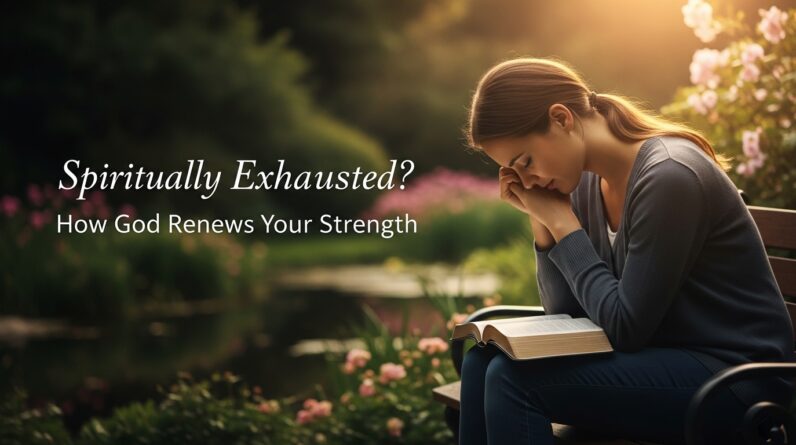


Letting God Restore What Pain Has Taken

You feel weary. Maybe the hurt came slowly — a relationship that frayed, a trust betrayed, a hope postponed — or maybe it hit like a sudden storm. Your chest tightens when you think about the future, and some mornings it’s hard to remember what joy felt like. You’re tired of pain shaping the story of your life.
You’re not the only one carrying this kind of ache. Many believers find themselves in seasons where prayer has been faithful but peace still feels elusive. Others have walked through counseling rooms, scripture reading, and sincere repentance and still feel certain pieces of their heart missing. This is part of the human experience; you are seen and you are not alone.
God is not distant from your brokenness. He invites restoration and shows up in seasons of rebuilding. There’s a deeper, steady work waiting for you — one that goes beyond a quick fix. If you want a fuller biblical foundation for that work, you can explore Healing Emotional Pain: Where God Meets You in Your Hurt — it lays out a roadmap for how God brings peace and stability back to your inner life.
Why This Feels So Hard
Pain wears you out in ways that go beyond the obvious. First, there’s mental exhaustion: making decisions, replaying conversations, and anticipating the next hurt drains your energy and thinking capacity. You might find yourself avoiding responsibilities because they feel heavier than they used to. This fatigue makes it hard to take the small faithful steps that lead to change.
Then there are repeated cycles. You forgive and then the old wound reopens. You make new boundaries and yet slip back into old patterns. These loops feel humiliating and discouraging. The hope that once buoyed you seems fragile, and every relapse into anxious thoughts or defensive behaviors reinforces a belief that you’re stuck.
Finally, there’s the fear of losing control. Pain convinces you that if you can’t perfectly guard every part of yourself, you’ll be vulnerable again. So you tighten up. You isolate. You try to micromanage relationships and feelings, believing that control equals safety. But that very effort creates rigidity and distance — from others and from God. When you read this, you think: this understands me. That understanding is the first step toward a different kind of healing, one rooted in grace rather than frantic self-reliance.

What Scripture Shows Us to Do
The Bible doesn’t offer flippant optimism. It offers commands, invitations, promises, and living examples — all of which shape your response to pain.
- Command: You are told to cast your cares on the Lord. The apostle Peter writes, “Cast all your anxiety on him because he cares for you” (1 Peter 5:7). This isn’t a call to passivity; it’s an invitation to actively hand over what you cannot carry alone.
- Invitation: Jesus opens the weary-hearted a practical door when he says, “Come to me, all who are weary and burdened, and I will give you rest” (Matthew 11:28). You aren’t required to have it all together before you come. The invitation is precisely for those whose souls are worn.
- Promise: Scripture holds promises that steady you when restoration feels implausible. “The Lord is close to the brokenhearted and saves those who are crushed in spirit” (Psalm 34:18). This is not abstract theology — it’s God’s real presence with your brokenness.
- Example person: Look at Joseph. He endured betrayal, slavery, false accusation, and years of waiting. Yet in the end he declared God’s sovereignty over suffering: “You intended to harm me, but God intended it for good” (Genesis 50:20). That doesn’t minimize the pain Joseph endured, but it does show how God can weave restoration and purpose into the aftermath.
Scripture gives you both the posture (surrender) and the pathway (trust and obedience) for letting God restore what pain has taken.
A Simple Way to Practice Faith Right Now
Restoration often begins with small, repeatable practices that recondition your heart. These aren’t magic tricks; they’re faithful habits that train you to rely on God again.
- Breathe + Pray: Start with a simple breathing prayer. Breathe in for four counts, silently say “Lord, help,” breathe out for four counts, and silently say “I give this to you.” Repeat this for two to three minutes when anxiety spikes. It calms your nervous system and redirects your attention to God’s presence.
- Short Verse Meditation: Choose one verse to carry through your day. For example, sit with “He heals the brokenhearted and binds up their wounds” (Psalm 147:3). Read it slowly, then repeat it quietly while doing an everyday task—washing dishes, walking, or commuting.
- Surrender Statement: Create a short surrender phrase you can say out loud: “Lord, I give you this wound and ask you to restore what pain has taken.” Saying it aloud makes the act of release tangible.
- Gratitude Pivot: When you find yourself cataloging losses, pivot by naming one small, true blessing — a warm cup of tea, a friend’s text, a sunset. Gratitude doesn’t erase pain, but it reorients your mind toward evidence of God’s goodness even in hard seasons.
These practices stick because they’re practical and portable. The point is consistency: small acts repeated daily become the scaffolding for larger change.

Where Real Change Slowly Happens
If you want restoration, expect a process. God’s renewal rarely looks like an overnight makeover; it’s more like steady scaffolding, brick by brick.
First, change is daily. You don’t rebuild in a single sermon or prayer — you rebuild in small choices: choosing honesty over defensiveness, choosing rest over constant productivity, choosing kindness toward yourself when shame whispers otherwise. Each decision is a small deposit into the bank of your resilience.
Second, transformation is grace-driven. You will fail. You will return to old patterns. When you do, grace meets you — not as a license to stay stuck, but as the fuel for renewed effort. God’s patience with you models how you might be patient with yourself. Remember Romans 8:28: “And we know that in all things God works for the good of those who love him” (Romans 8:28). This doesn’t mean every painful event is good in itself, but God is a worker — He shapes and repairs your life through trials.
Third, real change reshapes identity. Pain often steals parts of who you believe you are: joy, trust, a sense of worth. As you walk with God, those stolen things can be gradually returned in new forms — not as fragile as before, but wiser, gentler, and more resilient. Transformation takes time, but it leaves you less brittle.
Finally, community matters. Healing usually happens in relationship: a trustworthy friend, a pastor, a counselor, or a small group that listens without rushing to fix you. Let others see your struggle. Their presence is often one of the primary instruments God uses for your restoration.

Learn the Bigger Picture of Mental Health & Faith
Your heart and mind are gifts from God, and care for them is spiritual. Mental health challenges are not a sign of weak faith but part of living in a broken world. Healthy faith doesn’t ignore the realities of neurochemistry, past trauma, or the benefits of counseling. Instead, it integrates spiritual practices with practical supports — therapy, medication when appropriate, restful rhythms, and sound community.
For a fuller biblical foundation on how God brings peace and stability to your inner life, see Healing Emotional Pain: Where God Meets You in Your Hurt. That resource lays out the theological roots and practical steps for emotional restoration and how faith and mental health care work together to restore what pain has taken.
Other Biblical Stories That Give Hope
Stories from Scripture aren’t simply historical anecdotes; they’re living mirrors for your own journey. They show how God can move through human sorrow to bring restoration.
- David: King, shepherd, poet — David knew deep valleys and great triumphs. In Psalm 23:3 he writes that God “refreshes my soul.” David’s life models how honest lament and steadfast reliance on God coexist.
- Joseph: Betrayed by his brothers and unjustly imprisoned, Joseph’s journey shows that restoration can come after seasons of seeming defeat. His insight in Genesis — that God can bring good from evil — gives you a narrative hope (Genesis 50:20).
- Job: Job’s losses were catastrophic, yet the book of Job honors the reality of his pain. Job’s eventual restoration (and the deeper questions his story raises) remind you that God is present even in confusion and suffering (Job 42:10).
- Ruth: After loss, Ruth’s story is one of gentle rebuilding — loyalty, provision, and new life. Her return to Naomi and eventual place in God’s story show how small acts of faithfulness can restore family, identity, and purpose (Ruth 1:16-17).
If you want a focused character study, see the page on David for how a person with bruised soul can find restoration in God and community.
A Short Prayer for This Moment
Lord, you see the broken places I try to hide. You know what pain has taken from me — joy, trust, and a sense of who I am. I bring these losses to you now. Help me to breathe, to surrender what I cannot fix, and to take small steps each day toward wholeness. Restore what has been stolen, not only to its former state but in a way that keeps me closer to you. Give me patience for the slow work and courage for honest change. Use friends, scripture, and your Spirit to repair what is torn. In Jesus’ name, amen. (Meditate on Matthew 11:28 as you pray: Matthew 11:28.)
Final Encouragement
You don’t have to let pain define your future. Restoration is rarely linear, but it is real. God is at work — sometimes gently, sometimes through the hands of others, sometimes in ways you can’t yet see. Keep taking the small steps: a prayer, a short verse, a conversation with someone you trust, a morning when you choose rest instead of pushing. Over time, these choices add up. Hope is not naïve; it’s courageous. Let the Lord meet you today in the quiet, and keep returning to Him tomorrow. He who binds up the brokenhearted is with you on every step of the path to rebuilding.
If you want more practical steps and a theological foundation for emotional healing, the longer guide Healing Emotional Pain: Where God Meets You in Your Hurt maps out the steps for rebuilding identity, trust, and joy after deep hurt.
You’re not defined by pain. You’re being formed by a God who restores.
🙏 Read Next
- If your heart still feels fragile in the rebuilding process, rest in God’s nearness when everything feels broken.
- Not sure how to invite God into the rebuilding? Start with this gentle, guided prayer for deep emotional wounds
Sponsored recommendation

Acknowledgment: All Bible verses referenced in this article were accessed via Bible Gateway (or Bible Hub).
“Want to explore more? Check out our latest post on Why Jesus? and discover the life-changing truth of the Gospel!”