

Introduction
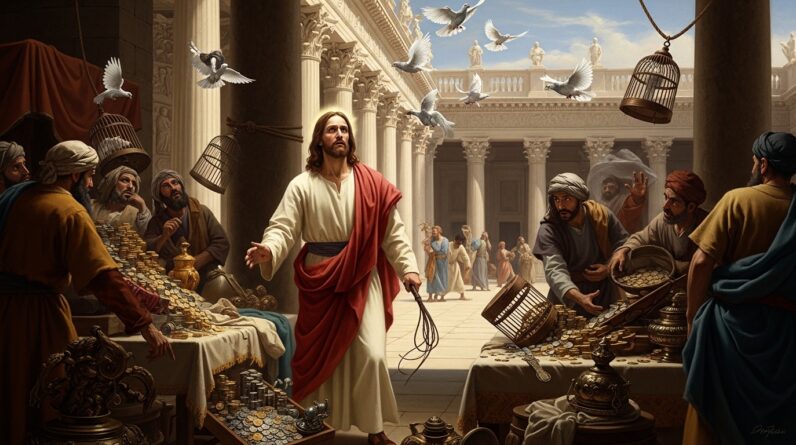
One of the most striking scenes in the New Testament is when Jesus storms into the temple and drives out those who are buying and selling. You may have seen dramatic paintings or heard sermons about it, but you might still wonder: who exactly were the money changers, and why did Jesus react so strongly? When you dig into this moment, it isn’t just about a historical disturbance — it’s a window into what God values in worship, how corruption can creep into even sacred spaces, and what true devotion looks like in everyday life.
This article will help you understand who the money changers were, why Jesus confronted them, and how that event speaks into your personal life, your worship, and your ethical choices today. You’ll get historical background, theological insight, and practical steps to apply the cleansing of the temple to your own heart and community.
Key Bible Moment: Matthew 21:12–13
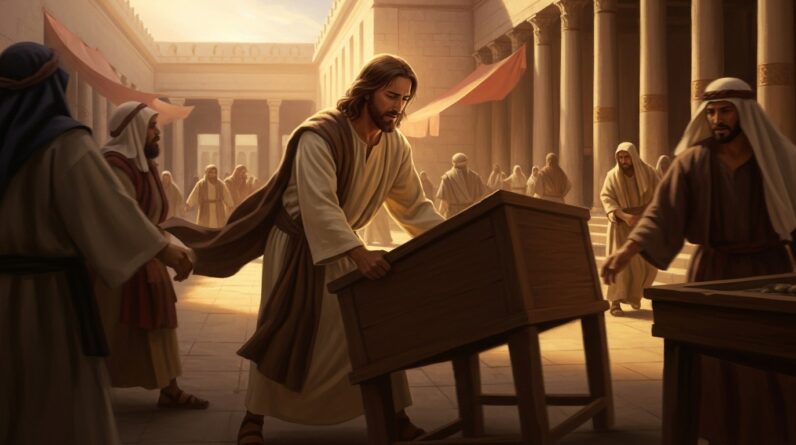
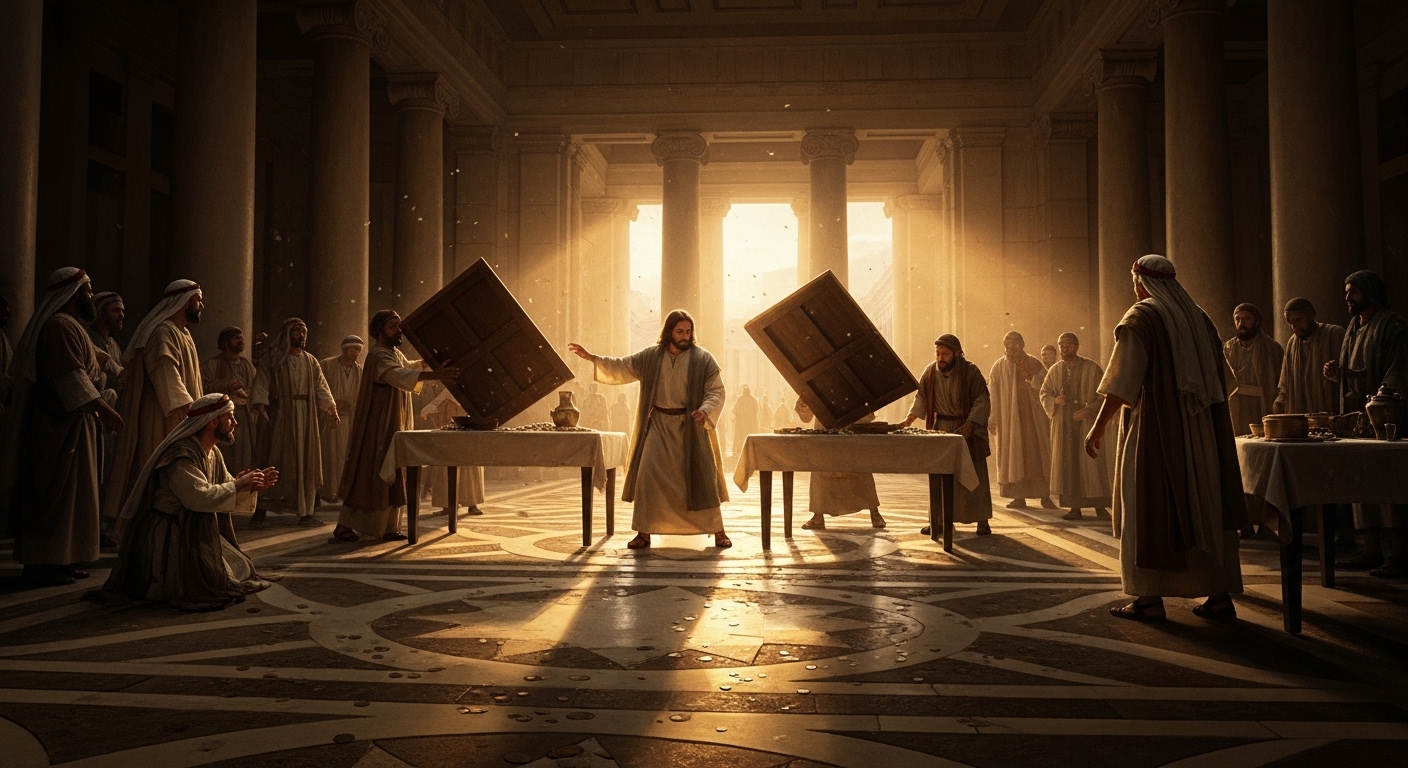
The primary passage describing this event in Matthew reads: “Jesus entered the temple courts and drove out all who were buying and selling there…” Read the moment for yourself here: Matthew 21:12–13. In Matthew’s account, Jesus overturns tables and rebukes the temple leaders: “‘My house will be called a house of prayer,’ but you are making it ‘a den of robbers.’”
This confrontation takes place during Holy Week, near the end of Jesus’ ministry in Jerusalem. The timing ramps up the tension between Jesus and religious authorities and sets the stage for the events of the crucifixion. As you study these verses, note the mix of righteous indignation and sacred concern — Jesus is defending the integrity of worship.
Context: Temple, Worship, and Holy Week
You need to picture the temple as a bustling center of Jewish religious life. During festival seasons (especially Passover), pilgrims flooded Jerusalem to worship and offer sacrifices. The temple had a hierarchy of spaces and strict rules about purity, sacrifices, and how temple tax was paid. To participate in worship, many visitors needed to exchange foreign coins for approved temple currency and purchase animals for sacrifice.
This demand created an environment where services like money changing and animal selling were necessary. But necessity can be abused. Over time, what began as helpful services became a marketplace inside a sacred precinct, and that marketplace shifted from facilitation to exploitation. Understanding this cultural and religious backdrop helps you see why the temple clearing was both a prophetic act and a moral correction.
Who Were the Money Changers?
The money changers were people who exchanged foreign coins for the special temple coins required to pay the temple tax and offer proper sacrifices. Since Roman and other imperial currencies often bore images contrary to Jewish sensitivities, pilgrims used exchange services to convert their money into acceptable currency. Sellers of animals provided the unblemished birds, sheep, and doves required for offerings.
At first glance, this system provided a necessary service. But as the marketplace grew, so did the opportunity for exploitation. Money changers often charged exorbitant exchange fees and set unfair prices for sacrificial animals. What once enabled worship started to hinder it. When you think about it, this is a pattern you can spot in many places — a helpful institution can become corrupt when profit becomes the priority rather than service.

Jesus Opposed Exploitation
In his rebuke, Jesus echoes an Old Testament critique: “‘Has this house… become a den of robbers?’” (see Jeremiah 7:11). Jeremiah’s prophetic words condemned the misuse of the temple as a refuge for injustice and false security. Jesus applies the same prophetic lens to the temple in his day: God’s house is not a cover for greed and exploitation.
When you read this, you should feel the seriousness of God’s concern for justice. God is not indifferent to systems that prey on the vulnerable, even when those systems operate under religious cover. This principle has wide implications for how you approach business, church leadership, and social responsibility. If a religious setting tolerates or profits from injustice, its worship becomes hollow.
Worship Must Be Genuine
Jesus quotes the prophetic promise that the temple is to be “a house of prayer” (Matthew 21:13). Worship is meant to be an encounter with God — focused, sincere, and oriented toward relationship rather than performance or profit.
When you examine your worship — both private and corporate — ask whether it encourages genuine devotion or whether it’s become a routine, a social habit, or even a platform for personal gain. The temple cleansing challenges you to keep worship centered on God, not on personal advancement, church marketing, or transactional exchanges disguised as piety.
Righteous Anger Against Corruption
Jesus’ actions model something important: righteous anger has a place when confronting systemic sin. In different gospel accounts you see similar scenes: John records an earlier temple clearing (John 2:13–16), and Mark gives a vivid account during Holy Week (Mark 11:15–17); Luke also records the event (Luke 19:45–46). Whether early in his ministry or near its climax, Jesus demonstrates that moral outrage against exploitation is part of prophetic ministry.
As you respond to injustice in your context, consider how to channel anger constructively. Righteous anger should aim to restore, protect, and purify — not to dominate or demean. When you act from a heart aligned with God’s purposes, your confrontations build rather than destroy.
The Temple Represents Your Life
The New Testament expands the temple metaphor: now believers themselves are described as temples of the Holy Spirit. Paul writes, “Your bodies are temples of the Holy Spirit” (1 Corinthians 6:19). This theological shift means the cleansing of the temple is also an image for personal sanctification.
Think about what “money changers” might be in your life — habits, attitudes, or priorities that have encroached into the space meant for God. It could be materialism, a thirst for praise, time spent on distractions, or unethical practices you’ve normalized. The temple-cleansing invites you to invite Jesus to examine and purify your inner sanctuary so that worship and life align with God’s presence.

The Danger of Mixing Faith and Self-Interest
The money changers symbolize a broader danger: using religion as a means to personal gain. When faith functions as a lever for influence, money, or status, it loses its soul. Mixing devotion with self-interest compromises integrity and harms the community.
You can see this in various modern parallels — ministries that prioritize fundraising over discipleship, corporations that co-opt religious language to sell products, or individual Christians who use faith as a brand. The temple story calls you to resist such compromises and to keep your faith life free from motives that undermine sincerity and justice.
Historical and Cultural Background: Coins, Taxes, and Trade
To get the full picture, it helps to understand the economics of the temple. The temple tax and sacrificial system required specific kinds of coins and unblemished animals. Nicely minted Tyrian shekels and other approved currencies were often preferred because they carried stable silver content and were free from idolatrous images. Money changers provided a needed service. But the exchange rates, handling fees, and the captive market of pilgrims made the system vulnerable to abuse.
Animal sellers profited off pilgrims who did not want to travel with livestock. The combination of captive customers and time pressure during festivals created opportunities for inflated prices and fraud. When you think about it, the situation mirrors many markets today where convenience and necessity create openings for exploitation. Recognizing that helps you see why Jesus’ action was so significant: he confronts not only individual greed but a system that institutionalizes extraction.
Theological Themes: Justice, Purity, and Prophetic Action
Several theological strands come together in this episode. First, justice: God cares about how people treat one another, and the temple can’t be an exception to ethical norms. Second, purity: the temple was intended as a sacred space devoted to God’s presence, and corruption pollutes that space. Third, prophetic action: Jesus acts like a prophet — calling out sin, purifying worship, and restoring what should be.
These themes are not just ancient abstractions; they speak into how you live, worship, and relate to social structures. When you uphold justice, pursue purity of heart, and practice prophetic courage, you participate in God’s work of renewal.
Righteous Anger vs. Sinful Anger: How to Tell the Difference
Anger itself isn’t necessarily sinful. Scripture gives space for righteous indignation — anger that burns against injustice and oppression. But sinful anger is self-centered, vengeful, and destructive. How can you tell the difference in your own life?
Righteous anger is guided by truth, tempered with love, and oriented toward restoration. Sinful anger feeds your ego, seeks to humiliate, and escalates harm. Before you confront corruption or call someone out, ask: Is my anger rooted in love for God and neighbor? Is my reaction proportionate and aimed at healing? Are you willing to listen and be accountable? These questions help you act with integrity.
Practical Applications for Your Life
This story is not merely a historical curiosity; it’s a mirror for daily living. Ask yourself whether anything in your life has displaced God: is it work, money, relationships, or the pursuit of comfort? Start with honest self-examination. Invite God to show you areas where you’ve allowed “marketplace” attitudes — bargaining, exploitation, or transactional mindset — to intrude into your spiritual life.
In practical terms, you might:
- Reassess how you use money and set tighter boundaries to avoid greed.
- Evaluate how your work practices affect others — ensure fairness and compassion.
- Recommit to authentic worship by carving out quiet, distraction-free time with God.
- Practice generosity to counteract consumerism and selfish accumulation.
These steps help you keep your inner temple aligned with God’s presence and purpose.
Leading Churches and Organizations: Lessons from the Temple
If you lead a church, ministry, or organization, the temple episode carries special weight. Leaders must guard against policies or systems that prioritize fundraising or reputation over spiritual formation and justice. Make transparency, accountability, and fair treatment central to your governance. Regularly ask whether your practices promote genuine worship and service or whether they commodify faith.
You can implement practical measures: transparent financial reporting, fair wages for staff, clear channels for complaints, and partnerships with organizations that serve the vulnerable. When you lead in these ways, you prevent the very abuses Jesus confronted.
How to Clean Your Own Temple: Practical Steps
The image of cleansing should move you toward concrete action. Here are steps you can take to invite God to clean up the areas where greed or distraction has set up shop:
- Invite honest self-reflection. Spend time in prayer and ask God to show you what occupies space that belongs to Him.
- Confess and repent of patterns that compromise your integrity — greed, dishonesty, pride, or exploitation.
- Establish spiritual disciplines that reorient you to God: Scripture reading, prayer, Sabbath rest, and generous giving.
- Seek community accountability. Invite trusted friends or mentors to speak truth into your life.
- Make practical changes: simplify your finances, adjust priorities, and remove tempting patterns that lead to compromise.
Each of these steps helps you cultivate a life where God’s presence is honored and worship is genuine.

Questions for Personal Reflection
You can use the temple-cleansing as a catalyst for introspection. Consider these questions and journal your responses:
- What are the “money changers” in my life that need to be driven out?
- Where might I be allowing convenience, profit, or reputation to trump authenticity and justice?
- How do my daily habits point to what I actually worship?
- What concrete steps can I take this week to realign my life with God’s priorities?
Reflection helps you move from passive admiration of Jesus’ actions to active participation in the work of personal and communal purification.
The Temple Cleansing and the Wider Narrative of Jesus
Remember that this event is woven into the larger narrative of Jesus’ life and mission. In John’s gospel, a temple cleansing appears early in Jesus’ ministry (John 2:13–16), while the synoptics place a similar act in Holy Week (Mark 11:15–17; Luke 19:45–46). Whether early or late, the act symbolically critiques religious systems and foretells the coming judgment and renewal associated with Jesus’ death and resurrection.
This connection invites you to see Jesus as both judge and savior — one who cares about holiness and justice, yet offers forgiveness and new life. When you allow that tension in your faith, you grow toward a balanced discipleship that refuses to tolerate injustice but is also rooted in grace.
Common Misunderstandings to Avoid
People often reduce the temple cleansing to a simple lesson: Jesus gets angry. But that misses the theological and ethical depth of the incident. It wasn’t merely an emotional outburst; it was a prophetic, purposeful act aimed at restoring the temple’s vocation as a house of prayer. Another mistake is to assume the money changers were individually wicked people; many were likely providing needed services. The core issue was systemic exploitation and the way sacred space had been compromised.
By avoiding these simplistic readings, you appreciate both Jesus’ compassion for worshippers and his uncompromising stance against systems that harm people in God’s name.
How Churches Can Prevent “Money Changers” Today
To guard against modern equivalents of temple corruption, churches can take intentional steps. Prioritize transparency in finances and decision-making. Ensure that commercial activities associated with the church serve ministry, not profit. Provide training for leaders on ethics and stewardship. Cultivate a culture where worship and service are not transactional but transformational.
When you participate in or lead a church community, advocate for structures that protect the vulnerable and prioritize ministry over personal gain. This orientation keeps your community faithful to its calling.
The Role of Prophecy and Confrontation
Jesus’ cleansing act functions prophetically: it names sin, performs judgment, and models corrective action. Prophecy sometimes requires bold confrontation, and healthy communities should be able to hear corrective voices. But prophetic confrontation should be accountable, gospel-shaped, and oriented to reconciliation.
If you feel called to prophetic ministry, cultivate wisdom and humility. Make sure your challenges are rooted in Scripture, offered in love, and aimed at restoration. That way, prophetic acts build communities rather than tear them down.
A Simple Reflection and Prayer
Take a moment now to pause and reflect. Ask God to search your heart and reveal anything that dishonors Him. Invite the Holy Spirit to cleanse areas of selfishness, pride, or greed.
A closing prayer you can use: Lord, search my heart and remove anything that does not honor You. Help me live with integrity, sincerity, and true devotion. Teach me to worship You with a pure heart. In Jesus’ name, Amen.
You can also journal or speak aloud things God brings to mind, and then take one practical step this week to address them.
Conclusion
The scene of Jesus driving out the money changers from the temple reveals much more than a dramatic moment in His life. It exposes the danger of mixing worship with commerce, the divine concern for justice, and the call for sincere devotion. It also offers a powerful metaphor for your personal life: your body is a temple where God desires to dwell in purity and love.
As you leave this article, take time to evaluate where you might be tolerating small corruptions in your life — whether that’s compromise in business practices, a routine approach to worship, or priorities that eclipse God. Let Jesus’ actions inspire you not only to critique but to clean, repent, and restore.
🔗 Internal Resources to Explore
If you want to understand how the cleansing of the temple fits into the bigger story of Jesus’ final days, these guides will help you go deeper into Palm Sunday, Holy Week, and Easter:
📖 Main Hub
👉 Holy Week Timeline: Events, Meaning, and Daily Devotional Guide
Walk through each day of Holy Week and see where the temple cleansing fits in the timeline of Jesus’ final week.
🌿 Related Articles
- 👉 Why Did Jesus Christ Ride a Donkey? (Meaning Explained)
Understand the prophetic meaning behind Jesus’ arrival in Jerusalem before He cleansed the temple. - 👉 Palm Sunday Meaning and Bible Verses
Explore the celebration that happened just before Jesus entered the temple and drove out the money changers. - 👉 What Happened on Good Friday?
Learn how the confrontation in the temple ultimately led to the events of the cross. - 👉 The Meaning of Easter Sunday
Discover how Jesus’ authority, shown in the temple, points to His victory through the resurrection.
Sponsored recommendation

Acknowledgment: All Bible verses referenced in this article were accessed via Bible Gateway (or Bible Hub).
“Want to explore more? Check out our latest post on Why Jesus? and discover the life-changing truth of the Gospel!”