


Morning Vs. Evening Devotions: Which Is Better?

You probably ask yourself this more than once: Should you pray and read Scripture in the morning or at night? Maybe you’ve tried both and felt tugged one way or the other, or maybe you’re hunting for a devotional rhythm that actually sticks. The reality is that “morning or evening devotions” isn’t a one-size-fits-all decision. It’s about what helps you meet God consistently, with clarity and devotion, in the season of life you’re living. In this article, you’ll find biblical examples, practical tips, and gentle guidance to help you discover the rhythm that works for your personality, schedule, and spiritual needs.
You’ll see how Scripture models both morning and evening times of devotion, why certain seasons favor one time over the other, and how to structure meaningful, bite-sized devotions that fit into a busy life. Throughout, you’ll also get practical routines you can try tomorrow morning or tonight, and ways to stay flexible without feeling guilty if your schedule changes. The aim is simple: help you connect with God daily, whether that connection happens when the sun rises or when it sets.
Why the Question Matters

Choosing between morning and evening devotions matters because the time you pick shapes your mindset, habits, and how you approach the day or rest. When you build a devotional rhythm that fits you, it becomes more than a checklist — it becomes a lifeline. The choices you make about when to meet God will affect your prayer life, your peace of mind, and how Scripture anchors your decisions. Some people think the “best” time is the one the Bible prescribes explicitly, while others weigh practical realities like family, work, and sleep. The truth is, you’ll want a balance of faithfulness and wisdom: faithful to the commitment of daily communion with God and wise about when you’re most receptive and undistracted.
Scripture supports both morning and evening patterns of devotion. For example, David writes about rising early to seek God in prayer: “In the morning, Lord, you hear my voice; in the morning I lay my requests before you and wait expectantly” (Psalm 5:3). Yet the Psalms also celebrate resting in the Lord at night: “In peace I will lie down and sleep, for you alone, Lord, make me dwell in safety” (Psalm 4:8). So both times have biblical precedent, and both can be spiritually nourishing if they help you live in God’s presence.
Biblical Examples: Morning Devotion Moments
When you scan the Bible, you find people who loved God at dawn. King David often turned to the Lord early in the day. He said, “I rise before dawn and cry for help; I have put my hope in your word” (Psalm 119:147). The prophet Isaiah and other Old Testament figures emphasize beginning the day by seeking God. Jesus Himself set the example: Mark records that He got up early to pray before the bustle of His day began: “Very early in the morning, while it was still dark, Jesus got up, left the house and went off to a solitary place, where he prayed” (Mark 1:35). This pattern suggests the morning can be a powerful time to center yourself on God’s priorities before the world demands your attention.
Morning devotions can be about setting the tone for your day. You start by handing over your plans, aligning your heart with God’s purposes, and asking for wisdom. Scripture also gives poetic reminders of God’s faithfulness each morning: “Because of the Lord’s great love we are not consumed, for his compassions never fail. They are new every morning; great is your faithfulness” (Lamentations 3:22-23). These verses can fuel your gratitude and trust as you step into each day.
Biblical Examples: Evening Devotion Moments

Evening devotions also have deep biblical resonance. The Psalms often echo the trust of ending the day with God. You can pray for peace and protection as you prepare to sleep, trusting God with the unresolved items and unmet needs of the day. David trusted the Lord at night, saying, “Into your hands I commit my spirit” (a sentiment echoed in Psalm 31:5). The evening can be a time for reflection, confession, and thanksgiving — a spiritual cool-down where you release your burdens and let God’s peace settle.
Evening devotions give you a chance to process how you actually lived that day. You can examine your motives, repent where needed, and thank God for what He revealed about Himself and you. The rhythm of night and day is built into the created order; by marking the end of the day with devotion, you honor that rhythm and invite God to transform your heart as you sleep. Jesus offered peace as a gift to His disciples: “Peace I leave with you; my peace I give you” (John 14:27). Closing your day with Scripture and prayer helps you receive that peace.
Benefits of Morning Devotions
If you’re a morning person, morning devotions can make a huge difference. When you connect with God at sunrise, you get to approach the day with a clear head and a surrendered heart. You set spiritual priorities before emails, traffic, or relentless to-do lists shape your mood and choices. There’s a special power to the quiet of early morning: fewer distractions, a chance to pray deliberately, and time to meditate on Scripture without the day’s noise intruding.
Practically, morning devotions can help you with focus, mental clarity, and emotional resilience. When you open the Bible in the morning, you’re more likely to carry a Scripture verse with you during the day, and less likely to make decisions out of stress or reactivity. As Matthew 6:33 reminds you, seeking God’s kingdom and righteousness is an orientation that affects all other priorities: “But seek first his kingdom and his righteousness, and all these things will be given to you as well” (Matthew 6:33). That doesn’t mean you’ll never be distracted — but starting with God tilts the day toward His perspective.
Benefits of Evening Devotions
If you prefer calm nights, evening devotions may be your sweet spot. You use the quieter time to reflect on the day through the lens of Scripture, allowing God to show you where you grew, where you stumbled, and where you need His grace. Evening devotions are especially healing when life’s rhythms are demanding: they provide intentional closure and a spiritual reset before sleep.
Ending your day with God can improve your sleep and your mental health. Gratitude, confession, and entrusting worries to God can lower anxiety and cultivate peace. Paul instructs believers to pray with thanksgiving and entrust anxieties to God: “Do not be anxious about anything, but in every situation, by prayer and petition, with thanksgiving, present your requests to God” (Philippians 4:6-7). That promise of God’s peace is a powerful reason to make evening devotions a consistent habit, particularly if your day ends with unresolved tensions.

Practical Morning Devotion Structure You Can Try
If you decide to try morning devotions, here’s a simple structure that won’t overwhelm you. Start small — a few minutes is better than an hour sporadically. You can scale up as the habit becomes natural.
Begin with a short opening prayer, something like: “Lord, open my eyes to your truth and shape my heart for today.” Read a short passage — a psalm, a gospel chapter, or a daily devotional reading. Meditate on one verse, asking what God wants to show you. Then offer specific prayers for guidance for the day, for people you’ll see, and for decisions you’ll make. Finish with a short declaration of trust, perhaps echoing David’s habit: “In the morning I will lay my requests before you” (Psalm 5:3).
You don’t need a long devotional book or a complicated plan — a Bible, a journal, and a consistent start time will get you far. If your mornings are rushed, record one or two short prayers on your phone that you listen to while dressing or commuting. The point is to begin the day with God’s voice — not to win spiritual brownie points.
Practical Evening Devotion Structure You Can Try
Evening devotions can be structured to help you process and rest. Start by thanking God for three specific things that happened during the day. Confess anything that needs repentance, and ask God to forgive and restore. Review the day: where did you see God? Where did you miss the mark? You can write a sentence or two in a journal to solidify the memory and the lesson.
Read a calming passage — for example, a psalm that celebrates God’s protection or a Gospel passage that points to Jesus’ promise of peace. Conclude with a prayer of surrender, entrusting tomorrow to God’s care. The Psalms model this well: you can lie down and sleep with confidence because the Lord watches over you (Psalm 4:8). If you struggle to fall asleep, try breathing prayers — short repeated petitions that anchor your mind on God’s presence.

Hybrid Approaches: When You Want Both
You don’t have to choose one forever. Many people find a hybrid approach most effective: a brief morning devotion for orientation and a short evening devotion for reflection. This two-point rhythm helps you begin with God and end with God, making every day bookended by communion with Him.
A hybrid rhythm could look like a 10-minute morning prayer and Scripture reading, and a 10-minute evening reflection and gratitude review. If you’re stretched for time, alternate deeper devotions on mornings with lighter evenings, or reserve longer sessions for weekends. The key is consistency and honesty: don’t aim for perfection; aim for presence. Both morning and evening devotions can be adapted to seasons like parenting infants, work travel, or health challenges. Flexibility paired with commitment preserves your relationship with God without creating burnout.
How Personality and Season Affect Your Choice

Your personality plays a big role in whether morning or evening devotions fit you best. If you’re naturally alert and reflective in the morning, that’s the time you’ll likely stay consistent. If you’re more introspective at night, evening devotions will likely be more meaningful. Beyond personality, life seasons — parenting young children, shift work, caregiving, or intense study seasons — will also shape what’s realistic and sustainable.
When your season changes, your devotional rhythm might need to change too. The goal is not to shame yourself for missing a morning once in a while; it’s to find ways to remain anchored in God throughout the changing rhythms of life. Consider setting season-specific goals: maybe mornings during the school year and evenings during summer nights. There’s wisdom in adapting rather than insisting on a fixed plan that becomes a source of guilt.
Common Objections and Honest Answers
You might be thinking: “I can’t pray in the morning—I’m not a morning person,” or “I’m exhausted at night, so evening devotions feel impossible.” These are valid challenges. The answer isn’t moralistic pressure but creative solutions. If mornings feel impossible, try a micro-devotion: read one Psalm verse and pray a two-sentence prayer. If evenings feel exhausting, try listening to an audio Scripture or a calm worship track while preparing for bed. Sometimes the resistance is spiritual; sometimes it’s practical. Either way, small, repeatable habits often beat grand but unsustainable plans.
Another common objection is that rhythm feels legalistic: you worry that devotional time could turn into performance. The fix is to keep the heart of devotion relational: it’s about presence with God, not a ritual to be perfected. When you start measuring your devotion by time or intensity, you risk losing the relational core. Return to simple acts: read, reflect, pray, and listen. Allow grace to shape your practice.
Making It Stick: Practical Tips
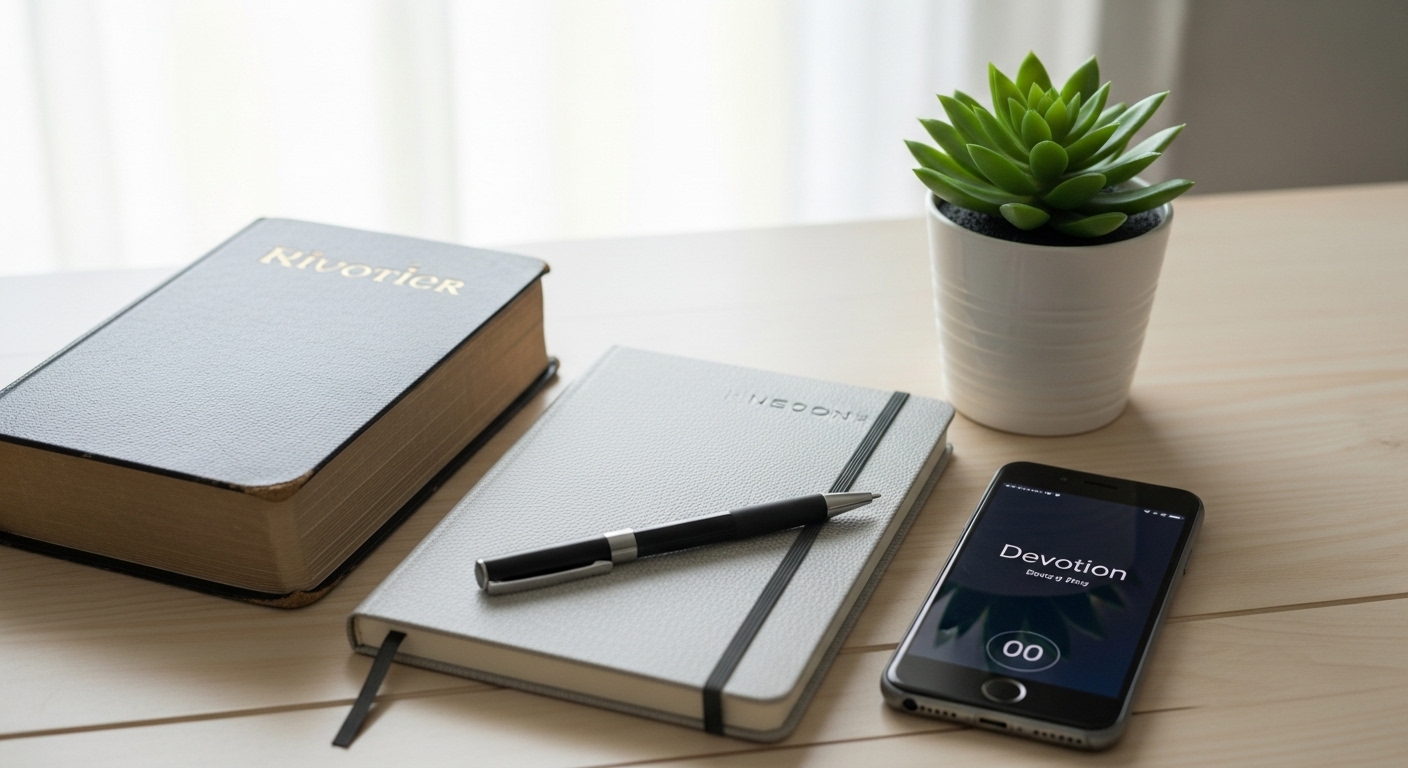
Whichever time you choose, a few practical habits help devotions stick. Make it achievable: five minutes daily is better than an hour once a week. Set a physical trigger: a cup of tea, a specific chair, or a bookmark placed where you’ll see it. Use technology wisely: set a single recurring alarm labeled “Devotion” rather than toggling multiple app notifications. Keep a small journal to record one insight or prayer request each day; this practice builds momentum and spiritual memory.
Connect devotions to the community when possible. Share a verse with a friend each morning or reflect with your spouse each evening. Accountability and shared devotion help reinforce your practice without turning it into legalism. Remember that the goal is relationship: let your devotion lead you to a deeper knowledge of God’s character and a steadier walk with Him.
Sample 7-Day Plan to Test Morning or Evening Devotions
If you want to experiment, try this simple 7-day plan. Day 1–3: do 10 minutes each morning. Day 4–6: switch to 10 minutes each evening. Day 7: do both briefly, morning and night. Keep a short journal entry each day, noting how you felt and what time seemed most natural. Reflect on questions like: Which time helped you think more clearly? Which time brought more peace? Which time felt sustainable?
Use short Scripture passages: a Psalm one day, a Gospel passage another, a Proverbs chapter another. Pray for guidance and ask God to show you where He best meets you. By the end of the week, you’ll have clearer data about what helps you connect consistently. You may find you prefer one time, or you may embrace a hybrid rhythm. Either way, you’ll have taken a practical step toward a habit rather than leaving it to chance.
Final Thoughts: It’s About Consistency, Not Comparison
If you take one thing away, remember this: the better time for devotion is the time that cultivates consistent presence with God in your life. Whether you choose morning or evening devotions, what matters is that you regularly open your heart to God and let Scripture and prayer shape you. Both morning and evening have biblical precedent and practical benefits; both can lead you deeper into a life of faith when practiced with humility and grace.
You won’t get it right every day, and that’s okay. What matters is returning to the practice and making it a habit of the heart rather than a legalistic requirement. Embrace the season you’re in, be gentle with yourself, and prioritize presence over perfection. As the psalmist trusted God’s new mercies each morning, so can you start fresh each day and end it in peace (Lamentations 3:22-23; Psalm 4:8).

Explore More
For further reading and encouragement, check out these posts:
👉 7 Bible Verses About Faith in Hard Times
👉 Job’s Faith: What We Can Learn From His Trials
👉 How To Trust God When Everything Falls Apart
👉 Why God Allows Suffering – A Biblical Perspective
👉 Faith Over Fear: How To Stand Strong In Uncertain Seasons
👉 How To Encourage Someone Struggling With Their Faith
👉 5 Prayers for Strength When You’re Feeling Weak

📘 Jesus and the Woman Caught in Adultery – Grace and Mercy Over Judgement
A powerful retelling of John 8:1-11. This book brings to life the depth of forgiveness, mercy, and God’s unwavering love.
👉 Check it now on Amazon 🛒💥

🔥 “Every great message deserves a home online.” 🌍💬🏡
Don’t let your calling stay hidden. Start a Christian blog or website using Hostinger — with 99.9% uptime, a free domain, and SSL, your voice can shine for God’s glory anytime, anywhere.
💥 Begin today. 🛒 Try it RISK-FREE! ✅

✝️ “Your body is God’s temple — care for it with purpose.” 💪💖🏛️
Renew your energy and restore balance naturally. Mitolyn helps support a healthy metabolism, giving you the vitality to live out God’s calling with strength and confidence.
🔥 Unlock Your Metabolic Power! ⚡Burn More Calories & Feel Great With Mitolyn. 💪
👉 Start Today. 🚀 Check Price Now. 🛒💰
💰 As a ClickBank & Amazon Affiliate, I earn from qualifying purchases.
📖 Acknowledgment: All Bible verses referenced in this article were accessed via Bible Gateway (or Bible Hub).
🚀 Want to explore more? 👉 Dive into our new post on Why Jesus? and experience the 🔥 life-changing truth of the Gospel!