



What Did Jesus Actually Teach About Hell?
Jesus taught that hell is a real and serious consequence of rejecting God—a place of separation, judgment, and loss—not a scare tactic. His warnings about hell were meant to call people to repentance, transformation, and life with God, emphasizing God’s justice and mercy, not fear alone.

INTRODUCTION
Why this matters: what Jesus taught about hell shapes how you live, how you love, and how you understand God’s justice and mercy. You don’t need a mystery; you need clarity—because how you respond to Jesus’ warnings affects your trust, repentance, and daily decisions. This topic matters for your faith because Jesus spoke plainly about judgment, separation, and the seriousness of sin in a way that called people to life, not to fear-driven despair.
God’s purpose, protection, and promise are woven through Jesus’ words about final things. He did not teach hell to frighten you gratuitously; He warned so you would turn, trust, and experience the protection of God’s mercy through Christ. For a broader look at eternal hope and what Scripture says about the life to come, see our article on Heaven and Hell: Biblical Perspectives.
Disclosure: This article may contain affiliate links. I may earn a small commission at no extra cost to you.
What Did Jesus Actually Teach About Hell? — SIMPLE BIBLICAL MEANING
In simple terms, Jesus taught that hell (often called Gehenna in the Gospels) is a real consequence of unrepented sin and rejection of God’s mercy, a place described as separation from God and a just outcome for persistent rebellion. Jesus used strong images—fire, outer darkness, weeping and gnashing of teeth—not to satisfy curiosity but to call people toward repentance and faith in Him. At the center of His teaching is the call to trust in His saving work; hell is held up as the tragic alternative to being reconciled to God through Christ.
Jesus’ message about hell is not the final word on humanity; Christ’s life, death, and resurrection are. He consistently points you away from ultimatums and toward a Person—Himself—who offers forgiveness, restoration, and the promise of eternal life for all who believe.
WHAT DOES THE BIBLE SAY ABOUT HELL?
Jesus speaks about judgment and final consequences in multiple places. He warns about Gehenna (see Matthew 5:22), urges radical steps to avoid sin (Matthew 5:29-30), and describes the final judgment (Matthew 25:41-46). In the parable of the rich man and Lazarus, Jesus pictured a definitive separation between comfort and torment (Luke 16:19-31). In His teaching, hell represents the reality of divine justice faced by those who die unrepentant and unreconciled to God.
Jesus’ focus, however, remains redemptive: He calls people to repentance so they will be spared that fate. See His invitation in Matthew 11:28-30 and His promise of abundant and eternal life in John 10:10.
📖 BIBLE FOUNDATION
Quoted verses:
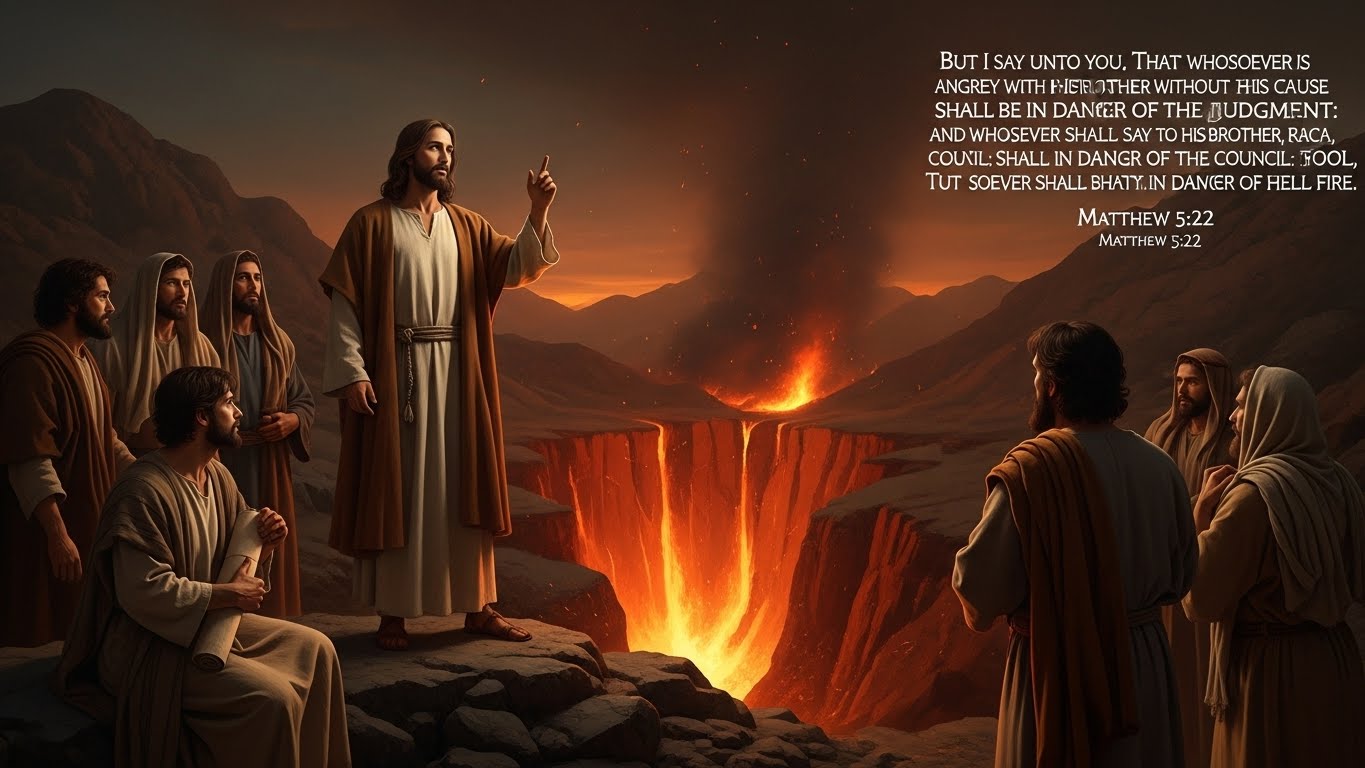
- “But I tell you that anyone who is angry with a brother or sister will be subject to judgment. Again, anyone who says to a brother or sister, ‘Raca,’ is answerable to the court. And anyone who says, ‘You fool!’ will be in danger of the fire of hell [Gehenna].” — Matthew 5:22.
- “Do not be afraid of those who kill the body but cannot kill the soul. Rather, be afraid of the One who can destroy both soul and body in hell.” — Matthew 10:28.
Speaker: Jesus of Nazareth, the incarnate Son of God, speaking as Teacher, Prophet, and Savior.
Audience: Varies by passage—disciples, crowds, Pharisees, and those listening on the hillsides or in synagogues. For example, the Sermon on the Mount (Matthew 5–7) was addressed to a broad audience including His followers.
Historical and biblical context: Jesus used common Jewish imagery to communicate eternal realities. Gehenna was originally the Valley of Hinnom outside Jerusalem where child sacrifice had once occurred and where refuse burned—an accessible image of destruction and finality to His first-century hearers. When Jesus used this term, it carried moral gravity: the reality of divine judgment which calls for repentance. But always, Jesus paired warning with a path of restoration—faith in Him. The Gospel message frames judgment as a loving, sobering call to turn and trust.
UNDERSTANDING GOD’S PURPOSE, PROTECTION, AND PROMISE
God’s purpose in Jesus’ warnings about hell is pastoral and redemptive: He seeks to protect you from the worst consequence of sin, which is separation from Himself. His warnings underline the seriousness of sin, the holiness of God, and the reality of human choice. But the primary theme in Jesus’ ministry is restoration through Himself: God’s ultimate purpose is to reconcile people to Himself by the blood of Christ (2 Corinthians 5:18-19).
God protects you not by hiding judgment but by providing a Savior. Christ’s supremacy means that judgment and grace converge in the person of Jesus—He is the one who judges and the one who offers forgiveness. You’re called to faith over fear: fear should move you to repentance and trust, not to despair or escapism. The promise is this: repentant faith in Jesus leads to life, restoration, and fellowship with God. See John 3:16-17 and John 5:24.
🌊 GOING DEEPER — BIBLICAL CONTEXT
Jesus’ teaching about hell fits within the whole biblical narrative—from God’s holy judgment in the Old Testament to the final judgment taught in Revelation. Cross-references that help you see continuity include Deuteronomy 32:35 (God’s vengeance), Psalm 9:17 (the wicked’s fate), and later New Testament explanations like 2 Thessalonians 1:9 and Revelation 20:14-15 (the lake of fire).
A biblical narrative example is the parable of the sheep and the goats, where Jesus describes a final separation based on deeds of mercy and faith—the righteous inherit eternal life while the unrighteous face eternal punishment (Matthew 25:31-46). That story ties Jesus’ warnings to practical love and justice in daily life.
For related study on how the gospel reframes fear into hope, see our guide on Born Again Through Faith: Understanding John 3:16 In A Personal Way
Theological continuity
The Bible consistently balances God’s justice and mercy. From Genesis to Revelation you see that God’s holiness requires a response to sin, but God provides a remedy: sacrifice in the Old Testament points to Christ’s once-for-all sacrifice (Hebrews 10:10-14). Jesus’ teachings about hell are part of that continuity—warnings that point you to the cross and to the life He offers.
DOES JESUS’ TEACHING ABOUT HELL GUARANTEE PROTECTION, SUCCESS, OR FINANCIAL BLESSING?
No. Jesus’ teaching about hell does not promise automatic earthly protection, material success, or financial blessing as a reward for faith. The New Testament resists prosperity theology. Jesus calls you to take up your cross, not a guaranteed comfortable life (Matthew 16:24). Paul likewise emphasizes suffering with Christ as part of faithful living (Philippians 1:29).
Scripture corrects the misconception that faith leads to material blessing by pointing to faithful endurance, sanctification, and the hope of eternal reward. Consider 2 Corinthians 4:17-18 which reframes present suffering in light of eternal glory, and Matthew 6:19-21 which warns against storing up earthly treasures as if they were ultimate.
💡 MODERN CONNECTION — FAITH, ANXIETY, AND DAILY LIFE
Jesus’ words on hell should not fuel paralyzing anxiety; they should awaken you to the urgency of Christ’s call. When you worry about judgment or your status before God, turn to clear gospel promises: confess your sin (1 John 1:9), rest in Christ’s finished work (John 19:30), and let the reality of judgment motivate obedience and love rather than fear-based avoidance.
In decision-making, let Jesus’ warnings sharpen your moral attention: pursue holiness, love your neighbor, and act with mercy. In worship, remember that Christ’s authority gives you confidence before God (Hebrews 4:16). In daily faithfulness, practice repentance and trust, not anxious speculation about the details of final punishment.
🛠️ Faithful Stewardship Tip For believers who feel called to share biblical truth online, choosing a reliable platform is part of faithful stewardship. Consider using Hostinger to create a secure, easy-to-manage site for teaching, discipleship, and sharing Scripture-driven content that honors God’s purposes and helps you steward your ministry responsibly.

ANGELS / PROMISE / DOCTRINE AND GOD’S PROTECTION
You are not called to place your faith in angels or signs as your primary protection; your faith is to be placed in God through Christ. Jesus demonstrated authority over spiritual powers (see Matthew 8:28-32) and promised the presence of the Holy Spirit to empower and protect believers (John 14:16-17). The proper posture toward spiritual beings is humility and dependence upon God, not superstition or a search for extra guarantees.
God’s protection is providential and relational: He guards your soul as you abide in Christ (John 10:27-29). That protection does not always exempt you from hardship, but it secures you in the promise of Christ’s presence and final triumph.
❤️ PRACTICAL APPLICATION
- Repent regularly. Confess specific sin and seek God’s forgiveness through Christ (1 John 1:9).
- Love practically. Let concern for others’ eternal state motivate acts of mercy and gospel conversation (Matthew 25:35-40).
- Anchor in Scripture. Memorize Jesus’ promises about forgiveness and life (John 3:16).
- Lead others gently. Share warnings with humility and point people to Christ’s cross (Galatians 6:1).
- Practice gratitude and hope. Let the reality of eternal life shape priorities and reduce fear (Philippians 3:20).
🪞 FAITH REFLECTION BOX
Take a moment to ask: Where do you feel fear about judgment? Pray for a renewed trust in Christ’s mercy, confess what you find, and worship the One who invites you into new life through repentance and faith (Romans 10:9-10).
A PRACTICAL TAKEAWAY
- Jesus warns about hell to call you to repentance, not to terrify you without hope.
- Gehenna imagery stresses serious consequences for unrepented sin.
- Christ’s death and resurrection offer rescue from judgment for those who trust Him.
- You are called to live in faith, holiness, and compassionate witness.
- God’s ultimate aim is restoration, and He invites you to participate in that mission through faithful living.
❓ Q&A — BIBLE ANSWERS EXPLAINED
Q1 (Doctrinal): Is hell eternal according to Jesus?
A1: Jesus speaks of eternal outcomes—terms like “eternal punishment” appear in the judgment context (Matthew 25:46). This indicates finality and enduring consequences for those who reject God’s mercy.
Q2 (Practical): How should worry about hell shape my evangelism?
A2: Let it fuel compassion and urgency, not shame or coercion. Jesus modeled calling people to repentance with love; follow His example by sharing the gospel clearly and lovingly (Luke 5:32).
Q3 (Misconception): Did Jesus describe hell as a place of literal fire and torment only?
A3: Jesus used vivid imagery—fire, darkness, weeping—to communicate seriousness, but these images point to real separation from God and suffering due to sin (see Mark 9:43-48). The focus is both moral and relational: exclusion from God’s life and blessing.
CONCLUSION & PRAYER
Jesus taught plainly about hell because He loves you and wants you to choose life in Him. His warnings expose the reality of sin and the need for radical repentance, while His life and death provide the rescue. Put your faith in Christ, live in obedience that flows from gratitude, and let the seriousness of judgment motivate mercy, not despair.
Prayer: Lord Jesus, thank You for speaking the truth in love. Give me the courage to turn from sin, the humility to receive Your mercy, and the boldness to share Your grace with others. Keep my heart anchored in Your cross and resurrection, and help me live for Your glory. Amen.
 RELATED BIBLE TEACHINGS
Is Hell Real According To The Bible? (Matthew 25:46, Revelation 20:14-15) (1)
Who Will Go To Heaven? (Matthew 7:21-23, John 14:6)
Want to explore more? Check out our article on Why Jesus? and discover the life-changing truth of the Gospel.