

The beliefs and practices of the first Christians didn’t come out of nowhere—they were shaped by everything Jesus did through His resurrection, ascension, and the coming of the Holy Spirit. To understand this foundation, follow the story in What Happened After Jesus Rose From the Dead? (Full Timeline Explained) and see how it led to the birth of the church in How Did The Early Church Start? (Book Of Acts Explained).
You’ve probably wondered: what did the very first Christians actually believe and how did they live day to day? When you read the earliest records, especially the book of Acts and Paul’s letters, you see a lively, often messy, deeply committed group shaped by the life, death, and resurrection of Jesus. This article walks you through the core beliefs and practical habits of that early movement, with Scripture links so you can read the original passages yourself.
Quick answer
In short: the first Christians believed that Jesus was the Messiah, they trusted him for salvation, they met regularly for teaching, prayer, and the Lord’s Supper, they shared everything in common to care for one another, and they were committed to telling others about Jesus. Their faith was both personal and communal, theological and very practical.
Key verse
A snapshot of their life is captured in Acts 2:42, which highlights the things that grounded early Christian identity.
The historical starting point: who were “the first Christians”?
You should picture the earliest Christians as people rooted in first‑century Jewish life but shaped by an extraordinary event: Jesus’ resurrection. Many were Jews who came to believe that Jesus fulfilled the Hebrew Scriptures. From Jerusalem they spread outward through trade routes, travel, and missionary journeys, forming communities that mixed backgrounds—Jews and Gentiles, slaves and free, men and women. Those communities were small by today’s standards, intense in relationships, and often persecuted for their convictions.
What they believed about Jesus
The first Christians centered everything on Jesus—his life, death, resurrection, and ongoing rule. They proclaimed him as Lord and Messiah, often using language drawn from Jewish hope but understood in a new light. For example, the apostolic preaching focused on Jesus’ resurrection as the decisive vindication of his identity and mission. When you read Acts 2:42 and related passages, you see belief in Jesus driving both worship and mission. The early creedal statements that emerge in Paul’s letters show that faith in Jesus was both a theological conviction and an existential trust that changed everything about who people were.
✝️ WHAT the early Christians believed
These beliefs are rooted in the resurrection, which is explained in The Meaning of the Resurrection of Jesus Christ.
Faith and conversion: what did it mean to believe?
Belief for the early Christians was not merely intellectual assent; it was a trust that led to baptism and new life. They said “Jesus is Lord” and meant it in ways that reshaped identity, allegiance, and daily practice. You can see the pattern in passages like Romans 10:9–10, where confessing Jesus and believing in your heart are linked to salvation. Conversion often involved hearing the apostolic testimony, responding in faith, and being baptized into the community (see Romans 6:3–4). That baptism symbolized dying to the old way and rising with Christ.
Apostolic teaching and Scripture
The earliest communities were formed and guided by the apostles’ teaching. That teaching included the life and words of Jesus, the meaning of his death and resurrection, ethical instructions, and practical guidance for community life. Acts repeatedly shows people devoting themselves to “the apostles’ teaching” (see Acts 2:42). Paul and other letters circulated to provide ongoing instruction, corrected misunderstandings, and reinforced core doctrines. Early Christians read Scripture (the Jewish Scriptures) in light of Jesus, interpreting prophecy and law through the lens of Christ’s fulfillment (see Luke 24:45–49).
⚡ HOW they lived and practiced their faith
You can explore this further in What Does The Holy Spirit Do? (7 Powerful Roles Explained).
Worship practices: prayer, preaching, and the Lord’s Supper
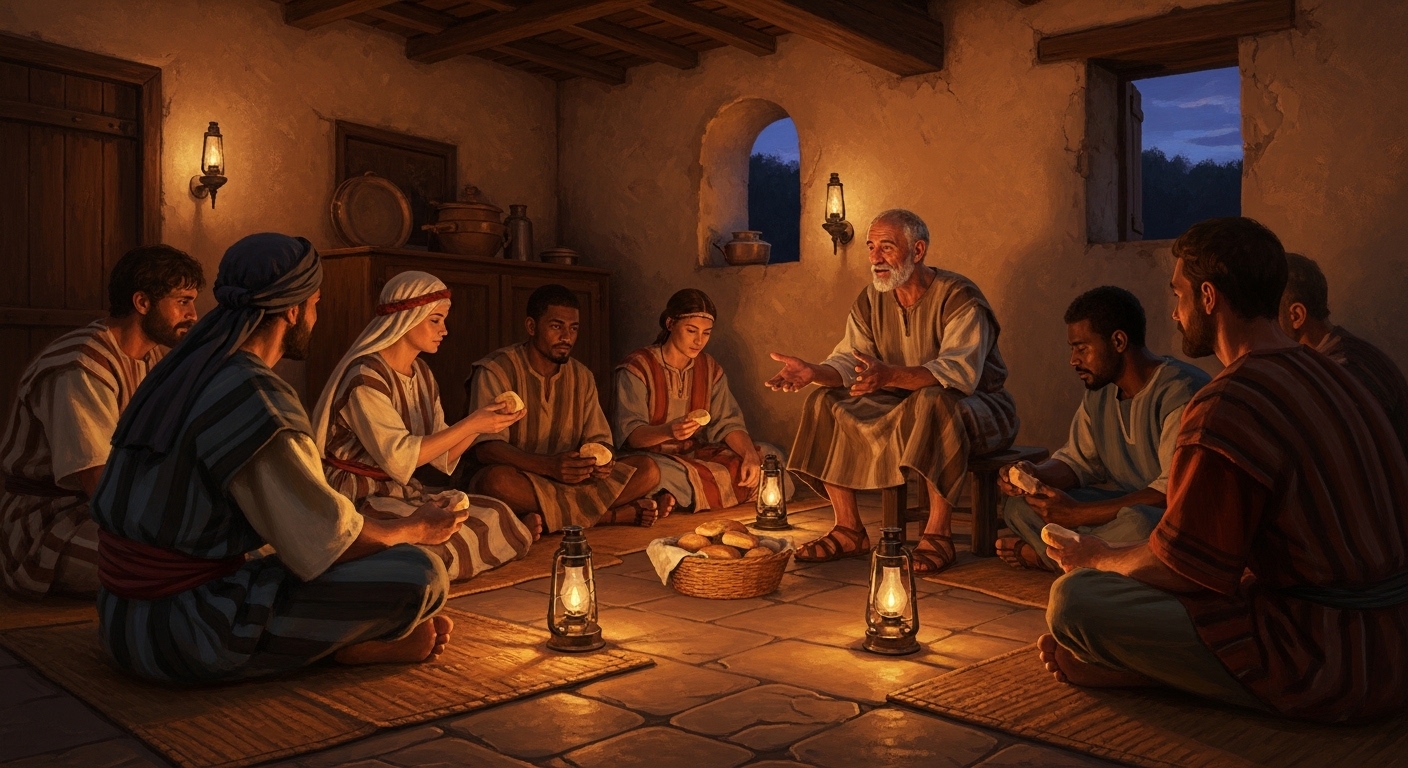
The first Christians met to worship and to remember Jesus. Their gatherings included prayer, teaching, singing, and the breaking of bread. Prayer was frequent and heartfelt—Paul tells you to “rejoice always, pray continually” in 1 Thessalonians 5:16–18. The Lord’s Supper (or Eucharist) became a central ritual. Paul recounts the institution of the meal in 1 Corinthians 11:23–26, showing that the early church commemorated Jesus’ death until he returns. Worship combined remembrance and hope—it looked back to what Jesus did and forward to his promised return.
Baptism: initiation into the community
Baptism functioned as the public entry into the Christian community. It was a ritual tied to repentance and repentance’s outward sign. When people believed the gospel, they were baptized, often immediately, which expressed a new identity in Christ and communal belonging. The New Testament describes baptism as participation in Christ’s death and resurrection (Romans 6:3–4). For you, baptism in the early church was not optional moral polish; it was the visible mark that you shared in the life, death, and hope tied to Jesus.
Community life and economic sharing
One of the most striking features of the early church was its strong sense of community and practical care. Acts describes believers who “had everything in common” and distributed to anyone in need (Acts 2:44–47). That didn’t always mean a uniform practice of communal property, but it did mean an ethic of sacrificial giving and mutual care. Later examples, like Acts 4:32–35 show people selling property to support those who lacked. The point for the early Christians was this: faith produced visible acts of love that knit communities together and testified to the world.
Teaching, discipleship, and formation
You see in the first communities a strong emphasis on discipling new believers. Teaching from apostles and elders helped form the group’s beliefs and practices. The goal was moral formation and spiritual maturity, not just intellectual knowledge. Paul’s vision in Ephesians 4:11–16 reveals the job of leaders: to equip the body so each person grows in maturity. That meant systematic instruction, correction, and encouragement. Discipleship in the early church took place within households, communal meals, and public gatherings—your faith would be formed by relationships as much as by sermons.
👀 FAITH / HISTORICAL FOUNDATION
If you’re exploring whether these beliefs are grounded in truth, see Evidence for the Resurrection of Jesus Christ.
Mission and evangelism: why they were so bold
The first Christians saw themselves as bearers of a message with cosmic and eternal implications. Jesus’ command to make disciples (the Great Commission) fueled their outreach. You can read that in Matthew 28:18–20 and in the apostolic preaching throughout Acts. They shared the gospel wherever they went—marketplaces, homes, synagogues, and public squares. Mark’s record of the directive “go into all the world and preach the gospel to all creation” (Mark 16:15) captures that missionary urgency. Mission for them was not optional extra work; it was the logical overflow of lives transformed by Christ.
Ethics and the moral life
The beliefs of the early Christians translated into an ethical framework that touched every part of daily life. They valued holiness, honesty, sexual purity, care for the poor, and justice. The New Testament letters repeatedly address how the gospel should shape relationships—marriage, business, and civic life. For instance, James insists that faith without works is dead (James 2:14–26), showing that belief must express itself in loving action. Paul’s letters likewise call you to live out the new identity you have in Christ. In short, early Christian belief and practice were inseparable.
Leadership and organization
Although a strong egalitarian impulse runs through the earliest communities—every believer matters—practical organization did develop. The apostles, elders, overseers (bishops), and deacons emerge as roles to maintain teaching, oversee worship, and care for the vulnerable. You see references to such roles in Paul’s guidance to Titus and Timothy and in general pastoral letters, and the apostolic activity in Acts shows itinerant apostles who planted churches. Leadership aimed to preserve apostolic teaching and sustain healthy communities, not to build hierarchical power.
Worship style: simplicity and sincerity
Worship in the first century was shaped by the limits and possibilities of small house churches. Gatherings were simple and participatory: reading Scripture, teaching, testimonies, spontaneous prophetic words, prayers, singing, the Lord’s Supper, and sometimes sharing resources. Hebrews exhorts you not to neglect meeting together (Hebrews 10:24–25), showing how central communal worship was. The earliest worship emphasized authenticity—your heart, your testimony, and your communal care mattered more than ornate ritual.
The sacraments: baptism and the Lord’s Supper again
You should appreciate how the two primary sacraments—baptism and the Lord’s Supper—functioned practically. Baptism was entry; the Lord’s Supper was ongoing remembrance and fellowship. Paul’s account in 1 Corinthians 11:23–26 shows how central the meal was to identity and expectation of Christ’s return. The sacraments were not purely symbolic for the early church; they were means by which you experienced and proclaimed the reality of Christ’s saving work and the unity of the community.
⚡ HOW they lived and practiced their faith
You can explore this further in What Does The Holy Spirit Do? (7 Powerful Roles Explained).
Gifts of the Spirit and charismatic life
The early church expected God to act powerfully through the Spirit: prophecy, healing, tongues, and other gifts were common. Acts portrays the Spirit descending and empowering people for witness and ministry. Paul’s instruction on spiritual gifts in letters highlights both the gifts’ variety and their purpose: to build up the body of Christ (Ephesians 4:11–16). The charismatic dimension meant that their assemblies could be unpredictable and dynamic—someone might speak a prophetic word, another might pray for healing, and all were encouraged to love and test what was said.
Relationship to Judaism
The first Christians emerged from Jewish contexts, and the early Jesus movement was initially a Jewish sect. You should remember that many first‑generation believers worshipped in the temple and synagogue and continued to observe certain Jewish rhythms. Over time, as more Gentiles joined and theological disputes arose, distinct practices and identities formed. Acts narrates the controversies and decisions that helped define the movement, emphasizing both the continuity with Jewish Scripture and the novelty introduced by Jesus’ resurrection and the Spirit’s work.
Persecution and suffering
Christianity didn’t spread because it was fashionable; often it grew amid opposition. Early believers experienced social rejection, legal pressure, and sometimes violence. Persecution, however, often clarified identity and deepened commitment rather than extinguishing faith. You see resilience in the book of Acts and the letters: suffering was reframed as participation in Christ’s sufferings and an occasion for witness. Paul’s letters repeatedly encourage you to endure hardship with hope, seeing persecution as a context in which the church’s testimony becomes more credible.
Women, family, and household structures
Women played significant roles in the early communities—as patrons, prophets, deacons, and house hosts. The early church formed around households; the “house church” model meant that family dynamics were central to church life. Instructions on household behavior in Paul’s letters show how the gospel reshaped relationships—wives, husbands, children, and slaves were addressed in light of Christ’s lordship. You should note that while the culture around them remained patriarchal, Christian teaching often elevated the social and spiritual dignity of women and the vulnerable.
How doctrine and practice were formed together
You must see that doctrine and practice in the early church were intimately connected. Beliefs about who Jesus was (high Christology), what he accomplished, and what the Spirit does shaped how people prayed, ate, worked, and loved. Conversely, practices—baptism, communal meals, care for the poor—reinforced doctrinal convictions. The movement’s theology wasn’t abstract: it was lived, argued, celebrated, and sometimes contested in real time. Read passages like Galatians 2:20 to sense how theology became lived identity.
How they handled teaching and false doctrine
The early church faced theological disagreements and false teaching. The apostles and early leaders guarded the apostolic message, corrected errors, and urged discernment. Paul’s letters address doctrinal distortions and ethical lapses, calling you to hold fast to the gospel and to test prophetic claims. The community’s reliance on Scripture and apostolic testimony became a yardstick for orthodoxy, and the practice of public teaching and communal discernment helped preserve a shared core of belief.
Daily life: work, rest, and rhythms
Early Christians lived in normal social patterns—you worked, slept, ate, and celebrated—but those rhythms were now shaped by discipleship. Sabbath and prayer rhythms, daily fellowship, and shared meals became life patterns. Paul and other writers encouraged you to live responsibly in your civic obligations while prioritizing the new identity in Christ. The Christian life was not an escape from daily realities; it was a transformation of everyday life through the lens of the gospel.
Mission strategy: small groups, preaching, and witness
You can learn from their mission methods. The early church combined grassroots relational evangelism with public proclamation. Houses hosted small groups; apostles and evangelists preached publicly; communities embodied the gospel in shared lives. The combination of relational faithfulness and prophetic proclamation allowed the movement to spread rapidly. Their strategy was less about marketing and more about incarnational presence: living out the gospel in neighborhoods, marketplaces, and homes.
💡 The CORE MESSAGE
To understand the foundation of their faith, read What Does “He Is Risen” Mean?.
What you can learn and apply today
There’s practical wisdom you can borrow from the earliest Christians. First, faith should deeply shape your daily habits—not just Sunday attendance. Second, community matters: you grow in faith through relationships, service, and shared life. Third, worship should be both reverent and authentic, shaped by Scripture but expressed in your cultural context. Fourth, mission flows from transformed lives—your witness matters. Finally, expect costs: commitment often requires sacrifice and willingness to suffer for truth. Apply these by cultivating regular prayer, participating in faithful teaching, sharing generously, and being active in local community life.
Practical steps you can take right now
If you want to live more like the early church, start simply: commit to regular prayer and Scripture reading, find a small group or house church for accountability, practice hospitality by opening your home, give sacrificially to those in need, and look for opportunities to share your faith naturally. These steps will help you move from theory to practice, making belief visible in everyday life.
Common misunderstandings
You should avoid two extremes: romanticizing the past as uniformly perfect or dismissing early practices as irrelevant relics. The early church had flaws and conflicts, yet their core commitments—Jesus-centered worship, communal care, and witness—remain instructive. Also avoid treating their practices as identical prescriptions for all cultures and times; instead, translate the principles faithfully into your context.
Distinctives: how they differed from surrounding groups
The early Christians stood out in several ways: their confession of Jesus as Lord, their radical mutual care, their refusal to worship local gods, and their ethical distinctiveness (especially regarding sexual ethics and honesty). These distinctives provoked curiosity and sometimes hostility. Their faithful living often attracted others who sought an alternative to social fragmentation and spiritual emptiness.
Why their example still matters
You live in a world that often emphasizes individualism and quick fixes. The early church modeled a countercultural way of life: deep community, sacrificial generosity, theological seriousness, and bold witness. Their witness shows that faith can be both communal and transformative. Reading their story helps you imagine what a sustained, faithful Christian presence might look like in your neighborhood and work.
Resources for further reading
If you want to dive deeper into origins and practice, start with the book of Acts and Paul’s letters, and then consult modern studies on early Christianity and church history. You might also read how early communal practices developed in specific cultural contexts and how church organization emerged over time. For a short introduction, you can explore reputable historical summaries and commentaries that provide context around dates, cultural pressures, and theological developments.
👣 The ORIGIN of the church
The beginning of these practices can be seen in What Happened At Pentecost? (Acts 2 Explained Simply).
How did the early church start?
The early church began in Jerusalem following Jesus’ resurrection and the coming of the Spirit at Pentecost. People were persuaded by apostolic preaching about Jesus’ death and resurrection and responded by repenting, being baptized, and joining the new community—an event that sparked missionary expansion throughout the Roman world. Acts narrates this pattern repeatedly: proclamation, conversion, baptism, and community formation, all under the Spirit’s guidance (Acts 2:42–47). That dynamic explains how a small group became a movement that changed the ancient world.
A brief theological snapshot
If you had to summarize early Christian theology in a few points: Christ is Lord and risen; salvation comes through faith in Jesus and is expressed in baptism and new life; the Spirit empowers and gifts the church; Scripture and apostolic teaching guide belief and practice; and the church exists to worship, serve, and witness. These points are grounded in the witness of the New Testament and give you the essentials for understanding early Christian conviction.
Final reflections and application
As you reflect, notice this: the first Christians were ordinary people called into an extraordinary relationship with Jesus. Their faith was practical—affecting how they ate, prayed, worked, and cared for neighbors. If you aim to recover something of their spirit, focus less on reproducing ancient forms exactly and more on embodying their priorities: devotion to Christ, deep community, sacrificial generosity, faithful teaching, and persistent witness. Let those priorities shape how you live, worship, and serve today.
🔁 To understand the FULL STORY
To see how everything connects, read What Happened After Jesus Rose From the Dead? (Full Timeline Explained) and How Did The Early Church Start? (Book Of Acts Explained).
🔥 To go deeper into the HOLY SPIRIT
Learn more in Who Is the Holy Spirit? (Simple Bible Explanation) and What Does The Holy Spirit Do? (7 Powerful Roles Explained).
🙏 To apply this PERSONALLY
Take the next step by reading How To Receive The Holy Spirit (Biblical Guide).
✝️ To understand the FOUNDATION
Go deeper into the core message in The Meaning of the Resurrection of Jesus Christ.
Conclusion
The faith and practice of the first Christians combine theological depth with everyday devotion. You’re invited to learn from their example: believe with conviction, enter community intentionally, worship sincerely, give generously, and proclaim boldly. Their example still matters because it shows that a small, committed community can bear enduring witness to the gospel.
Prayer
Lord, help me live faithfully like the early church—rooted in Christ, committed to community, and bold in witness. Give me the grace to love tangibly, serve sacrificially, and proclaim your name with humility and joy. Amen.
Sponsored recommendation

Acknowledgment: All Bible verses referenced in this article were accessed via Bible Gateway (or Bible Hub).
Check out our latest post on Why Jesus? and discover the life-changing truth of the Gospel!”