


To fully understand the meaning of the ascension, it’s important to first explore the resurrection of Jesus. If you’re new to this, start with The Meaning of the Resurrection of Jesus Christ, or follow the full story in What Happened After Jesus Rose From the Dead? (Full Timeline Explained).
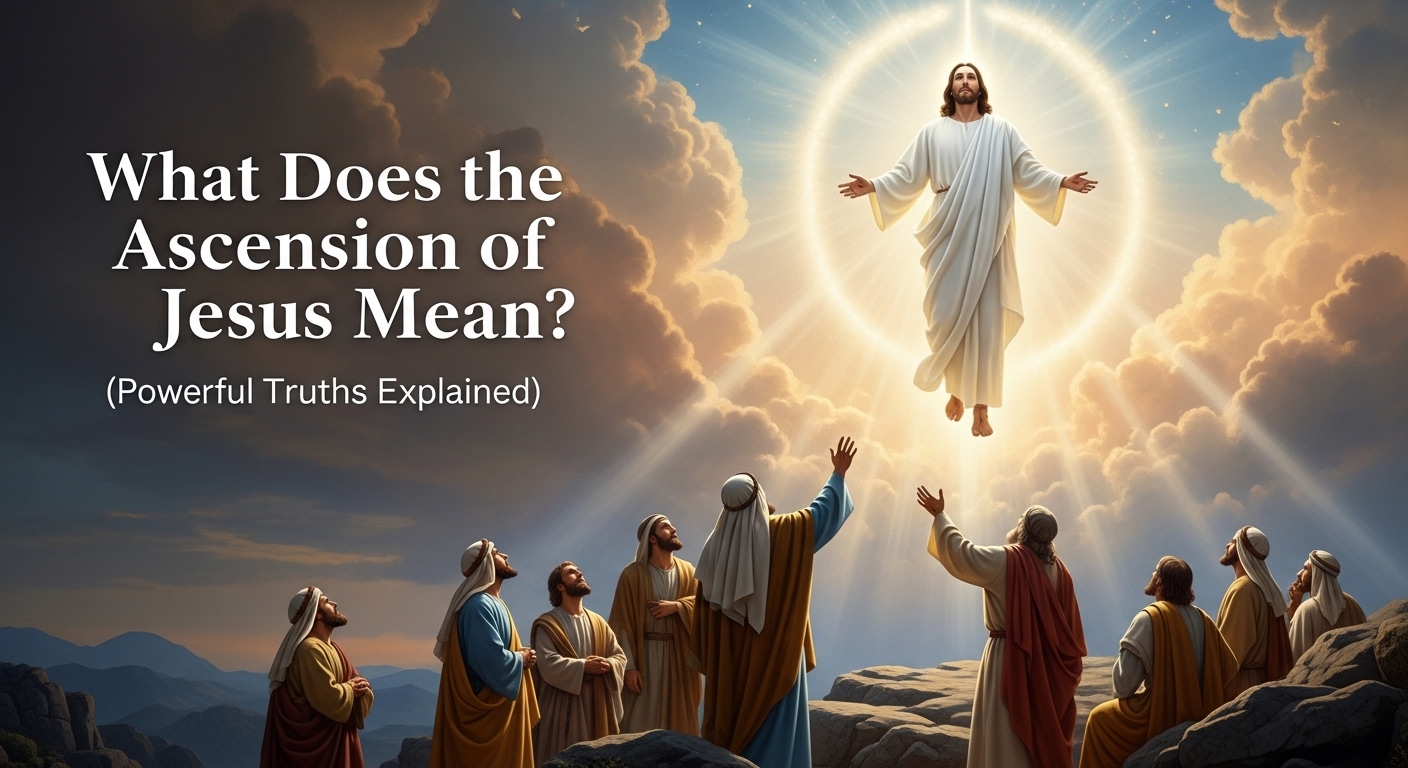
The ascension is often overlooked—but it holds deep meaning for your faith and daily life. When Jesus rose into heaven, He didn’t simply leave; He accomplished key things that shape how you understand who He is, what He did, and what you’re called to do now. In this article you’ll explore the biblical text, theological significance, historical context, and practical application so you can live confidently in the truth of Christ’s ascension.
Quick answer
The ascension means Jesus reigns, His mission is complete, and believers are now sent. It marks the end of His earthly appearances and the beginning of His heavenly rule and ongoing ministry on behalf of believers. The ascension reassures you that Christ is ruling at God’s right hand, interceding for you, and empowering the church through the Holy Spirit to continue His mission.
Key verse
Read the scene of the ascension in Scripture for yourself: Acts 1:9. In that brief verse you see the physical act of Jesus being taken up and a promise that frames everything that follows.
What happened in the ascension?
After His resurrection, Jesus spent forty days instructing His followers and opening their minds to understand Scripture and God’s purposes. On the day of the ascension He led them to the vicinity of Bethany, blessed them, and was taken up into heaven before their eyes. The disciples watched until a cloud hid Him from sight, and two angels reassured them that Jesus will return in the same way He left. See the pastoral account in Luke 24:50–53 and the more detailed narrative in Acts 1:9–11.
✝️ When explaining WHY the ascension matters
This becomes clearer when you understand Why the Resurrection Matters for Christians, which explains how everything begins with Jesus rising from the dead.
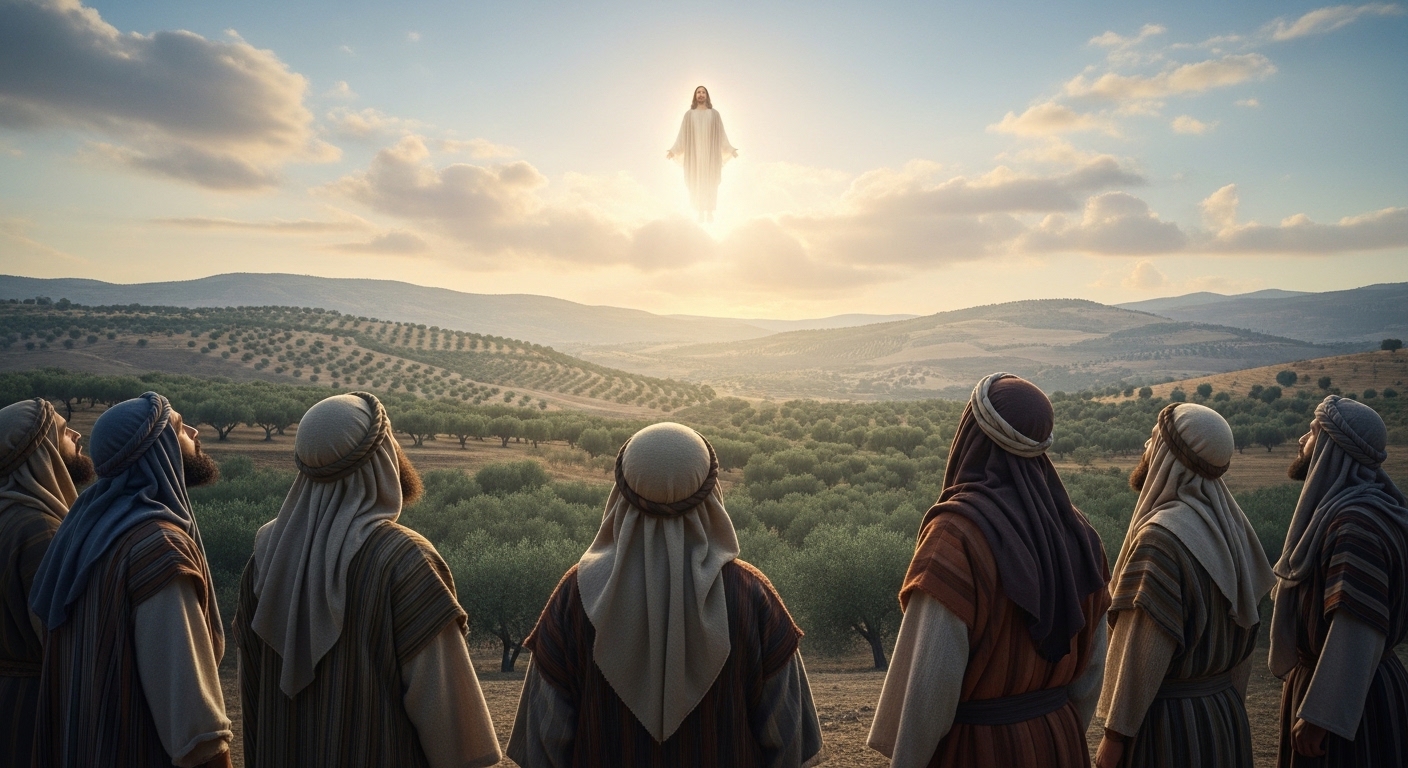
Explanation: Three powerful truths of the ascension
1. Jesus is King
When Jesus ascended, He was enthroned at the Father’s right hand, a biblical image of sovereign rule. The ascension is not just a departure; it’s an enthronement. Scripture links Jesus’ ascension with His exaltation and universal reign. Consider the picture in Ephesians 1:20–23, where Paul explains that God raised Christ from the dead and seated Him at His right hand in the heavenly realms, placing all things under His feet. Similarly, Philippians 2:9–11 shows Jesus being given a name above every name so that every knee will bow.
This kingly rule matters for you. It means Jesus has authority over history, pain, injustice, and your personal struggles. When He ascended, He didn’t abandon the world; He assumed rule over it. That rule is active and present even when circumstances seem chaotic. Because Jesus reigns, you can trust that God’s purposes are being worked out even now.

2. His work is complete
The ascension follows the resurrection and completes the saving work Jesus accomplished on the cross. When Jesus declared “It is finished” on the cross, salvation’s victory was secured (see John 19:30). The resurrection testified to the Father’s acceptance of that work, and the ascension affirmed Jesus’ finished mission by glorifying Him and assigning Him His place of authority.
Jesus’ final earthly words and actions sealed the mission: He taught His disciples, opened Scripture to them, and commissioned them before returning to the Father. In Luke 24:46–47, Jesus explains that repentance and forgiveness of sins should be proclaimed in His name to all nations. The ascension signals that the foundational work to defeat sin, death, and the powers is done, and now the proclamation and expansion of that salvation continues through the church.
For you, the completeness of Christ’s work brings assurance. You do not earn your right standing with God; it is secured in what Jesus completed. You live out the consequences of that finished work—freely forgiven, adopted, and empowered—not because of anything you did, but because of what He finished.
3. A new mission begins
The ascension marks the beginning of a new phase: Jesus sends the Spirit and commissions His followers to carry on His work. Right before He ascended, Jesus told the disciples they would receive power when the Holy Spirit came upon them and that they would be His witnesses “in Jerusalem, and in all Judea and Samaria, and to the ends of the earth” (Acts 1:8). The mission shifts from Jesus’ physical presence on earth to the church’s empowered witness through the Spirit.
The outpouring of the Spirit at Pentecost (see Acts 2:1–4) demonstrates how the ascension sets the stage for mission. Rather than being a withdrawal, the ascension launches Jesus’ body, the church, into active ministry under the authority of the risen and reigning Lord.
For you, this means you are part of Jesus’ ongoing mission. He is at the Father’s right hand, interceding and reigning, while you are empowered by the Spirit to witness, serve, and live out the gospel in everyday contexts.
👀 When explaining PROOF / REALITY of events
If you’re wondering whether these events are historically reliable, see Evidence for the Resurrection of Jesus Christ for a deeper look.

Biblical anchors and supporting passages
The New Testament consistently links the ascension to Christ’s ongoing work and cosmic authority. Here are key passages that help you understand the full picture:
- The narrative moment: Acts 1:9 and Luke 24:50–53.
- The promise of power and mission: Acts 1:8.
- Pentecost and the Spirit’s coming: Acts 2:1–4.
- Jesus seated at the right hand: Ephesians 1:20–23.
- Exaltation and universal lordship: Philippians 2:9–11.
- Christ as intercessor and advocate: Romans 8:34 and Hebrews 7:25.
- The Great Commission: Matthew 28:18–20.
- Jesus promises to return: Acts 1:11.
- Believers seated with Christ: Ephesians 2:6.
- Jesus prepares a place and will return: John 14:2–3.
- Jesus sends you as the Father sent Him: John 20:21.
- Christ as mediator between God and humanity: 1 Timothy 2:5.
- The hope of Christ’s future coming and the resurrection of believers: 1 Thessalonians 4:16–17.
Each of these passages contributes to the rich theological tapestry that makes the ascension so meaningful. When you weave them together, the picture is clear: Christ reigns, continues to mediate, and commissions His people while empowering them by the Spirit.
📖 When referencing SCRIPTURE / TEACHING
For key Scriptures related to this, read Bible Verses About the Resurrection of Jesus to deepen your understanding.
Historical and creedal perspective
The early church immediately recognized the ascension as a central truth. It appears in the creeds and liturgies that shaped Christian identity. The Apostle’s Creed simply states, “He ascended into heaven and is seated at the right hand of God,” a concise confession that points to authority, victory, and ongoing ministry. The Nicene Creed likewise affirms Christ’s enthronement.
Historically, church fathers reflected on the ascension as the confirmation of Christ’s divinity and sovereignty. They also emphasized the implication that Christ’s physical absence does not equal abandonment—rather, His heavenly presence is even more effective for cosmic redemption and the life of the church.
For you, the creedal affirmations are not dry theology but anchors for worship and trust. When you recite or remember these truths, you connect with generations of believers who have relied on the reigning Christ.
The ascension and the Holy Spirit
The ascension and the coming of the Spirit are tightly connected. Jesus told the disciples to wait in Jerusalem for the promised Spirit (Acts 1:4–5. See also Acts 1:8). The Spirit’s arrival at Pentecost launched the church into mission with boldness and power (Acts 2:1–4). In this way, the ascension prepares the way for God’s presence to dwell in and among believers rather than in a single physical body.
This shift affects how you relate to God today. You receive the presence of Jesus through the Spirit. You’re not left to mimic Jesus’ ministry; you’re enabled by the same Spirit who raised Jesus and equips the church to witness, serve, and love with supernatural power and perseverance.
The ascension and intercession
One of the most comforting theological truths tied to the ascension is Jesus’ ongoing intercession on your behalf. Scriptures teach that Christ intercedes for believers at the Father’s right hand (Romans 8:34; Hebrews 7:25). He is your advocate, bringing your needs and petitions before the Father and applying the benefits of His finished work.
Knowing Jesus intercedes changes how you pray and how you face life’s uncertainties. You can pray with confidence, knowing the risen and reigning Savior is active in heaven on your behalf. Intercession isn’t a passive role; it’s a dynamic ministry that secures grace, mercy, and ongoing spiritual benefit for God’s people.
The ascension and hope of Christ’s return
The ascension doesn’t only look backward to what Jesus accomplished; it also points forward to what He will complete. The angels who appeared at the ascension told the disciples, “This same Jesus… will come back in the same way you have seen him go into heaven” (Acts 1:11). Jesus’ ascension guarantees His return and frames your hope for the final consummation of God’s kingdom.
That future hope affects your present ethics and endurance. If Christ will return, then suffering is temporary, injustice will be addressed, and God’s purposes will be fully realized. The promise of a future resurrection and reunion (see 1 Thessalonians 4:16–17) means you can live with joyful expectation rather than despair.
🔥 When explaining SPIRITUAL MEANING
If you want a deeper explanation of what it means that Jesus rose, read What Does “He Is Risen” Mean?.
Practical application: Live with purpose and confidence
How do you live in light of the ascension? Here are practical ways to translate the truth into everyday life.
- Root your identity in the reigning Christ. You are loved, forgiven, and seated with Christ in spiritual reality (Ephesians 2:6). This changes how you see failures, achievements, and your worth.
- Serve with the Spirit’s power. The ascension makes possible the Spirit’s sending. When you serve or witness, rely on the Spirit’s power rather than just your own abilities (Acts 1:8; Acts 2:1–4).
- Pray with assurance. Jesus intercedes for you (Romans 8:34). Bring your needs boldly to the throne of grace.
- Engage the mission. The Great Commission continues—Jesus sent you as the Father sent Him (John 20:21; Matthew 28:18–20). Look for everyday opportunities to testify to God’s work in your life and to embody kingdom values.
- Keep eyes on the horizon. The ascension reminds you of Christ’s return (Acts 1:11). Live expectantly, with your actions shaped by eternity.
Each of these applications flows from the reality that Jesus reigns and is actively involved in the life of the church from heaven. When you internalize that truth, your confidence and purpose shift from striving to resting in what Jesus already accomplished and is continuing to do.
Common questions and honest answers
Did Jesus physically go to heaven?
Yes. The New Testament describes a bodily ascension—Jesus was taken up and a cloud hid Him from the disciples’ sight (Acts 1:9; Luke 24:50–53). The ascension involves real, historical movement and not merely a metaphor.
Is the ascension the same as the resurrection?
They are distinct but inseparably connected. The resurrection is Jesus’ victory over death, showing the Father’s vindication. The ascension is the consequent exaltation and seating of Jesus at the Father’s right hand—His entrance into heavenly rule. The resurrection makes the ascension possible and meaningful.
Did the ascension separate Jesus from believers?
No—though His physical presence changed, His relational and spiritual presence continues and is actually more widely accessible through the Holy Spirit. Jesus promised to be with you always and sent the Spirit to dwell within believers (John 14:2–3; Acts 2:1–4).
How is the ascension relevant to your everyday life?
The ascension shapes how you pray, how you interpret suffering, how you find identity, and how you engage in mission. It grounds your hope and gives authority to your witness. Living under a reigning Christ gives a stable orientation for your decisions, relationships, and vocation.
Pastoral reflections: How to hold tensions
You may wrestle with tensions—for example, “If Christ reigns, why is there suffering?” or “How do I wait faithfully for the Spirit’s work?” Healthy faith holds together the “already” and the “not yet.” The ascension says the decisive victory has occurred; the fullness of that victory is yet to be consummated. Until that consummation, you live as one redeemed and tasked to participate in God’s restorative work. Both assurance and urgency flow from the ascension.
Another tension is between dependence and action. The ascension calls you to both rely on Christ’s sovereign rule and to act in faithful obedience. You don’t wait passively; you act vigorously, empowered by the Spirit.
How worship grows from the ascension
Worship naturally springs from ascension truth. When you worship, you declare Jesus’ lordship and celebrate what He accomplished and continues to do. Hymns and liturgies that echo the ascension—celebrating Christ’s enthronement and role as intercessor—help you reorient your heart to heavenly realities. Worship keeps your perspective on the One who rules with justice and mercy, and it fuels your mission.
The ascension and your relationships
Because you’re joined to Christ, His ascension affects how you live in community. If Christ reigns, then the church is a community under His authority and love. Your interpersonal conflicts, service, and unity find meaning within the framework of Christ’s rule. The ascension calls you to reconcile, forgive, and serve as tangible evidence that Jesus’ kingdom is breaking in among people.
The ascension and suffering
The ascension doesn’t remove suffering, but it puts suffering in perspective. You can face trials knowing Christ’s rule means suffering is not final and is being redeemed. Christ intercedes, and the Spirit comforts and empowers. You can persist in hope because the one who ascended has the last word.
A brief theological wrap-up
In Christian theology, the ascension is integral to the story of redemption. It completes Christ’s earthly work, vindicates His mission, inaugurates His reign, and sends the Spirit to the church. It situates believers in a cosmic drama where the risen Lord rules, prays, and equips. When you connect these dots, the ascension stops being an isolated event and becomes the hinge that moves you from historical achievement to present empowerment and future hope.
What happened after Jesus ascended?
After the ascension, the disciples returned to Jerusalem, prayed together, and waited for the Spirit as Jesus instructed. Ten days later, on the day of Pentecost, the promised Spirit descended (Acts 2:1–4). The church was born as the gospel spread with power. The early followers began to witness boldly, perform acts of mercy, establish local communities, and expand the mission beyond Jewish boundaries. The ascension set this whole movement in motion—Christ enthroned at the center, the Spirit empowering the mission, and the church as the instrument of God’s ongoing grace.
If you want to explore more on that immediate aftermath, see a helpful overview here: What Happened After Jesus Ascended? (search the phrase on your favorite Bible study site or resource).

🙏 When adding DEVOTIONAL APPLICATION
For a more personal reflection, you may also want to read the Resurrection Devotional.
Conclusion
The ascension gives direction and hope. It tells you that Jesus reigns, that His saving work is complete, and that you are both sent and empowered to continue the mission. This event is not a distant theological footnote but a living reality that shapes your identity, prayer, worship, relationships, and purpose. Live with the confidence that the risen and enthroned Christ is active, interceding, and inviting you to participate in His redemptive work.
Prayer
Lord, help me live with purpose. Thank You for ascending in victory and for reigning with power. Send Your Spirit to empower my weak moments, guide my steps, and embolden my witness. Help me trust in Your intercession and return with hope. Amen.
🔗 Continue Exploring the Resurrection & Ascension
- The Meaning of the Resurrection of Jesus Christ
- What Happened After Jesus Rose From the Dead? (Full Timeline Explained)
- Where Did Jesus Go After The Resurrection? (Bible Explained)
- Why the Resurrection Matters for Christians
- Evidence for the Resurrection of Jesus Christ
- Bible Verses About the Resurrection of Jesus
- What Does “He Is Risen” Mean?
- Resurrection Devotional
Sponsored recommendation

Acknowledgment: All Bible verses referenced in this article were accessed via Bible Gateway (or Bible Hub).
“Want to explore more? Check out our latest post on Why Jesus? and discover the life-changing truth of the Gospel!”