

What Is Gehenna In The Bible? (Matthew 5:22, Mark 9:43)

1. Introduction
Have you ever wondered what Jesus actually meant when he used the word “Gehenna”? Maybe you read Matthew 5:22 or Mark 9:43 and felt a chill at the phrase “fire of hell” or “where the fire never goes out.” Those images can be unsettling, and they often leave people confused about whether God is simply a furious judge or if there’s a deeper, compassionate purpose behind the warning.
In this article, you’ll explore what Gehenna is historically and biblically, why Jesus used it as a warning, and how that truth matters for your daily life and faith. You won’t get only a dry theological lecture — you’ll get clear Scripture, real-world application, and a gentle invitation to live differently because of what God teaches through this sobering image.
2. The Bible Foundation
Read the verses that most often bring Gehenna to mind.
- Matthew 5:22 (NIV)
“But I tell you that anyone angry with a brother or sister will be subject to judgment. Again, anyone who says to a brother or sister, ‘Raca,’ is answerable to the court. And anyone who says, ‘You fool!’ will be in danger of the fire of hell.” - Mark 9:43 (NIV)
“If your hand causes you to stumble, cut it off. You should enter life maimed rather than with two hands to go into hell, where the fire never goes out.”

To understand these words, you also need the Old Testament background that made “Gehenna” a vivid image for Jesus’ audience:
- Jeremiah 7:31 (NIV)
“They have built the high places of Tophet in the Valley of Ben Hinnom to burn their sons and daughters in the fire—something I did not command, nor did it enter my mind.” - Jeremiah 19:2–6 (NIV)
“and say, ‘Hear the word of the Lord, you kings of Judah and people who live in Jerusalem. This is what the Lord Almighty, the God of Israel, says: Look! I am going to bring such a disaster on this place that the ears of everyone who hears of it will tingle. Because they have forsaken me and made this a place of foreign gods, they have burned sacrifices in it and have built the high places of Topheth to burn their sons and daughters in the fire—something I did not command or mention, nor did it enter my mind. So beware, the days are coming, declares the Lord, when people will no longer call it Topheth or the Valley of Ben Hinnom, but the Valley of Slaughter.’”
These passages show you two important things: Gehenna is rooted in a real place — the Valley of Hinnom (Ge Hinnom) near Jerusalem — and that place had a dark history of child sacrifice and desecration. Over time, Gehenna became more than geography; it became a powerful symbol of judgment and ruin.
3. Understanding the Core Truth
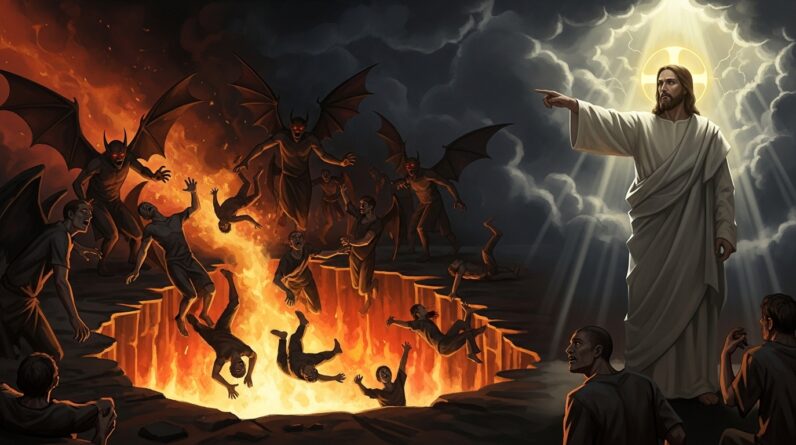
In simple terms, Gehenna in the Bible is a loaded symbol Jesus used to warn about the real, eternal consequences of persistent evil. When Jesus speaks about Gehenna, he isn’t describing a fairy-tale underworld or merely trying to frighten you into compliance. He is calling attention to the seriousness of sin and the urgency of choosing life with God.
Why this matters: You live with choices that have moral and spiritual weight. Jesus’ words about Gehenna are meant to jolt you out of complacency. They remind you that sin isn’t a harmless private matter — it damages relationships, warps your heart, and can lead you away from the life God desires for you. Gehenna, then, stands as an image of what happens when people relentlessly choose self-destructive paths.

4. Going Deeper — The Hidden Meaning
Dig a bit deeper and you’ll see that Jesus’ use of Gehenna carries both historical memory and pastoral urgency. First-century Jews knew Gehenna as a cursed valley associated with the most abominable practices of the past — Topheth and child sacrifice. The valley was later used as a dump and place of continual burning, which made it a vivid metaphor for destruction that doesn’t go away.
The deeper lesson for you is heart-level: Jesus’ warning is not just about external punishment but about the internal consequences of unrepentant inner attitudes — hatred, contempt, greed, hardness of heart. In Matthew 5:22, he equates uncontrolled anger and contempt with being “in danger of the fire of hell.” He’s saying: if you let bitterness rule you, you’re on a path that breaks you, isolates you from others, and separates you from God.
A helpful Bible story is the parable of the Prodigal Son (Luke 15:11–32). The younger son’s choices led him to a wasteland, but repentance brought restoration. Gehenna is the warning of what happens if the prodigal refuses to return — it’s the long-term consequence of unrepentant living.
5. Modern Connection — Relevance Today
How do you connect a valley near ancient Jerusalem to your life in 2025? Gehenna translates into everyday realities you face: relationships broken by anger, careers wrecked by greed, communities harmed by apathy, and personal souls dulled by unrepentant patterns.
You might shrug off small sins thinking they’re no big deal, but Jesus’ language invites you to evaluate your heart. Do you hold grudges? Do you mock or belittle others? Are there patterns you repeatedly excuse? Gehenna warns you that persistent choices create habits and consequences that are hard to undo.
In your neighborhoods, workplaces, and families, the life-or-death imagery of Gehenna calls you to make bold, practical changes: choose reconciliation, seek humility, uproot self-destructive habits, and pursue holiness — not out of fear alone but out of love for God and others.

6. Practical Application — Living the Message
Here are realistic steps you can take this week to live with the warning of Gehenna in mind, but the grace of Jesus as your motivation:
- Notice and name: When you feel habitual anger or contempt, pause and name it. Awareness is the first step toward change.
- Remove temptations: If a relationship, habit, or media repeatedly leads you into harmful patterns, put practical boundaries in place. Jesus’ hyperbole about cutting off a hand or plucking out an eye presses you to remove what causes ongoing sin.
- Confess and repair: Confess your wrongs to God and, where possible, seek to repair damage — apologies, restoration, making amends.
- Replace with positive action: Fill the space with prayer, Scripture, and serving others. Replacement is more sustainable than mere abstinence.
- Seek community and accountability: You weren’t meant to battle alone. Invite a trusted friend, mentor, or pastor into honest accountability.
These steps don’t reduce God’s justice — they let God’s grace work in you so that the dire warning about Gehenna becomes a catalyst for transformation, not despair.
7. Faith Reflection Box
Take a deep breath. Where do you see patterns of anger, contempt, or persistent selfishness in your life? How might Jesus’ warning about Gehenna be a mercy — a wake-up call to choose differently today?
Key Takeaways:
- Gehenna refers to the Valley of Hinnom and became a biblical symbol of judgment and destruction.
- Jesus used Gehenna to warn about the serious, eternal nature of sin and hardened hearts.
- The warning is pastoral and urgent — meant to lead you to repentance, not despair.
- Practical steps (awareness, boundaries, confession, replacement, accountability) help you align your life with God’s ways.
- God’s invitation is restorative: warnings point you toward repentance and renewed life in Christ.
8. Q&A
Q1: Isn’t Gehenna just an old cultural image — does it still matter to Christians today?
Answer: Yes, Gehenna is rooted in a historical place and cultural memory, but its theological meaning remains deeply relevant. Jesus used real imagery his listeners understood so they would grasp the seriousness of sin and the stakes of spiritual choices. For you, that means ancient geography becomes a present-day call to attention: choices have consequences. Paul reminds you in Romans 6:23 that “the wages of sin is death, but the gift of God is eternal life in Christ Jesus our Lord,” emphasizing both judgment and grace. Treat the warning as a merciful wake-up call toward repentance and life.
Related: What Is Sheol In The Bible? (Psalm 16:10)
Q2: Does Gehenna mean that God is vindictive and enjoys punishment?
Answer: No — Jesus’ warnings about Gehenna arise from love and justice, not vindictiveness. God’s heart is to restore and redeem; He warns because He cares about your long-term well-being. Scripture balances warning with mercy: 2 Peter 3:9 says God is “not wanting anyone to perish, but everyone to come to repentance.” The purpose of warnings is corrective — God seeks to draw you back, not to delight in your destruction. Obstinately rejecting God’s love leads away from life; warnings are attempts to prevent that tragedy.
Q3: How should I talk to others about Gehenna without sounding harsh or judgmental?
Answer: Speak with humility and empathy. Share your own struggles and the hope you’ve found in Christ rather than lecturing. Use Jesus’ tone — candid but compassionate. Emphasize God’s desire for repentance and transformation, and offer concrete help (prayer, accountability, practical support). Scripture encourages you to speak the truth in love (Ephesians 4:15), combining honesty about consequences with a posture of compassion and service. Offer the gospel: warnings paired with grace.
See also: Is Hell Real According to Scripture? (Matthew 10:28)
9. Conclusion & Reflection
Gehenna is more than a scary word — it’s a historical symbol Jesus used to call people away from the destructive power of sin and toward life in God. When you read Matthew 5:22 and Mark 9:43, hear both the warning and the invitation: wake up, turn from what destroys, and choose the path of life.
Prayer: Lord, thank You for Your clear words and kind warnings. Help me to recognize the places where I’ve allowed bitterness, contempt, or selfishness to grow. Give me the courage to remove what causes harm, the humility to seek forgiveness, and the strength to walk in new life. Lead me by Your Spirit, and help me share Your truth with compassion. In Jesus’ name, amen.

More Inspiration Awaits — Read These Next
 For deeper insight into Isaiah 40:31 and how it renews your strength in both faith and daily life
For practical lessons on compassion and neighborliness from the Good Samaritan
For a clear explanation of what we can learn from the Parable of the Good Samaritan
For meaningful insights from the Parable of the Pearl and its hidden treasures
For a deeper look at the Rich Man and Lazarus and what it reveals about the afterlife
For guidance on the Parable of the Ten Virgins and preparing for God’s Kingdom
For clarity on the Parable of the Lamp and how it calls us to shine our light
For insights from the Parable of the Wedding Feast and the meaning behind the invited guests
 Jesus and the Woman Caught in Adultery – Grace and Mercy Over Judgement
A powerful retelling of John 8:1-11. This book brings to life the depth of forgiveness, mercy, and God’s unwavering love. Check it now on Amazon 


 “Every great message deserves a home online.”


Don’t let your calling stay hidden. Start a Christian blog or website using Hostinger — with 99.9% uptime, a free domain, and SSL, your voice can shine for God’s glory anytime, anywhere. Begin today. Try it RISK-FREE! 

 “Your body is God’s temple — care for it with purpose.”


Renew your energy and restore balance naturally. Mitolyn helps support a healthy metabolism, giving you the vitality to live out God’s calling with strength and confidence.
Unlock Your Metabolic Power!  Burn More Calories & Feel Great With Mitolyn.
Start Today.  Check Price Now.
As a ClickBank & Amazon Affiliate, I earn from qualifying purchases.
 Acknowledgment: All Bible verses referenced in this article were accessed via Bible Gateway (or Bible Hub).
Want to explore more? Dive into our new post on Why Jesus? and experience the life-changing truth of the Gospel!