


To understand why Jesus ascended into heaven, we first need to look at what happened after His resurrection. You can follow the full story in What Happened After Jesus Rose From the Dead? (Full Timeline Explained) or explore the foundation in The Meaning of the Resurrection of Jesus Christ.

Why didn’t Jesus stay on earth?
You’ve probably asked that question at some point: Jesus healed, taught, forgave, and walked among people—so why didn’t He just stay? The ascension of Jesus into heaven is one of those pivotal moments in the New Testament that carries deep theological meaning and practical implications for your faith today. It isn’t simply a historical footnote; it shapes how you understand Christ’s ongoing work, your access to God, and the mission you’re called to carry out.
Quick answer
Jesus ascended to complete His earthly mission, return to the Father, send the Holy Spirit, and inaugurate His reign and ministry from heaven. His going up was not abandonment but the essential next step in God’s redemptive plan so that the church could be empowered and the gospel could spread worldwide.
Key verse
A short verse that captures one of the primary reasons is John 16:7. In this verse Jesus tells His disciples that it is for their good that He goes away, because then the Advocate—the Holy Spirit—will come to them. That single statement opens up a theological doorway into why the ascension was necessary and how it benefits you personally.
The biblical account of the ascension
The New Testament gives you several snapshots of the ascension, showing both the event and its meaning. One of the clearest narratives is in the book of Acts where Luke records the actual moment Jesus was taken up and the disciples were left looking into the sky. Read Acts 1:9-11 and you’ll find angels telling the disciples that Jesus will come back in the same way He left. That scene ties the ascension to the promise of Christ’s return and sets the stage for the church’s mission.
Luke also records the closing scenes of Jesus’ ministry in Luke 24:50-53, where He blesses the disciples and is lifted into heaven. John gives you another angle earlier, when Jesus tells Mary not to cling to Him because He must ascend to the Father in John 20:17. Together these passages show the event and explain its purpose in various theological dimensions.
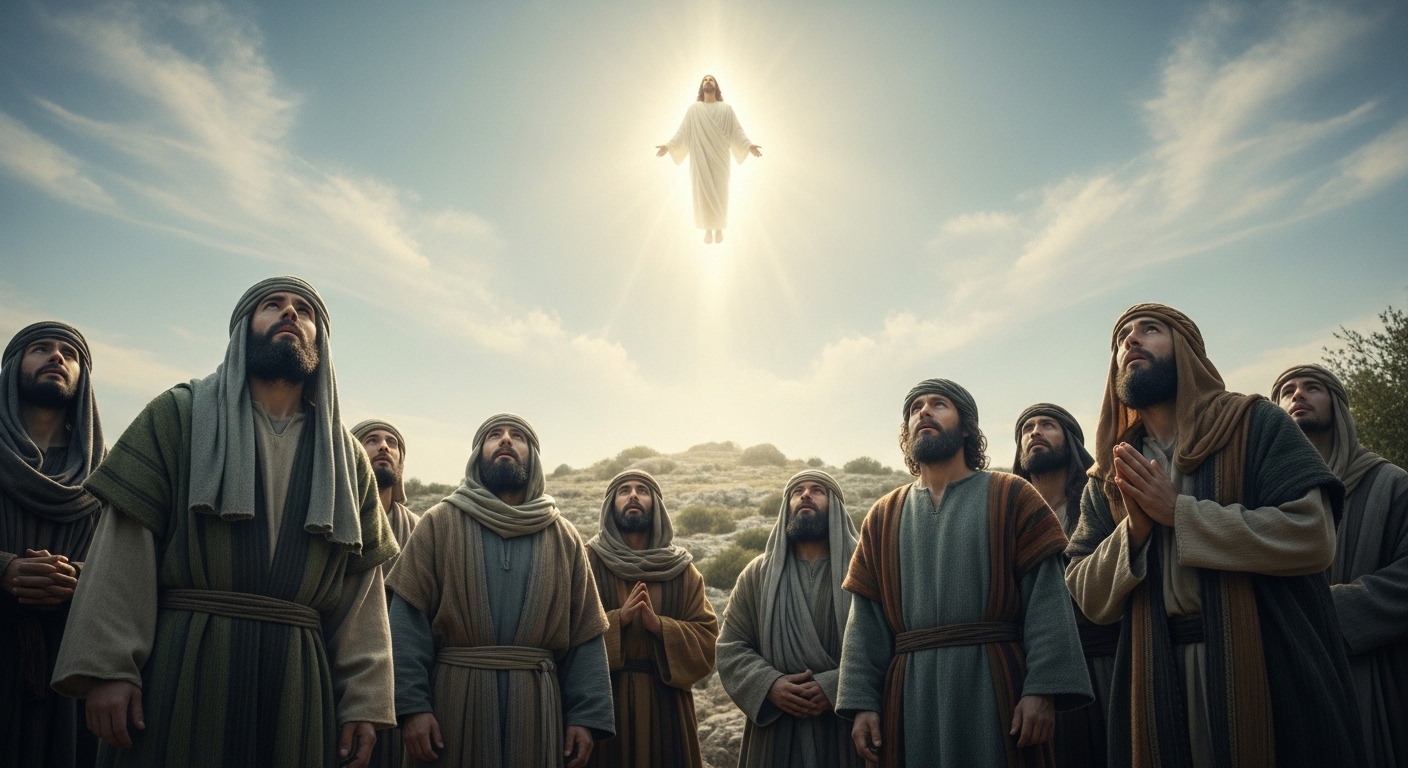
To send the Holy Spirit
Jesus promised the Spirit would come after He returned to the Father
From Jesus’ own words, one clear reason for the ascension is to make way for the gift of the Holy Spirit. Jesus tells His disciples that it’s better for them if He goes away because the Advocate will come: John 16:7. The Spirit’s coming at Pentecost (recorded in Acts 2) is directly linked to Jesus’ departure. When you read Acts 2:1-4, you see the promised empowerment for witness, boldness, and a new, indwelling presence of God with believers.
Why the Spirit matters to you
The Holy Spirit changes how God relates to believers. Instead of Jesus being physically present on earth, the Spirit dwells within you, guiding, comforting, convicting, and empowering you for holy living and witness. The ascension, therefore, is not a loss of presence but a transition to a more personal, ongoing presence of God through the Spirit.

To reign at the right hand of the Father
Jesus’ exaltation is a core biblical truth
Another biblical reason for the ascension is Christ’s exaltation. Scripture repeatedly speaks of Jesus being seated at the right hand of God the Father—an image of authority, honor, and reign. For example, Mark 16:19 gives a brief statement that “the Lord Jesus…was taken up into heaven and sat down at the right hand of God.” Paul expands on what this means in Ephesians 1:20-23, describing Christ’s supremacy over all things.
What reigning means for you
Christ reigning in heaven guarantees that your Savior is not powerless or sidelined—He rules. His sovereignty means prayers are heard by a reigning Lord, judgment and redemption are rooted in His authority, and the cosmic scope of salvation is secured. When you face injustice, suffering, or uncertainty, the ascended Christ is actively reigning and working all things according to God’s purposes.

To intercede for believers
Jesus as your heavenly advocate
Ascension places Jesus in a unique role as your high priest and intercessor. Scriptures such as Hebrews 4:14 and Romans 8:34 affirm that Jesus is in heaven interceding on your behalf. Paul explicitly says Christ Jesus is at the right hand of God and is interceding for you, which means your access to God is secured through His mediating role.
How that affects your prayer life
Knowing Jesus intercedes should give you confidence to pray. It removes the intimidation of approaching a holy God, because your Savior is there, advocating for you and presenting your needs. The ascension makes your prayers effective and meaningful, not because of your worth, but because of the One who stands before the Father for you.
To prepare a place and promise a return
Jesus promised to prepare a place
Jesus assured His followers that He was going to prepare a place for them and that He would return. Read John 14:2-3 and you’ll see Jesus promising to come again to take you to be with Him. The ascension is the opening act of this promise—He goes to prepare and secures the way for your future with Him.
The hope of Christ’s return
The angels’ words in Acts 1:9-11 emphasize that Jesus will come back in the same fashion. That return is the Christian hope that shapes how you live—you live with expectation, steward your life for eternity, and act in light of the day when Christ will make all things new.
To empower the church for mission
Ascension shifts the stage to the church
With Jesus ascending, the baton of mission passes clearly to the church under the Spirit’s power. Jesus commissions His followers to take the gospel to the ends of the earth, and that mission is grounded in the authority of the ascended Lord. You can see the connection between ascension and mission in Acts 1:8 and the Great Commission in Matthew 28:18-20. The Spirit empowers you; the ascended Lord authorizes you.
What this means for your daily life
Because Jesus ascended and sent the Spirit, you’re not left to do mission in your own strength. The church exists to carry the message and demonstrate the kingdom. Your everyday life—work, relationships, neighborhood—becomes a theater for mission because the ascended Christ empowers and sends you as part of His body.
To fulfill Scripture and complete the work of salvation
The ascension completes the redemptive arc
Jesus’ life, death, resurrection, and ascension together fulfill the Old Testament promises and the pattern God established. The prophets pointed toward a suffering servant who would be exalted, and the New Testament consistently shows how Jesus’ ascension fulfills that pattern of exaltation after suffering. Passages such as Luke 24:50-53 and Acts 1:9-11 present the ascension as the final act in the earthly ministry that ushers in a new era for God’s people.
Theological completion for you
Spiritually, the ascension means that Christ’s mediatory work is effective, that forgiveness offered is ratified, and that the new covenant is inaugurated. You can trust the completeness of salvation: Jesus has finished the work on the cross, been raised, and ascended to secure the promises for you.
To establish Christ’s eternal kingship and cosmic authority
Scripture paints a cosmic picture of Christ’s rule
The ascension isn’t just a local or personal promotion—it’s a cosmic enthronement. John’s visions in Revelation show every creature worshiping the Lamb who reigns on high, and passages like Ephesians 1:20-23 depict Christ’s authority over “everything.” You also see the cosmic worship in Revelation 5:11-14, where heavenly beings praise the Lamb, affirming the breadth of His reign.
Your life under Christ’s kingly rule
Knowing Jesus reigns gives your life an orienting center. Decisions, ethics, and the direction of your heart are measured against the rule of Christ. The ascension affirms that the ultimate power in the universe is in the hands of the crucified and risen Savior—so you can live with purpose, resisting the temporary powers of this age.
How the ascension affects your everyday faith
Presence of God through the Spirit
One immediate result of the ascension is that God’s presence is no longer tied to one physical location. Instead, the Holy Spirit indwells believers everywhere. That means you experience God’s guidance, conviction, and comfort in personal and communal ways that a single physical presence couldn’t provide.
Confidence in prayer and access
Because Jesus intercedes for you at the Father’s right hand, your prayers have access and significance. You don’t approach God based on your merit but through Christ’s mediation. That truth reshapes your prayer life into a practice of confidence and humility.
Hope and perspective in suffering
The ascension reframes suffering. You can endure trials knowing the ascended Christ reigns and will one day return to make all things right. This hope infuses daily struggles with meaning and ultimate perspective.
Call to active discipleship and witness
Ascension sends you into the world. With the Spirit’s power and Christ’s authority, your faith is meant to be active, not private. Whether you’re sharing the gospel, serving the needy, or working faithfully in your vocation, you’re participating in the ongoing mission of the ascended Lord.

Common questions about the ascension
Did Jesus stop being human when He ascended?
No. The New Testament affirms Jesus’ continuing humanity and deity. His ascension is not a shedding of human nature but the glorification of the incarnate Son. That’s why texts like Hebrews 4:14 speak of a high priest who can sympathize with human weakness—Jesus remains truly human even as He reigns.
Is ascension different from resurrection?
Yes. Resurrection refers to Jesus’ rising from the dead, demonstrating victory over death. Ascension refers to His being taken up into heaven and enthroned at the Father’s right hand. Both events are distinct but inseparable in the New Testament’s presentation of salvation history.
Why didn’t Jesus stay and build an earthly kingdom?
God’s plan was to establish a kingdom that transcends national and earthly boundaries—a kingdom of hearts and lives united to Christ. The ascension completes Jesus’ work to initiate that spiritual kingdom, empower a worldwide church, and promise a future, ultimate return to consummate His reign. The Great Commission in Matthew 28:18-20 sends you out to make disciples of all nations under the authority of the ascended King.
How to respond practically to the ascension
Live with the Spirit’s guidance
Since Jesus ascended to send the Spirit, you should cultivate sensitivity to the Spirit’s leading. That means prayerfully seeking wisdom, listening in Scripture, and testing promptings by Scripture and community.
Participate in the mission
The ascension empowers you to share the gospel. Make sharing your faith part of your life rhythm—through relationships, acts of service, and faithful speech. You’re sent by the ascended Lord to bear witness.
Pray with confidence
Bring your needs, intercessions, and praises to God with confidence, trusting Jesus’ intercession. Your prayers matter because your Savior advocates for you.
Keep your gaze on Christ’s return
Live expectantly. The ascension is a reminder that history is moving toward a definitive renewal. Let that hope shape your values, use of time, and investments.
Conclusion
The ascension of Jesus is not an end but a glorious hinge in God’s redemptive story. It completes Christ’s earthly mission, secures His authority, sends the Spirit, empowers the church, guarantees your access to God, and anchors your hope in His promised return. Far from being a withdrawal, the ascension opens a new era of God’s presence and power in the world—a reality you get to live in daily through the Spirit.
Prayer
Lord, help me trust Your bigger plan. Thank You that Jesus ascended to prepare a place, to send the Spirit, and to reign on my behalf. Help me to live by the Spirit, to pray with confidence, and to participate in Your mission until You return. Amen.
 Internal Resources to Explore
The ascension of Jesus was not random—it was part of God’s plan from the beginning.
To see how everything connects, read What Happened After Jesus Rose From the Dead? (Full Timeline Explained).
You can also go deeper with:
Sponsored recommendation

Acknowledgment: All Bible verses referenced in this article were accessed via Bible Gateway (or Bible Hub).
“Want to explore more? Check out our latest post on Why Jesus? and discover the life-changing truth of the Gospel!”