



You’ve knelt, poured your heart out, and waited. Days, weeks, maybe years pass, and you feel the silence. That ache—“Why is my prayer not working?”—can be soul-crushing, and it’s one of the most honest questions a believer can ask. You’re not alone in asking it, and asking it well can lead you to clearer spiritual diagnosis instead of shallow answers.
This article focuses on why prayers often feel ineffective. You’ll read about spiritual blockers—unconfessed sin, doubt, wrong motives—and the posture of your heart. I won’t dive into long theological debates about whether God hears every prayer, nor will I give step-by-step “do this and God will answer” formulas. Instead, you’ll get a careful look at seven biblical reasons you might be experiencing silence, signs to watch for, and how scripture points to the root issues.
Why Does It Feel Like My Prayer Is Not Answered?
If you’ve been asking, “why is my prayer not answered?”, you’re not alone.
There are moments when you pray sincerely, consistently, and even desperately—and still feel like nothing is happening. That silence can feel confusing, even painful. It may seem like God is distant, uninterested, or withholding something good.
But in many cases, what feels like “unanswered prayer” is actually something deeper—something Scripture helps you understand with clarity.
Sometimes God is working beneath the surface. Sometimes there are spiritual or heart-level barriers. And sometimes the answer is unfolding in ways you don’t yet see.
This is why careful diagnosis matters.
Before you read on, here’s a short, honest prayer to help you approach this topic with humility and clarity.
🙏 Short Prayer
Lord, help me see my heart clearly. Give me humility to face what needs to change and the courage to keep seeking You when answers seem delayed. Amen.
A note about related topics
If you want to explore this further, these can help you go deeper:
- If you’re unsure whether God is even listening, read → Does God Hear Every Prayer?
- If you’re wondering whether something in your approach might be off, see → Can You Pray Wrong?
- If you want to strengthen your foundation, start here → How to Pray (Step-by-Step for Beginners)

The pattern to watch for: diagnosis before prescription
When your prayers feel ineffective, the first move is diagnosis. In medical terms, you wouldn’t ask for medicine before the doctor tells you what’s wrong. The same is true spiritually: careful diagnosis helps you identify what’s blocking your prayers so you can respond in honest ways, not just follow quick fixes.
Scripture repeatedly links the state of the heart and the condition of life to how prayer functions. That doesn’t mean God is transactional or mechanical, but it does mean there are relational realities—sin, doubt, motive, obedience—that shape your prayer experience. Below are seven biblical reasons that commonly explain why prayer seems to “not work.”
1) Unconfessed sin and separation from God
One of the clearest biblical warnings about barriers to prayer is the connection between sin and separation. Isaiah speaks plainly about the distance sin creates: “Isaiah 59:2” — “But your iniquities have separated you from your God; your sins have hidden his face from you so that he does not hear.” Psalm 66 also warns that cherishing sin in your heart can hinder God’s listening: see Psalm 66:18.
If your life has unconfessed patterns, secret compromises, or ongoing rebellion, prayer can feel like shouting into a void. That feeling isn’t necessarily condemnation—often it’s God’s gracious prompt to check your heart. The pattern looks like a recurring distance: you pray, sense no warmth or clarity, and find it easier to avoid prayer than persist in it. Scripture consistently ties the quality of your relationship with God to the posture of your prayers, and unaddressed sin shows up as that coldness you can’t ignore.
You don’t have to solve every issue at once to face this reality, but you should recognize how persistent unconfessed sin is a common cause of spiritual silence and stalled prayers.

2) Wrong motives and selfish requests
Sometimes your request itself is part of the problem. James cuts to the bone: “You ask and do not receive, because you ask with wrong motives, that you may spend what you get on your pleasures” (James 4:3). God hears what you ask for, but He also reads why you ask.
Wrong motives show up when prayer is more about getting than about surrender, when your primary intention is personal gain, image, or comfort rather than seeking God’s heart. You might be asking for blessing to bolster status, for relief so you can avoid growth, or for vindication rather than reconciliation. Those are honest realities many of us wrestle with.
When motives are misaligned, prayer can feel like repeating the same words with no inward change. The text of the prayer might be right, but the motive underneath distorts the request. That dissonance is often why you feel ignored: the relational aim of prayer—transforming you and aligning you with God—is missing.

3) Doubt and lack of faith
Doubt is a quiet thief. Jesus taught that belief is often the gateway through which prayers flow: “Therefore I tell you, whatever you ask for in prayer, believe that you have received it, and it will be yours” (Mark 11:24). Hebrews echoes that without faith it is impossible to please God (Hebrews 11:6). But doubt doesn’t need to be a full denial of God; it can be a wavering, a repeated “I believe—help my unbelief” as the father lamented in Mark 9:24.
You can recognize doubt when you pray and quickly cave into anxiety, when your mind races with worst-case scenarios, or when you hedge your prayers with “if it’s Your will” and then live like you don’t mean it. Doubt can be exacerbated by unmet expectations, trauma, or repeated disappointments. It’s not a moral failure so much as a spiritual wound that needs honest attention.
When doubt dominates, prayers can feel transactional or powerless. You might get up and pray but internally check out, half-believing that nothing will change. Scripture expects wrestlers with doubt; it doesn’t shame them beyond repair, but it does show that wavering faith affects prayer partnership with God.

4) Hypocrisy, public posturing, and wrong heart posture
Jesus warned against praying for show: “And when you pray, do not be like the hypocrites, for they love to pray standing in the synagogues and on the street corners to be seen by others” (Matthew 6:5). He pointed to the inward posture more than the outward performance. Authentic prayer grows out of inward humility; performance-focused prayer grows out of pride.
A heart posture problem can look like meticulous religiosity without tenderness, ritual without genuine sorrow or thanks. You might pray long prayers that impress others while your actual life lacks compassion or justice. Isaiah’s prophetic critique hits hard: “When you spread out your hands in prayer, I will hide my eyes from you; even if you offer many prayers, I will not listen” (Isaiah 1:15. This is about a disconnect between external religious acts and internal realities.
If you’re wrestling with pride, image-management, or spiritual performance, your prayers can feel hollow or ineffective. The remedy isn’t performative humility but an honest assessment of whether your worship and prayer reflect a heart that’s turned toward God rather than toward public perception.
5) Unforgiveness and relational sin
Jesus tied forgiveness to the effectiveness of prayer in powerful ways. He taught that forgiving others is linked to receiving from the Father: “For if you forgive others their trespasses, your heavenly Father will also forgive you” (Matthew 6:14 and He warned about withholding forgiveness as something that stands between you and clear fellowship (Mark 11:25). Unforgiveness often looks like a fist—clenched, hurt, unwilling to release—and it corrodes your relationship with God.
Unforgiveness can be subtle. You might say you’ve moved on, but your prayers reveal bitterness: you avoid praying for the person who hurt you, you rehearse the offense in your head, or you ask God to settle the score without a surrendered heart. That posture blocks the tenderness and vulnerability prayer requires.
Relational sin—unreconciled conflict, gossip, resentment—creates distance that feels spiritual. The Scriptures show that reconciliation and forgiveness are integral to a praying life; when you neglect them, you shouldn’t be surprised if prayer feels stifled.
6) Disobedience and not aligning your life with God’s directions
Answered prayer is often linked to walking in obedience. John’s letters highlight this relational consistency: “And whatever we ask we receive from him, because we keep his commandments and do what pleases him” (1 John 3:22). Disobedience doesn’t always look dramatic. It might be a pattern of small compromises, stubbornness, or selective obedience.
When your life is at odds with God’s revealed ways, prayer can feel like a disconnected habit. You might find prayer leading to conviction that you ignore, or you might notice the disconnect yourself—saying one thing while living another. Proverbs presents a blunt image: “If anyone turns a deaf ear to the law, even his prayers are detestable” (Proverbs 28:9). That’s a strong biblical way of saying: alignment matters.
Disobedience doesn’t always produce immediate dramatic consequences, but it does erode intimacy. The result? A prayer life that feels thin, repetitive, or emotionally flat.
7) Spiritual warfare, delays, and mysterious “no’s”
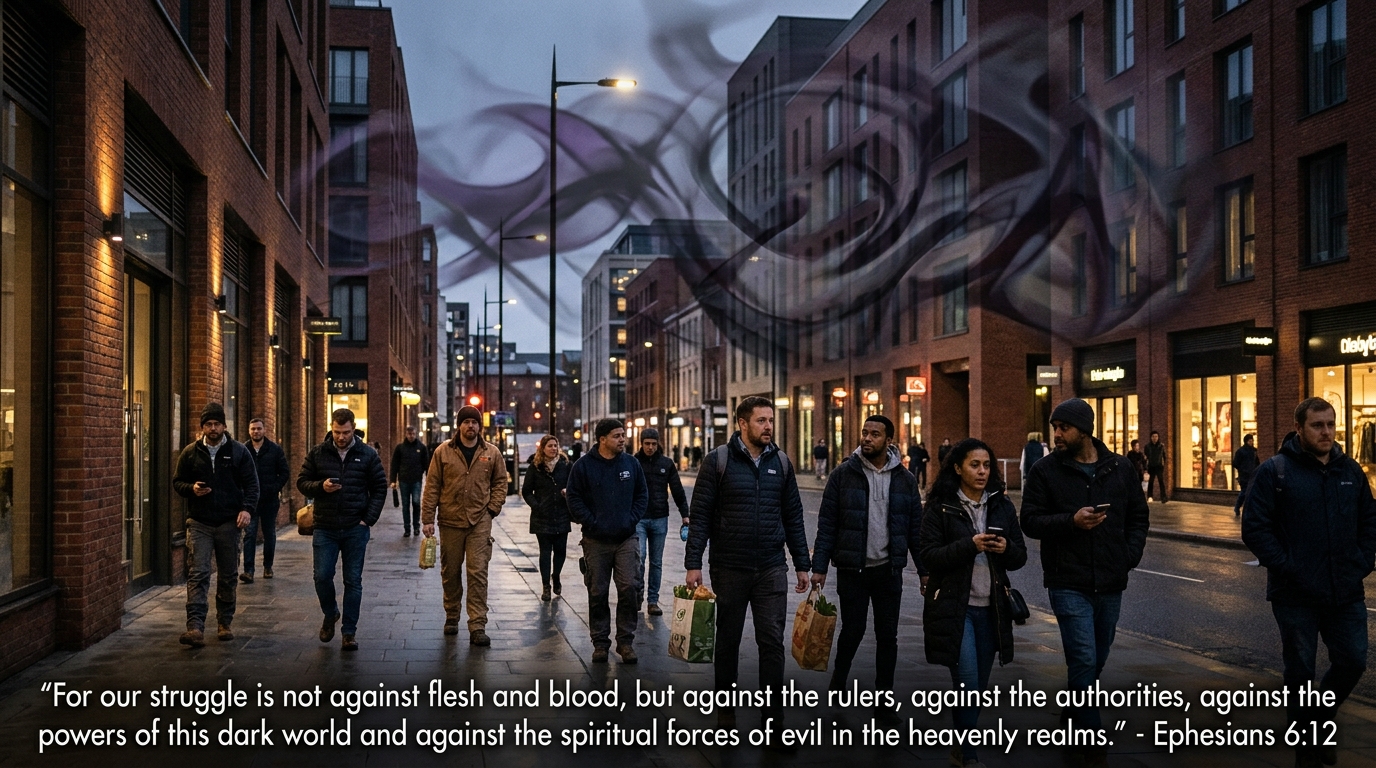
Not every unanswered prayer is tied to an obvious moral failing. Scripture acknowledges spiritual conflict and the reality of times when God’s answer is not immediate or is different than you ask. Ephesians frames the Christian life as a battle in the heavenly realms: “For our struggle is not against flesh and blood, but against the rulers, against the authorities…” (Ephesians 6:12). That indicates there are external spiritual forces at work in a fallen world.
You can also face seasons where God seems silent as part of growth, shaping, or protection—scripture portrays divine delay for reasons that sometimes remain mysterious. The apostle Paul’s thorn is an example: he begged three times, and God’s answer was not removal but sustaining grace (2 Corinthians 12:8-9). In such cases, the “not working” of prayer may be part of a larger narrative where God is at work beyond visible results.
Recognizing spiritual opposition or purposeful delay doesn’t give a license to passivity, but it does help you avoid simplistic conclusions like “God is ignoring me because of X” when other dynamics are in play. There are times when unseen battles, timing, or God’s larger purposes explain silence.
When Prayer Feels Frustrating and Discouraging
There’s a unique kind of frustration that comes when you keep praying—and nothing seems to change.
You may feel:
- Ignored, even though you’re trying to be faithful
- Confused about what you’re doing wrong
- Tired of repeating the same requests
- Tempted to slowly stop praying altogether
For some, it’s not just about one prayer—it’s about a season. Months or years of waiting can quietly wear down your hope.
These emotions matter. They’re not a sign that you’re failing—they’re often a signal that something deeper needs attention.
Instead of pushing those feelings away, Scripture invites you to bring them honestly before God. Many of the Psalms were written from this exact place—honest, raw, and searching.
Signs and symptoms: How to recognize which reason fits you
It’s one thing to read the seven reasons; it’s another to discern which applies to your situation. Here are diagnostic indicators—questions and signs—to help you identify the most likely root cause of your prayer struggle. I’m offering observation prompts rather than prescriptive steps.
- Do you sense guilt, secrecy, or ongoing patterns of sin that you hesitate to confess aloud? If yes, unconfessed sin may be a lead.
- When you pray, do you find your mind focused more on outcomes that boost your comfort, reputation, or control? If so, motives may be skewed.
- Do you pray with expectation, or do you brace for disappointment and rehearse worst-case scenarios? Frequent anxiety and hedging may indicate doubt.
- Are your prayers crafted to impress others or to maintain spiritual status? If performance matters more than encounter, heart posture may be the problem.
- Do you avoid praying for people who’ve hurt you, or do you nurse grudges privately? Bitterness and unforgiveness often show up here.
- Is there a pattern of ignoring clear convictions or Scripture in daily life while expecting prayer to fix things? That points toward disobedience.
- Have you faced spiritual attacks, unexplained obstacles, or long seasons of delay with no obvious moral reason? Consider spiritual opposition or divine timing.
Each set of signs nudges you to reflect—not to blame yourself but to seek honest appraisal. The Bible values transparency: it helps you diagnose, not to shame, but to restore.
Common misconceptions about unanswered prayer
You’ll encounter plenty of myths about unanswered prayers. Here are a few, with brief corrective notes grounded in Scripture.
- Myth: If you pray long enough or hard enough, God must give you what you want. Reality: Prayer is relational, not mechanical. Jesus’ teaching and the epistles stress faith, alignment, and motives over brute force (Mark 11:24; James 4:3).
- Myth: If God doesn’t answer, He doesn’t love you. Reality: Silence isn’t proof of absence; scripture shows God often uses waiting and testing as part of growth (see examples of many Biblical figures who waited).
- Myth: Prayer is only about getting results. Reality: Prayer’s primary work is transformation of your heart and deepening relationship with God; answers are part of that story but not the whole point.
- Myth: Only dramatic sin blocks prayer. Reality: Subtle things—hidden resentments, small compromises, persistent doubt—often have more impact on daily prayer than headline sins.
These corrections won’t be exhaustive, but they help you reframe your expectations and approach prayer with greater realism.
Questions to reflect on (diagnostic, not prescriptive)
Reflection helps you notice patterns. Here are questions to ask yourself in prayerful honesty. They’re diagnostic, not a how-to.
- When you pray, do you feel closer to God afterward or more distant?
- What emotions dominate your prayers—fear, entitlement, gratitude, desperation, performance?
- Are there pockets of life you consistently avoid bringing to God?
- Do you pray privately with humility, or mostly in public for affirmation?
- When you sense conviction, how quickly do you respond or deny it?
- Are your prayers primarily for your agenda, or for aligning with God’s wisdom?
Answering these can point you to the most likely cause among the seven reasons above.
When it’s not because of you: conditional and non-moral factors
It’s possible that nothing you’re doing morally or spiritually is the primary barrier. God’s timing, the sanctifying process, or spiritual battles beyond your immediate control can all make prayer feel stalled. Even Jesus experienced times of wrestling and apparent silence. Paul’s thorn was not removed despite persistent prayer, and God gave sustaining grace rather than relief (2 Corinthians 12:8-9).
If your life is largely aligned with Scripture and your heart posture is honest, yet prayers remain unanswered in ways you don’t understand, recognize that biblical faith accepts mystery alongside assurance. That mystery does not excuse neglect; it invites patient endurance and wise counsel.
Practical caution: avoid simplistic formulas
You’ll encounter plenty of quick-fix lists online promising that doing X, Y, and Z guarantees an answer. The Bible offers relational clarity about barriers, not a guarantee checklist that you can box-tick to force a result. Avoid reducing prayer to a formula; the heart and relationship matter more than mechanics. While it’s reasonable to examine your life for the seven reasons above, don’t treat them as a manipulative recipe to control outcomes. Scripture values transformation, not performance.
When you need help discerning
If this diagnostic process raises more questions than answers, consider talking with a mature pastor, spiritual director, or trusted Christian friend who can listen to your prayer life’s patterns without quick judgment. A fresh pair of eyes—someone who can relate scripture to your story—helps you distinguish between moral issues, spiritual warfare, and seasons of God’s shaping that require endurance.
You may also find biblical counseling helpful if you’re dealing with deep-rooted sin patterns, trauma, or chronic doubt. These are normal and common, and the church is meant to be a place where such struggles are addressed with grace and truth.
Final encouragements from Scripture
While this article focuses on reasons prayers can feel ineffective, Scripture consistently invites you to keep drawing near to God. Even the Bible’s warnings about barriers are meant to restore relationship, not to condemn. For example, Psalm writers cry out from places of doubt and receive renewal; James and the prophets call for honesty that leads to reconciliation.
A few verses worth revisiting as you diagnose your prayer life:
- Psalm 66:18 — on cherished sin hindering prayer
- James 4:3 — on wrong motives
- Mark 11:24 and Mark 9:24 — on faith and wrestling with unbelief
- Matthew 6:5 and Isaiah 1:15 — on posture and authenticity
- 1 John 3:22 — on obedience and prayer alignment
- Ephesians 6:12 — on spiritual realities that affect the visible
These passages don’t provide a manipulative key, but they do give you guideposts for honest self-examination that leads to real spiritual growth.
Closing words
Asking “Why is my prayer not working?” is a courageous and necessary question. It invites you into honesty, a humbling but hopeful space where God can meet you with truth and grace. Whether the reason is sin that needs confession, motives that require reorientation, doubt that needs tending, or more mysterious spiritual dynamics, scripture gives you clarity to diagnose rather than despair.
Take your time, be compassionate with yourself, and allow God’s Spirit to gently illuminate the places that need change. This is a journey of growth, not a quick fix. Keep seeking, even when answers are slow—your pursuit matters more than the speed of your results.