

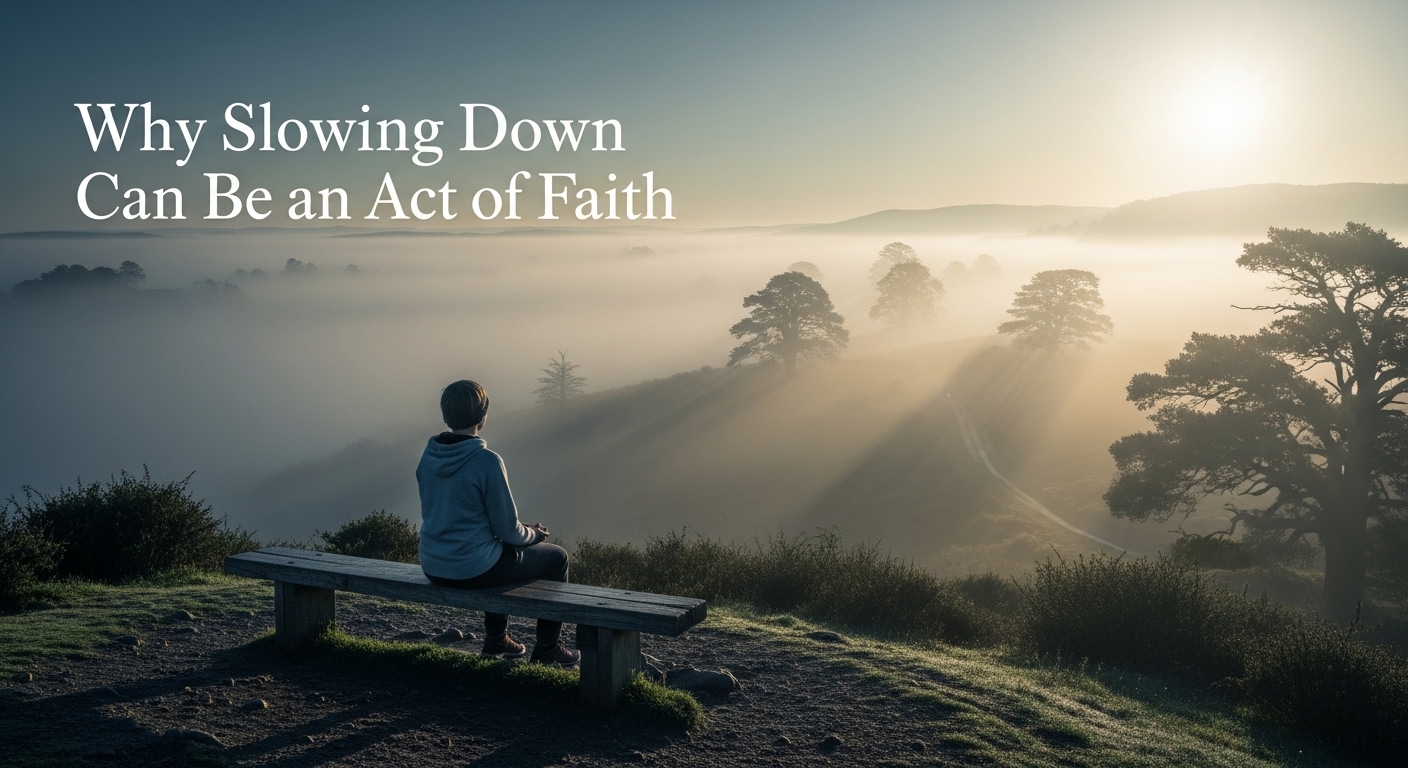
Why Slowing Down Can Be an Act of Faith
Introduction
You wake up with your phone buzzing, and already your stomach tightens. A meeting, a message from a loved one, errands, a list you couldn’t finish yesterday—everything demands you move faster. You tell yourself you’ll breathe later, pray later, rest later. Somehow later never comes.
You are not the only one who feels this weight. Many believers discover that anxiety creeps back even after prayer, that spiritual rhythms fray under the pressure of daily life, and that trust can feel like an idea instead of a practice. You’re carrying more than a schedule; you’re carrying the expectation that you must control the pace of life to keep everything from unraveling.
God wants to meet you here. The invitation to come away and rest is real, and slowing down can itself be an act of obedience and trust. If you’re longing to live with faith that governs your day-to-day pace, this piece is for you—gentle, practical, and rooted in scripture.
Sponsored recommendation

Why This Feels So Hard
Slowing down feels impossible because you’re exhausted in ways that go beyond physical tiredness. Your mind is taxed by constant decisions, incomplete tasks, and the steady hum of digital noise. When your inner reservoir is drained, every minor friction—an unexpected call, a delayed email—feels catastrophic. You’re not failing at faith; you’re wearing out in a culture designed for speed.
You also live inside repeated cycles. You try to rest: a weekend off, a vacation, a short season of spiritual focus—and then life rushes back. The same pressures reappear, and the relief you felt is temporary. This cyclical rhythm teaches you learned helplessness: when rest doesn’t stick, you assume it can’t be trusted. So you tighten your grip on control rather than loosen it toward God.
Fear of losing control is a powerful driver. Slowing down feels like risking productivity, responsibility, or even relevance. You worry that if you pause, tasks will fall apart, relationships will fray, or God’s timing will be thwarted. That fear is real, and it’s often louder than the still, small voice inviting you to rest.
When you read this, something inside recognizes the truth of these pressures. You find a quiet relief in being understood. That recognition is the first step toward a different way of living—one rooted in obedience and trust rather than reactive pace and perpetual hurry.

What Scripture Shows Us to Do
Scripture doesn’t treat rest as optional. It frames slowing down as part of how you obey and trust God. The Bible gives commands about rhythms of rest, invitations to trade your burdens, promises of God’s sustaining presence, and living examples who modeled trust.
A clear command: Sabbath is institutionalized in scripture as a rhythm for the people of God. When God commands rest, it’s not just for physical recuperation; it’s to reorient your dependence. See the principle behind the Sabbath in the command to remember the Sabbath day: Exodus 20:8. Observing rest becomes a way you declare that God is ultimately in charge of time.
A gracious invitation: Jesus calls you toward rest in the most personal way. He says, “Come to me, all you who are weary and burdened, and I will give you rest” (Matthew 11:28). That invitation implies an exchange—you give your striving, and He gives rest. Choosing to slow down is choosing to receive what He offers.
A promise for your heart: Peace that surpasses anxious striving is a promise you can lean on. When you bring your cares to God in prayer, you are promised the guarding presence of God’s peace: Philippians 4:6-7. Slowing down to pray becomes a practical pathway into that promised peace.
A living example: Jesus modeled intentional withdrawal for rest, even amid ministry demands. After long stretches of teaching and healing, He invited the disciples to a quiet place and rest (Mark 6:31). If the Son of God prioritized retreat and replenishment, it’s a holy precedent for your own rhythms.
Scripture, then, frames slowing down not as spiritual failure but as a spiritual discipline. It’s a posture that aligns your trust with God’s character and rhythm.
A Simple Way to Practice Faith Right Now
You don’t need a long retreat or a perfect schedule to practice slowing down. Start where you are, in minutes. Here are practical, sticky practices you can use today to turn slowing down into a faith habit.
Breathe — Then pray. For one minute, breathe slowly: inhale for four counts, hold for two, exhale for six. As you breathe out, say a short sentence of surrender: “Lord, I give this day to You.” Repeat that breath-prayer three times. The physical act of regulated breathing calms your nervous system; the prayer anchors it to God.
Short verse meditation. Choose a verse that settles your heart. For example, say slowly and quietly: “Be still, and know that I am God” (Psalm 46:10). Repeat it five times, letting the meaning sink in. Keep it in your pocket—whenever you notice anxiety rising, whisper it.
A surrender statement for productivity moments. When a list demands you, practice a two-line surrender: “I will do my best with next step. God holds the outcome.” Speak it aloud or type it into your task list and move on. This simple reframe turns a compulsive drive to control into a faithful offering of effort without over-identifying with the result.
Gratitude pivot. When you notice your mind racing toward worry, identify one small thing to thank God for—sunlight through the window, a safe commute, the presence of a loved one. Gratitude shifts your attention away from scarcity thinking and toward the faithfulness of God.
Micro-rhythms for the day. Small choices multiply. Choose three daily anchors: morning breath-prayer, a brief midday verse, and an evening reflection of one way you saw God’s faithfulness. Over days and weeks, these simple micro-rhythms build a sustainable faith habit.

Where Real Change Slowly Happens
Transformation rarely happens in dramatic leaps. More often it’s the result of small, consistent decisions compounded over time. The same principle applies to learning to trust God with your pace.
You will make false starts. You will experiment with a new rhythm, feel relief, and then revert under pressure. That’s normal. Spiritual growth is messy; it looks like practice, not perfection. When you expect imperfection, you’re more likely to return to the discipline rather than give up.
Change happens in daily repetition. Tiny faithful acts—pausing to breathe, choosing Sabbath, saying a short prayer—mold your neural pathways and spiritually train your heart to rely on God. James talks about maturity developing through perseverance (James 1:2-4). Your persistence matters more than a single perfect day.
Grace drives the process. The gospel makes room for failure; God doesn’t require flawless performance to love you. Slowing down is an obedience motivated by grace, not by legalism. You obey because the Father’s heart is to restore and renew you, not to scold your inability to get everything done.
Trust grows when you practice it. Each time you slow down and experience God’s sustaining presence, your confidence that God is good and in control increases. That confidence leads to bolder acts of trust—choosing renovation over reaction, priority over panic, presence over productivity.
You’re building a new identity. Over time, the repeated choice to slow down forms you into someone whose default posture is dependence rather than hustle. That identity change is subtle but profound: it reorders your decisions and frees you to live out obedience to God’s pace.

Learn the Bigger Picture of Mental Health & Faith
Slowing down isn’t just a personal preference; it’s integrated into a wider theology of how God cares for your whole person—mind, body, and spirit. Mental health and spiritual formation are not opposed; they’re partners. When you practice rest and intentional rhythms, you align your life with God’s created design for flourishing.
For a fuller biblical foundation on how God brings peace and stability to your inner life, see Finding Rest for Your Soul: Jesus’ Invitation to the Weary. That resource walks through biblical rhythms, practical theology, and everyday practices for steadying your heart under stress.
If exhaustion has already set in, you may find immediate help in resources like Too Tired to Pray? What to Do Instead. For practical rhythms that protect mental health, explore How Sabbath Principles Restore Mental Health. These readings build on the idea that slowing down is not a luxury but a spiritual practice that preserves your capacity to love others and serve faithfully.
Other Biblical Stories That Give Hope
Stories in Scripture give you practical models for trusting God’s timing and care, even through seasons of deep pressure.
David: A man who ran, fought, and fled but also learned to rest in God’s shepherding care. His confidence that God provides under pressure can settle your anxious heart—see Psalm 23:1.
Joseph: Betrayed and imprisoned, Joseph’s life was marked by prolonged waiting before purpose unfolded. His story reminds you that God is active in the long, slow work of salvation and restoration—see Genesis 39:2.
Ruth: A woman who navigated loss and scarcity but stepped into faithful, steady obedience that changed her trajectory. Ruth’s humility and trust show how slow faithfulness leads to redemption—see Ruth 1:16.
Job: Perhaps the most honest portrait of prolonged suffering, Job’s journey toward restored trust shows that faith can endure questions and pain. In the midst of suffering, the work of slow trust and reorientation matters—see Job 23:10.
These stories don’t promise that slow faith eliminates difficulty. Rather, they show that a steady trust woven through hardship becomes the path by which God accomplishes His purposes. You are part of that story when you choose to trust in the everyday.
A Short Prayer for This Moment
Lord Jesus, I bring my hurried heart to You. Teach me to slow my pace and rest my soul in Your presence. Help me trust that Your timing is wise and Your strength is sufficient. Give me the courage to practice small acts of obedience today—breathing, praying, pausing—so my life can reflect Your rhythm. In Your name I surrender my striving. Amen.
Final Encouragement
You don’t have to fix everything at once. Slowing down is not a single heroic act but a daily series of small choices that demonstrate trust. Each time you choose to pause and invite God into the moment, you practice a faith that says, “You are enough.” Over weeks and months, these choices compound into a life that reflects God’s steadiness.
If you’re worried that slowing down will cost you relevance or effectiveness, remember: Jesus’ model of withdrawal and restoration enabled long-term mission, not retreat from it. Choosing rest is choosing obedience to the Lord’s pace, which prepares you for sustained calling and compassion.
You are not alone on this path. Thousands of believers wrestle with the same pace pressures, and God’s invitation stands for you today. Begin small. Breathe. Pray. Rest a little more than you once did. Watch trust grow and anxiety lessen. Slowing down is an act of faith—practical, brave, and profoundly obedient.
If you found this helpful, read next:
- Finding Rest for Your Soul: Jesus’ Invitation to the Weary (for a fuller biblical foundation)
- Too Tired to Pray? What to Do Instead (if exhaustion is present now)
- How Sabbath Principles Restore Mental Health (for practical rhythms)
Bible verse references used (each linked to Bible Gateway):
- Exodus 20:8
- Matthew 11:28
- Philippians 4:6-7
- Mark 6:31
- Psalm 46:10
- James 1:2-4
- Psalm 23:1
- Genesis 39:2
- Ruth 1:16
- Job 23:10
Sponsored recommendation
Acknowledgment: All Bible verses referenced in this article were accessed via Bible Gateway (or Bible Hub).
“Want to explore more? Check out our latest post on Why Jesus? and discover the life-changing truth of the Gospel!”